

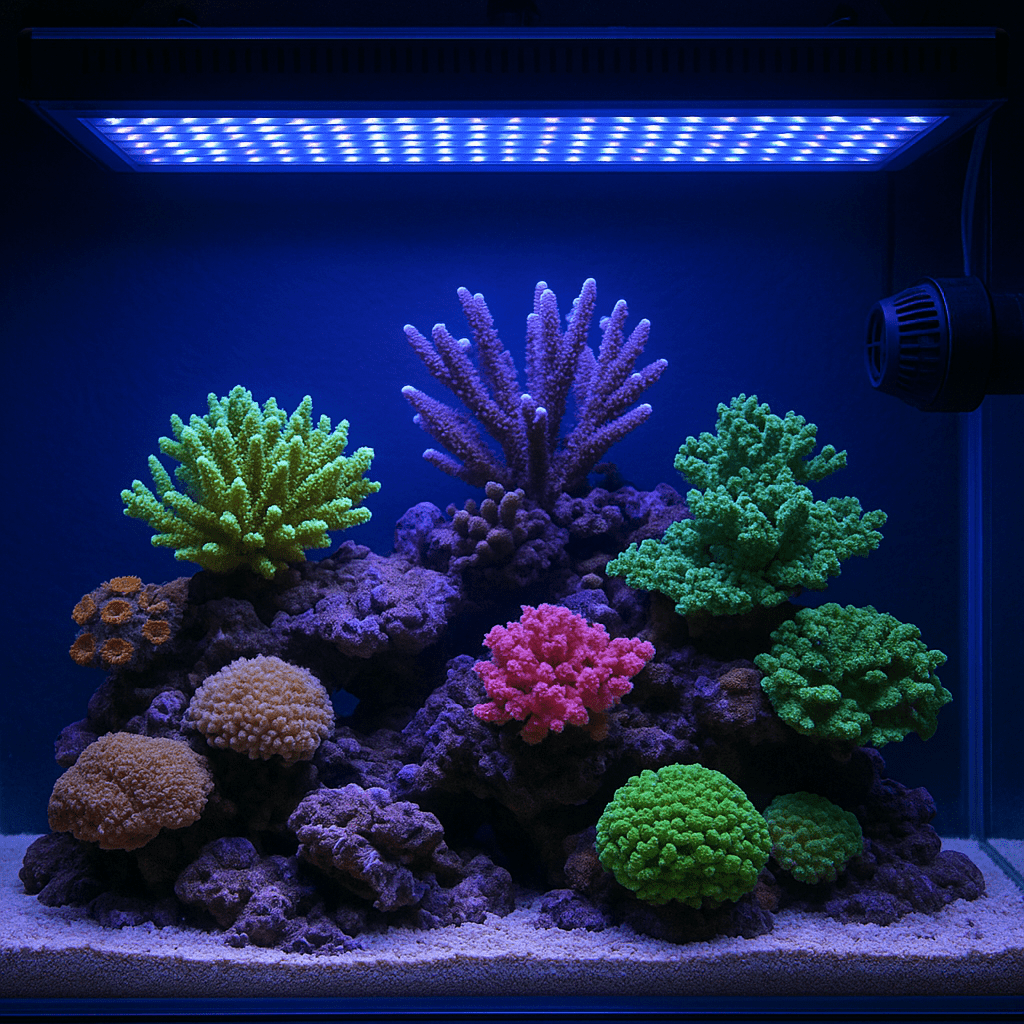
Good tank maintenance keeps a reef aquarium stable, clean, and predictable. It prevents many common problems before they start. A simple routine protects fish, corals, and beneficial bacteria. It also makes reef keeping less stressful and far more enjoyable over time.
Many reef issues come from neglect, not bad luck. Rising nutrients, dirty pumps, old filter media, and drifting salinity can slowly damage a system. Beginners often focus on gear first. Experienced hobbyists focus on consistency. In this guide, you will learn how to build a practical reef tank maintenance routine, what to clean, how often to test, and how to avoid common mistakes that lead to algae, coral stress, and unstable water chemistry.
Quick Reference Tank Maintenance Schedule
| Task | Frequency | Why It Matters |
|---|---|---|
| Check temperature and equipment | Daily | Catches failures early |
| Top off evaporated water | Daily | Keeps salinity stable |
| Feed livestock and observe behavior | Daily | Spots disease and stress fast |
| Clean glass | 2–3 times weekly | Improves viewing and reduces algae buildup |
| Test alkalinity | 1–3 times weekly | Supports coral growth and stability |
| Test nitrate and phosphate | Weekly | Helps manage nutrients |
| Empty skimmer cup | Weekly or as needed | Maintains skimmer performance |
| Change filter floss or socks | 2–3 times weekly | Prevents trapped waste decay |
| Water change | Weekly or biweekly | Exports nutrients and refreshes trace elements |
| Clean pumps and powerheads | Monthly | Restores flow and efficiency |
| Calibrate probes and inspect dosing | Monthly | Prevents hidden parameter drift |
Use this schedule as a baseline. Heavy feeding, SPS tanks, and small aquariums often need more attention. Soft coral tanks may need less. The goal is stable conditions, not constant interference.
Why Tank Maintenance Matters
A reef tank is a closed system. Waste does not disappear on its own. Fish produce ammonia. Food breaks down into nitrate and phosphate. Detritus settles in low-flow areas. Salt creep builds around equipment. Over time, small issues become major problems.
Good maintenance keeps these problems under control. It supports oxygen levels, water clarity, and stable chemistry. Corals respond well to consistency. Fish also stay healthier in clean, predictable water. Parasites and disease are still possible, but stress drops when the tank is well maintained.
Maintenance also protects your investment. Pumps last longer when cleaned. Heaters are safer when inspected. Test results become more useful when the system follows a routine. That routine is what separates a struggling reef from a thriving one.
Daily Tank Maintenance Tasks
Daily reef maintenance should be quick and simple. Start by checking temperature, water level, and equipment operation. Make sure return pumps, powerheads, skimmers, and lights are working normally. Listen for unusual sounds. A noisy pump often needs cleaning.
Next, observe your livestock. Healthy fish swim normally and respond to food. Corals should show expected extension for their species. A closed coral is not always a crisis. Several closed corals may signal a problem. Fast observation helps you catch issues early.
Top off evaporation with fresh RODI water, not saltwater. Salt stays behind when water evaporates. Replacing it with saltwater raises salinity. If you use an auto top off system, inspect the reservoir and float sensors often. A failed ATO can quickly destabilize a reef tank.
Weekly Tank Maintenance Tasks
Weekly maintenance does most of the heavy lifting. Clean the glass with a magnet cleaner or algae scraper. Remove film algae before it thickens. Empty and rinse the protein skimmer cup. Change filter socks or filter floss before trapped waste breaks down in the system.
Test your key water parameters every week. At minimum, check salinity, alkalinity, nitrate, and phosphate. Many reef keepers also test calcium and magnesium. If you keep stony corals, alkalinity deserves extra attention. It can shift fast in growing systems.
Perform a water change if that fits your routine. Many hobbyists change 10 percent weekly. Others change 15 to 20 percent every two weeks. Mix new saltwater fully. Heat it to match the tank. Match salinity closely. Sudden changes can stress fish and corals more than slightly elevated nutrients.
Monthly and Long-Term Maintenance
Monthly maintenance focuses on equipment and hidden buildup. Remove powerheads and return pumps. Soak them in citric acid or vinegar solution. This dissolves calcium deposits and restores flow. Rinse everything well before returning it to the tank.
Inspect tubing, dosing lines, ATO sensors, and heater placement. Salt creep around fittings can cause leaks. Dosing lines can clog or slip out of place. Heaters should stay fully submerged if designed for that use. Small mechanical failures often create big reef problems.
Also review your light schedule and test kit accuracy. Replace expired reagents. Calibrate refractometers and probes. If your tank has a sump, vacuum detritus from low-flow chambers. That trapped waste can fuel nuisance algae and cyanobacteria over time.
Water Chemistry and Parameter Stability
Tank maintenance is not only about cleaning. It is also about keeping water chemistry stable. Stability matters more than chasing perfect numbers. Most reef tanks do well when salinity stays around 1.025 to 1.026, temperature remains steady, and nutrients stay within a reasonable range.
For mixed reefs, alkalinity often sits between 7.5 and 9 dKH. Calcium commonly ranges from 400 to 450 ppm. Magnesium often stays between 1250 and 1400 ppm. Nitrate and phosphate should not hit zero in most modern reef tanks. Corals need some nutrients.
The key is avoiding swings. Large corrections can shock corals. If alkalinity falls, raise it slowly. If phosphate climbs, reduce it gradually. Good maintenance prevents emergency corrections. Learn more in our reef tank water parameters guide.
Step-by-Step Tank Maintenance Routine
If you want a simple system, follow this routine:
- Check temperature, salinity, and equipment.
- Observe fish and corals before feeding.
- Clean viewing panes and remove visible algae.
- Replace dirty mechanical filtration.
- Empty and rinse the skimmer cup.
- Test alkalinity, nitrate, and phosphate.
- Mix and heat fresh saltwater.
- Siphon detritus from easy-to-reach areas.
- Perform the water change slowly.
- Recheck salinity after the change.
- Clean up salt creep around the tank.
- Record results in a log or app.
This routine usually takes less time than dealing with a neglected tank. It also builds a useful history. Your test log can reveal trends long before livestock shows stress.
Common Tank Maintenance Mistakes
Many reef keepers clean too little. Others clean too aggressively. Both create problems. Replacing all filter media at once can disrupt stability. Deep cleaning every surface in one day can remove helpful biofilms and stir up waste.
Another common mistake is ignoring salinity drift. This happens often in tanks without an ATO. Overfeeding is also a maintenance issue. More food means more waste, more nutrients, and more algae pressure. Feed enough, but not blindly.
Do not trust equipment without inspection. A heater can fail. A doser can stick on. A refractometer can read wrong if uncalibrated. Good reef maintenance means checking the tools that manage your system. Our reef tank maintenance schedule can help you stay organized.
Common Problems
Why does algae keep returning?
Recurring algae usually points to excess nutrients, old bulbs, dirty flow pumps, or neglected mechanical filtration. Test nitrate and phosphate first. Then review feeding, water source quality, and detritus buildup. Replace filter floss more often. Clean dead spots in the sump and rockwork.
Why are my corals losing color?
Color loss often comes from unstable alkalinity, poor lighting balance, low nutrients, or sudden changes. Maintenance helps by keeping parameters consistent. Test alkalinity several times per week in coral-heavy tanks. Check that your lights and dosing schedule have not drifted.
Why is my tank cloudy after cleaning?
Cloudiness often happens when detritus gets stirred into the water column. Clean in sections instead of disturbing the whole tank at once. Use fresh filter floss after maintenance. If the tank stays cloudy, check for bacterial blooms, overfeeding, or dying organisms.
Why does my salinity keep changing?
Salinity swings usually come from evaporation, inaccurate top off habits, or bad measuring tools. Use calibrated equipment. Top off with RODI water only. Consider an ATO if you do not already run one. Stability improves fast when evaporation is managed properly.
Tools That Make Tank Maintenance Easier
You do not need every gadget. You do need reliable basics. A refractometer, quality test kits, algae scraper, turkey baster, siphon hose, buckets, and spare filter floss go a long way. An ATO is one of the best upgrades for stability.
For larger systems, dosing pumps save time and improve consistency. A battery-powered gravel vacuum can help in sumps and bare-bottom areas. Label your buckets and mixing containers. Never use soap on reef equipment. Residue can be harmful to marine life.
If you are still building your routine, our guides on how to cycle a reef tank, best clean up crew for reef tank, and protein skimmer setup guide can help.
Frequently Asked Questions
How often should I do water changes on a reef tank?
Most reef tanks do well with 10 percent weekly or 15 to 20 percent biweekly. Heavy bioloads may need more. Stable tanks with dosing may need less.
What is the most important maintenance task?
Consistency is the most important factor. If one task stands out, it is maintaining stable salinity and alkalinity. Corals react quickly to swings in both.
Should I clean live rock during maintenance?
Only lightly if needed. Use a turkey baster to blow off detritus. Avoid scrubbing rock aggressively unless you are treating a specific issue.
Can I over-clean a reef tank?
Yes. Replacing too much media, removing too much biofilm, or making large sudden corrections can destabilize the tank. Clean methodically, not aggressively.
How do I know my maintenance routine is working?
Your parameters stay stable. Algae stays manageable. Fish act normal. Corals extend well and grow steadily. Problems become easier to predict and prevent.
Strong tank maintenance is not glamorous, but it is the foundation of every successful reef aquarium. Build a routine you can follow every week. Keep it simple. Stay consistent. Your reef will reward you with better health, better color, and fewer emergencies.
Was this helpful?
Related Posts
Juvenile Orange Shoulder (acanthurus Olivaceus)
Juvenile orange shoulder tangs are bright, hardy, and reef safe, but they grow large and need a spacious…
 By
ByBest Filtration Systems
Best Filtration Systems for a Healthy Saltwater Aquarium Choosing the best filtration system for your saltwater aquarium is…
[favorite_button]
My Bookmarks:
To see full list click here
[user_favorites user_id="" include_links="true" site_id="" post_types="" include_thumbnails="true" thumbnail_size="thumbnail" include_excerpt="false"]