

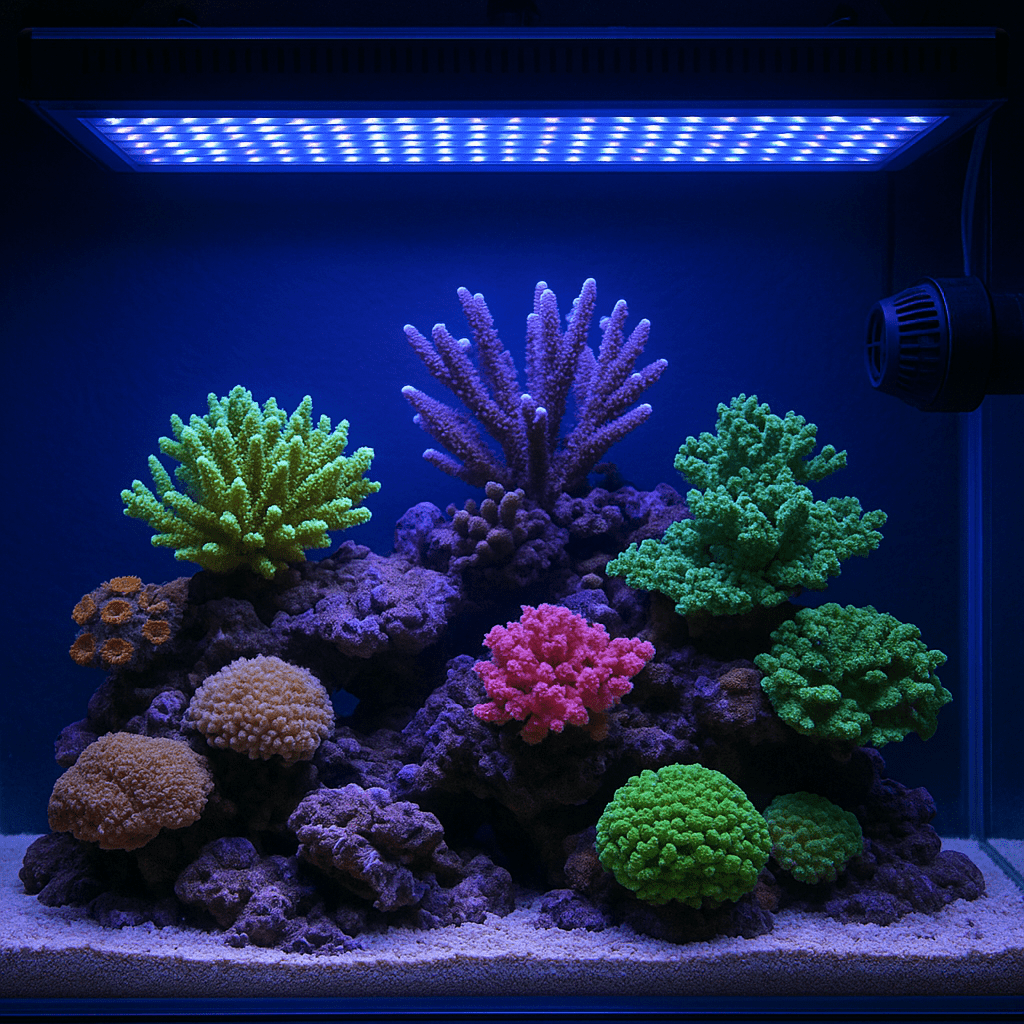
Reef tank water changes remove waste, restore trace elements, and improve long-term stability. Done correctly, they help corals grow, keep fish healthy, and prevent many common water quality problems.
Many reef keepers overcomplicate water changes at first. The process is actually simple once you build a routine. The key is consistency and preparation. In this guide, you will learn how to do a reef tank water change safely, how much water to change, what equipment helps most, and how to avoid common mistakes. We will also cover mixing saltwater, matching parameters, and troubleshooting issues that appear after a change. Whether you keep soft corals, LPS, SPS, or a mixed reef, a good water change routine supports better stability and healthier livestock.
Quick Reference Table
| Task | Best Practice |
|---|---|
| Water change amount | 10% weekly or 15–20% every two weeks |
| New saltwater mixing time | At least 12–24 hours |
| Temperature match | Within 1°F of display tank |
| Salinity match | Within 0.001 specific gravity |
| Target salinity | 1.025–1.026 for most reef tanks |
| Target alkalinity match | As close as possible to display tank |
| Best tools | Heater, pump, hose, refractometer, mixing container |
| Main goal | Stability with minimal stress |
Why Water Changes Matter in a Reef Tank
Water changes do more than lower nitrate. They dilute dissolved waste, remove excess nutrients, and replace elements corals use every day. Salt mixes also help restore ionic balance. This matters in tanks with growing stony corals, heavy feeding, or limited export.
Regular changes can improve polyp extension, coral color, and overall clarity. They also reduce the buildup of unknown contaminants. These may come from foods, additives, dust, or dying organisms. A water change will not fix every problem, but it is one of the safest maintenance tools available.
Beginners often ask if water changes are still needed when they run a skimmer, refugium, or dosing system. In most tanks, the answer is yes. Those tools help a lot, but they do not fully replace fresh saltwater. Water changes remain one of the easiest ways to reset water quality before small issues become larger ones.
How Much Water Should You Change?
For most reef aquariums, 10% each week works very well. It is simple, gentle, and easy to maintain. Another common schedule is 15% to 20% every two weeks. Both approaches can succeed if parameters stay stable.
Smaller, frequent changes are usually safer than large, infrequent ones. Big changes can shift alkalinity, salinity, temperature, and nutrient levels too quickly. Corals often dislike sudden swings, especially SPS. If your tank is already stressed, large changes may make things worse.
You may need larger changes when nitrate is very high, after a chemical accident, or after livestock loss. In those cases, test first and make changes carefully. Match the new water closely. If possible, perform several moderate changes over a few days instead of one extreme change. Stability matters more than speed in most reef systems.
Equipment You Need
You do not need expensive gear to do a good reef tank water change. A few basic tools make the process easier and safer. Use a clean food-safe container for mixing. Add a heater and a small pump or powerhead. These help dissolve salt and stabilize temperature.
You also need a refractometer or a reliable digital salinity meter. Avoid guessing with swing-arm hydrometers if possible. Use a hose or siphon to remove old water. Many hobbyists use a small utility pump for faster draining and refilling. Keep dedicated buckets and tools for aquarium use only.
It also helps to have towels, a thermometer, and test kits for salinity, alkalinity, nitrate, and phosphate. If your tank is coral-heavy, test calcium and magnesium too. Good preparation reduces stress during maintenance. It also lowers the chance of spills, rushed decisions, and parameter mistakes.
How to Mix New Saltwater Correctly
Always start with purified water. RO/DI water is best for reef tanks. Tap water often adds nitrate, phosphate, silicate, copper, or chloramine. These can fuel algae and irritate sensitive corals. Fill your mixing container with the amount of water you need.
Add a heater and circulation pump first. Then slowly add reef salt according to the brand instructions. Never dump water into dry salt. Add salt to water instead. Let the mix circulate for at least 12 hours. Many reef keepers prefer 24 hours. This gives the salt time to dissolve fully and stabilize.
Before using it, check temperature and salinity. Match them closely to the display tank. If you keep demanding corals, check alkalinity too. Some salt mixes run much higher than others. That difference can shock corals during a larger change. For more help with stable chemistry, see reef tank water parameters and how to mix saltwater for a reef tank.
Step-by-Step: How to Do a Reef Tank Water Change
First, turn off equipment that may run dry. This usually includes the return pump, skimmer, auto top off, and sometimes heaters. Leave circulation pumps running if the water level stays safe. Good flow helps protect oxygen levels while you work.
Second, remove the old water. Siphon from the sump or display tank. Many hobbyists vacuum light detritus from bare areas at the same time. Avoid stirring deep sand beds aggressively. That can release trapped waste into the water column.
Third, slowly add the new saltwater. Pouring too fast can disturb sand and stress corals. A pump and hose make this easier. Refill the sump to its normal operating level. Then restart your return pump and other equipment. Check that the skimmer does not overflow. Skimmers often react after a water change.
Finally, confirm salinity and temperature after everything settles. Watch fish and corals for a few minutes. Most tanks respond well when the new water is matched properly. If you want a stronger maintenance routine, read reef tank maintenance schedule.
Aquarium Setup Tips That Make Water Changes Easier
Your tank setup affects how easy water changes feel. Sumps make the process simpler because you can drain and refill there without disturbing the display. Mark your sump water level clearly. This helps you refill to the same point each time.
Keep a dedicated mixing station if you have space. Even a small brute container with a pump saves time. Many reef keepers delay maintenance because setup takes too long. A ready system removes that barrier. It also helps you respond quickly during emergencies.
Aquascaping matters too. Leave some open areas where detritus can collect and be removed. If every surface traps debris, waste stays in the tank longer. Good flow and accessible sump chambers reduce buildup between changes. For more planning ideas, check reef tank setup guide.
Common Problems
Why do corals look closed after a water change?
This usually points to a parameter mismatch. Salinity, alkalinity, and temperature are the most common causes. Corals may also react to stirred detritus or residue in a dirty bucket. Most mild reactions pass within a few hours.
Test the display tank and the new water next time before changing. Match them more closely. Slow the refill rate as well. Sensitive LPS and SPS often prefer gentle changes with minimal disturbance.
Why is my skimmer overflowing after a water change?
Fresh saltwater can temporarily change surface tension. Some salt mixes also cause a stronger skimmer reaction. Turn the skimmer down, raise the cup, or leave it off briefly until the system settles. Make sure no additives, soaps, or cleaning residues entered the water.
Why did my salinity change after the water change?
The new water was likely mixed too strong or too weak. It can also happen if the tank water level was off before you started. Always measure salinity with a calibrated tool. Check both the display and the new batch before use.
Should you vacuum the sand bed during every water change?
Light surface cleaning is helpful in many tanks. Deep, aggressive vacuuming is not always wise, especially in mature systems. Clean small sections at a time. This removes waste without destabilizing the bed.
Why are nitrate and phosphate still high?
Water changes help, but they do not solve the root cause alone. Heavy feeding, weak export, trapped detritus, and old rock can keep nutrients elevated. Review feeding, skimming, flow, and filtration. You may also need more frequent changes for a while. For nutrient control basics, see how to lower nitrates in a reef tank.
Best Practices for Long-Term Success
Consistency beats perfection. A simple weekly routine works better than occasional large corrections. Keep notes on how much water you change, what salt brand you use, and your main parameters. Trends matter more than single numbers.
Try not to change too many things at once. If you switch salt brands, monitor alkalinity closely. If you dose supplements, test before and after a water change to see how much the new water shifts your levels. This is very important in SPS systems.
Finally, keep your tools clean. Salt creep, old hoses, and dirty containers can create avoidable problems. Rinse equipment with fresh water after use. A clean process protects your reef and makes each water change easier than the last.
Frequently Asked Questions
How often should I do a reef tank water change?
Most hobbyists do 10% weekly or 15% to 20% every two weeks. Choose a schedule you can maintain consistently.
Can I use tap water for reef tank water changes?
It is not recommended. RO/DI water is much safer because it avoids unwanted nutrients and contaminants.
Do I need to turn everything off during a water change?
Turn off equipment that may run dry, especially the return pump, skimmer, and auto top off. Keep safe circulation if possible.
How long should new saltwater mix before use?
At least 12 hours is good. Twenty-four hours is even better for full mixing and stable parameters.
Are water changes enough to maintain calcium and alkalinity?
In lightly stocked tanks, sometimes yes. In coral-heavy tanks, water changes alone are often not enough. Dosing may be needed.
Was this helpful?
Related Posts
Juvenile Orange Shoulder (acanthurus Olivaceus)
Juvenile orange shoulder tangs are bright, hardy, and reef safe, but they grow large and need a spacious…
 By
ByBest Filtration Systems
Best Filtration Systems for a Healthy Saltwater Aquarium Choosing the best filtration system for your saltwater aquarium is…
[favorite_button]
My Bookmarks:
To see full list click here
[user_favorites user_id="" include_links="true" site_id="" post_types="" include_thumbnails="true" thumbnail_size="thumbnail" include_excerpt="false"]