

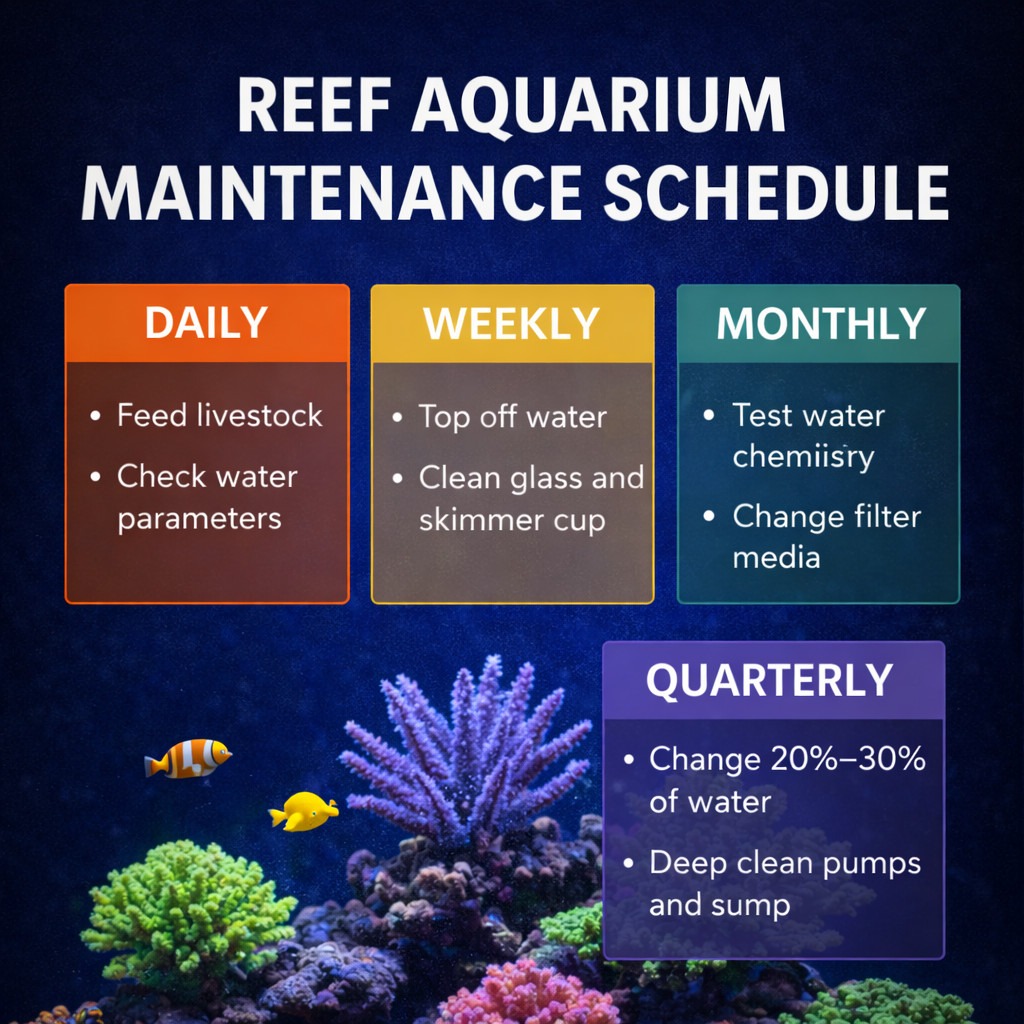
A reef maintenance schedule keeps your tank stable and predictable. It helps you prevent algae, catch problems early, and keep corals and fish healthy. The best schedule is simple enough to follow every week. It should cover testing, cleaning, feeding checks, and equipment care without turning the hobby into a chore.
Many reef tanks fail from inconsistency, not bad intentions. New hobbyists often react only when something looks wrong. By then, nutrients may be high, alkalinity may have drifted, or pumps may already be clogged. A clear routine solves that problem. In this guide, you will learn what to do daily, weekly, monthly, and every few months. You will also learn how to adjust your routine for soft coral tanks, mixed reefs, and SPS systems. Use this as a practical framework, then fine-tune it to match your livestock, feeding level, and equipment.
Quick Reference Reef Maintenance Schedule
| Task | Frequency | Why It Matters |
|---|---|---|
| Check temperature and livestock | Daily | Catches stress and equipment issues early |
| Top off evaporated water | Daily | Keeps salinity stable |
| Empty skimmer cup if needed | 2–3 times weekly | Maintains skimmer performance |
| Clean glass | Weekly | Improves viewing and limits algae buildup |
| Test alkalinity, nitrate, phosphate | Weekly | Tracks the most important reef trends |
| Water change | Weekly or biweekly | Exports nutrients and replenishes trace elements |
| Change or rinse filter media | Weekly | Prevents detritus buildup |
| Inspect pumps and ATO | Monthly | Reduces failure risk |
| Deep clean pumps and powerheads | Every 2–3 months | Restores flow and efficiency |
| Calibrate probes and dosing equipment | Every 3 months | Improves accuracy and stability |
This schedule works for most reef aquariums. Heavily stocked tanks need more frequent testing and cleaning. Lightly stocked tanks may need less. The goal is consistency, not perfection.
Daily Reef Tank Maintenance
Daily checks take only a few minutes. They are the most important part of reef care. Start by looking at your fish and corals before the lights ramp up fully. Watch for clamped fins, rapid breathing, closed polyps, tissue recession, or unusual behavior. Small changes often appear before test results shift.
Next, check temperature and salinity stability. If you use an auto top off system, confirm it is working. Make sure the reservoir still has water. If you top off manually, add fresh RODI water slowly. Never top off with saltwater. Evaporation removes water, not salt.
Feed fish carefully and observe appetite. Overfeeding creates nutrient problems fast. Remove uneaten food if it settles. Glance at your skimmer, return pump, and powerheads. Make sure water movement looks normal. Also check the floor and stand for leaks or salt creep. A five-minute daily routine prevents many expensive problems.
Weekly Reef Maintenance Tasks
Weekly maintenance is where most stability comes from. Start by cleaning the glass with a magnet or scraper. This prevents hard algae from taking hold. Empty and rinse the skimmer cup. Dirty skimmer necks reduce foam production. Replace or rinse filter socks, floss, or roller mat sections as needed.
Test your core parameters every week. At minimum, test alkalinity, nitrate, and phosphate. In mixed reefs and SPS tanks, also test calcium and magnesium regularly. Record the results in a notebook or app. Trends matter more than one isolated number. A stable alkalinity of 8.0 dKH is better than a swing between 7.0 and 9.0.
Perform a water change if your system benefits from it. Many hobbyists do 10 percent weekly or 15 to 20 percent every two weeks. Match salinity and temperature closely. Vacuum detritus from low-flow areas during the change. This is also a good time to inspect coral growth, move frags if needed, and trim macroalgae in the refugium.
Monthly Maintenance and Equipment Checks
Monthly tasks focus on equipment reliability. Reef tanks depend on pumps, heaters, lights, and sensors. Small failures can become major losses. Inspect return pumps, wavemakers, heater controllers, dosing lines, and your ATO system. Look for calcium buildup, snail blockages, brittle tubing, and worn suction cups.
Clean salt creep from cords, power strips, and plumbing joints. Salt creep can wick moisture into places it should not reach. Check your light mounts and screen tops for corrosion. If you run carbon or GFO, review whether it needs replacing. Carbon is often changed monthly. GFO depends on phosphate load and media volume.
Review your test log each month. Ask simple questions. Are nutrients rising? Is alkalinity consumption increasing? Are corals shading each other more than before? These trends tell you when to adjust feeding, flow, dosing, or maintenance frequency. Monthly review turns reef keeping from reactive to proactive.
Every 2 to 3 Months: Deep Cleaning and Calibration
Every few months, schedule a deeper service session. Remove powerheads and return pumps. Soak them in vinegar or citric acid solution. This dissolves calcium deposits and restores performance. Rinse everything well before returning it to the tank. Reduced flow often happens slowly, so many hobbyists miss it until corals start collecting detritus.
Calibrate probes and controllers on the same schedule. pH probes drift over time. Salinity probes can also lose accuracy. If you use dosing pumps, measure their output again. A small dosing error repeated daily can shift alkalinity or calcium significantly. Replace old tubing if it has hardened.
Use this time to inspect backup gear. Test battery air pumps, spare heaters, and leak detectors. Make sure your RODI unit is still producing clean water. Check TDS if you have a meter. Preventive maintenance is not exciting, but it protects the livestock you have already invested in.
How to Build a Reef Maintenance Schedule That Fits Your Tank
Not every reef tank needs the same routine. A soft coral tank with light feeding is more forgiving. An SPS-dominated reef needs tighter control. Start with a basic schedule, then adjust based on livestock demand. Tanks with fast-growing stony corals consume alkalinity and calcium quickly. They need more testing and dosing attention.
Feeding level also changes the plan. Heavy fish loads create more waste. That means more filter maintenance and stronger nutrient export. Tanks with messy eaters may need filter sock changes every few days. Nano reefs often need closer salinity monitoring because evaporation changes them faster.
Write your schedule down. Put daily tasks near the tank. Add weekly and monthly reminders on your phone. Keep supplies nearby so maintenance is easy to start. The best reef maintenance schedule is the one you can repeat. Simple routines beat complicated plans that get ignored after two weeks.
Step-by-Step Weekly Reef Maintenance Routine
If you want a practical system, follow this order each week. First, mix fresh saltwater a day ahead if possible. Heat it and match salinity. Second, clean the glass and inspect corals closely. Third, test alkalinity, nitrate, phosphate, calcium, and magnesium if needed for your tank type.
Fourth, turn off return pumps if your sump level changes during water changes. Fifth, siphon detritus from bare spots, sump chambers, and dead flow zones. Sixth, remove the old water and add the new water slowly. Seventh, replace or rinse mechanical filtration. Eighth, empty and wipe the skimmer cup.
Ninth, restart equipment and confirm normal operation. Tenth, record your test results and any observations. Note coral color, polyp extension, algae growth, and fish behavior. This routine usually takes 30 to 60 minutes. It keeps your tank cleaner and makes parameter swings easier to catch early.
Common Problems Caused by Poor Maintenance
Rising Nitrate and Phosphate
This usually comes from overfeeding, dirty filter media, weak skimming, or trapped detritus. Increase mechanical filter changes. Clean low-flow areas. Review feeding amounts. Consider larger or more frequent water changes. If nutrients remain high, improve export with a refugium, stronger skimming, or media.
Alkalinity Swings
Alkalinity often swings when coral growth increases but dosing stays the same. Test more often in growing reefs. Recalibrate dosing pumps. Check for clogged dosing lines. Keep water changes consistent. Stability matters more than chasing an exact number.
Persistent Algae on Glass and Rock
Algae often points to excess nutrients, old bulbs in some systems, or neglected flow areas. Shorten the time between cleanings. Reduce waste buildup. Confirm your cleanup crew is adequate. Test phosphate even if nitrate looks acceptable.
Corals Look Dull or Stay Closed
Check temperature, salinity, alkalinity, and flow first. Dirty pumps can reduce flow more than you think. Accumulated waste can also irritate corals. Look for recent changes in lighting, hands in the tank, or aggressive neighbors. Stable conditions usually bring the best polyp extension.
Frequently Asked Questions
How often should I do water changes on a reef tank?
Most reef tanks do well with 10 percent weekly or 15 to 20 percent biweekly. Heavy bioloads may need more. Mature, stable systems with strong dosing may need less.
How often should I test reef water?
Test weekly at minimum. SPS tanks often need alkalinity testing two to four times weekly. New tanks also benefit from more frequent testing while they stabilize.
What is the most important daily reef maintenance task?
Observe the tank closely. Watching livestock behavior every day helps you catch disease, equipment failure, and stress before they become serious.
Can I skip maintenance if my tank looks fine?
No. Reef problems often build slowly. By the time the tank looks bad, nutrients or chemistry may already be far off target.
Does a nano reef need more maintenance?
Usually yes. Smaller tanks change faster. Salinity, temperature, and nutrients can swing quickly, so regular checks are even more important.
Helpful FancyReef Guides
- reef tank water parameters
- reef tank water change guide
- protein skimmer setup
- reef tank algae control
- reef tank flow guide
A good reef maintenance schedule creates stability, and stability grows healthy reefs. Start small. Stay consistent. Track your results. Over time, your routine will become second nature, and your tank will reward that discipline with better color, stronger growth, and fewer surprises.
Was this helpful?
Related Posts
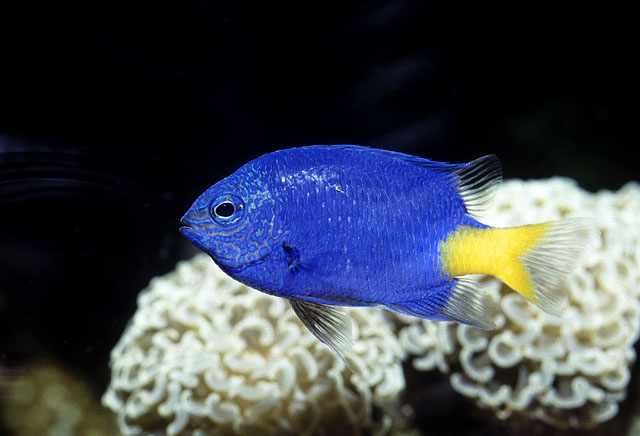
Yellowtail Damselfish (Chrysiptera Parasema)
Yellowtail Damselfish are hardy, colorful, and reef safe, but they can be territorial. Learn their care, feeding, tank…
 By
By
Water Chemistry Basics
Water chemistry basics are the foundation of reef success. Learn the key parameters, target ranges, and simple ways…
[favorite_button]
My Bookmarks:
To see full list click here
[user_favorites user_id="" include_links="true" site_id="" post_types="" include_thumbnails="true" thumbnail_size="thumbnail" include_excerpt="false"]