

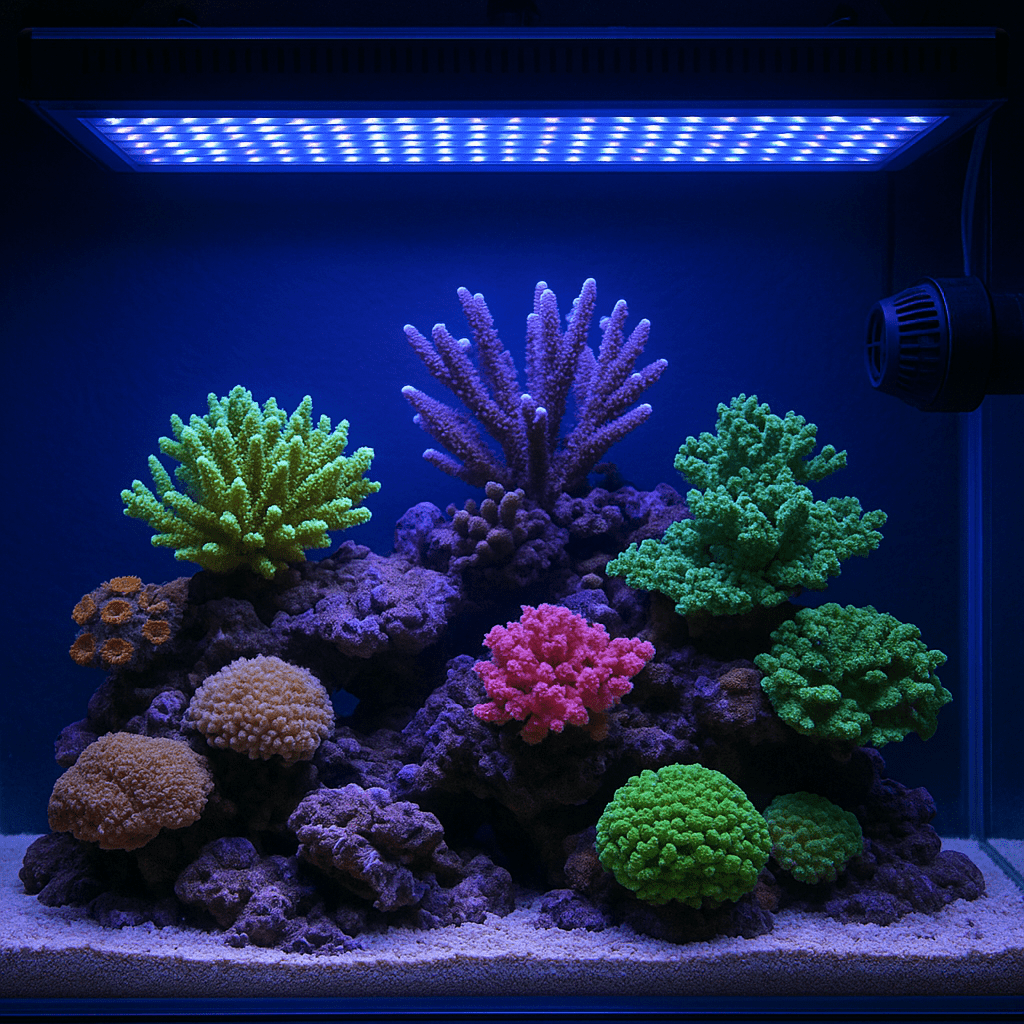
Green hair algae is fixable. It thrives when light, nutrients, and weak export line up in its favor. The best cure is a balanced plan. Reduce the fuel, remove the algae, and improve long-term stability so it does not return.
Almost every reef keeper deals with green hair algae at some point. It can cover rock, smother corals, and make a healthy tank look neglected. The good news is that most outbreaks follow predictable patterns. In this guide, you will learn what causes green hair algae, how to remove it safely, and how to prevent repeat blooms. We will cover nutrients, lighting, cleanup crews, filtration, and practical troubleshooting steps that work in real reef aquariums.
Quick Reference Table
| Issue | Target or Action | Why It Helps |
|---|---|---|
| Nitrate | Keep stable around 2–15 ppm | Prevents imbalance and supports coral health |
| Phosphate | Keep stable around 0.03–0.10 ppm | Limits excess algae fuel without starving corals |
| Lighting | Reduce white channels and long photoperiods | Slows algae growth quickly |
| Manual removal | Scrub and siphon during water changes | Removes biomass and trapped nutrients |
| Cleanup crew | Add grazers suited to tank size | Keeps regrowth under control |
| Filtration | Improve skimming and export | Removes dissolved waste before algae uses it |
| Source water | Use 0 TDS RODI water | Prevents silicates and nutrients from entering |
| Flow | Eliminate dead spots | Reduces detritus buildup on rock |
What Is Green Hair Algae?
Green hair algae is a common nuisance algae in marine aquariums. It usually appears as soft green strands on rock, pumps, frag plugs, and overflow boxes. Short patches may look harmless at first. Then it can spread fast if conditions favor it.
This algae feeds on available nutrients and light. It also benefits from trapped detritus. Many outbreaks start in newer tanks. Others happen after overfeeding, weak maintenance, old source water filters, or unstable nutrient control. A tank can even test low for nitrate and phosphate while still growing heavy algae. That happens because the algae is consuming nutrients as fast as they appear.
The key point is simple. Green hair algae is usually a symptom, not the root problem. Killing it without fixing the cause often brings it back. Lasting success comes from combining removal, nutrient control, and better husbandry.
What Causes Green Hair Algae in a Reef Tank?
Most green hair algae outbreaks come from excess available nutrients. Nitrate and phosphate are the main drivers. Fish waste, leftover food, and decaying organics all contribute. Dirty filter socks and detritus-packed rock can feed algae for weeks.
Lighting also matters. Long photoperiods and heavy white light often accelerate growth. Older bulbs can shift spectrum in ways that favor nuisance algae. LED intensity that is too high can do the same. This is common in tanks where corals are sparse and rock gets full exposure.
Weak flow is another factor. Detritus settles in low-flow zones. That waste breaks down and fuels algae on the same rock where it collects. Poor source water can also trigger blooms. If your RODI water has measurable TDS, you may be adding unwanted nutrients every top-off and water change.
Finally, many tanks simply lack enough competition. Healthy corals, macroalgae, and bacteria all compete for nutrients. When that balance is weak, nuisance algae takes the lead.
Step-by-Step: How to Fix Green Hair Algae
Start with manual removal. Pull out rocks if possible. Scrub them in old saltwater with a toothbrush. Siphon the loosened algae out during a water change. Do not just brush it loose in the display. That spreads fragments and waste.
Next, test your basics. Check nitrate, phosphate, alkalinity, salinity, and temperature. Also check your RODI water with a TDS meter. If source water is not pure, fix that first. Replace exhausted DI resin and old membranes as needed.
Then reduce the fuel. Feed smaller portions. Rinse frozen food. Empty the skimmer cup often. Change filter socks on time. Vacuum detritus from the sump and behind rockwork. If phosphate is high, use a remover slowly. If nitrate is excessive, improve export rather than chasing a crash.
Adjust lighting next. Shorten the display photoperiod by one to two hours. Reduce white channels before reducing blue. Corals usually tolerate this well for a short period. Algae often slows within days.
Finally, add appropriate grazers and stay consistent. Green hair algae rarely disappears overnight. Most tanks improve over several weeks. The goal is steady decline, not a one-day miracle.
Aquarium Setup Factors That Make Hair Algae Worse
Rock layout matters more than many hobbyists realize. Tight aquascapes trap waste. Dense walls of rock reduce flow and create shaded debris pockets. Hair algae often starts on the outer surfaces of these dirty zones. Open structures are easier to clean and circulate better.
Tank age matters too. Newer tanks often go through ugly phases. Dry rock systems are especially prone to nuisance algae in the first year. They lack the biodiversity found in mature live rock systems. In these tanks, patience is part of the cure.
Mechanical filtration also plays a major role. A strong skimmer helps, but it cannot compensate for neglected socks, sponges, and chambers full of detritus. If waste sits in the system, it will break down. Hair algae is happy to use it.
If your aquascape is hard to service, consider small changes. Improve access around the rocks. Aim powerheads to keep particles suspended. Make it easy for your filtration to catch waste before algae does.
Lighting Requirements and Adjustments
Green hair algae loves strong, available light. It responds especially well to long days and broad-spectrum white output. That does not mean your reef must stay dim. It means your lighting should match your coral load and nutrient control.
If algae is spreading fast, shorten the photoperiod to about seven to eight hours of peak display lighting. Keep changes moderate. Sudden blackouts can stress some corals and do not solve the root issue alone. A short blackout may help in severe cases, but it should support, not replace, a full plan.
Reduce white and red channels first. Many reef tanks can maintain coral color with lower white intensity during algae treatment. Blue-heavy schedules tend to be less favorable for visible nuisance growth. Still, nutrient control remains the bigger factor.
If you use old fluorescent or metal halide bulbs, replace them on schedule. Spectrum shift can encourage nuisance algae over time. Stable, appropriate lighting helps corals compete more effectively for space and resources.
Water Flow and Detritus Control
Hair algae often grows where waste settles. That makes flow a major piece of the puzzle. Good flow keeps particles suspended so overflow and filtration can remove them. Poor flow lets organics collect in rock crevices, sand edges, and behind structures.
Watch your tank during feeding. If food and debris drift into one corner and stay there, you have a dead spot. Reposition powerheads to create random movement. Aim for broad flow, not a harsh jet blasting one rock face. Strong, indirect flow is usually best.
Use a turkey baster or small powerhead weekly. Blow detritus off the rocks before a water change. This simple habit removes a surprising amount of trapped waste. It also exposes hidden buildup in areas that look clean from the front.
Do not ignore the sump. Detritus in return chambers and refugium walls still breaks down into nutrients. A cleaner system gives nuisance algae fewer opportunities to gain ground.
Feeding, Nutrients, and Filtration
Overfeeding is one of the most common causes of green hair algae. Fish should eat eagerly, but food should not drift away uneaten. Feed smaller amounts. Spread food across two lighter feedings if needed. Rinse frozen foods to reduce excess phosphate-rich juices.
Do not aim for zero nutrients. Corals need some nitrate and phosphate. Ultra-low nutrients can destabilize a tank and harm coral color. Instead, aim for stable, reasonable ranges. Consistency matters more than chasing a perfect number.
Protein skimming, regular water changes, refugiums, and chemical media can all help. Refugiums with macroalgae are especially useful because they create direct competition for nutrients. Phosphate media like GFO can work well, but use it carefully. Dropping phosphate too fast can stress corals.
If your tank is heavily stocked, your export must match the bioload. More fish means more waste. More waste means stronger maintenance and filtration demands. Balance is the real goal.
Compatibility: Best Cleanup Crew for Green Hair Algae
Cleanup crews help most after manual removal. They are best at controlling regrowth, not erasing a full outbreak alone. Turbo snails are excellent for many tanks. Tuxedo urchins can be very effective on rockwork. Some tangs and rabbitfish also graze hair algae well in larger systems.
Choose animals that fit your tank size and livestock. A small nano reef should not get a tang for algae control. Urchins can move frags and loose coral pieces. Large snails can knock over unsecured frags too. Plan around their behavior.
Do not expect hermit crabs to solve a major outbreak. Some will pick at algae, but they are usually support players. Mexican turbo snails, certain urchins, and dedicated herbivorous fish are more impactful. Even then, they need help from better nutrient management.
A balanced crew works best. Mix rock grazers, sand cleaners, and strong filtration habits. That combination gives your tank better long-term resistance.
Common Problems
Why do I have hair algae if my nitrates and phosphates test low?
This is very common. The algae may be absorbing nutrients before the test detects them. Detritus trapped in rock can also feed algae locally. Manual removal and detritus export are essential here. Do not assume the tank is nutrient poor just because the test reads low.
Why does green hair algae keep coming back after I remove it?
Removal alone does not fix the cause. Regrowth usually means nutrients, lighting, or detritus are still supporting it. Review feeding, source water, flow, and filtration. Add grazers only after the root issues are addressed.
Should I use an algaecide or chemical treatment?
Chemical treatments can work, but they carry risk. Dying algae releases waste back into the tank. Oxygen can drop if too much dies at once. If you use one, improve aeration and remove as much algae as possible first. In mixed reefs, slower and safer methods are usually better.
Will a blackout fix green hair algae?
A blackout may weaken it, but the algae often returns if nutrients remain available. Use blackouts only as a short-term tool. They should support a broader correction plan, not replace one.
Can corals be harmed by hair algae?
Yes. Hair algae can shade corals, irritate tissue, and trap detritus around bases. It is especially problematic on encrusting corals and small frags. Remove algae around coral bases carefully and improve flow in those areas.
Frequently Asked Questions
How long does it take to get rid of green hair algae?
Most tanks show improvement within two to four weeks. Severe cases can take longer. Consistency matters more than speed.
What eats green hair algae in a reef tank?
Turbo snails, tuxedo urchins, rabbitfish, and some tangs are common choices. The best option depends on tank size and compatibility.
Is green hair algae normal in a new tank?
Yes. Many new tanks go through algae phases. Good maintenance and patience usually bring the system into balance.
Should I lower nitrates to zero to stop algae?
No. Zero nutrients can stress corals and destabilize the tank. Aim for stable, moderate levels instead.
Does using RODI water really matter?
Absolutely. Poor source water can feed ongoing algae problems. Clean RODI water is one of the best preventive tools in reef keeping.
Final Tips for Long-Term Prevention
The best way to beat green hair algae is to make your tank less inviting to it every week. Keep nutrients stable. Remove detritus before it breaks down. Feed with intention. Maintain your RODI system. Use a cleanup crew that matches your tank.
Most important, avoid big swings. Reef tanks respond best to steady habits. Small weekly corrections work better than dramatic one-time fixes. If you stay patient and methodical, green hair algae almost always loses.
For more help, see our guides on reef tank water parameters, best cleanup crew for reef tank, how to lower phosphate in a reef tank, and reef tank lighting guide.
Was this helpful?
Related Posts
Cuban Hogfish (bodianus Pulchellus)
Cuban Hogfish care is straightforward in larger reef tanks. Learn tank size, diet, compatibility, and reef safety before…
 By
ByWhat to Do During a Power Outage
A reef tank power outage demands fast action. Protect oxygen, temperature, and circulation first to keep fish and…
 By
By[favorite_button]
My Bookmarks:
To see full list click here
[user_favorites user_id="" include_links="true" site_id="" post_types="" include_thumbnails="true" thumbnail_size="thumbnail" include_excerpt="false"]