

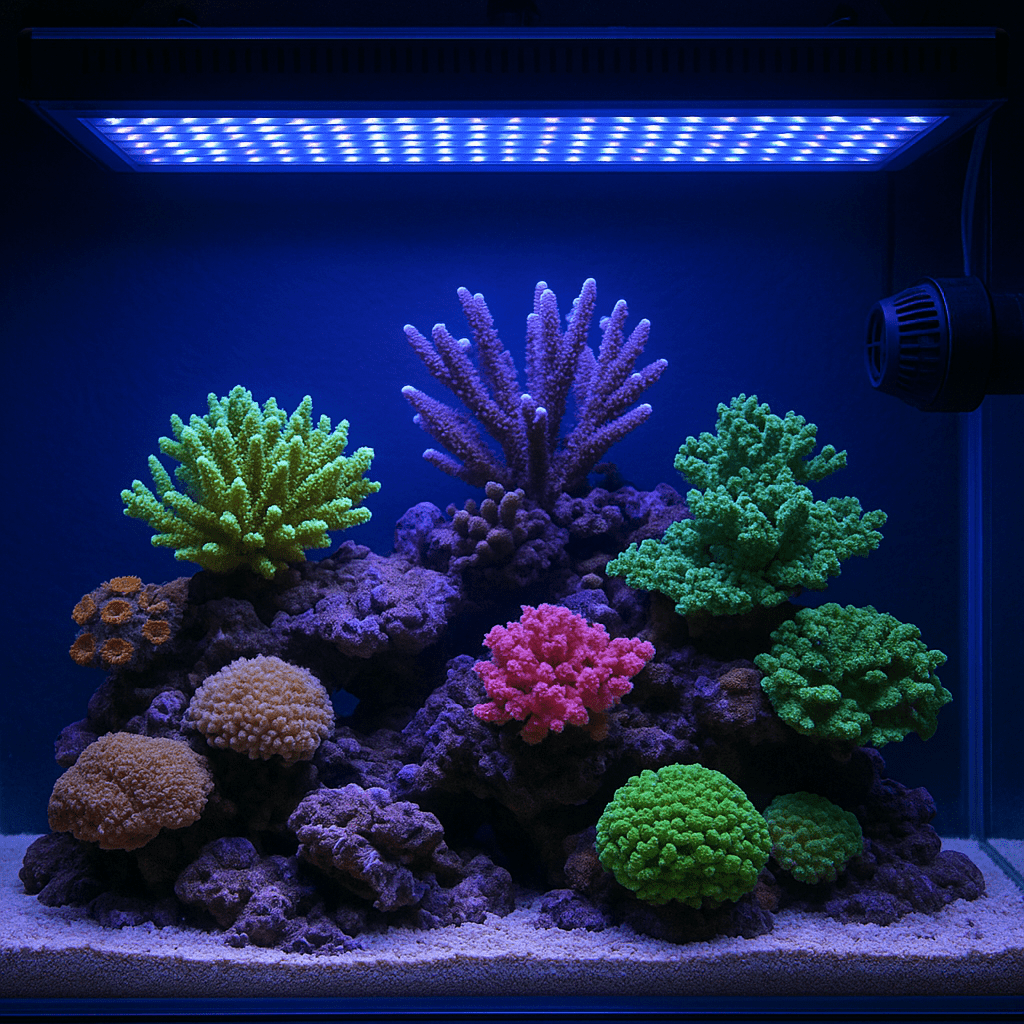
SPS corals need strong, varied water movement. The best flow pattern is broad, random, and constantly changing. Good flow keeps detritus suspended, delivers oxygen and nutrients, and protects delicate tissue from dead spots or direct blast damage.
Many reef keepers focus on PAR and alkalinity first. Those matter a lot. Still, flow often decides whether an SPS tank thrives or struggles. Acropora, Montipora, and other small polyp stony corals evolved in moving water. In captivity, they need more than raw pump power. They need the right pattern. In this guide, you will learn how SPS flow works, how to place pumps, how to avoid common mistakes, and how to tune water movement for healthier coral growth and color.
Quick Reference Table
| Category | Ideal Range or Goal | Why It Matters |
|---|---|---|
| Overall flow style | Random, turbulent, broad | Prevents dead spots and improves gas exchange |
| Turnover target | 30x to 60x display volume hourly | Common starting range for SPS systems |
| Pump output | Avoid narrow direct jets on colonies | Reduces tissue recession and polyp damage |
| Surface agitation | Moderate to strong | Boosts oxygen and stabilizes pH |
| Flow schedule | Pulsing or alternating patterns | Creates changing current and better coverage |
| Signs of low flow | Detritus buildup, weak polyp extension | Indicates stagnant zones |
| Signs of too much direct flow | Tissue peeling, bent polyps, bare patches | Shows the coral is being blasted |
Use this table as a starting point. Every aquascape changes how water moves. Rock walls, coral density, and tank dimensions all affect the final pattern. Fine tuning always matters more than chasing one exact number.
Why Flow Matters in an SPS Tank
SPS corals rely on water movement for almost everything. Flow brings oxygen to coral tissue. It also removes carbon dioxide and waste. Strong movement helps deliver amino acids, plankton, and dissolved nutrients to each colony. This is vital in tanks with heavy lighting and fast calcification.
Flow also keeps detritus from settling between branches. That is a big deal in Acropora-dominated systems. Waste trapped inside colonies can fuel algae, cyanobacteria, and tissue loss. Good flow helps your filtration remove that waste before it breaks down.
Another benefit is stability. Well-oxygenated water supports fish, bacteria, and coral metabolism. Many hobbyists see better polyp extension after improving circulation. Coral color often improves too. That happens because healthy tissue can exchange gases and nutrients more efficiently. If your SPS look dull despite stable chemistry, flow may be the missing piece.
What the Ideal SPS Flow Pattern Looks Like
The ideal flow pattern is not a single stream. It is a broad, chaotic movement that changes direction often. In nature, reefs get surge, rebound, and cross-current. Your goal is to mimic that kind of movement inside glass walls.
Think of flow as layers. One layer moves across the top for gas exchange. Another passes behind and through the rockwork. A third sweeps around coral branches. When these layers interact, they create turbulence. That turbulence is what SPS corals like most.
You want polyps to sway and flutter. You do not want them pinned flat in one direction all day. Constant one-way flow creates shadowed dead zones behind colonies. It also causes uneven growth. Random flow encourages thicker branches, better encrusting, and more even tissue health. Broad gyres, pulse modes, and alternating pumps all help create this effect.
Tank Turnover and Flow Rate Basics
Most SPS tanks do well with 30 to 60 times turnover per hour. This means total pump output compared to display volume. A 100-gallon SPS tank often runs 3,000 to 6,000 gallons per hour of internal circulation. Some high-energy systems run even more.
These numbers are only a guide. Pump ratings are measured without rock, coral, or glass interference. Real flow inside the tank is always lower. A packed aquascape may need more pumps than an open structure. A shallow frag system may need fewer.
Do not chase turnover alone. A tank can have huge pump numbers and still have dead spots. Pattern matters more than total output. Two broad pumps placed well usually beat one powerful narrow pump. Start with enough capacity to adjust upward later. It is easier to dial pumps back than to buy more after coral growth blocks circulation.
Aquarium Setup and Aquascaping for Better Flow
Open aquascaping makes SPS flow much easier. Leave space behind the rock structure. Leave channels between islands. Avoid stacking rock tightly against the back glass. Water needs room to wrap around and return through the structure.
Branching SPS become flow blockers as they grow. Plan for the mature colony, not the frag plug. A tiny Acropora can become a large wall in one year. If colonies are too close, the center of the reef can become stagnant. That often leads to shaded tissue loss and detritus pockets.
Long tanks benefit from opposing pumps on each side. Cube tanks often benefit from one gyre pump high on the back or side, plus a second pump lower on the opposite wall. Peninsula tanks need special planning because one short side is visible. In those tanks, hidden side or back-mounted pumps often work best. For more layout ideas, see aquascaping for reef tanks, reef tank pump placement, and beginner SPS coral care.
Best Powerhead Placement for SPS Corals
Place pumps so their flow intersects. Crossing currents create turbulence. Turbulence is far better than a straight jet. Many hobbyists mount one pump high on each side panel. They aim slightly toward the front center and just above the main rock line. This creates broad movement across the reef face.
A second common method uses a gyre pump near the surface. It pushes water across the top, down the far wall, and back through the rockwork. This creates a circular pattern. Add a second pulse pump low on the opposite side for randomness. That combination works very well in mixed-height SPS tanks.
Avoid aiming pumps directly at a single colony from close range. That strips tissue over time. Instead, bounce flow off glass or let it cross another stream first. Also check the sand bed. If your pumps create constant sandstorms, the lower flow path needs adjustment. Small changes in angle can make a huge difference.
Step-by-Step Guide to Creating Ideal Flow Patterns
- Start with an open aquascape. Leave space around and behind the rock.
- Choose broad-flow pumps, not only narrow high-velocity pumps.
- Mount the first pump high for surface movement and gas exchange.
- Mount the second pump opposite it to create intersecting currents.
- Use pulse, random, or alternating modes if your controller allows it.
- Watch detritus during feeding. Note where particles settle.
- Adjust pump angle to clear low-flow pockets behind colonies.
- Observe coral polyp movement. Look for gentle, changing sway.
- Reduce direct blast on any coral showing tissue wear.
- Recheck flow monthly as coral growth changes the pattern.
This process works better than setting pumps once and forgetting them. SPS tanks evolve fast. Coral mass changes circulation more than most beginners expect. Regular observation is part of proper flow management.
Water Flow by SPS Coral Type
Not all SPS corals want the same intensity. Acropora usually prefer the strongest and most variable flow. They respond well to chaotic movement and high oxygen levels. Millepora and bushy species especially like changing current around every branch.
Montipora are often a little more forgiving. Plating Montipora still need good movement, especially under the plates where detritus can collect. Digitata enjoy strong flow too, but direct blasting can still damage tissue tips.
Birdsnest and Pocillopora appreciate brisk, irregular flow. Their dense branch structure traps waste easily. Stylophora often show good polyp extension in moderate to strong turbulent flow. If you keep a mixed SPS reef, create zones. Put the highest-energy species in the most active areas. Keep gentler zones for LPS or lower-demand corals. For broader husbandry, read reef tank water parameters and Acropora coral care.
Common Problems
Detritus Collects Behind the Rockwork
This usually means your return path is weak. Water enters an area but does not exit well. Add a low-mounted pump or change the angle of an existing one. Turkey baste the rock during maintenance. If clouds appear from one area every time, that zone needs more circulation.
SPS Tissue Recedes on One Side
One-sided recession often points to direct blast or stagnant shadowing. Check whether one colony blocks flow to another. Rotate the coral if possible. Redirect the pump so the stream becomes broader before it reaches the tissue. Also inspect alkalinity stability, because chemistry and flow problems can overlap.
Weak Polyp Extension
Low polyp extension can mean too little flow, too much direct flow, pests, or unstable water quality. First observe movement around the colony. Polyps should move but not stay flattened. Check at night too. Many SPS extend more after lights out. If extension improves after adjusting flow, circulation was likely part of the issue.
Sand Blowing Everywhere
Your lower flow path is too strong or too focused. Raise the pump slightly. Aim it across the upper water column. Use wider-output pumps if needed. Fine sand is more sensitive than coarse aragonite, so substrate choice matters as well.
Corals Grow Unevenly
Uneven growth often comes from one-direction flow and light shading. Alternate current direction during the day. Add a second pump if the tank only has one dominant stream. Better randomness usually produces more balanced colony shape.
Frequently Asked Questions
How much flow does an SPS tank need?
Most SPS tanks need about 30x to 60x turnover per hour. Use that as a starting point. The final goal is broad, chaotic flow, not just a high number.
Can SPS get too much flow?
Yes. They can handle strong movement, but not a constant narrow blast. Too much direct flow can cause tissue recession, poor extension, and uneven growth.
Is random flow better than constant flow for Acropora?
Yes. Random flow is usually better. It reaches more surfaces, reduces dead spots, and better mimics natural reef conditions.
Should I run pumps at night in an SPS tank?
Yes. Keep strong circulation at night. Corals and fish still need oxygen. Some hobbyists reduce intensity slightly, but never shut flow off.
What is the best pump setup for an SPS reef?
Two or more broad-flow pumps usually work best. Place them so currents intersect. Add pulse or random modes for more natural movement.
In the end, ideal flow patterns for an SPS tank are dynamic, broad, and deliberate. Watch your corals closely. They will tell you when the pattern is right. Healthy extension, clean rockwork, and steady growth are the signs you want.
Was this helpful?
Related Posts
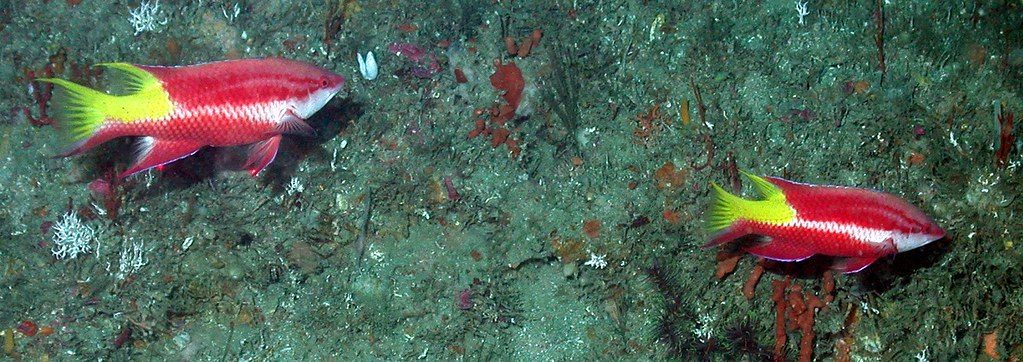
Cuban Hogfish (bodianus Pulchellus)
Cuban Hogfish care is straightforward in larger reef tanks. Learn tank size, diet, compatibility, and reef safety before…
 By
ByWhat to Do During a Power Outage
A reef tank power outage demands fast action. Protect oxygen, temperature, and circulation first to keep fish and…
 By
By[favorite_button]
My Bookmarks:
To see full list click here
[user_favorites user_id="" include_links="true" site_id="" post_types="" include_thumbnails="true" thumbnail_size="thumbnail" include_excerpt="false"]