

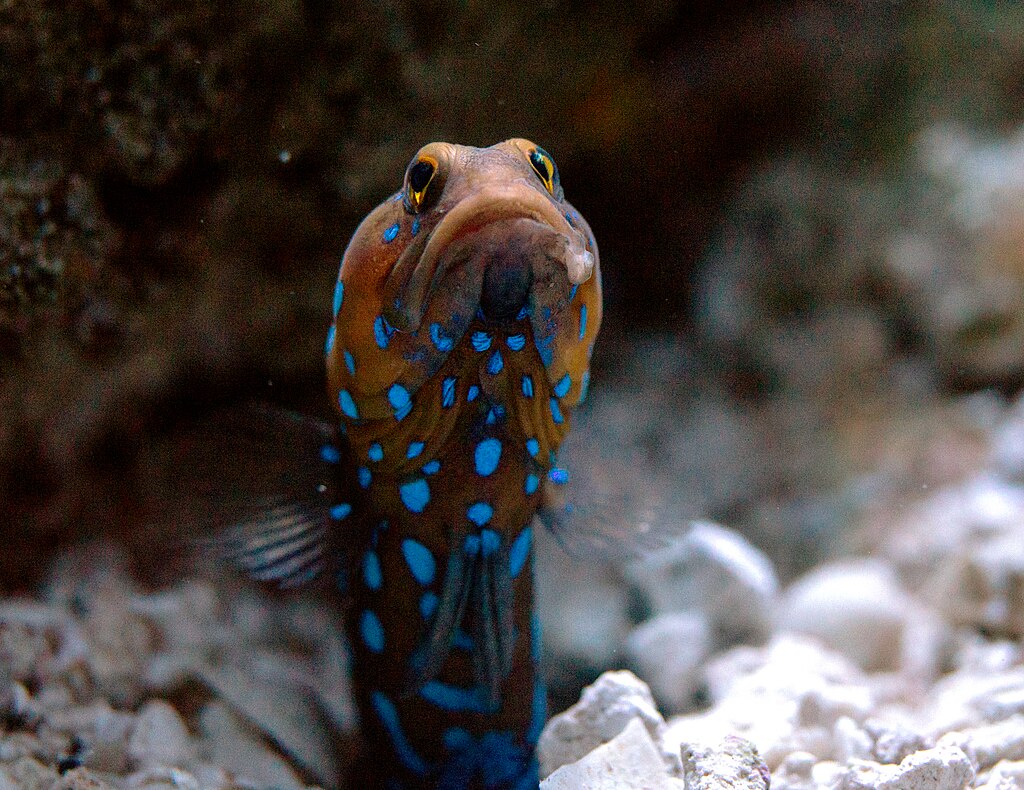
The Blue Dot Jawfish is one of the most striking reef-safe fish in the hobby. It is also one of the most misunderstood. This species needs a cool, stable tank, a deep sand bed, and a secure lid. When those needs are met, it becomes a fascinating burrow builder with tons of personality.
Many hobbyists buy this fish for its color alone. That often leads to losses. Opistognathus rosenblatti comes from deeper, cooler water than many common reef fish. In this guide, you will learn how to keep Blue Dot Jawfish successfully. We will cover tank size, substrate depth, aquascaping, feeding, compatibility, common problems, and practical care tips that improve long-term survival.
Blue Dot Jawfish Quick Reference
| Scientific name | Opistognathus rosenblatti |
| Common name | Blue Dot Jawfish |
| Care level | Moderate to difficult |
| Temperament | Peaceful, territorial near burrow |
| Adult size | About 4 inches |
| Minimum tank size | 30 gallons for one, larger is better |
| Temperature | 72-76°F preferred |
| Diet | Carnivore; mysis, brine, finely chopped seafood, pellets |
| Reef safe | Yes |
| Special needs | Deep sand bed, rubble, tight lid, low stress |
This table covers the basics. The details matter even more with this species. Small mistakes in setup often cause failure. Good planning makes a huge difference.
Natural Habitat
The Blue Dot Jawfish comes from the Gulf of California. It lives in sandy areas near rubble and rock. It builds burrows in the substrate and spends much of its time hovering just above the entrance. At the first sign of danger, it darts back inside.
This fish is often collected from deeper water. That matters in captivity. It usually prefers cooler temperatures than many tropical reef fish. Warm tanks increase stress over time. They can also reduce oxygen levels. That combination often explains why some jawfish do well for months, then decline without a clear cause.
In nature, the burrow is everything. It provides shelter, security, and a place to rest. Blue Dot Jawfish carry shell pieces and rubble to reinforce the entrance. In the aquarium, they need the same opportunity. A shallow decorative sand layer is not enough for this species.
Aquarium Setup
A 30-gallon tank is the bare minimum for one Blue Dot Jawfish. A 40-gallon breeder or larger is a better choice. More floor space matters more than extra height. This fish lives near the bottom and needs room to establish a burrow site.
Use a sand bed that is at least 3 to 4 inches deep. Many keepers prefer 4 to 5 inches. Mix fine sand with small shell fragments and bits of rubble. That helps the fish build a stable tunnel. Place some extra empty shells nearby. The fish will often rearrange them.
Keep rockwork secure and stable. Never place heavy rock directly on loose sand where burrowing can undermine it. Set rock on the tank bottom or on sturdy supports first. Then add sand around it. This prevents collapses and protects the fish.
The lid must be tight. Blue Dot Jawfish are famous jumpers. Even tiny gaps around cords can become escape routes. Use mesh screening, cover openings, and check the top often. This is not optional. Many healthy jawfish are lost to jumping.
Water Parameters and Stability
Stable water is critical. Aim for salinity around 1.025, pH between 8.1 and 8.4, and low nitrate. Ammonia and nitrite should always be zero. Blue Dot Jawfish do not tolerate sudden swings well. They stress easily during moves, rescapes, and parameter shifts.
Temperature is the most important issue. Keep this species around 72 to 76°F if possible. Many reef tanks run warmer than that. Long-term exposure to 78 to 80°F can be risky. Some specimens survive it. Many do not thrive. Cooler water better matches their natural environment.
Good oxygenation helps a lot. Use strong surface agitation and reliable filtration. Cooler water holds more oxygen, which benefits this fish. Avoid overcrowding the tank. Heavy fish loads increase stress and reduce water quality. That is a bad combination for jawfish.
Quarantine is strongly recommended. It allows the fish to recover from shipping and begin eating well. It also helps you watch for parasites. If you quarantine, provide a container of sand and rubble so the fish can burrow and feel secure.
Lighting Requirements
The Blue Dot Jawfish has no special lighting needs. It is not photosynthetic. Lighting should be chosen for the reef tank as a whole, not for this fish alone. Still, very intense lighting can make a new specimen feel exposed, especially in a sparse tank.
If the tank houses bright SPS corals, make sure the jawfish has shaded areas and a secure burrow zone. The fish will spend time near the entrance and may retreat more often under harsh light. This does not always mean something is wrong. It can simply mean the fish wants more cover.
Aquascaping helps more than dimming lights. Use overhangs, rock edges, and rubble piles to create a sheltered bottom area. That gives the fish confidence. Confident jawfish show more natural behavior and spend more time in view.
Water Flow
Moderate flow works best. The fish should not be blasted directly at the burrow entrance. Strong, chaotic flow can collapse loose sand and frustrate the fish. It may also keep the jawfish hidden more often. A calm zone near the substrate is ideal.
This does not mean the whole tank should be low flow. Reef tanks still need circulation. Just direct pumps so the bottom has protected pockets. Watch where sand accumulates. If dunes form or the burrow keeps caving in, adjust the pump placement.
A stable burrow reduces stress. Stress affects feeding, immunity, and behavior. Good flow design supports both coral health and fish comfort. This is one of those small setup details that matters more than many beginners expect.
Feeding
Blue Dot Jawfish are carnivores. They do best with small, meaty foods offered once or twice daily. Good choices include mysis shrimp, enriched brine shrimp, finely chopped clam, finely chopped shrimp, and quality sinking pellets. Variety helps maintain weight and color.
New arrivals may be shy at first. Target feeding near the burrow often helps. Use a turkey baster or feeding tube to deliver food close to the entrance. Once settled, many specimens become bold feeders. They will hover in the water column and grab food quickly.
Avoid relying on one food only. Mysis is excellent, but a mixed diet is better long term. Soak foods in vitamins if the fish arrived thin. Watch body condition from above and from the side. A healthy jawfish should look full, not pinched behind the head.
If tankmates outcompete the jawfish, feed more strategically. Turn off pumps briefly. Feed fast fish at one end first. Then target the jawfish at its burrow. This simple routine often solves feeding issues.
Compatibility
Blue Dot Jawfish are peaceful and reef safe. They do well with calm tankmates that do not harass them. Good companions include small wrasses, clownfish, gobies, blennies, firefish, and other peaceful reef fish. Avoid aggressive species that claim the whole tank.
Be careful with larger dottybacks, hawkfish, aggressive wrasses, and boisterous tangs in smaller systems. These fish can intimidate a jawfish and keep it hidden. Burrow competition can also be a problem with other bottom dwellers. Watch for disputes near the substrate.
This species is generally safe with corals and most invertebrates. It will not nip coral tissue. It may, however, move small rubble pieces or shell fragments near its home. Keep unsecured frags away from its chosen area. The fish is not destructive. It is simply landscaping.
Pairs are sometimes kept, but success depends on tank size and compatibility. Two jawfish may fight if space is limited. For most hobbyists, one specimen is the safest plan.
Step-by-Step Acclimation Guide
- Prepare the tank before the fish arrives. The sand bed and lid should already be in place.
- Dim the lights during acclimation. This lowers stress.
- Match temperature slowly. Then use drip acclimation if salinity differs.
- Transfer the fish gently. Avoid exposing it to air for long.
- Release it near a quiet bottom area with sand and rubble.
- Leave the lights low for the rest of the day.
- Do not chase the fish if it hides. Let it settle naturally.
- Offer a small feeding later or the next day.
- Check the lid again that night. Jumping often happens early.
Patience matters here. Some fish settle in quickly. Others need several days before they act confidently. Avoid major maintenance during that period.
Propagation and Breeding
Can Blue Dot Jawfish be bred in aquariums?
Jawfish are mouthbrooders, and breeding behavior is fascinating. However, Blue Dot Jawfish are not commonly bred by hobbyists. Spawning is possible in theory, but raising larvae is difficult. Most aquarists focus on long-term care rather than breeding attempts.
What makes breeding difficult?
Pair formation is not always easy. Males may incubate eggs in the mouth, but larval rearing requires specialized live foods and dedicated systems. Larvae are small and delicate. Survival rates are usually low without advanced marine breeding experience.
Common Problems
Why is my Blue Dot Jawfish hiding all the time?
Hiding usually points to stress. Common causes include aggressive tankmates, shallow substrate, unstable burrows, bright exposure, or recent introduction. Check that the fish has at least 3 to 4 inches of sand and nearby rubble. Review tankmate behavior. Give it time if it was added recently.
Why did my jawfish stop eating?
Loss of appetite often follows shipping stress, harassment, or warm water. Test parameters first. Then verify the temperature. Offer small meaty foods near the burrow. If other fish steal everything, target feed. Persistent refusal can also suggest disease or severe stress.
Why does this species jump?
Jumping is a natural escape response. Sudden movement, aggression, poor acclimation, and nighttime fright can trigger it. The only safe solution is a fully covered tank. Do not assume a cautious fish will stay put. Almost every jawfish can jump.
Why does the burrow keep collapsing?
The substrate may be too fine, too shallow, or exposed to direct flow. Add mixed grain sand, shell pieces, and rubble. Reduce flow near the bottom. Make sure rockwork is not shifting into the burrow zone. A stable tunnel improves confidence fast.
Why do Blue Dot Jawfish die in warm reef tanks?
This is one of the biggest issues with the species. Many standard reefs run too warm for long-term success. Chronic heat stress weakens the fish over time. Keep temperatures in the low to mid 70s when possible. That single adjustment can improve outcomes dramatically.
Frequently Asked Questions
Is the Blue Dot Jawfish reef safe?
Yes. It is considered reef safe with corals and most invertebrates. It may move small rubble near its burrow.
What is the best tank size for a Blue Dot Jawfish?
A 30-gallon tank is the minimum for one fish. A 40 breeder or larger offers better floor space and stability.
How deep should the sand bed be?
Aim for at least 3 to 4 inches. Many keepers prefer 4 to 5 inches with mixed rubble.
Can Blue Dot Jawfish live in a tropical reef tank?
They can sometimes survive in warmer systems, but cooler tanks are safer. Long-term success is usually better at 72-76°F.
Do Blue Dot Jawfish need a lid?
Absolutely. A tight lid is essential. This species is a known jumper and can escape through very small gaps.
Final Care Tips
The Blue Dot Jawfish is not the easiest reef fish, but it is very rewarding. Success comes from matching its natural needs. Keep the tank cool. Provide a deep sand bed. Add rubble for burrow building. Choose peaceful tankmates. Feed small meaty foods regularly. Cover the tank tightly.
If you respect those basics, this fish often becomes a centerpiece. Few reef fish show such interesting behavior. Watching a jawfish engineer its home is half the fun of keeping one.
For more reef care help, see our guides on reef tank parameters, best sand for reef tanks, peaceful reef fish, and reef fish quarantine.
Was this helpful?
Related Posts
Reef Alkalinity and Calcium Guide
Learn the ideal reef alkalinity and calcium ranges, how they interact, and how to test, dose, and troubleshoot…
 By
ByReef Tank Basics
Learn reef tank basics, from setup and cycling to lighting, flow, and water chemistry, so your first reef…
[favorite_button]
My Bookmarks:
To see full list click here
[user_favorites user_id="" include_links="true" site_id="" post_types="" include_thumbnails="true" thumbnail_size="thumbnail" include_excerpt="false"]