Coral coloration depends on light, nutrients, feeding, and stability. Bright color is not just genetics. It is usually the result of balanced reef conditions. When corals fade, brown out, or bleach, the tank is giving you useful signals.
In this coral coloration guide, you will learn what creates coral color, why colors change, and how to improve color safely. We will cover lighting, water chemistry, nutrient balance, feeding, placement, and common mistakes. The goal is simple. Help you build a reef that looks vibrant and stays healthy long term.
Quick Reference Table
| Factor | Ideal Range or Goal | Common Color Effect |
|---|---|---|
| PAR for many LPS and soft corals | 50 to 150 | Too much can wash color |
| PAR for many SPS corals | 200 to 350 | Stable high light can improve pigments |
| Nitrate | 2 to 15 ppm | Zero can pale corals; excess can brown them |
| Phosphate | 0.03 to 0.10 ppm | Zero can dull color; excess can darken tissue |
| Alkalinity | 7.5 to 9.0 dKH | Swings often reduce color and polyp extension |
| Calcium | 400 to 450 ppm | Supports growth and skeletal health |
| Magnesium | 1250 to 1400 ppm | Helps maintain chemistry stability |
| Flow | Moderate to strong, varied | Poor flow can cause dull tissue and detritus buildup |
| Feeding | Regular, targeted when needed | Can improve depth of color |
Use this table as a starting point. Every reef is different. Coral species also vary. Always make changes slowly.
What Creates Coral Color?
Coral color comes from several sources. The first source is zooxanthellae. These are symbiotic algae that live in coral tissue. They help the coral make energy from light. When zooxanthellae numbers rise, corals often look browner. That is common in nutrient-rich tanks.
The second source is coral pigment. These pigments include fluorescent proteins and chromoproteins. They can appear green, red, blue, pink, purple, or yellow. Many of these pigments help protect the coral from intense light. Some also react to stress.
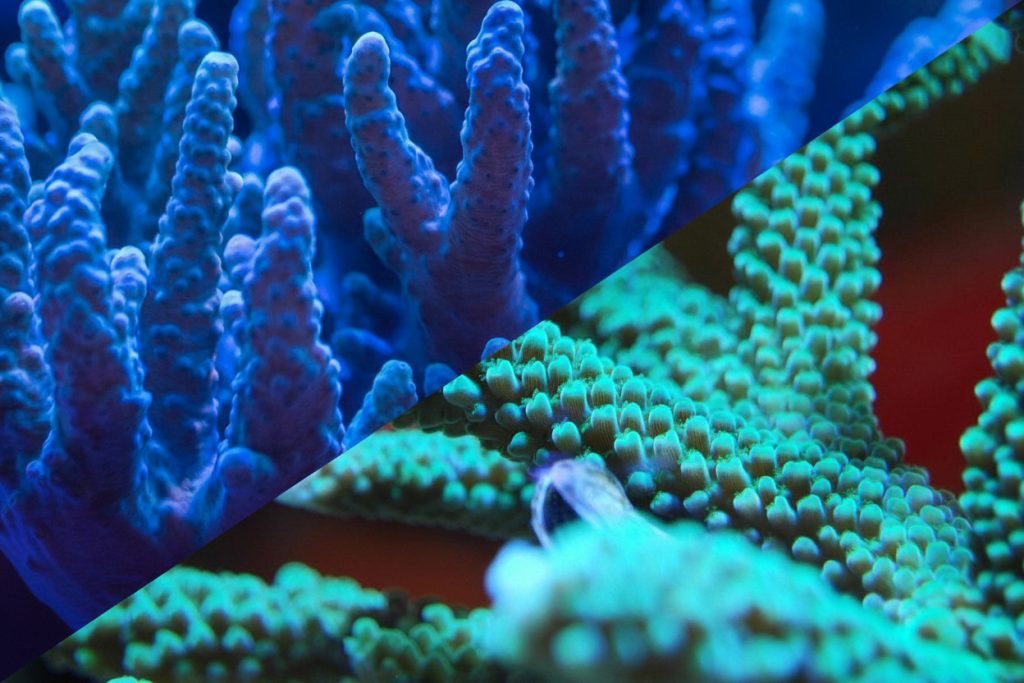
The third source is reflected light. Spectrum matters. A coral may look very different under blue-heavy LEDs than under daylight. This is why hobbyists sometimes confuse viewing color with true health. A coral can glow under actinic light and still be declining. Always judge color alongside growth, tissue fullness, and polyp extension.
Why Corals Change Color
Color changes are normal in reef tanks. A coral moved from one system to another often shifts color. It is adapting to new light, nutrients, and flow. Some changes are positive. Others warn of stress.
Browning usually means increased zooxanthellae density. This often happens with elevated nutrients, low light, or both. Pale color often points to low nutrients, excessive light, or recent stress. Bleaching is more serious. In bleaching, the coral loses much of its zooxanthellae. Tissue can turn white or very pastel.
Color can also improve with maturity. New tanks often struggle with consistency. Mature reefs usually hold steadier nutrient levels and better microbial balance. That helps corals settle in. If your coral is changing color, do not chase one number. Look at the whole system and the recent trend.
Lighting Requirements for Better Coral Color
Lighting is one of the biggest drivers of coral coloration. It affects growth, pigment production, and zooxanthellae density. Strong light can improve color in many SPS corals. It can also bleach corals if increased too fast.
Start by matching the coral type to the right PAR range. Many soft corals and LPS prefer lower to moderate PAR. Many SPS corals thrive in moderate to high PAR. Use a PAR meter if possible. Guessing often leads to problems.
Spectrum matters too. Blue and violet wavelengths enhance fluorescence. Balanced daylight supports a more natural look and often better overall growth. Avoid making huge lighting changes. Increase intensity in small steps over two to three weeks. If a coral lightens quickly, reduce intensity or move it lower. Stable lighting schedules matter as much as raw power. Aim for a consistent photoperiod each day.
Nutrients and Water Chemistry
Many reef keepers lose color by driving nutrients too low. Ultra-low nutrients can create pale, weak-looking corals. This is common in tanks with oversized skimmers, aggressive media use, or heavy carbon dosing. Corals need some nitrate and phosphate.
At the other extreme, excess nutrients can darken corals and slow calcification. Brown tissue often appears when nitrate and phosphate stay elevated for long periods. The best approach is balance. Keep nitrate and phosphate measurable and stable. Avoid rapid swings.
Water chemistry also shapes color. Alkalinity swings are especially damaging. Corals may lose brightness after sudden changes. Calcium and magnesium support skeletal growth and system stability. Salinity and temperature must also remain steady. A colorful reef is usually a stable reef. Test regularly. Dose carefully. Make one change at a time so you can track the result.
Water Flow and Coral Placement
Flow affects more than polyp movement. It helps corals exchange gases, remove waste, and receive food. Poor flow allows detritus to settle on tissue. That can irritate corals and dull their appearance. Strong, random flow often improves tissue health and extension.
Placement matters because light and flow interact. A coral placed high in the tank receives more light. It may also receive stronger current. Some corals color up best in bright, turbulent areas. Others prefer gentler conditions. Euphyllia, for example, often loses tissue quality in harsh direct flow. Acropora usually wants much more movement.
Watch the coral, not just the equipment. If tissue looks retracted, the coral may be receiving too much flow. If debris settles on the colony, flow may be too weak. Small placement changes often improve color over time. Give corals two to four weeks before judging the result.
Feeding and Trace Elements
Feeding can deepen color, especially in LPS and some soft corals. Corals use both light and food. Regular feeding supports tissue thickness and energy reserves. Offer foods that match coral size. Fine plankton foods work for many SPS and filter feeders. Mysis, brine, and reef blends suit many LPS.
Do not overfeed. Extra food raises nutrients fast. Feed small amounts and monitor nitrate and phosphate. Fish waste also helps feed corals. A reef with healthy fish stocking often develops better coral color than a sterile tank.
Trace elements may play a role in pigmentation. Iron, potassium, and iodine are often discussed. However, random dosing is risky. Test when possible. Use regular water changes if you are unsure. Many color problems blamed on trace deficiency are actually caused by unstable alkalinity, poor lighting, or nutrient imbalance. Fix the basics first.
Step-by-Step Plan to Improve Coral Color Safely
- Test your basics first. Check salinity, temperature, alkalinity, calcium, magnesium, nitrate, and phosphate.
- Review recent changes. Think about lighting, dosing, media use, and new equipment.
- Measure PAR if possible. Match coral placement to its light needs.
- Stabilize alkalinity. Keep daily swings minimal.
- Maintain measurable nutrients. Avoid chasing zero nitrate or zero phosphate.
- Improve flow where detritus collects. Aim for varied, indirect movement.
- Feed modestly and consistently. Watch for better tissue fullness over several weeks.
- Adjust one variable at a time. Fast changes often make color worse.
- Take weekly photos. Color shifts are easier to judge with side-by-side images.
- Be patient. Healthy color often returns slowly, not overnight.
This process works because it removes guesswork. Most coloration issues come from imbalance, not a single magic additive.
Common Problems
Why are my corals turning brown?
Brown corals often point to low light, elevated nutrients, or both. Extra zooxanthellae make tissue appear darker. Check nitrate and phosphate first. Then review PAR and placement. Increase light slowly if needed. Do not make abrupt jumps.
Why are my corals pale but not fully white?
Pale corals often result from very low nutrients or excessive light. This is common after aggressive nutrient export. Raise nutrients slowly if they are near zero. Reduce light intensity slightly if the coral recently moved upward or the schedule changed.
Why did a new coral lose its vendor color?
Vendor systems often use different lighting and nutrient levels. Shipping stress also affects pigments. Give new corals time. Acclimate them carefully. Expect some color shift during the first month. Focus on tissue health and polyp extension first.
Can too much blue light hide problems?
Yes. Heavy blue lighting can make corals glow even when tissue is thinning. View corals under a balanced spectrum at times. This gives a more honest picture of condition and growth.
Do coral color supplements work?
Sometimes, but they are not a shortcut. Supplements help only when a real deficiency exists. In many tanks, stable basics matter more than bottled color products.
Compatibility and Tank Mates
Coral color suffers when corals are stressed by neighbors or fish. Chemical warfare from soft corals can affect SPS color and growth. Sweepers from LPS can damage nearby colonies. Crowding also reduces flow and creates shaded areas.
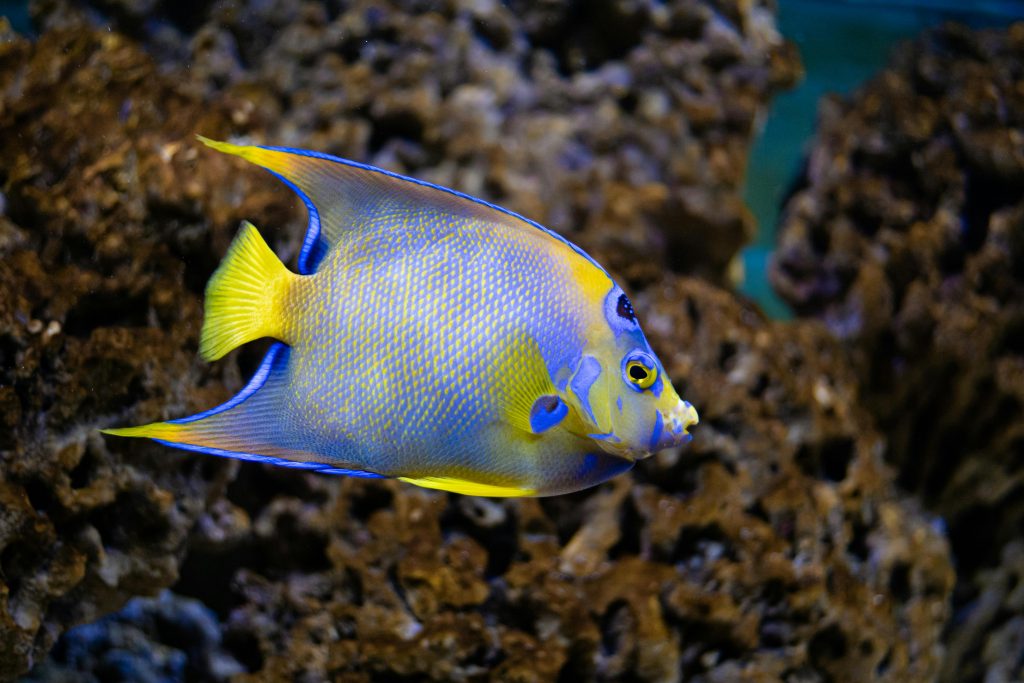
Some fish nip coral tissue. Angelfish are the classic example. Certain crabs and invertebrates can also irritate polyps. Even if damage looks minor, repeated stress often reduces extension and color. Leave space between colonies. Run carbon if your tank contains many soft corals. Observe fish behavior closely after adding new livestock.
A calm, stable reef lets corals devote energy to growth and pigment production. Stress steals that energy quickly.
Frequently Asked Questions
What is the best light color for coral coloration?
A blue-heavy spectrum boosts fluorescence. A balanced spectrum supports a more natural appearance. Good color usually comes from proper PAR and stability, not one exact color setting.
Can high nutrients ever improve coral color?
Slightly higher nutrients can help pale corals recover. Excess nutrients usually lead to browning. The goal is measurable but controlled nitrate and phosphate.
How long does it take for coral color to improve?
Minor changes may appear in two to four weeks. Major recovery often takes several months. Fast improvements are less common than hobbyists expect.
Should I dose amino acids for better color?
Amino acids can help some systems, especially nutrient-poor tanks. Start with a low dose. Watch nutrients and coral response. They are a supplement, not a substitute for stable husbandry.
Why do my corals look better at night?
Many corals extend feeding tentacles at night. Blue evening light also increases fluorescence. Night appearance can be dramatic, but daytime tissue health remains the better indicator.
Final Tips for Long-Term Color
Great coral color comes from consistency. Keep nutrients in range. Keep alkalinity steady. Match light and flow to the coral. Feed thoughtfully. Avoid sudden changes. Most of all, stay patient.
If you want deeper reef knowledge, read our guides on reef tank parameters, reef lighting guide, how to lower nitrate in a reef tank, and coral placement guide. These topics connect directly to coral coloration and long-term reef success.
Was this helpful?
Related Posts
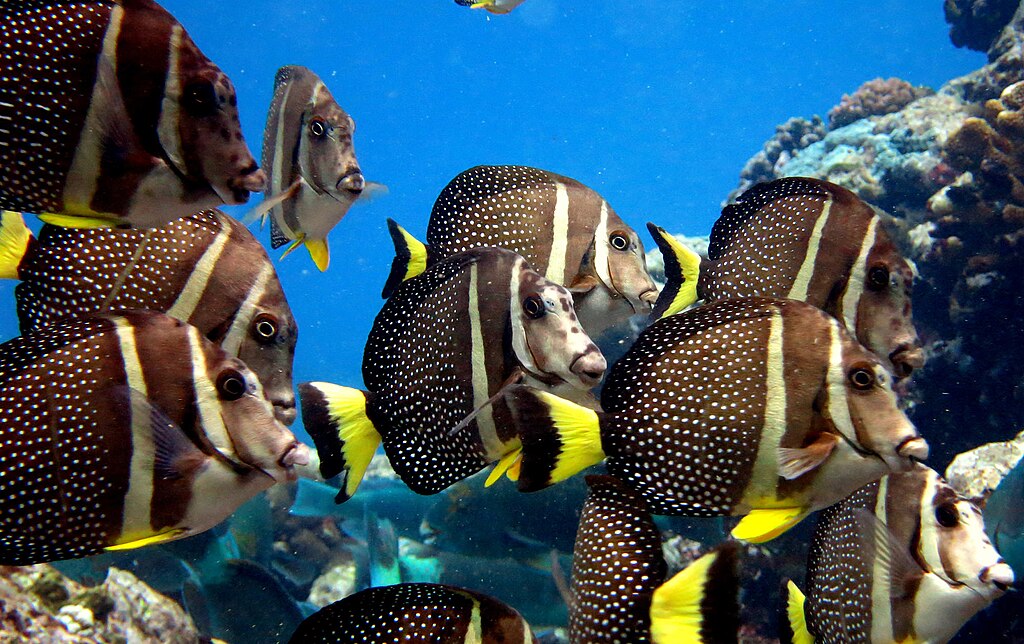
Mustard Guttatus (Acanthurus guttatus)
Mustard guttatus is a large, active tang that needs a 180-gallon tank, strong flow, and daily algae feeding…
 By
By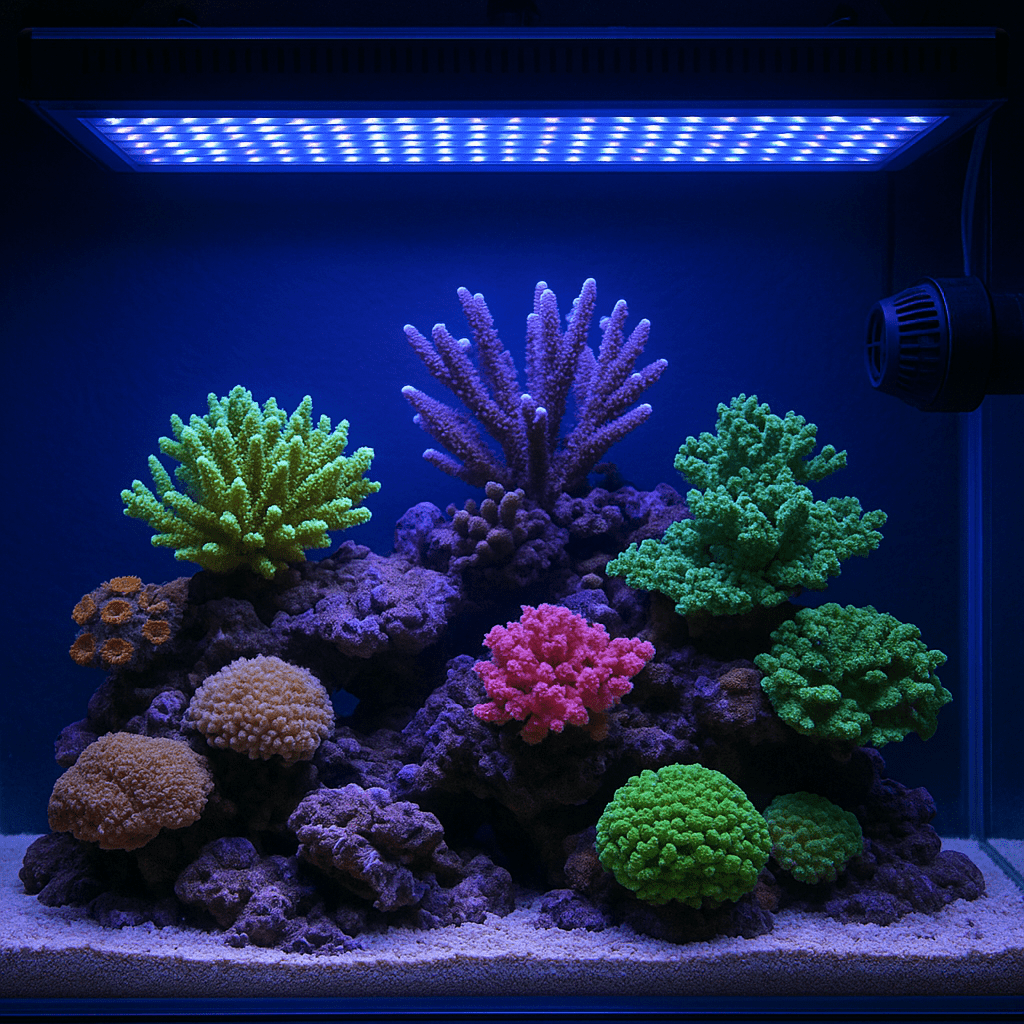
Beginner SPS Coral Guide
Learn which SPS corals are best for beginners, plus setup, lighting, flow, and water tips for long-term success.