

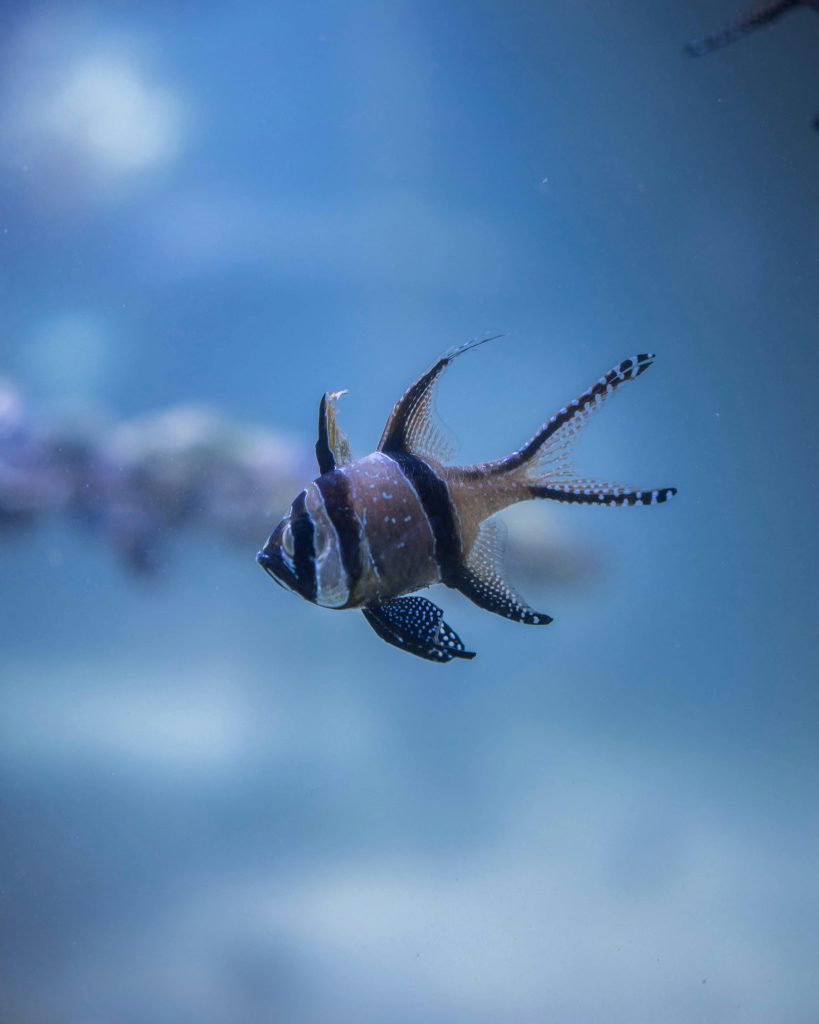
Kaudern’s cardinal is a peaceful reef fish with a striking pattern and unusual breeding behavior. It suits many beginner and intermediate marine tanks. Success depends on stable water, calm tankmates, careful feeding, and smart stocking choices.
Also called the Banggai cardinalfish, Pterapogon kauderni is one of the most recognizable marine fish in the hobby. Its silver body, bold black bars, and white spots make it stand out in almost any reef aquarium. This species is also famous for mouthbrooding, which means the male carries the eggs and young in his mouth. In this guide, you will learn how to care for Kaudern’s cardinal, how to set up the right tank, what to feed, how to avoid common mistakes, and how to breed them in captivity. If you want a calm, reef-safe fish with real personality, this species deserves a closer look.
Quick Reference Care Table
| Common name | Kaudern’s cardinal / Banggai cardinalfish |
| Scientific name | Pterapogon kauderni |
| Care level | Easy to moderate |
| Temperament | Peaceful, but territorial with its own kind |
| Reef safe | Yes |
| Adult size | About 3 inches |
| Minimum tank size | 30 gallons for one or a bonded pair |
| Diet | Carnivore |
| Temperature | 76 to 80°F |
| Salinity | 1.024 to 1.026 |
| pH | 8.1 to 8.4 |
| Nitrate | Preferably under 15 ppm |
| Flow | Low to moderate |
| Lighting | No special need beyond reef tank lighting |
| Breeding | Male mouthbrooder |
Natural Habitat
Kaudern’s cardinal comes from a very limited natural range. It is native to the Banggai Islands of Indonesia. That small range made the species famous in conservation discussions. Wild populations faced pressure from collection and habitat issues for many years.
In nature, these fish live in calm, shallow waters. They often stay close to sea urchins, anemones, branching corals, and seagrass beds. Juveniles use these structures for shelter from predators. Adults usually hover in small groups near cover. They do not roam long distances like tangs or wrasses.
This natural behavior explains much of their aquarium care. They prefer defined territory and visible shelter. They also feel more secure when they can hover near rockwork or branching structures. Aquacultured specimens are common today, and they are the best choice. Captive-bred fish adapt better to prepared foods and aquarium life. They also reduce pressure on wild populations.
Aquarium Setup
A 30-gallon tank works for a single fish or a bonded pair. Larger tanks are better if you keep a mixed reef community. Extra space helps reduce stress and aggression. It also gives timid fish room to avoid stronger feeders.
Build an aquascape with open water and sheltered zones. Kaudern’s cardinals like to hover in place. They do not need huge swimming lanes. Still, they should have space away from active fish. Branching rockwork, artificial urchin structures, or coral skeleton shapes can help them feel secure.
Use stable reef parameters at all times. Sudden salinity swings can stress them badly. Keep ammonia and nitrite at zero. Maintain low nitrate and good oxygen levels. A covered tank is wise, even though they are not famous jumpers. Quarantine new arrivals before adding them to the display. This lowers the risk of introducing parasites or bacterial infections. If you need help planning a system, see our guides on reef tank setup and marine fish quarantine.
Lighting Requirements
Kaudern’s cardinal has no demanding lighting needs of its own. It adapts well to most reef aquarium lighting. The fish does not rely on intense light for feeding or behavior. In fact, many individuals seem calmer under moderate lighting or in tanks with shaded areas.
If you keep them in a coral reef system, set lighting based on coral needs first. The cardinal will usually adjust without issue. Problems can occur in very bright, exposed aquascapes with no cover. In those tanks, the fish may stay hidden or show stress. Add caves, overhangs, branching coral shapes, or calmer corners to break up the exposure.
A regular day and night cycle is important. Sudden light changes can startle them. Ramp-up and ramp-down settings help if your fixture supports them. This species often looks best in balanced reef lighting. Its white spots and silver body reflect blue and white spectrum beautifully.
Water Flow
Low to moderate flow is ideal for Kaudern’s cardinal. In the wild, they live in sheltered zones rather than surge-heavy reef crests. They are hoverers, not strong current swimmers. Constant blasting flow can make feeding harder and increase stress.
That does not mean stagnant water is acceptable. Good circulation still matters for oxygen exchange and waste export. The goal is varied flow. Create calmer pockets behind rockwork or branching structures. Let the fish choose where it feels comfortable. In a mixed reef, this is easy to achieve by aiming powerheads away from their preferred resting area.
Watch the fish during feeding time. If food blows past too fast, flow may be too strong. If detritus settles heavily around their area, flow may be too weak. Fine-tuning helps both fish health and tank cleanliness. For broader circulation tips, our reef tank flow guide can help.
Feeding
Kaudern’s cardinal is a carnivore. It needs meaty foods and regular feeding. Most captive-bred fish accept frozen foods quickly. Good staples include mysis shrimp, finely chopped seafood, enriched brine shrimp, copepods, and quality marine pellets. Variety matters. It improves nutrition and encourages a stronger feeding response.
Feed small portions one to two times daily. These fish are not aggressive feeders. Fast tankmates can outcompete them easily. During feeding, watch to make sure each cardinal actually eats. A fish that hovers but never grabs food may slowly waste away in a busy community tank.
New arrivals can be shy. Start with frozen mysis or enriched live foods if needed. Once settled, many learn to take pellets. Avoid relying on brine shrimp alone. It is useful for appetite, but not ideal as a sole diet. If your fish looks thin behind the head or along the belly, increase feeding frequency and reduce competition. Our best food for reef fish guide covers useful options.
Compatibility
Kaudern’s cardinal is reef safe. It does not bother corals, clams, or most invertebrates. That makes it a strong choice for peaceful reef tanks. It usually mixes well with clownfish, gobies, blennies, firefish, smaller wrasses, and many reef-safe inverts.
The main caution involves its own species. Groups can work when fish are very young and the tank is large. As they mature, aggression often increases. Dominant fish may harass weaker ones badly. In smaller tanks, a single fish or a true bonded pair is the safest approach. Randomly mixing adults often fails.
Avoid housing them with aggressive feeders or bullies. Large dottybacks, some hawkfish, aggressive damsels, and pushy wrasses can intimidate them. Predatory fish may also see them as food. If you want a calm community, choose tankmates with similar energy. For stocking ideas, visit our reef-safe fish guide.
Step-by-Step Guide to Adding Kaudern’s Cardinal
- Choose a captive-bred specimen whenever possible.
- Look for full body weight and clear eyes.
- Avoid fish with clamped fins or rapid breathing.
- Quarantine the fish in a separate tank.
- Observe feeding response for at least two weeks.
- Match salinity and temperature carefully before transfer.
- Add the fish with lights dimmed.
- Provide a sheltered area near rockwork.
- Offer frozen mysis within the first day.
- Watch for bullying from established tankmates.
This process prevents many common losses. Most problems start with stress, poor acclimation, or competition. Slow and careful introduction gives this species the best chance to settle in well.
Propagation and Breeding
How Kaudern’s Cardinals Breed
This species is one of the easier marine fish to breed in home aquariums. The pair forms a bond, and the female passes eggs to the male. The male then holds the eggs and developing young in his mouth. This is called paternal mouthbrooding.
During this period, the male often stops eating. Brooding can last around three weeks. Near release time, you may see a swollen jaw and reduced activity. The young are released as fully formed miniature fish. They are much larger than many marine larvae, which makes home rearing more practical.
Breeding Setup Tips
Keep a healthy bonded pair in a peaceful tank. Feed rich foods often. Stable water quality is essential. Many breeders move the male or the fry to a separate rearing tank near release. This prevents predation and improves survival. Newly released juveniles can usually take enriched baby brine shrimp, copepods, and finely sized prepared foods.
Do not try to force pairs by crowding adults together. That often causes stress and fighting. True pairs show tolerance and stay close together. If breeding interests you, this fish is one of the best reef-safe species to learn with.
Common Problems
Why is my Kaudern’s cardinal not eating?
The most common causes are stress, recent shipping, strong flow, or aggressive tankmates. Start by checking whether the fish is being outcompeted. Offer frozen mysis in a calm area. Reduce flow during feeding if needed. Quarantine fish often resume feeding faster than fish placed directly into busy displays.
Why is my cardinal hiding all the time?
Constant hiding usually means the fish feels exposed or threatened. Add more structure and shaded zones. Review tankmate behavior. Bright lighting with no cover can also cause this. In some cases, poor acclimation or disease is involved, so check breathing rate and body condition.
Why are my Banggai cardinals fighting?
Same-species aggression is common as fish mature. A pair may work well, but extra fish often become targets. Remove bullied individuals quickly. Torn fins, cornering, and refusal to feed are warning signs. In smaller tanks, keep one fish or a proven pair only.
Why is my fish breathing fast?
Rapid breathing can point to ammonia, low oxygen, disease, or shipping stress. Test water immediately. Check temperature and salinity. Increase aeration if needed. If water quality is good, consider parasites or bacterial issues and move the fish to quarantine for closer observation.
Frequently Asked Questions
Is Kaudern’s cardinal reef safe?
Yes. It is considered reef safe and does not nip corals. It also ignores most invertebrates.
How many Kaudern’s cardinals can I keep together?
In most home tanks, keep one fish or a bonded pair. Larger groups often become aggressive over time.
What is the minimum tank size for a Banggai cardinalfish?
A 30-gallon tank is a practical minimum for one fish or a pair. Larger tanks offer better long-term stability.
Are captive-bred Kaudern’s cardinals better?
Yes. Captive-bred fish usually eat prepared foods better and adapt faster. They are also the more responsible choice.
Can Kaudern’s cardinal breed in a reef tank?
Yes. Many hobbyists breed them in reef aquariums. Raising the fry is easier if you move them to a separate setup.
Kaudern’s cardinal is popular for good reason. It is beautiful, peaceful, reef safe, and fascinating to breed. Its care is straightforward once you understand its habits. Give it stable water, calm tankmates, meaty foods, and secure shelter. Do that, and this elegant fish can thrive for years in a home reef.
Was this helpful?
Related Posts
Reef Tank Plumbing Basics
Learn reef tank plumbing basics, including drains, return pumps, sump flow, noise control, and flood prevention for a…
 By
ByOur Reef Emergency Plan
A reef emergency plan helps you act fast during outages, leaks, and water quality crashes. Here is the…
[favorite_button]
My Bookmarks:
To see full list click here
[user_favorites user_id="" include_links="true" site_id="" post_types="" include_thumbnails="true" thumbnail_size="thumbnail" include_excerpt="false"]