

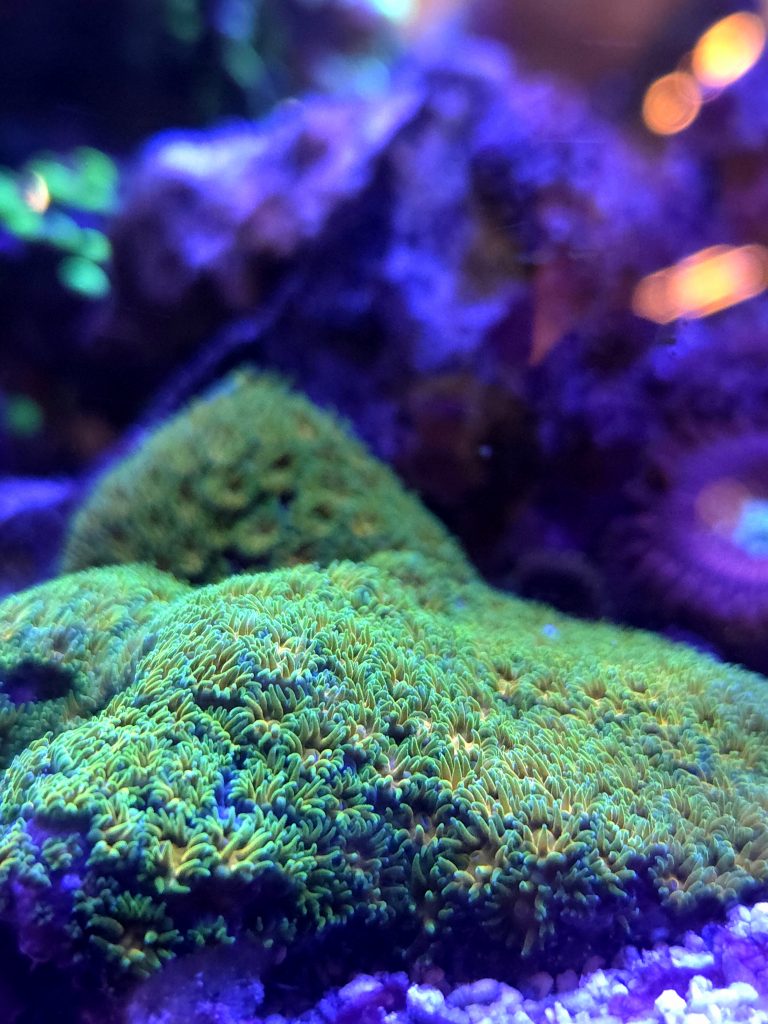
Leptastrea corals are hardy, colorful encrusting LPS corals that suit many reef tanks. They tolerate moderate light, steady flow, and stable water chemistry. Most hobbyists find them easy to keep once placement, nutrients, and aggression are managed well.
These corals are often overlooked beside flashier SPS and acans. That is a mistake. Leptastrea offers excellent color, strong growth, and beginner-friendly care. It can form bright orange, green, red, or multicolor crusts over rockwork. In this guide, you will learn how to keep Leptastrea healthy, where to place it, how to feed it, and how to fix common problems. We will also cover propagation, compatibility, and the water conditions that support long-term success.
Quick Reference Care Table
| Common Name | Leptastrea coral |
| Scientific Group | Leptastrea spp. |
| Care Level | Easy to moderate |
| Growth Form | Encrusting |
| Temperament | Mostly peaceful, but can sting nearby corals |
| Lighting | Low to moderate |
| Flow | Low to moderate, indirect |
| Placement | Lower to middle rockwork |
| Diet | Photosynthesis plus occasional fine meaty foods |
| Temperature | 76–79°F |
| Salinity | 1.025–1.026 specific gravity |
| Alkalinity | 8–9 dKH |
| Calcium | 400–450 ppm |
| Magnesium | 1250–1400 ppm |
| Nitrate | 2–15 ppm |
| Phosphate | 0.03–0.10 ppm |
Use this table as a starting point. Stable conditions matter more than chasing perfect numbers. Leptastrea usually adapts well if changes happen slowly.
What Is Leptastrea Coral?
Leptastrea is an encrusting stony coral with small, distinct polyps. It belongs to the large polyp stony coral group in the hobby, though its polyps stay compact. The colony spreads as a crust over rock, plugs, and reef structure. Each corallite has a defined star-like look, which gives the coral nice texture.
Many reef keepers choose Leptastrea for color contrast. Bright eyes and vivid tissue stand out under blue reef lighting. It also works well in mixed reefs because it stays low and does not demand intense light. Compared with some LPS corals, it is less fussy about feeding. Compared with SPS, it is usually more forgiving. That mix of beauty and durability makes it a strong choice for beginners and intermediate hobbyists alike.
If you enjoy encrusting corals, you may also like Montipora coral care and Favia coral care.
Natural Habitat
Leptastrea species occur across the Indo-Pacific region. They are found on reef slopes, protected lagoons, and shallow reef areas. In nature, they often grow on hard substrate where they can spread across stable surfaces. Some colonies live in brighter zones. Others settle in shaded spots or lower light areas.
This natural range explains their flexibility in aquariums. They do not always need intense light. They often handle moderate nutrient levels better than delicate SPS corals. Water movement on natural reefs is steady but not always blasting. That is why indirect, moderate flow works well in captivity. Their encrusting habit also helps them colonize rock faces and reef ledges. In the home aquarium, try to mimic that setting. Give them a secure surface, stable chemistry, and room to spread without touching prized neighbors.
Aquarium Setup
Leptastrea can live in tanks as small as 10 gallons, but larger systems are easier to keep stable. A 20-gallon or larger reef gives you more room for coral placement and chemical stability. Stability is the real goal. Sudden swings in salinity, alkalinity, or temperature can stress this coral.
Place Leptastrea on rockwork where it can encrust outward. Lower to middle placement is often best. Avoid tight spots near aggressive corals. It may lose battles against stronger stinging species. At the same time, it can slowly irritate soft tissue neighbors if it grows into them. Leave a buffer zone around the colony. Many hobbyists mount frags on small islands to control spread. That also makes future fragging easier.
Use mature live rock or biologically stable dry rock. Keep filtration simple and consistent. Good options include a protein skimmer, filter floss, activated carbon, and regular water changes. For more system planning, see reef tank setup guide.
Lighting Requirements
Leptastrea usually prefers low to moderate light. A PAR range of about 50 to 150 works for most specimens. Some hobbyists keep it higher, but sudden exposure to strong light can bleach tissue. Start lower and acclimate slowly. This is especially important if the coral came from a dim frag tank.
Signs of too much light include faded color, retracted polyps, and tissue paling. Signs of too little light include dull color and very slow growth. Because Leptastrea comes in many color morphs, watch the coral itself rather than following one exact PAR number. Blue-heavy reef lighting often makes fluorescent pigments pop nicely. Still, growth depends on balanced spectrum and stability, not just visual glow.
If you upgrade lights, use a ramp schedule or screen acclimation. Increase intensity over one to three weeks. Sudden changes cause stress more often than modestly imperfect light levels.
Water Flow
Leptastrea likes low to moderate, indirect flow. The goal is gentle movement across the colony. This helps remove waste and keeps detritus from settling in the corallites. It also supports gas exchange and coral health.
Avoid direct, harsh flow from a powerhead. Strong laminar flow can keep polyps closed and cause tissue recession over time. On the other hand, stagnant areas can trap debris and promote algae growth around the colony edge. A random, alternating pattern works best. If you see detritus collecting on the surface, increase flow slightly or adjust the angle of nearby pumps.
Observe the coral after any adjustment. Healthy colonies show modest polyp extension, firm tissue, and clean surfaces. Flow should support the coral, not batter it.
Water Chemistry and Stability
Like other stony corals, Leptastrea builds a calcium carbonate skeleton. It needs stable alkalinity, calcium, and magnesium. Aim for alkalinity between 8 and 9 dKH. Keep calcium around 400 to 450 ppm. Maintain magnesium between 1250 and 1400 ppm.
Do not chase every small test result. Rapid corrections often cause more harm than a slightly off number. Nitrate and phosphate should not be bottomed out. Leptastrea often colors up better with some nutrients present. A practical target is 2 to 15 ppm nitrate and 0.03 to 0.10 ppm phosphate. Zero nutrients can lead to pale tissue and poor growth. Excess nutrients can fuel nuisance algae that overgrow the colony edge.
Test alkalinity regularly. In small tanks, it can drift faster than expected. For more chemistry basics, read reef tank water parameters.
Feeding
Leptastrea gets much of its energy from light through its zooxanthellae. It can still benefit from occasional feeding. Fine particulate foods work best. Try reef roids, powdered plankton blends, baby brine, or very fine mysis fragments. Feed once or twice weekly for steady growth.
Target feeding can help, but it is not always necessary. Turn off strong flow for a few minutes. Gently broadcast a small amount near the colony. Watch for feeding response. Some colonies extend more at night. If so, feed after lights dim. Avoid overfeeding. Extra food can raise nutrients and encourage algae. In mixed reefs, fish and invertebrates may steal food before the coral captures it. That is normal.
A healthy Leptastrea can grow well without direct feeding if lighting and chemistry are stable. Feeding is a boost, not a substitute for good husbandry.
Compatibility
Leptastrea is generally reef safe with fish and most invertebrates. It does not bother mobile tank mates. The main issue is coral-to-coral warfare. Leptastrea can encrust into nearby corals and compete for space. It may also lose tissue if placed too close to aggressive LPS with long sweeper tentacles.
Good neighbors include many zoanthids, mushrooms with space between them, and peaceful encrusting corals. Use caution near euphyllia, galaxea, chalices, and favias. Those can sting at night. Also protect Leptastrea from nuisance crabs or fish that pick at coral tissue. Most common reef fish ignore it, but some angelfish and large butterflies may nip.
Plan for future growth, not just current frag size. A one-inch frag can become a spreading patch over time. Giving it room now prevents later problems.
Step-by-Step Placement Guide
1. Inspect the frag. Check for pests, algae, and damaged tissue before adding it.
2. Dip if needed. Use a coral dip according to label directions. Rinse with tank water after dipping.
3. Start low. Place the frag in lower light with indirect flow for acclimation.
4. Watch for one week. Look for stable color, clean tissue, and some polyp extension.
5. Adjust slowly. Move higher only if the coral seems too shaded or loses color from low light.
6. Leave space. Keep several inches between Leptastrea and more aggressive corals.
7. Maintain stability. Avoid major changes in light, flow, or alkalinity during the first month.
Propagation and Fragging
How Leptastrea Grows
Leptastrea spreads by encrusting over nearby hard surfaces. This makes it one of the easier stony corals to frag. Healthy colonies often form clear growth margins along the edge.
Fragging Method
Use bone cutters, a band saw, or a rotary tool if the frag is on a thick plug or rock. Cut through the base, not through healthy tissue if possible. Aim to give each frag a section with several intact corallites. Wear eye protection. Coral skeleton fragments can fly.
Aftercare
Place fresh frags in low to moderate light and gentle flow. Dip only if needed after cutting. Watch for brown jelly, tissue recession, or algae on exposed skeleton. Most frags heal well when water quality stays stable.
Common Problems
Why Is My Leptastrea Turning Pale?
Paling usually points to excess light, sudden chemistry shifts, or nutrients that are too low. Check PAR, alkalinity stability, nitrate, and phosphate. Move the coral lower if lighting seems intense. Raise nutrients carefully if they are unreadable.
Why Is Tissue Receding?
Tissue recession often follows alkalinity swings, pest damage, aggression, or direct flow. Test alkalinity first. Inspect for vermetid snails, algae, or hidden stings from nearby corals. Improve flow pattern if one side is getting blasted.
Why Is Algae Growing on the Edges?
Algae on the growth edge usually means the coral is stressed or detritus is collecting. Increase indirect flow slightly. Remove algae by hand if possible. Review nutrient export and avoid overfeeding. Healthy tissue usually outcompetes algae when conditions improve.
Why Is It Not Growing?
Slow growth can result from low alkalinity consumption, weak light, or lack of available nutrients. Some morphs also grow slower than others. Feed lightly once or twice weekly. Keep parameters stable for several months before judging growth rate.
Frequently Asked Questions
Is Leptastrea a beginner coral?
Yes. It is often a good beginner coral. It tolerates moderate conditions and does not need extreme lighting.
Is Leptastrea an SPS or LPS coral?
In the hobby, it is usually treated as an LPS coral. Its care is closer to hardy encrusting LPS than demanding SPS species.
How fast does Leptastrea grow?
Growth is usually moderate. Stable alkalinity, moderate light, and occasional feeding can improve spread over time.
Can Leptastrea live in low light?
Yes. Many colonies do well in low to moderate light. Very dim conditions may reduce color and growth.
Does Leptastrea need target feeding?
No. It can thrive without target feeding. Still, occasional fine foods may improve growth and coloration.
Final Thoughts
Leptastrea coral is one of the better hidden gems in reef keeping. It is colorful, adaptable, and rewarding to grow. Give it stable water, moderate conditions, and enough space to encrust. Avoid sudden changes. Watch for aggression and algae at the colony edge. If you do those basics well, Leptastrea can become a bright, durable part of your reef for years.
Was this helpful?
Related Posts
Our Reef Emergency Plan
A reef emergency plan helps you act fast during outages, leaks, and water quality crashes. Here is the…
 By
ByReef Alkalinity and Calcium Guide
Learn the ideal reef alkalinity and calcium ranges, how they interact, and how to test, dose, and troubleshoot…
[favorite_button]
My Bookmarks:
To see full list click here
[user_favorites user_id="" include_links="true" site_id="" post_types="" include_thumbnails="true" thumbnail_size="thumbnail" include_excerpt="false"]