

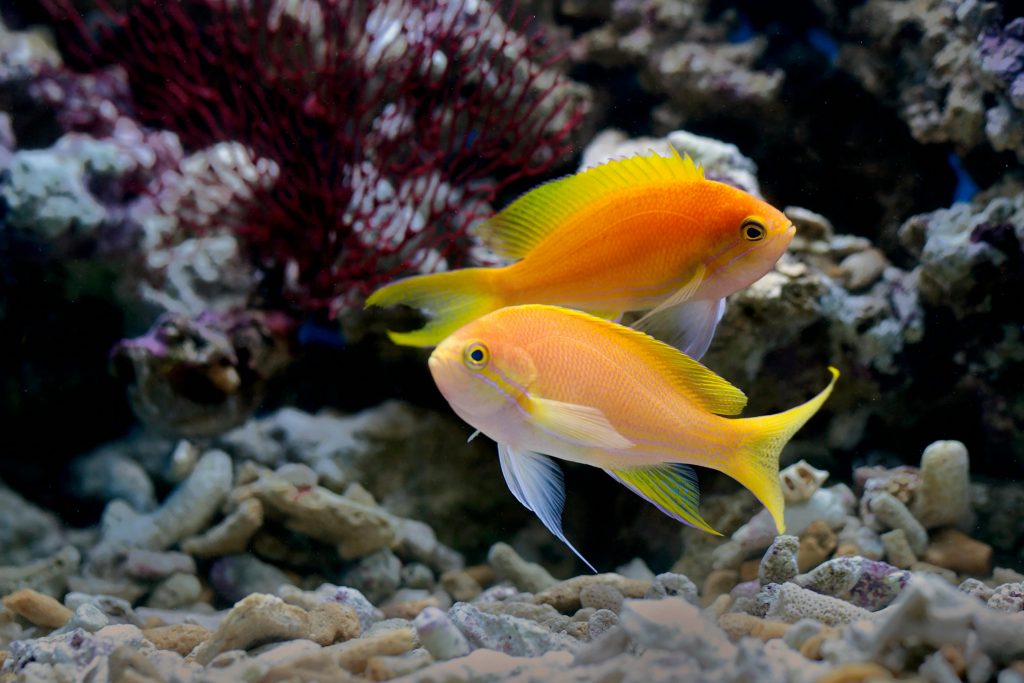
Lyretail Anthias are active, colorful reef fish that thrive in groups, strong flow, and stable water. They suit established tanks best. Success depends on frequent feeding, smart stocking, and careful social management.
Few reef fish add movement like a group of Lyretail Anthias. Their orange bodies, constant swimming, and social behavior make them a favorite in mixed reefs. They are also one of the more forgiving anthias species. That does not make them beginner-proof. These fish still need excellent water quality, regular feeding, and enough space to form a stable hierarchy. In this guide, you will learn how to care for Pseudanthias squamipinnis, choose the right group size, feed them properly, avoid aggression, and troubleshoot common problems in the home reef aquarium.
Quick Reference Care Table
| Common name | Lyretail Anthias |
| Scientific name | Pseudanthias squamipinnis |
| Care level | Moderate |
| Temperament | Peaceful to semi-aggressive within groups |
| Adult size | 4 to 5 inches |
| Minimum tank size | 70 gallons for a small group |
| Diet | Planktivore; small meaty foods |
| Reef safe | Yes |
| Temperature | 76 to 79°F |
| Salinity | 1.025 to 1.026 |
| pH | 8.1 to 8.4 |
| Flow | Moderate to strong |
| Lighting | Not demanding; reef lighting is fine |
| Best kept as | One male with several females |
Lyretail Anthias are often recommended as a first anthias species. That is mostly true. They adapt better than many deepwater anthias. They also accept prepared foods more readily. Even so, they still need more attention than many common reef fish.
Natural Habitat
Lyretail Anthias occur across the Indo-Pacific and Red Sea. In nature, they live above coral reefs and outer reef slopes. You will usually find them in large shoals. They hover in the water column and pick zooplankton from passing currents.
This natural behavior explains much of their care. They are open-water swimmers. They want room to move. They also expect food to arrive often in small amounts. On the reef, currents bring constant plankton. In aquariums, that means one large feeding per day is rarely enough.
Wild groups often contain one dominant male and many females. If the male disappears, a dominant female may transition into a male. This matters in captivity. Social structure is not random. It affects color, aggression, and long-term success.
Appearance and Behavior
Females are bright orange to peach with a graceful lyre-shaped tail. Males are more vivid. They often show stronger magenta or purple tones on the face. Their dorsal fin is more elongated. Mature males also display more boldly during social interactions.
These fish spend much of the day in midwater. They rarely perch or hide for long unless stressed. Healthy specimens stay visible and alert. They react quickly at feeding time. They also maintain awareness of tankmates and hierarchy.
Within a group, some chasing is normal. A dominant fish will establish order. Brief displays are expected. Constant harassment is not. A bullied anthias may hide, stop eating, or develop a pinched belly. That is a warning sign that the group balance is failing.
Aquarium Setup
A 70-gallon tank is the practical minimum for a small group. Bigger is better. A 90-gallon or 120-gallon tank gives much better results. These fish need horizontal swimming room. They also benefit from mature rockwork and stable parameters.
Build an aquascape with open water in front and shelter behind. Use caves, arches, and overhangs. Anthias like quick retreat paths. They do not want a wall of rock from end to end. Leave broad lanes for swimming and social displays.
A tight lid is essential. Lyretail Anthias can jump when startled. This risk increases during acclimation or social disputes. Keep ammonia and nitrate under control with strong filtration and a good skimmer. Frequent feeding adds nutrients fast. Plan for that from the start. Helpful reads include how to cycle a reef tank and reef tank parameter guide.
Lighting Requirements
Lyretail Anthias do not have strict lighting needs. They are fish, not photosynthetic corals. Standard reef lighting works well. The main concern is intensity during introduction. New anthias can be shy under very bright lights, especially in sparse tanks.
If your tank runs high PAR for SPS corals, provide shaded zones and overhangs. This gives new fish a place to settle. Once established, they usually adapt to bright reef systems without issue. Their color often looks excellent under blue-heavy reef lighting.
A stable day-night cycle helps reduce stress. Sudden light changes can trigger darting and jumping. If possible, use ramping LED schedules. That creates a gentler transition at dawn and dusk. It is a small detail, but it helps active planktivores feel secure.
Water Flow
Moderate to strong, varied flow suits this species best. In nature, they hover in current and feed from the water column. They enjoy movement, but not a nonstop blast from one powerhead. Random, turbulent flow is ideal.
Good flow also keeps oxygen levels high. That matters because anthias are active swimmers with fast metabolisms. Low oxygen can lead to heavy breathing and poor appetite. This is especially important in warm tanks or tanks with dense fish stocking.
Watch how the fish use the tank. Healthy Lyretail Anthias will swim into and around current, then retreat to calmer spots. If they constantly hug corners or struggle to hold position, the flow pattern may need adjustment.
Feeding
Feeding is the biggest challenge with Lyretail Anthias. They are planktivores and do best with several small meals daily. Aim for two to four feedings if possible. Small portions are better than one heavy feeding. Their bodies are built for frequent intake.
Good foods include frozen mysis, enriched brine shrimp, calanus, copepods, finely chopped seafood, and quality small pellets. Many hobbyists have success with tiny sinking or slow-sinking pellets once the fish settle in. Variety matters. It improves nutrition and feeding response.
Watch body condition closely. A healthy anthias looks full through the belly and back. A thin fish develops a pinched abdomen and sharper body lines. That usually means underfeeding, bullying, internal parasites, or poor acclimation. If you travel often, consider an auto feeder for pellets between frozen meals. See also best foods for reef fish.
Compatibility
Lyretail Anthias are reef safe. They do not bother corals, clams, or ornamental invertebrates. That makes them excellent for mixed reefs, SPS tanks, and coral-heavy displays. Their constant movement also adds life without nipping polyps.
Choose tankmates carefully. They do best with peaceful to moderately assertive fish. Good companions include wrasses, clownfish, gobies, blennies, fairy wrasses, flasher wrasses, and many tangs in larger tanks. Avoid very aggressive fish that dominate feeding time.
Use caution with dottybacks, large hawkfish, aggressive damsels, and pushy angelfish. These can stress anthias or outcompete them for food. Within their own species, keep one male with several females. In smaller tanks, multiple males usually create conflict. If buying all females, one may transition over time.
Step-by-Step Acclimation Guide
1. Quarantine first. Anthias often arrive stressed. Quarantine helps you monitor feeding and disease. A bare-bottom tank with PVC, flow, and stable salinity works well.
2. Offer food early. Try small frozen foods within the first day. Eating quickly is a very good sign. Refusal for several days needs attention.
3. Observe social behavior. If keeping a group, watch for one fish taking all the abuse. Rearranging PVC or separating bullies may help.
4. Match salinity carefully. Anthias can react poorly to sudden changes. Slow acclimation is safer when source water differs greatly.
5. Introduce to the display with lights dimmed. This reduces panic and aggression. Feed the tank shortly after release.
6. Monitor for jumping. Keep every opening covered. New anthias can launch through very small gaps.
For disease prevention basics, read reef fish quarantine guide.
Sex Change and Group Management
Lyretail Anthias are protogynous hermaphrodites. That means females can become males. In the aquarium, this usually happens when no male is present. The dominant female changes over time and begins showing male coloration and behavior.
This is fascinating, but it can create problems. If two fish begin transitioning in a small tank, aggression may rise sharply. Chasing increases. Feeding confidence drops. One fish may become stressed enough to decline.
The safest group is one male with three to seven females, depending on tank size. In smaller systems, even one male and two females can work. Add the group together when possible. Adding a lone female later can trigger heavy aggression from an established male.
Common Problems
Why is my Lyretail Anthias not eating?
The most common causes are shipping stress, bullying, poor acclimation, or unsuitable food size. Start with small frozen foods that drift naturally in flow. Reduce aggression. Check breathing rate. A fish that refuses food and breathes heavily may have gill issues or parasites.
Why is my anthias getting skinny?
Weight loss usually points to underfeeding or competition. Anthias burn energy quickly. Increase feeding frequency and verify the fish actually swallows food. Internal parasites are another possibility, especially in newly imported fish.
Why is there aggression in my group?
Some chasing is normal. Constant attacks are not. The group may be too small, the tank too cramped, or more than one fish may be transitioning to male. Adding more females in a suitable tank can spread aggression. In smaller tanks, removing the bully is often the better fix.
Why is my anthias hiding all the time?
Hiding usually means stress. Check for aggressive tankmates, excessive light exposure without cover, poor water quality, or low oxygen. Anthias should be visible and active most of the day once settled.
Why did my anthias jump?
Jumping often follows sudden fright, chasing, or abrupt lighting changes. Every anthias tank needs a secure lid. Even calm fish can jump during maintenance or feeding commotion.
Frequently Asked Questions
Are Lyretail Anthias good for beginners?
They are one of the better anthias for newer reef keepers. Still, they are best for beginners with stable tanks and a solid feeding routine.
How many Lyretail Anthias should I keep?
Keep one male with several females. In most home aquariums, three to five fish is a practical group size if the tank is large enough.
Can Lyretail Anthias live alone?
Yes, a single specimen can live alone. They usually look and behave better in a proper group, though tank size and stocking must support it.
Do Lyretail Anthias need an automatic feeder?
Not always, but it helps. An auto feeder can provide small pellet meals during the day, especially in busy households.
Are Lyretail Anthias reef safe with shrimp?
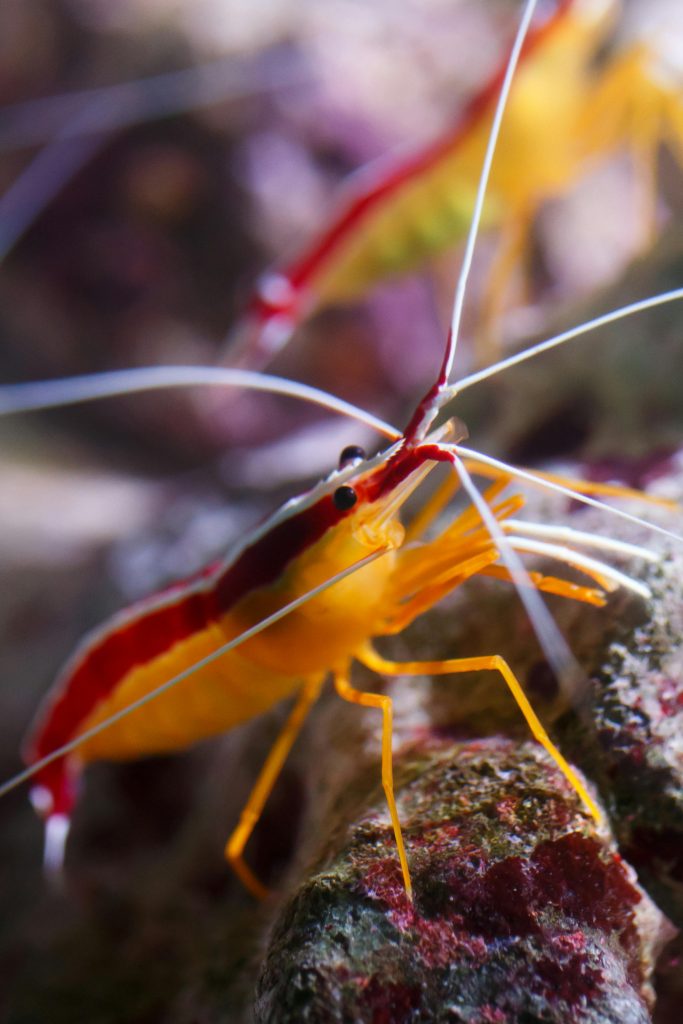
Yes. They are generally safe with cleaner shrimp, peppermint shrimp, snails, and other common reef invertebrates.
Final Thoughts
Lyretail Anthias are beautiful, reef safe, and full of motion. They are also demanding in specific ways. Feed them often. Give them swimming space. Keep their social structure stable. Maintain strong oxygenation and clean water. Do those things well, and a group of Lyretail Anthias can become one of the most rewarding displays in a reef tank.
Was this helpful?
Related Posts
Gold Spotted Rabbitfish (Siganus Punctatus)
Gold Spotted Rabbitfish care includes large tanks, heavy algae feeding, and caution with corals. Learn tank size, diet,…
 By
By
Sharknose Goby (Elacatinus evelynae)
Sharknose Goby care is simple in stable reef tanks. Learn feeding, tank setup, compatibility, and common problems for…
[favorite_button]
My Bookmarks:
To see full list click here
[user_favorites user_id="" include_links="true" site_id="" post_types="" include_thumbnails="true" thumbnail_size="thumbnail" include_excerpt="false"]