Keeping a vibrant, thriving reef tank is one of the most rewarding parts of the saltwater aquarium hobby. Maintaining reef tank health means staying consistent with water quality, equipment care, and the daily habits that keep corals growing and fish stress-free. With a simple routine and a bit of observation, you can prevent most problems long before they threaten your reef.
Water Quality: The Foundation of a Healthy Reef
Stable, clean water is the single most important factor in reef tank health. Even small swings in parameters can stress corals and lead to algae blooms or disease. Aim for consistency over perfection, and test regularly.
Key Parameters to Monitor
- Salinity: 1.024–1.026 specific gravity, checked with a refractometer.
- Temperature: 77–79°F (25–26°C) with a reliable heater and, if needed, a fan or chiller.
- Alkalinity: 8–9.5 dKH for most mixed reefs.
- Calcium & Magnesium: Calcium 400–450 ppm, Magnesium 1250–1350 ppm.
- Nitrate & Phosphate: Keep measurable but low; avoid both zero and very high levels.
Build a simple weekly routine around testing and water changes. If you’re still dialing in your schedule, see our guide on creating a saltwater tank maintenance schedule for step-by-step ideas.
Smart Water Change Habits
- Change 10–15% of your water every 1–2 weeks.
- Mix saltwater at least 24 hours in advance with heat and circulation.
- Match temperature and salinity closely to the display tank.
- Use water changes to gently correct parameters, not to make sudden large swings.
Tip: If your parameters are drifting between water changes, consider dosing alkalinity and calcium. Start low, test often, and adjust slowly.
Equipment, Flow, and Filtration
Healthy reefs rely on strong, stable circulation and clean, well-maintained equipment. Neglected pumps and filters can quickly become nutrient traps and failure points.
Flow and Oxygenation
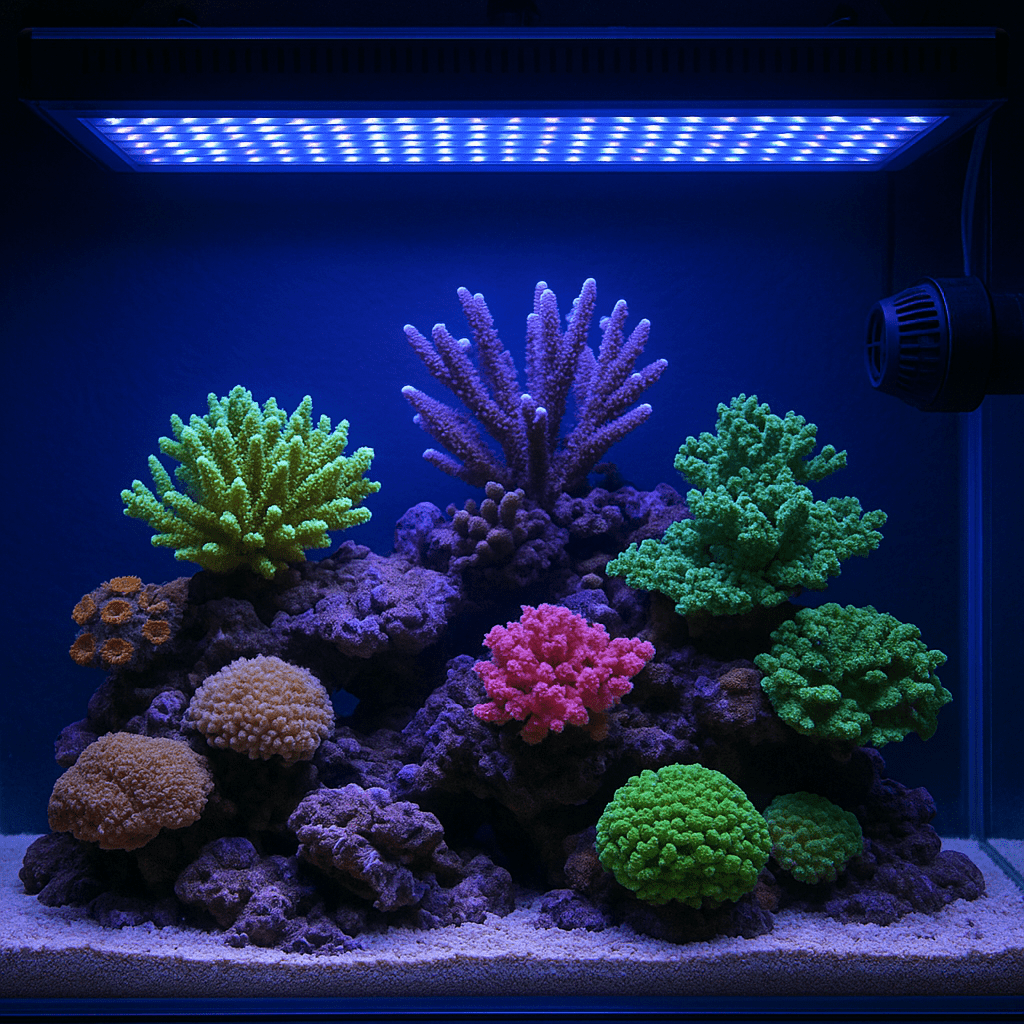
- Use multiple powerheads to create random, turbulent flow rather than one strong jet.
- Aim for 20–40x tank volume per hour in total flow for most mixed reefs.
- Point some flow toward the surface to improve gas exchange and pH stability.
Corals that stay retracted or accumulate detritus may need more flow. For layout ideas, check out our article on aquascaping reef tanks for better flow.
Filter & Skimmer Maintenance
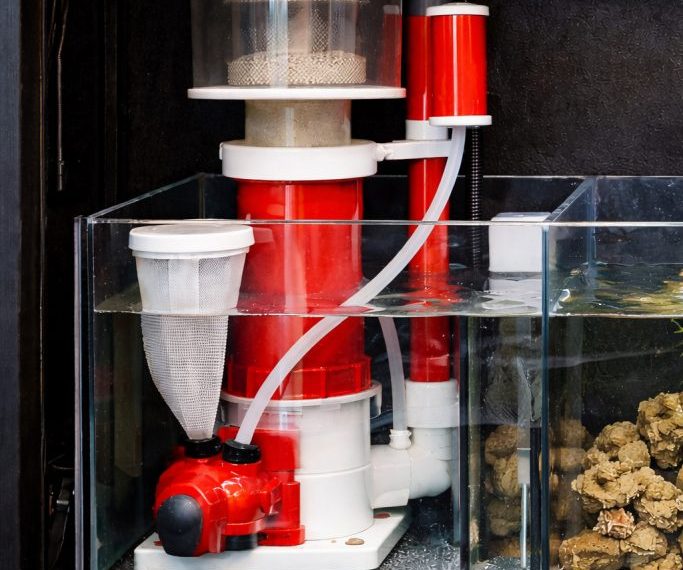
- Clean protein skimmer cups 1–2 times per week to maintain efficiency.
- Rinse or replace mechanical filter media (sponges, floss) weekly.
- Soak pumps and powerheads in a vinegar solution every few months to remove calcium buildup.
- Monitor return pump performance and noise—declines often signal that cleaning is overdue.
Feeding, Observation, and Long-Term Stability
Feeding your fish and corals well—without overdoing it—is crucial for long-term reef health. Excess food quickly becomes nitrate and phosphate, fueling nuisance algae.
- Feed small amounts 1–2 times daily; everything should be eaten within a couple of minutes.
- Target-feed LPS corals and anemones sparingly, once or twice a week.
- Rotate foods (frozen, pellets, nori) to support a varied diet and better coloration.
Daily observation is your best early-warning system. During feeding, take 2–3 minutes to look for:
- Fish breathing rapidly, hiding, or showing spots or frayed fins.
- Corals staying closed, losing color, or receding from the base.
- New algae growth on rock, sand, or glass that appears faster than usual.
Keep a simple log of changes—new livestock, equipment tweaks, or parameter shifts. When something goes wrong, that history makes troubleshooting much easier.
As your reef matures, focus on stability and patience. Avoid making multiple changes at once, quarantine new arrivals when possible, and introduce livestock slowly. For more planning help, visit our beginner-friendly overview on setting up your first reef tank so you can build a system that’s easy to keep healthy from day one.
With consistent care, careful observation, and a focus on stability, maintaining reef tank health becomes a straightforward, enjoyable routine—and your corals and fish will reward you with long-term growth and color.
Sources
- Borneman, E. H. Aquarium Corals: Selection, Husbandry, and Natural History. TFH Publications.
- Sprung, J. & Delbeek, J. C. The Reef Aquarium series. Ricordea Publishing.
- Holmes-Farley, R. “Reef Aquarium Water Parameters.” Advanced Aquarist.
Was this helpful?
Related Posts
Protein Skimmer Reef Tank Guide
Learn how a protein skimmer works, how to size one, and how to tune it for a cleaner,…
 By
By
Reef Aquarium Water Parameters
Learn the ideal reef aquarium water parameters, safe ranges, and how to keep salinity, alkalinity, nutrients, and pH…