

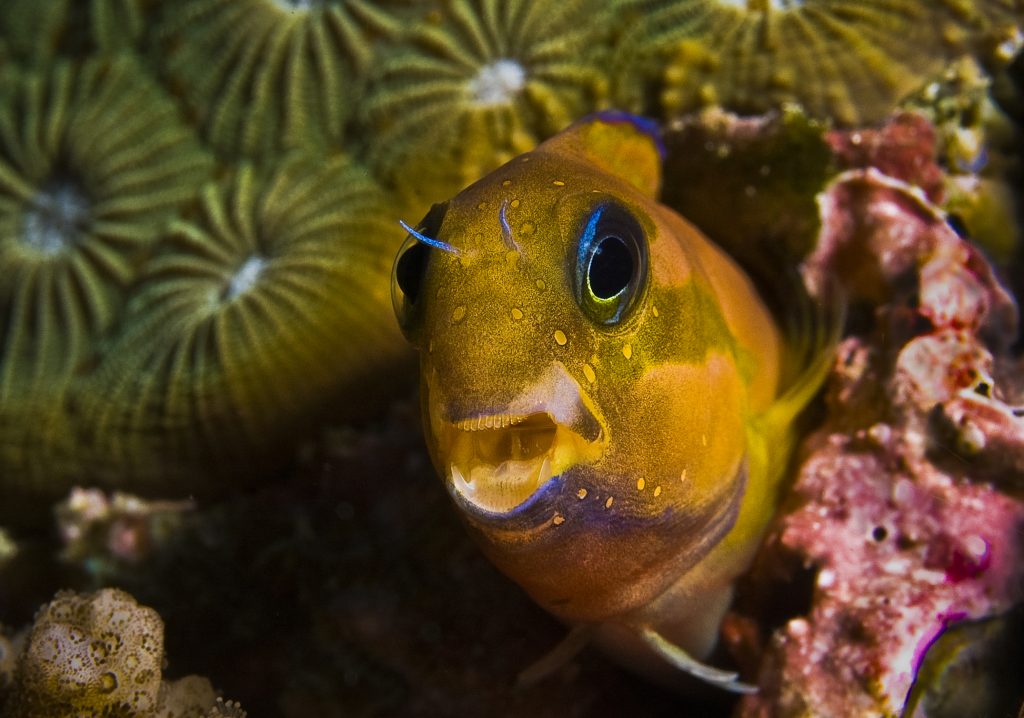
The Midas Blenny is one of the best reef fish for color, personality, and movement. This bright golden blenny is usually peaceful, reef safe, and easy to keep in a stable marine tank. Give it secure rockwork, a covered aquarium, and frequent feedings, and it often becomes a standout fish for beginners and experienced reef keepers alike.
If you are researching Ecsenius midas, this guide covers the details that matter most in real reef tanks. You will learn about tank size, behavior, feeding, compatibility, and common problems. You will also see why this fish behaves differently from many other blennies. Despite the name, the Midas Blenny spends much of its time swimming in open water. That makes it a great choice for adding motion to a reef display. With the right setup and a careful stocking plan, this species is hardy, engaging, and rewarding to keep long term.
Quick Care Facts
| Common name | Midas Blenny |
| Scientific name | Ecsenius midas |
| Care level | Easy to moderate |
| Temperament | Generally peaceful |
| Adult size | About 5 to 6 inches |
| Minimum tank size | 30 gallons, 40 breeder or larger preferred |
| Diet | Omnivore, meaty planktonic foods |
| Reef safe | Usually yes |
| Water temperature | 76 to 78°F |
| Salinity | 1.025 to 1.026 specific gravity |
| Ideal nitrate | Low to moderate, stable |
| Special note | Known jumper, cover the tank |
The quick chart gives a solid overview, but success depends on the details. Midas Blennies are hardy once established, yet they still need stable reef conditions. They do best in mature tanks with secure hiding spots and regular feeding. They are not demanding fish, but they are active fish. That means they appreciate room to move and a calm social structure. Many losses happen after jumping or from poor acclimation. A lid matters as much as diet. If you plan around those two points, this species is usually straightforward to keep.
Natural Habitat
The Midas Blenny comes from the Indo-Pacific. It is found in areas like the Red Sea, East Africa, and across island reef systems. In nature, it lives around rocky reef slopes and coral outcrops. It often hovers above crevices rather than sitting on the substrate. That surprises many new hobbyists. Most blennies perch often, but this species behaves more like a darting planktivore.
Wild Midas Blennies use holes in the rock as retreats. They rush back into these shelters when threatened. This explains why aquarium specimens need caves and tight hiding spaces. Their long body lets them wedge into narrow openings. Their natural environment also has moderate to strong water movement. Food drifts by in the water column. That is why they respond so well to frequent small feedings in captivity. Understanding this habitat helps explain their open-water swimming, fast feeding response, and strong need for secure rockwork.
Aquarium Setup
A 30-gallon tank is often listed as the minimum size. In practice, a 40 breeder or larger works better. This fish is active and uses more of the tank than many blennies. It needs open swimming space, but it also needs several rock crevices. Build the aquascape with caves, overhangs, and narrow bolt-holes. Avoid unstable rock piles. The fish will dive into shelter quickly when startled.
A tight lid is essential. Midas Blennies are excellent jumpers. They may leap during feeding, aggression, or sudden light changes. Mesh tops work well if the openings are small. Keep parameters stable. Aim for 76 to 78°F, salinity around 1.025 to 1.026, and good oxygenation. This fish appreciates mature biological filtration and low stress. It adapts well to reef tanks with soft corals, LPS, and many mixed reef setups. For new systems, wait until the tank is stable and free of ammonia or nitrite. Quarantine is strongly recommended before introduction. You can learn more about stable systems in our anchor text, anchor text, and anchor text resources.
Lighting Requirements
The Midas Blenny has no special lighting demand of its own. Standard reef lighting is fine as long as the fish has shaded retreats. In coral tanks, lighting is usually driven by coral needs rather than fish needs. This species adapts well to moderate or strong reef lighting when the aquascape includes caves and darker zones.
Very bright lighting can make a newly introduced blenny feel exposed. That can lead to hiding, skipped meals, or pacing. If the fish seems nervous, reduce stress during the first week. Feed with pumps off, keep tankmates calm, and provide a predictable light schedule. A gradual ramp-up period helps. The fish often becomes bolder once it claims a favorite cave. Its color can also shift with mood, stress, and social behavior. Healthy specimens usually show rich yellow to gold tones. Some display blue around the eyes or face. Good nutrition and low stress support the best coloration.
Water Flow
Moderate flow is ideal for a Midas Blenny. It enjoys moving water and often hovers in the current. Still, the tank should not be a constant blast zone. Create varied flow areas. Let one side of the tank have stronger circulation and another side offer calmer shelter. This gives the fish options.
Good flow also improves oxygenation and keeps suspended food moving through the water column. That matches the fish’s natural feeding style. If flow is too weak, the tank may feel stagnant. If flow is too strong everywhere, the fish may stay hidden more often. Watch behavior. A comfortable Midas Blenny spends time out in the open, then darts back to its hole when alarmed. Random turbulent flow from wavemakers usually works better than a direct narrow jet. In mixed reefs, aim for coral-appropriate circulation while preserving a few calmer pockets near the rockwork.
Feeding
Feeding is one of the most important parts of Midas Blenny care. Despite being a blenny, this fish is not mainly an algae grazer. It does best on meaty foods and plankton-sized items. Offer frozen mysis, enriched brine shrimp, finely chopped seafood, and quality marine pellets. Many individuals also accept flakes. Feed at least once or twice daily. Smaller, more frequent meals are even better.
A varied diet helps maintain body weight and color. Thin specimens often need extra attention after shipping. Newly imported fish may be shy at first, but many adapt quickly to prepared foods. Target the water column rather than the rocks. This fish likes to dart out and snatch food midwater. Some hobbyists also offer occasional herbivore blends, spirulina foods, or finely chopped clam for variety. Avoid long fasting periods. A healthy Midas Blenny should have a full, smooth body profile. A pinched belly is a warning sign. For more feeding guidance, see anchor text and anchor text.
Compatibility
The Midas Blenny is usually peaceful and reef safe. It mixes well with many community fish, including clownfish, gobies, wrasses, firefish, cardinals, and peaceful tangs in larger tanks. It rarely bothers corals or ornamental invertebrates. That makes it a reliable choice for mixed reefs. The main caution is territorial conflict with similar fish.
Avoid keeping it with aggressive dottybacks, large hawkfish, or highly territorial blennies in small tanks. It may also quarrel with fish that have a similar body shape, especially other fang blennies or blenny-like species. In cramped systems, it can become defensive around its chosen cave. Add it after the most timid fish but before highly aggressive fish. If you want more than one blenny species, use a larger tank with many separate hiding spots. Most reef keepers do best with one Midas Blenny per aquarium. It is generally safe with shrimp, snails, crabs, and corals, which is why it remains a favorite in reef-safe fish lists.
Step-by-Step Acclimation Guide
1. Quarantine first. Place the fish in a separate observation tank if possible. Watch for parasites, shipping stress, and feeding response.
2. Match temperature carefully. Float the bag and avoid sudden changes. Stable temperature reduces stress fast.
3. Use a gentle acclimation process. Drip acclimation can help, but do not prolong exposure to dirty shipping water.
4. Introduce the fish with lights dimmed. Lower light reduces panic and lowers jump risk.
5. Offer shelter immediately. The fish should see rock crevices or PVC tubes right away.
6. Feed small foods early. Try mysis or small pellets within the first day. A feeding response is a good sign.
7. Keep the lid closed. Do not leave gaps around cords or overflows.
8. Watch tankmate behavior. Even peaceful fish may harass a new arrival. Rearranging one rock can sometimes break established territories.
Propagation and Breeding
Midas Blennies are not commonly bred by casual hobbyists, though spawning behavior is possible in captivity. Like other blennies, they are egg layers. The male usually guards eggs placed in a sheltered site. The challenge comes after hatching. Larvae are tiny and require specialized live foods and dedicated rearing systems.
For most reef keepers, propagation is not practical at home. There is no fragging process because this is a fish, not a coral. If a pair forms, avoid stressing them with aggressive tankmates or unstable water quality. Keep nutrition high and provide secure spawning cavities. Even then, raising the fry is advanced work. Most hobbyists should focus on long-term care rather than breeding. As captive breeding improves across the marine hobby, this species may become more available from aquaculture sources in the future.
Common Problems
Why is my Midas Blenny hiding all the time?
New fish often hide for several days. This is normal. Persistent hiding usually points to stress, aggression, or poor acclimation. Check for bullying from wrasses, clownfish, dottybacks, or other blennies. Make sure the fish has a secure cave. Review ammonia, salinity, and temperature stability. If the fish eats and emerges briefly, give it time.
Why did my Midas Blenny jump?
Jumping is common with this species. Sudden movement, chasing, bright light changes, or feeding excitement can trigger it. Use a tight mesh lid and cover every opening. Check for aggression and reduce sudden disturbances around the tank.
Why is my Midas Blenny losing weight?
Weight loss usually means underfeeding, internal parasites, or social stress. Offer more frequent feedings and use calorie-dense frozen foods. Observe whether faster fish steal the food first. A pinched belly should never be ignored. Quarantine helps with diagnosis.
Can a Midas Blenny get ich or velvet?
Yes. It is not unusually delicate, but it can still contract common marine diseases. Quarantine, observation, and proper treatment matter. Fast breathing, flashing, clamped fins, and refusal to eat need quick action.
Why is my Midas Blenny chasing other fish?
Territorial behavior usually centers on a favorite cave. Similar-shaped fish are the most common targets. Increase hiding spots, review stocking order, and consider whether the tank is too small for the mix.
Frequently Asked Questions
Is the Midas Blenny reef safe?
Yes. It is considered reef safe in most aquariums. It does not usually nip corals or bother invertebrates.
How big does a Midas Blenny get?
Most reach about 5 to 6 inches in captivity. Adults need more room than many smaller blennies.
What does a Midas Blenny eat?
It prefers meaty foods such as mysis, brine, finely chopped seafood, pellets, and quality flakes. Variety is best.
Can I keep two Midas Blennies together?
Usually not in average home aquariums. They may fight unless the tank is large and carefully planned.
Is a Midas Blenny good for beginners?
Yes, if the tank is stable and covered. It is hardy, personable, and usually adapts well to prepared foods.
The Midas Blenny earns its popularity. It combines strong color, fun behavior, and solid reef compatibility. Its care is simple once you understand its real needs. Think secure rockwork, regular feeding, peaceful tankmates, and a lid with no gaps. Meet those needs, and this fish often becomes one of the most visible and entertaining animals in the tank. For many reef keepers, it is the perfect fish to add motion and personality without adding major risk to corals or invertebrates.
Was this helpful?
Related Posts
Reef Tank Plumbing Basics
Learn reef tank plumbing basics, including drains, return pumps, sump flow, noise control, and flood prevention for a…
 By
ByOur Reef Emergency Plan
A reef emergency plan helps you act fast during outages, leaks, and water quality crashes. Here is the…
[favorite_button]
My Bookmarks:
To see full list click here
[user_favorites user_id="" include_links="true" site_id="" post_types="" include_thumbnails="true" thumbnail_size="thumbnail" include_excerpt="false"]