

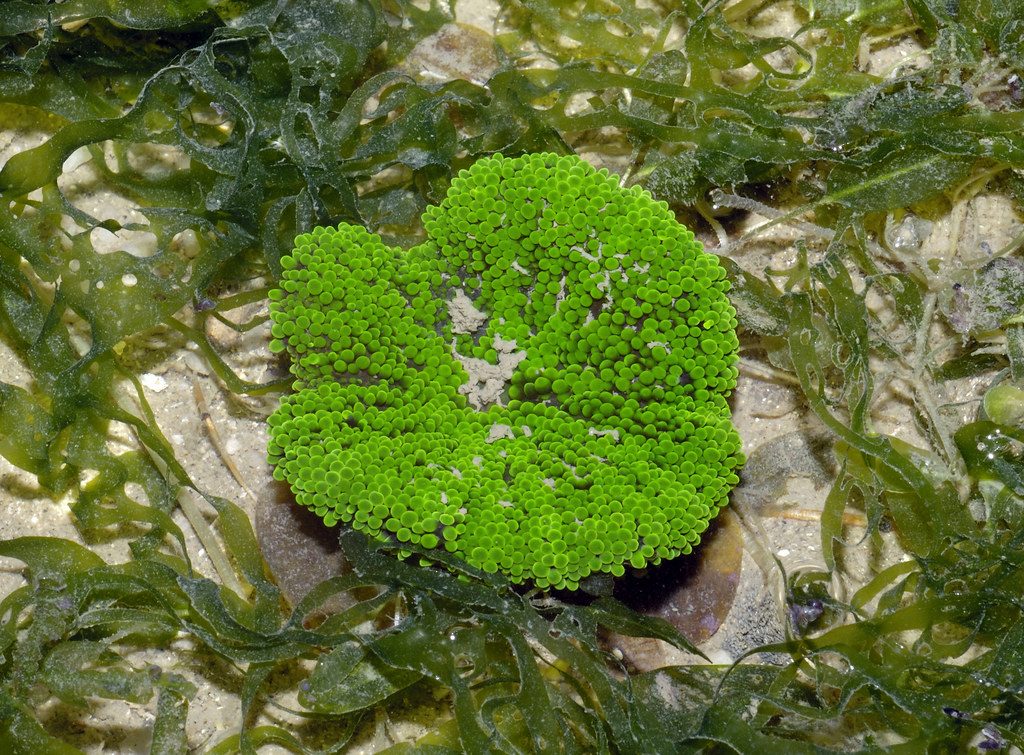
Mini carpet anemones (Stichodactyla tapetum) are one of the most rewarding “anemone without the monster size” options in reef tanks. They stay relatively small, come in stunning greens, reds, oranges, and mottled patterns, and they tend to be much less prone to wandering than many hosting anemones. The tradeoff is that they still demand stable reef parameters and thoughtful placement. In this guide, you’ll learn how to choose a healthy specimen, set up the right conditions, feed for growth and color, and prevent the most common issues like gaping mouths, detachment, or getting shredded by pumps.
Quick Care Snapshot
| Care level | Moderate |
| Typical size | 2–6 in (5–15 cm) across (can be larger when fully expanded) |
| Tank size | 20+ gallons (more stable is better) |
| Lighting | Moderate (PAR ~80–180) |
| Flow | Low to moderate, indirect |
| Placement | On rock or rubble in a “cup” or crevice; avoid sand-only placement |
| Feeding | 1–2x weekly small meaty foods (optional but helps growth) |
| Reef safety | Generally reef-safe but can sting nearby corals |
| Special note | Protect powerheads and overflows; can detach if unhappy |
Natural History: What “Mini Carpet” Really Means
Stichodactyla tapetum is often called the mini carpet anemone because it shares the “carpet” look of larger Stichodactyla species but stays far smaller and is more manageable in home aquariums. In the wild, it’s found in the Indo-Pacific on shallow reef flats and lagoon environments where light is strong but water movement can be variable. They typically anchor their foot (pedal disc) into rock crevices or among rubble where they can stay protected while their oral disc expands to capture food.
Unlike bubble tip anemones, mini carpets are not a reliable host anemone for common clownfish. Some clowns may investigate them, but many ignore them, and persistent clownfish can irritate or even damage a small anemone over time. Think of S. tapetum as a display anemone with a strong feeding response rather than a guaranteed clownfish centerpiece.
How to Choose a Healthy Mini Carpet Anemone
Buying well is half the battle. A healthy mini carpet usually acclimates quickly and settles into a spot within a few days.
Look for these positive signs
- Sticky tentacles that grab food or gently adhere to your glove
- Tight mouth (closed or slightly puckered), not gaping
- Good inflation with normal day-to-night changes
- Foot attached firmly to rock/rubble at the store if possible
- Responsive to light changes or gentle water movement
Avoid these red flags
- Gaping mouth with tissue showing inside
- Mushy tissue, tears, or a damaged foot
- Constant deflation for long periods in the store
- Bleaching (very pale or translucent) unless you are prepared for careful rehab
- Floating loose in a tank with strong flow (often indicates stress)
Tank Requirements and Placement
Mini carpet anemones do best in mature, stable reef systems. They can survive in newer tanks, but you will see far better results in a tank that has consistent alkalinity, salinity, and nutrient levels.
Minimum tank size
A 20-gallon reef can work, but 30–60 gallons (or larger) is more forgiving. Stability matters more than raw volume, so prioritize consistent top-off, reliable temperature control, and predictable dosing or water changes.
Best aquascape for Stichodactyla tapetum
In most home tanks, the easiest way to keep a mini carpet settled is to give it a “home” that mimics rubble and crevices.
- Rock cup method: Place a shallow bowl-shaped rock or a small depression in the rockwork where the anemone can plant its foot.
- Rubble island: Create a small rubble patch in a low-flow zone, ideally bordered by rock so the foot can grip.
- Avoid bare sand placement: Many mini carpets will not stay put on open sand unless they can reach something solid.
Spacing tip: Mini carpets can sting nearby corals. Give them a buffer zone of several inches at minimum, more if you keep sensitive LPS or fleshy corals.
Water Parameters (Stability First)
Mini carpet anemones are fairly tolerant within reef ranges, but they react poorly to rapid swings. Keep salinity and alkalinity stable and avoid big temperature fluctuations.
| Parameter | Recommended range |
| Temperature | 77–79°F (25–26°C) |
| Salinity | 1.025–1.026 SG (35 ppt) |
| pH | 8.1–8.4 |
| Alkalinity | 8–9.5 dKH (keep steady) |
| Calcium | 400–450 ppm |
| Magnesium | 1250–1400 ppm |
| Nitrate | 2–15 ppm |
| Phosphate | 0.03–0.10 ppm |
Note on nutrients: Ultra-low nutrient systems can lead to pale coloration and slow recovery after stress. A little measurable nitrate and phosphate often supports better color and feeding response.
Lighting Requirements
Stichodactyla tapetum contains symbiotic zooxanthellae and benefits from consistent reef lighting. Most specimens do best under moderate light, and they can bleach if moved too quickly into high PAR.
Target intensity and photoperiod
- PAR: ~80–180 is a solid range for most tanks
- Photoperiod: 8–10 hours of peak lighting is typical
- Spectrum: Blue-heavy reef spectrum (with some white) supports color and natural appearance
Acclimation tip: If your tank lighting is strong, start the mini carpet lower or partially shaded and move it gradually over 1–2 weeks. Sudden jumps in intensity are a common cause of shrinking and bleaching.
Water Flow: Indirect and Consistent
Mini carpets prefer low to moderate, indirect flow. Too little flow can allow detritus to settle on the oral disc, while too much direct flow can keep the anemone from staying inflated and may encourage it to detach and move.
What good flow looks like
- Tentacles gently sway rather than flatten
- The anemone stays inflated most of the day
- Food stays in place long enough to be grabbed
- No constant “folding” or lifting at the edges
Critical safety: Cover or guard powerheads and overflow intakes. Even a “mostly stationary” mini carpet can detach during acclimation, after a water change, or if something irritates it at night.
Feeding: How to Get Better Growth and Color
Mini carpet anemones can live primarily from light and dissolved nutrients, but targeted feeding usually improves growth, resilience, and coloration. The key is small portions that are easy to digest.
Best foods
- Finely chopped shrimp, scallop, or clam
- Mysis shrimp (rinsed)
- Enriched brine shrimp (as a supplement, not a staple)
- High-quality frozen blends with marine proteins
Feeding schedule and technique
- Frequency: 1–2 times per week for most tanks
- Portion size: Pea-sized or smaller for typical specimens
- How: Use tongs or a pipette to place food on the center of the oral disc
- Protect the meal: Turn off pumps for 5–10 minutes if fish or shrimp steal food
Common mistake: Overfeeding large chunks can cause regurgitation hours later, leading to stress and bacterial issues. If you see repeated spit-outs, reduce portion size and feed less often.
Compatibility: Fish, Corals, and Invertebrates
Mini carpet anemones are generally compatible with reef tanks, but they are still stinging predators with a sticky oral disc. Plan livestock around that reality.
Fish compatibility
- Usually safe with: tangs, wrasses, gobies, blennies, clownfish (with caution), chromis
- Use caution with: very small fish and weak swimmers (tiny gobies, new juvenile fish) especially if the anemone is large and very sticky
- Avoid harassment: Some butterflyfish and angelfish may pick at anemones
Coral compatibility
Give mini carpets space. Their sting can damage nearby LPS and soft corals, and they can win slow-motion battles by touching a coral at night when fully expanded.
- Keep several inches of clearance in all directions
- Avoid placing next to fleshy LPS (acans, euphyllia, scolys) unless you have a clear barrier zone
- Monitor at night for maximum expansion
Invertebrate compatibility
- Shrimp: Cleaner and peppermint shrimp may steal food. They can coexist, but you may need to “guard” feedings.
- Snails and hermits: Generally fine, though snails can irritate the anemone if they bulldoze over it.
- Other anemones: Mixing anemone species can lead to chemical and physical warfare. Keep distance and run carbon if mixing.
Acclimation and First Week Tips
The first week is when most problems show up. Your goal is to help the anemone attach, settle, and resume normal inflation cycles.
- Temperature match and then drip acclimate 30–60 minutes if salinity differs
- Handle gently: Avoid tearing the foot. Never pull it off a surface
- Place on rubble/rock in a low-flow area so it can attach
- Dim or reduced lighting for the first 2–3 days if coming from lower light
- Do not force-feed on day one. Wait until it’s sticky and responsive
Common Problems and Troubleshooting
Why is my mini carpet anemone moving?
Movement is usually a response to flow, light, or irritation. Mini carpets move less than many anemones, but they still relocate if conditions are off.
- Too much direct flow: Redirect the powerhead or create a baffle zone
- Light too intense or too dim: Adjust placement gradually
- Physical irritation: Snails, hermits, or fish picking can trigger relocation
- Parameter swings: Check salinity and alkalinity first
My anemone is shrinking or deflating every day
Some inflation and deflation is normal, especially at night. Daily prolonged deflation can signal stress.
- Test salinity (top-off issues are common)
- Check temperature swings between day and night
- Confirm alkalinity stability (avoid rapid dosing corrections)
- Make sure it is not being blasted by flow
- Consider light acclimation if recently changed fixtures or settings
What does a gaping mouth mean?
A mildly open mouth can happen after feeding. A persistently gaping mouth often indicates serious stress, poor water quality, or infection. First steps are to stabilize parameters, improve oxygenation, and avoid feeding until it is sticky and responsive again. If the anemone is deteriorating rapidly, consider moving it to a low-stress observation area with gentle flow and stable heat, but avoid repeated handling that can tear the foot.
My mini carpet won’t attach
Failure to attach is usually about substrate choice or flow. Provide rubble and a crevice, lower the flow, and give it time.
- Place it in a small “nest” of rubble where the foot can grip
- Reduce flow for 24–48 hours in that zone
- Check for sand grains stuck under the foot if it was on sand
- Avoid moving it repeatedly. Let it decide
It got sucked into a powerhead. What now?
Turn off the pump immediately. If tissue damage is severe, the anemone may not recover, and decaying anemones can foul small tanks quickly. Remove loose tissue, run fresh activated carbon, and perform a water change. This is why guarding intakes and using foam covers or anemone guards is non-negotiable with any anemone species.
Propagation: Do Mini Carpet Anemones Split?
Stichodactyla tapetum is not typically fragged like corals, and deliberate cutting is risky and not recommended for most hobbyists. That said, mini carpets can reproduce asexually in established systems through natural division or budding, and hobbyists sometimes notice new small individuals appearing in the rockwork over time. The best “propagation method” is simply excellent husbandry: stable parameters, moderate light, gentle flow, and occasional feeding.
If you do see multiple individuals, treat them as separate anemones for spacing and pump safety. Avoid trying to peel one off rock. Instead, encourage it to move onto a removable rubble piece by placing rubble adjacent to its foot and adjusting flow slightly.
FAQ
Do mini carpet anemones host clownfish?
Usually not reliably. Some clownfish may try, but S. tapetum is best kept as a display anemone rather than a guaranteed host.
Are mini carpet anemones safe for reef tanks?
They are generally reef-safe, but they can sting nearby corals and may capture very small fish. Give them space and protect pump intakes.
How much light does Stichodactyla tapetum need?
Moderate light is ideal for most specimens, roughly PAR 80–180. Acclimate slowly to stronger lighting to avoid bleaching.
How often should I feed a mini carpet anemone?
Once or twice per week with small meaty foods is a good routine. Avoid large chunks that can be regurgitated and cause stress.
Why is my mini carpet anemone shrinking?
Short deflation cycles can be normal, but repeated shrinking often points to parameter swings, too much direct flow, or light shock. Check salinity and alkalinity stability first.
Final Tips for Long-Term Success
- Prioritize stability over chasing numbers
- Give the anemone a rocky crevice or rubble nest to attach
- Use moderate light and acclimate to changes slowly
- Keep indirect flow and guard all intakes
- Feed small portions and don’t overdo it
Was this helpful?
Related Posts
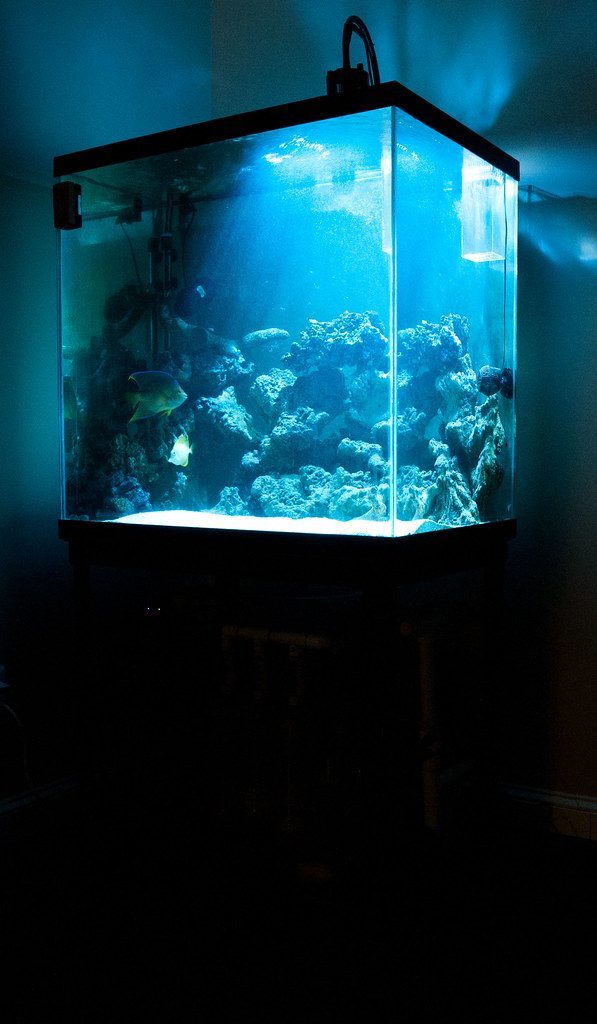
Reef Lighting For Soft Corals
Learn the ideal PAR, spectrum, and photoperiod for reef lighting for soft corals, plus placement and troubleshooting tips.
 By
By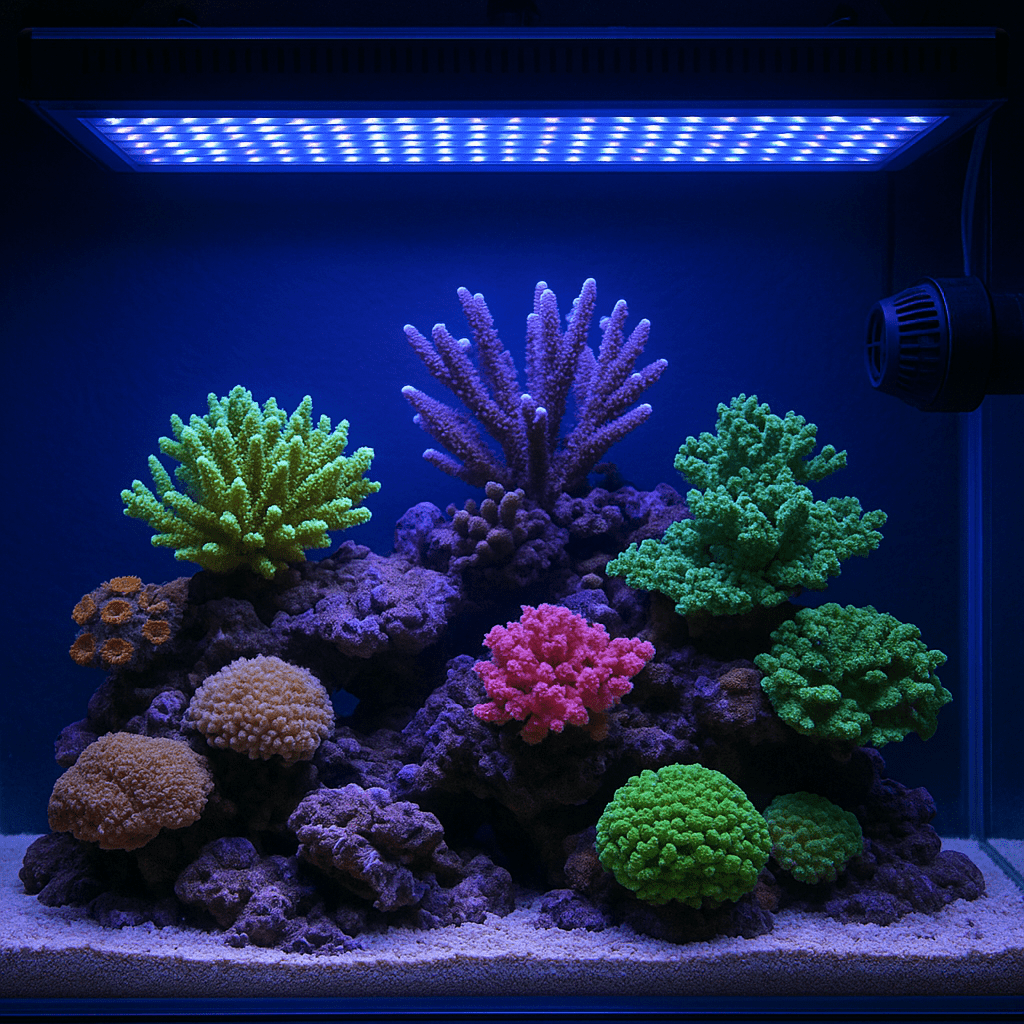
Coral Care Troubleshooting
Learn how to diagnose coral stress, match symptoms to causes, and fix common reef tank problems before they…
[favorite_button]
My Bookmarks:
To see full list click here
[user_favorites user_id="" include_links="true" site_id="" post_types="" include_thumbnails="true" thumbnail_size="thumbnail" include_excerpt="false"]