Understanding the Nitrogen Cycle in Saltwater Aquariums
The nitrogen cycle in saltwater aquariums is the invisible engine that keeps your reef or fish-only system healthy. Before adding fish, corals, or invertebrates, you must establish this cycle so that harmful waste is converted into less toxic forms. Skipping or rushing this step is one of the most common reasons new tanks crash.
If you’re just getting started, you may also want to review our guides on setting up a saltwater aquarium and choosing the best beginner saltwater fish once your cycle is complete.
How the Nitrogen Cycle Works
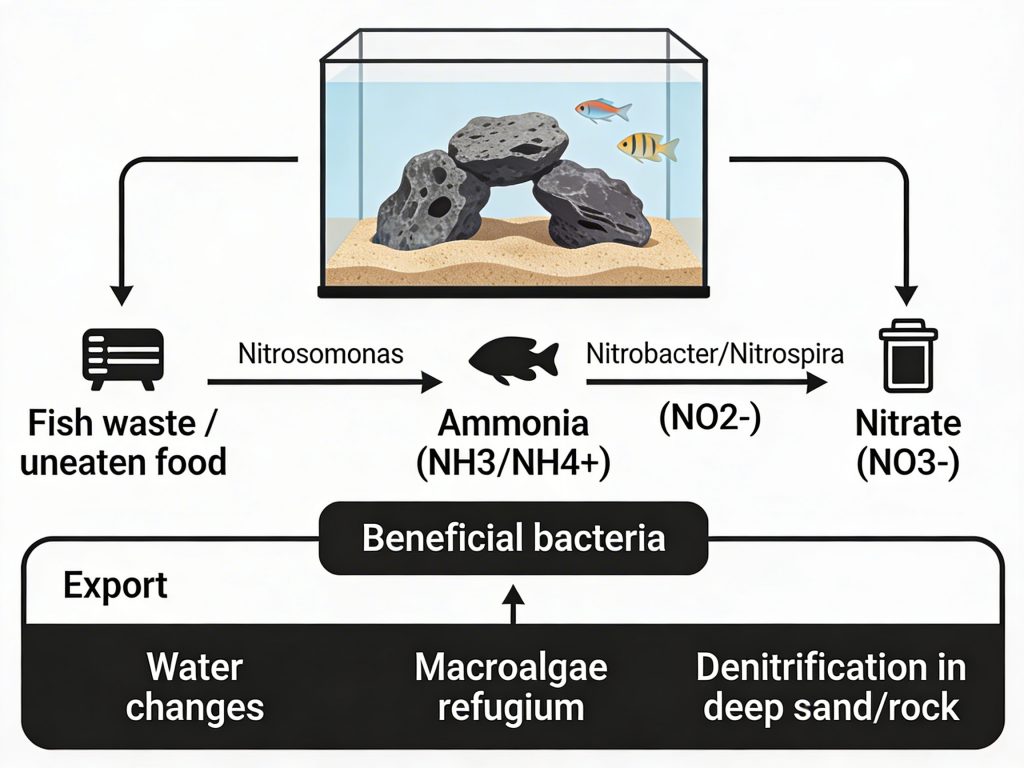
The nitrogen cycle is a biological process in which beneficial bacteria break down fish waste, uneaten food, and other organic material. In a saltwater aquarium, this happens mainly in your live rock, sand bed, and filter media.
The Three Main Stages
- Ammonia (NH3) – Produced by fish waste, decaying food, and dead organisms. Even low levels are toxic to fish and invertebrates.
- Nitrite (NO2–) – Bacteria convert ammonia into nitrite. Nitrite is also harmful and must be processed further.
- Nitrate (NO3–) – A second group of bacteria converts nitrite into nitrate. Nitrate is far less toxic, but high levels can stress fish and fuel algae.
Goal of cycling: 0 ppm ammonia, 0 ppm nitrite, and low, stable nitrate (typically <20–30 ppm in fish-only tanks and lower for reefs).
How to Cycle a Saltwater Aquarium
There are several ways to start the nitrogen cycle. Most hobbyists now use a fishless cycle, which is safer and more humane.
Steps for a Fishless Cycle
- 1. Add a source of ammonia – Use pure household ammonia (no surfactants or scents) or simply drop in a pinch of fish food daily. This feeds the first group of bacteria.
- 2. Seed beneficial bacteria – Live rock, established filter media, or bottled bacteria jump-start the cycle. This can significantly shorten cycling time.
- 3. Test regularly – Use a reliable saltwater test kit to track ammonia, nitrite, and nitrate. You’ll see ammonia rise, then fall as nitrite spikes, then nitrate will appear.
- 4. Be patient – A typical cycle takes 3–6 weeks. Only when ammonia and nitrite both read 0 ppm for several days after adding an ammonia source is the tank considered cycled.
When you’re ready to stock your tank, add fish slowly and monitor parameters closely. Our article on setting up a quarantine tank can help you introduce new fish safely without disrupting the cycle.
Maintaining a Stable Nitrogen Cycle
Once the nitrogen cycle is established, your job is to keep it stable and prevent excess nitrate from building up.
Practical Tips for Long-Term Success
- Don’t overstock or overfeed – More fish and food mean more waste and higher nitrate.
- Perform regular water changes – 10–20% weekly or biweekly helps keep nitrate and dissolved organics under control.
- Use quality filtration – Protein skimmers, refugiums with macroalgae, and biological media all support the nitrogen cycle.
- Clean gently – Rinse filter media in removed tank water, not tap water, to avoid killing beneficial bacteria.
By respecting the nitrogen cycle and giving beneficial bacteria time to establish, you create a stable foundation for a thriving saltwater aquarium. Patience at the beginning pays off with healthier fish, fewer algae problems, and a much more enjoyable reef-keeping experience.
Sources
- Fenner, R. (2001). The Conscientious Marine Aquarist. TFH Publications.
- Sprung, J. & Delbeek, J. (1994). The Reef Aquarium, Volume 1. Ricordea Publishing.
- Spotte, S. (1992). Captive Seawater Fishes. Wiley-Interscience.
Was this helpful?
Related Posts
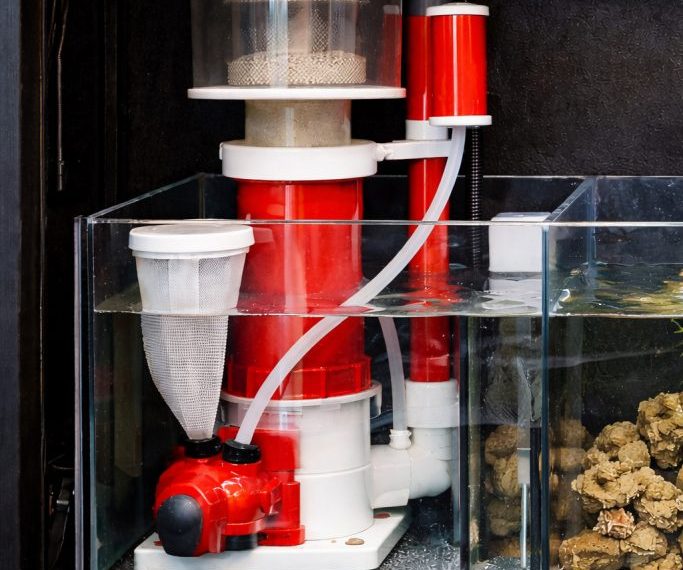
Protein Skimmer Reef Tank Guide
Learn how a protein skimmer works, how to size one, and how to tune it for a cleaner,…
 By
By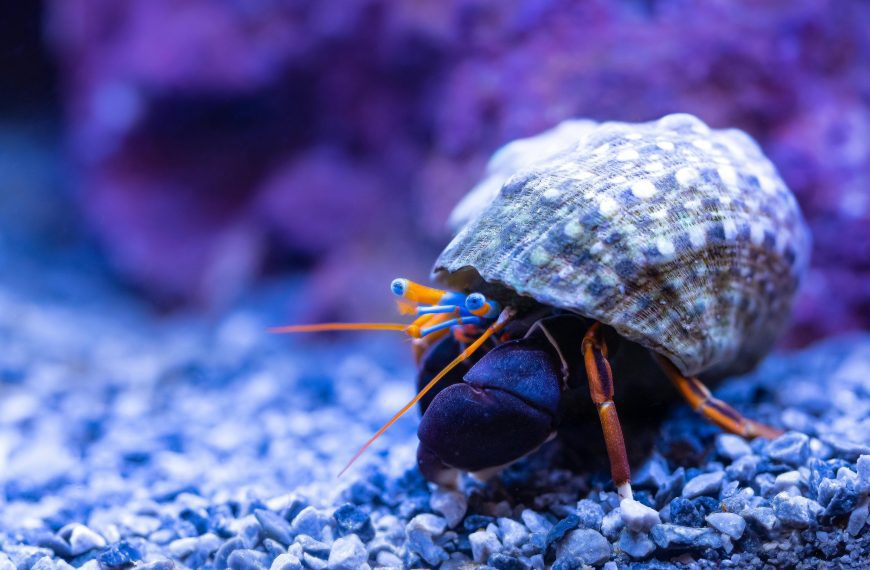
Best Reef Safe Cleanup Crew
The best reef safe cleanup crew includes hardy snails, selective scavengers, and a few specialty invertebrates matched to…