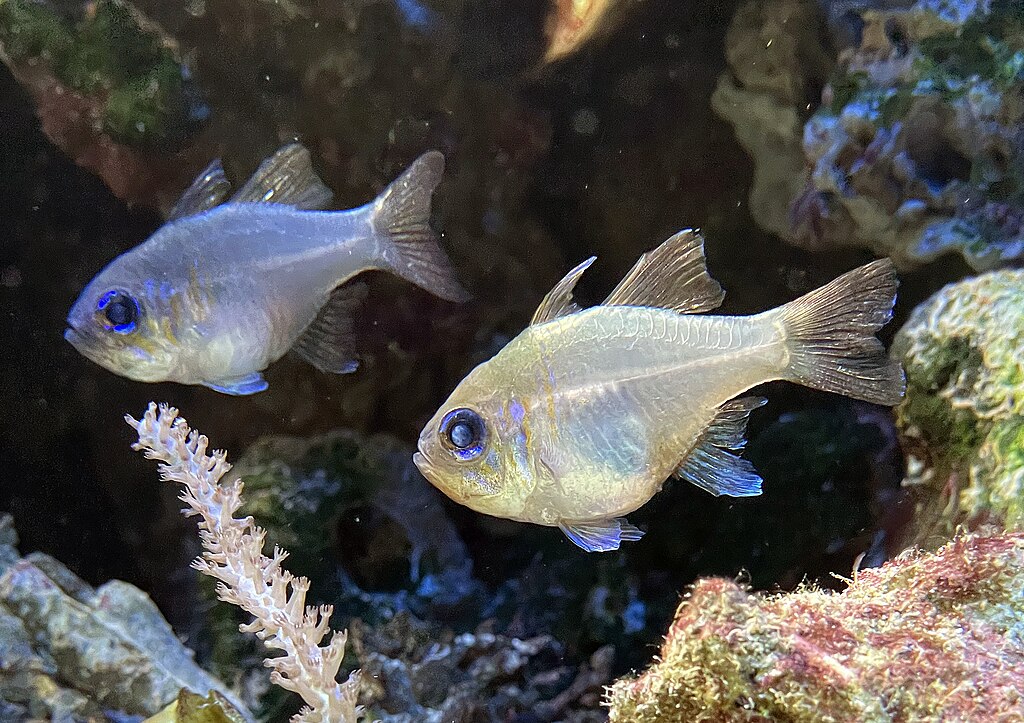
Setting up a saltwater aquarium is one of the most rewarding projects in the hobby. With a bit of planning and patience, you can create a thriving marine system that keeps fish, corals, and invertebrates healthy for years. This guide walks you through the key steps so your first saltwater tank starts on the right foot.
Planning Your Saltwater Aquarium Setup
Before buying equipment, decide what kind of tank you want: fish-only, fish-only-with-live-rock (FOWLR), or a reef tank with corals. Each style has different lighting and filtration needs, so planning now saves money and frustration later.
Key decisions to make early:
- Tank size: A 30–55 gallon tank is ideal for beginners. More water volume means more stability.
- Location: Keep the tank away from windows, heaters, and high-traffic areas to reduce temperature swings and stress.
- Budget: Include the cost of salt mix, test kits, and ongoing maintenance, not just the tank and stand.
For a deeper dive into picking the right tank and stand, see our guide on choosing your first reef tank.
Essential Equipment and Initial Setup
A stable saltwater aquarium depends on matching the right gear to your tank size and livestock plans.
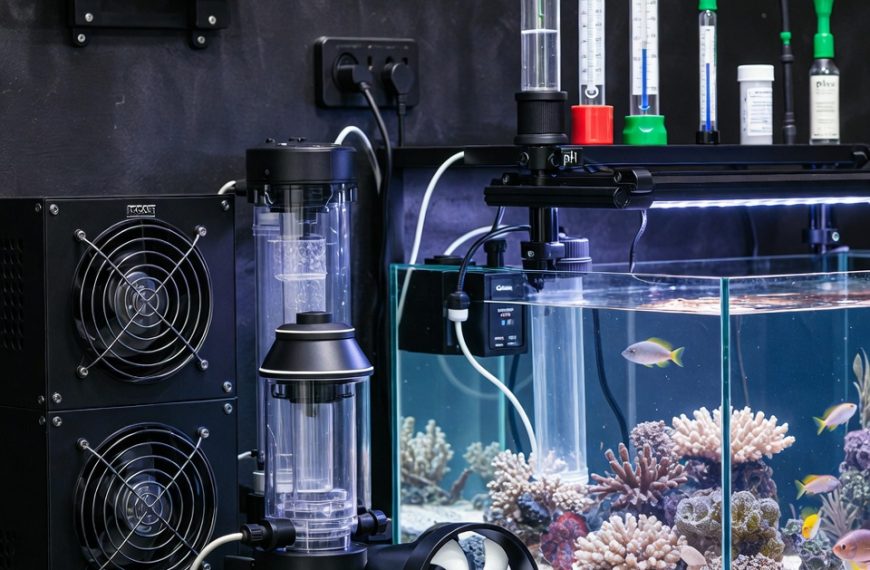
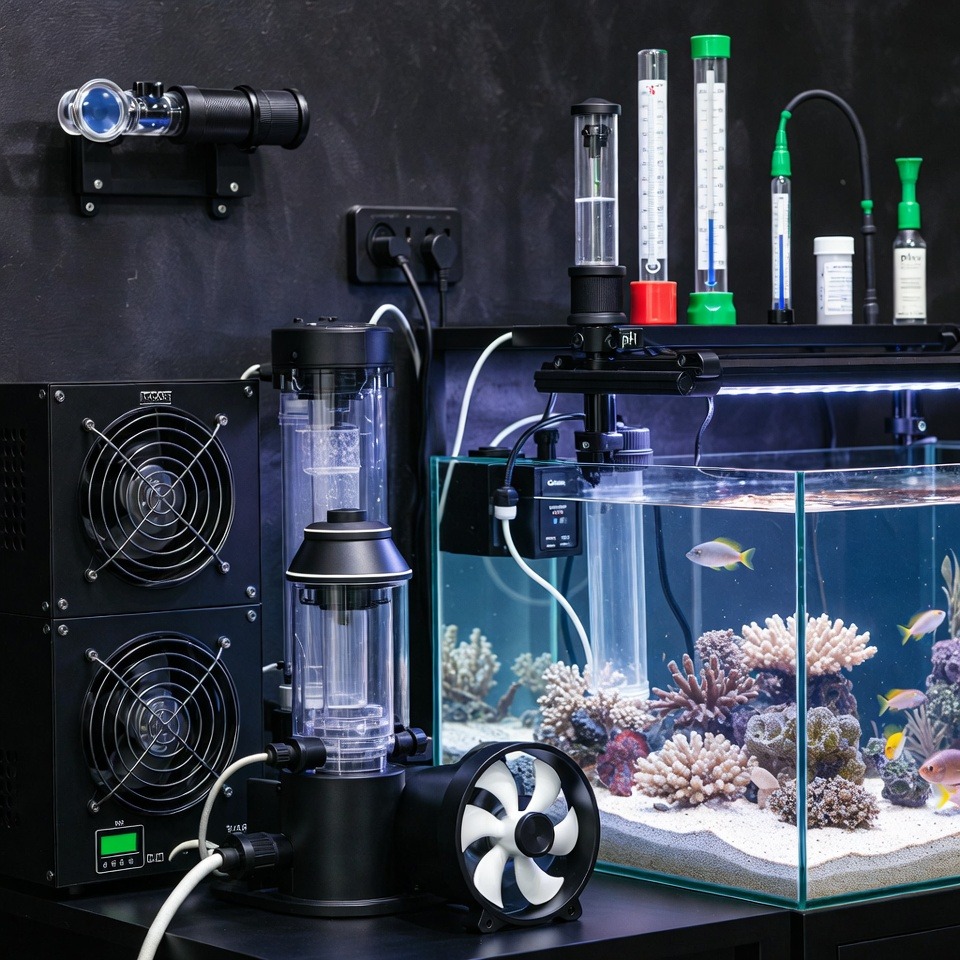
Core equipment checklist
- Tank & stand: Ensure the stand is level and rated for the full weight of the filled aquarium.
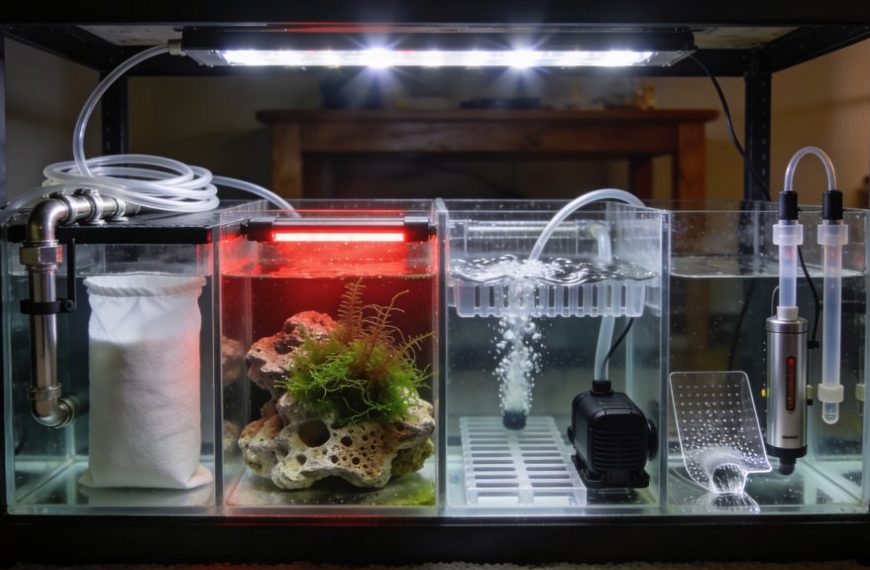
- Filtration: A quality hang-on-back filter or sump with filter socks and media for biological and mechanical filtration.
- Protein skimmer: Highly recommended for tanks over 30 gallons to remove dissolved organics.
- Heater & thermometer: Aim for 77–79°F (25–26°C) with a reliable digital thermometer.
- Powerheads: Provide internal flow of 20–30x the tank volume per hour, especially in reef systems.
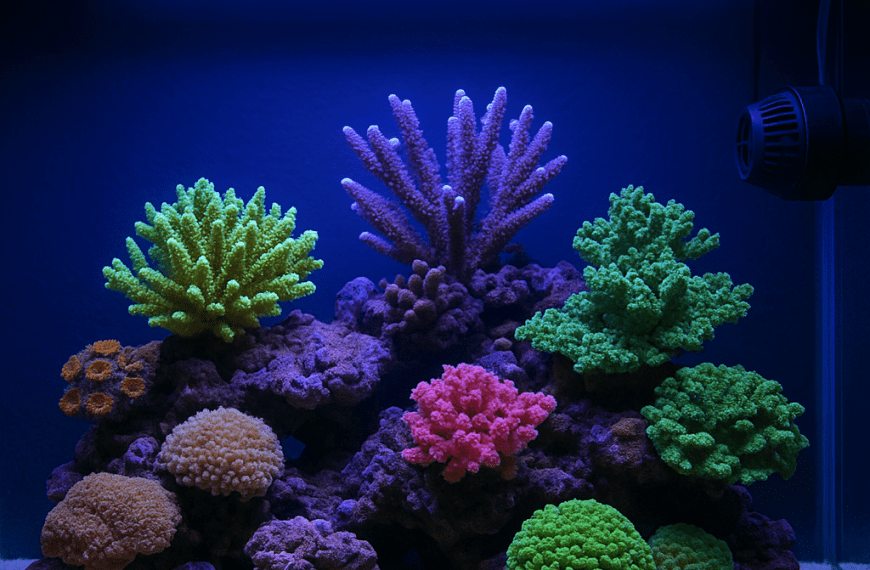
- Lighting: For fish-only, standard LEDs are fine; reef tanks need higher-output reef LEDs.
Rock, sand, and saltwater
Use a mix of live rock and dry rock to build your aquascape, leaving open swim space and plenty of hiding spots. Add 1–2 pounds of rock per gallon as a general guideline. Choose a sand grain size that won’t blow around in your flow; many hobbyists prefer a fine to medium aragonite substrate.
Mix your saltwater in a separate container with RO/DI water and a reputable marine salt mix. Target a salinity of 1.025–1.026 specific gravity, measured with a refractometer. Once mixed and heated, you can fill the tank, start your equipment, and let everything run.
Pro tip: Never mix salt directly in the display tank with sand and rock present. Pre-mixing helps avoid precipitation and uneven salinity.
Cycling, Stocking, and Long-Term Care
The nitrogen cycle is the foundation of a healthy saltwater aquarium. After filling the tank, add a source of ammonia (fish food, bottled ammonia, or a hardy starter fish if you prefer a livestock-based cycle) and test regularly for ammonia, nitrite, and nitrate.
- Cycle time: Expect 3–6 weeks for the cycle to complete.
- Goal: Ammonia and nitrite at 0 ppm, nitrates present but manageable (<20–30 ppm).
- Patience: Avoid rushing fish into an uncycled tank; this is the most common beginner mistake.
Once the cycle is complete, add livestock slowly—one or two fish at a time, spaced a few weeks apart. Quarantine new arrivals when possible to prevent introducing parasites. Start with hardy species and peaceful community fish, and research compatibility before each purchase.
For ongoing success, follow a simple routine:
- Perform 10–20% water changes weekly or bi-weekly.
- Test salinity, temperature, and basic parameters regularly.
- Clean mechanical filtration and skimmer cups as needed.
When you’re ready to add corals, check out our beginner-friendly overview of beginner soft corals and our maintenance checklist in saltwater aquarium maintenance checklist.
Setting up a saltwater aquarium is less about expensive gadgets and more about consistency and patience. By planning your system, investing in reliable equipment, and allowing the tank to mature before heavy stocking, you’ll build a stable marine environment that’s both beautiful and enjoyable to care for over the long term.
Sources
- Michael S. Paletta, The New Marine Aquarium, Microcosm, 2001.
- John H. Tullock, Natural Reef Aquariums, Microcosm, 2001.
- Sprung & Delbeek, The Reef Aquarium, Vol. 1–3, Ricordea Publishing.
- Manufacturer guidelines from major aquarium brands (Red Sea, Eheim, Sicce, AI).
 By
By