Platygyra corals are hardy LPS with a maze-like skeleton and bold feeding response. They can thrive in mixed reefs when you match light, flow, and chemistry. Good placement and stable alkalinity prevent most problems.
Identification and placement basics
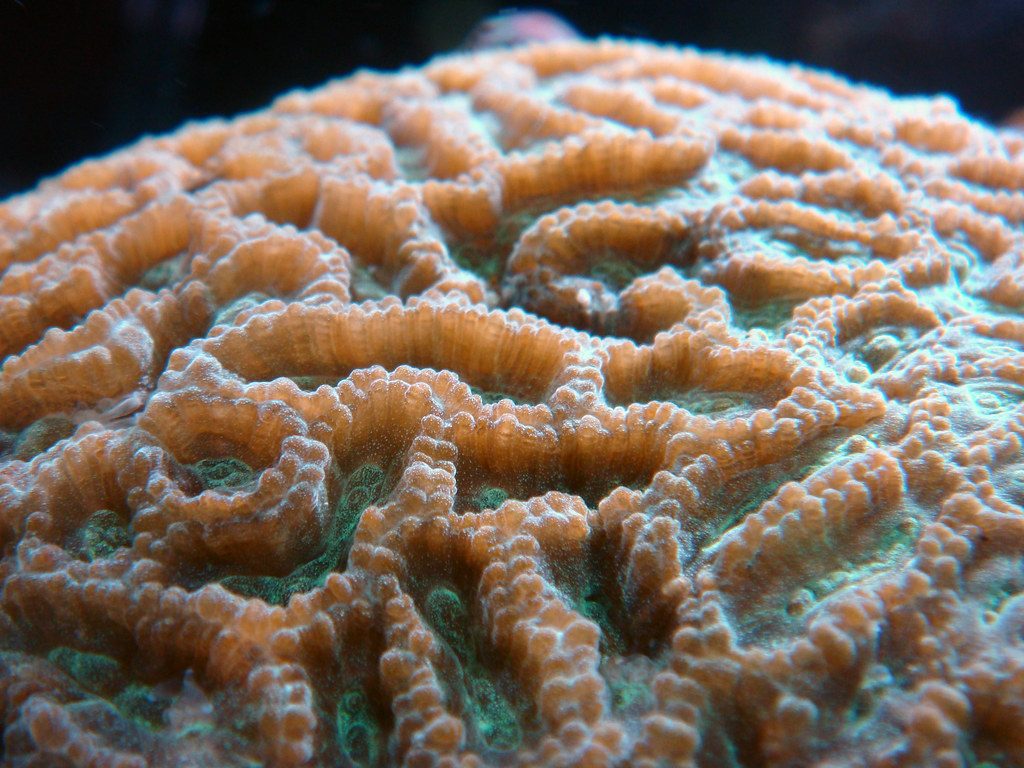
Platygyra is often sold as “brain coral” or “maze coral.” Most specimens show valleys and ridges with fleshy polyps. Color varies from green to red and tan. Expect moderate growth with stable parameters.
Place Platygyra on rock or sand with room for expansion. Give it 4 to 6 inches of space. Many extend sweepers at night. Sweepers can sting nearby corals.
Start low in the tank and move up slowly. Use a 10 to 14 day acclimation plan. Increase light by 10 to 15% per week. Watch for tissue recession on ridge tops.
Use gentle to moderate flow that makes the tissue sway. Avoid blasting flow that peels tissue from sharp ridges. Detritus should not settle in valleys. If it does, adjust flow or placement.
- Leave 4–6 inches of clearance for night sweepers.
- Start at 50–80 PAR and adjust slowly.
- Choose flow that prevents debris buildup in valleys.
For more setup guidance, review our reef tank flow guide. If you are planning a mixed LPS layout, see LPS coral placement tips.
Water parameters, lighting, and stability targets
Stable chemistry matters more than chasing exact numbers. Keep salinity at 1.025 to 1.026 specific gravity. Hold temperature at 77 to 79°F. Avoid swings over 1°F per day.
Target alkalinity at 8.0 to 9.0 dKH for mixed reefs. Keep calcium at 420 to 450 ppm. Maintain magnesium at 1300 to 1400 ppm. Test alkalinity two to three times weekly in new systems.
Platygyra likes moderate light in most tanks. Aim for 75 to 150 PAR at the coral. Too much light can bleach ridge tops. Too little light can cause dull color and slow growth.
Keep nutrients present but controlled. Nitrate at 5 to 15 ppm works well. Phosphate at 0.03 to 0.10 ppm helps tissue stay full. Ultra-low nutrients can cause pale tissue and slow healing.
- Salinity: 1.025–1.026 SG, measured with a calibrated refractometer.
- Alkalinity: 8.0–9.0 dKH, avoid swings over 0.3 dKH daily.
- Nitrate: 5–15 ppm and phosphate: 0.03–0.10 ppm.
If you need a simple testing routine, use our reef tank parameter checklist. Consistency beats constant corrections.
Feeding, handling, and troubleshooting
Platygyra will photosynthesize, but feeding improves growth and recovery. Feed one to two times per week at night. Offer mysis, chopped krill, or reef roids mixed with tank water. Turn off pumps for 10 to 15 minutes.
Use a turkey baster or coral feeder to target valleys. Start with pea-sized portions per 2 to 3 inches of coral. Too much food can rot in valleys. Resume flow and skim wet after feeding.
Handle Platygyra by the skeleton, not the tissue. Sharp ridges can tear flesh during moves. Use coral epoxy or gel to stabilize on rock. A wobbling coral often gets tissue damage.
Common issues include recession, brown jelly, and stings from neighbors. Recession often follows alkalinity swings or high flow. Brown jelly needs fast action. Siphon the slime and dip in iodine per label. Then improve flow and reduce feeding for a week.
- Recession on ridge tops: lower PAR by 20% and stabilize alkalinity.
- Debris in valleys: increase random flow or gently baste daily.
- Night stings: increase spacing or use a rock barrier.
Quarantine helps with pests and infections. A simple coral QT can be a 10 to 20 gallon tank. Match temperature and salinity to the display. Observe for 2 to 4 weeks before placement.
Platygyra corals reward steady care and thoughtful placement. Keep light moderate, flow gentle, and chemistry stable. Feed lightly and give them space at night. With patience, they become a reliable centerpiece LPS.
Sources: Borneman, E. (2001) Aquarium Corals; Delbeek, J. & Sprung, J. (1994–2005) The Reef Aquarium series; Veron, J.E.N. (2000) Corals of the World.
Was this helpful?
Related Posts
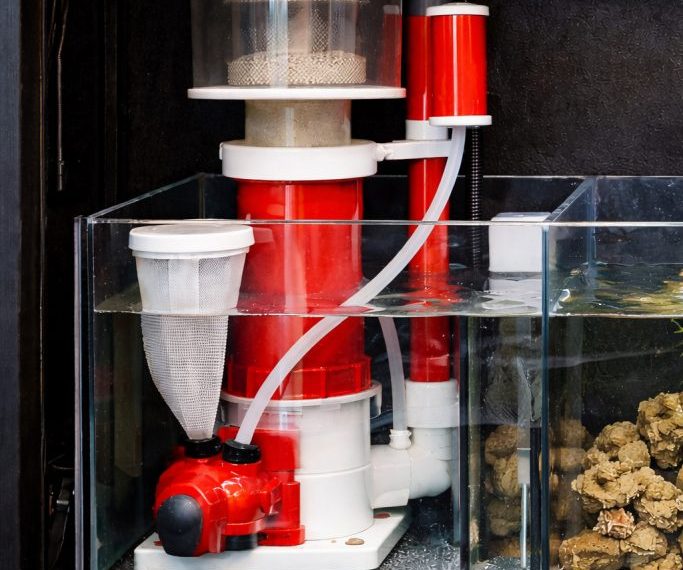
Protein Skimmer Reef Tank Guide
Learn how a protein skimmer works, how to size one, and how to tune it for a cleaner,…
 By
By
Reef Aquarium Water Parameters
Learn the ideal reef aquarium water parameters, safe ranges, and how to keep salinity, alkalinity, nutrients, and pH…