

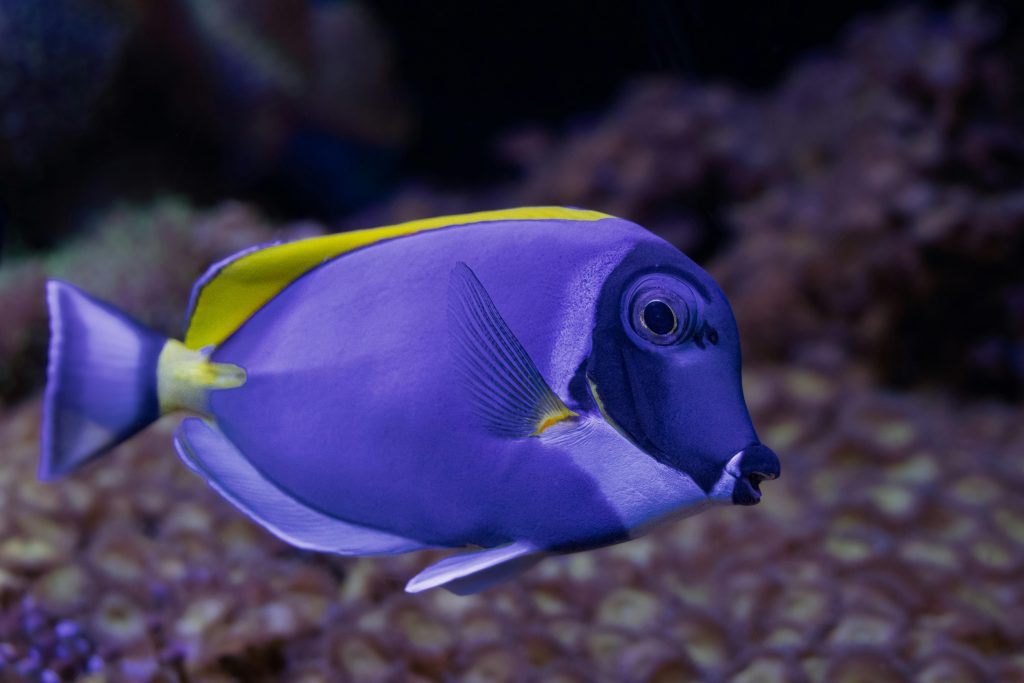
The Powder Blue Tang is one of the most striking reef fish in the hobby. It is also one of the most demanding. This species needs excellent water quality, strong flow, heavy feeding, and careful quarantine. In the right system, it becomes an active, beautiful centerpiece fish.
Many reef keepers fall in love with Acanthurus leucosternon because of its bold blue body, yellow dorsal fin, and crisp white face. Yet this fish has a reputation for stress, aggression, and marine ich. That reputation is deserved. Still, success is possible with planning. In this guide, you will learn tank size, diet, compatibility, reef safety, disease risks, and practical care tips for long-term success. If you are considering this tang, it pays to understand its needs before you buy one.
Powder Blue Tang Quick Reference
| Scientific name | Acanthurus leucosternon |
| Common name | Powder Blue Tang |
| Care level | Difficult |
| Temperament | Semi-aggressive to aggressive |
| Minimum tank size | 125 gallons |
| Adult size | 8 to 9 inches |
| Diet | Herbivore with omnivorous needs |
| Reef safe | Yes, with caution around some algae competition |
| Ideal temperature | 75 to 79°F |
| Salinity | 1.025 to 1.026 |
| pH | 8.1 to 8.4 |
| Flow | Moderate to strong |
| Lighting | Normal reef lighting |
This table gives a fast overview. The details matter even more with this species. Powder Blue Tangs often do poorly in tanks that look acceptable on paper. They need stability, room, and a low-stress environment every day.
Natural Habitat
The Powder Blue Tang comes from the Indian Ocean. It is found around reefs in places like the Maldives, Sri Lanka, and East Africa. In nature, it spends much of its time grazing algae from hard surfaces. It also swims in surge zones and reef slopes with constant water movement.
This natural setting explains many of its needs in captivity. The fish is built for motion. It wants open swimming space and steady oxygen-rich water. It also feeds throughout the day. That means long gaps between meals can lead to stress and weight loss. Wild specimens are alert and active. In small or crowded tanks, they often become defensive. Understanding the habitat helps explain why this fish struggles in immature aquariums. It does best in established reef systems with stable chemistry, mature rockwork, and plenty of natural grazing surfaces.
Aquarium Setup
A 125-gallon tank is the practical minimum for a Powder Blue Tang. Larger is better. A 6-foot tank gives this fish the horizontal swimming room it needs. In smaller tanks, stress rises quickly. Aggression also becomes more likely.
Aquascape with open lanes and structured rockwork. The fish needs room to cruise, but it also wants places to retreat. Create arches, islands, and clear pathways. Avoid packing the tank wall to wall with rock. That limits movement and traps detritus. Strong filtration is essential. Use an oversized protein skimmer if possible. Keep nitrate and phosphate under control, but do not strip the tank sterile. A mature reef with some natural algae film is helpful. Stable salinity is critical. Sudden swings can trigger stress and disease. If you want a strong start, review these basics on reef tank setup before adding demanding tangs.
Lighting Requirements
Powder Blue Tangs do not have special lighting needs of their own. They adapt well to standard reef lighting. The real concern is how lighting supports the whole aquarium. Good lighting helps maintain algae growth on rock and supports any corals in the system.
If your reef uses intense LED or hybrid lighting, provide shaded areas within the rockwork. This gives the fish places to rest when it feels exposed. Sudden lighting changes can cause stress. When introducing a new Powder Blue Tang, dim the lights for the first day if possible. That simple step can reduce panic and aggression. Keep the photoperiod consistent. Wild reef fish respond well to predictable day and night cycles. If your system grows no natural algae at all, the fish will rely even more on prepared foods. That is manageable, but it means your feeding routine must be very consistent.
Water Flow
This species enjoys moderate to strong flow. In nature, it lives in energetic reef zones. Good water movement helps with oxygenation and waste export. It also encourages the fish to behave naturally.
Aim for broad, turbulent flow rather than a constant narrow blast. The fish should be able to swim through moving water without being pinned in one spot. Dead zones should be minimal. Strong flow also benefits gas exchange, which matters for active tangs with high oxygen demand. If the fish spends long periods breathing hard near the surface, check oxygen levels, temperature, and flow patterns. Poor circulation can add stress quickly. In mixed reefs, use pumps that create varied current across the tank. That setup supports coral health and keeps the tang active and engaged.
Feeding
Feeding is one of the biggest keys to success. Powder Blue Tangs are constant grazers. They need frequent meals and a strong plant-based diet. Offer dried nori daily. Clip it in several spots if you keep multiple herbivores. Replace uneaten sheets before they foul the water.
Also feed high-quality herbivore pellets and frozen foods with marine algae. Spirulina blends work well. Many specimens also accept mysis shrimp and finely chopped seafood. That extra protein can help maintain weight, but algae should remain the foundation. Feed small portions two to four times per day. Thin fish often decline fast. A healthy Powder Blue should have a full body and smooth belly line. Soak foods in vitamins occasionally. This may support immune health and coloration. If you need a broader plan for herbivores, our guide to best food for reef fish can help you build a better rotation.
Compatibility
Powder Blue Tangs are reef safe with corals and most invertebrates. They do not usually nip coral tissue. That makes them attractive for SPS and mixed reefs. The real issue is temperament. This fish can be aggressive, especially toward other tangs and similarly shaped fish.
It often does best as the only tang in smaller systems. In large tanks, tang groups can work, but stocking order matters. Add the Powder Blue last when possible. Avoid mixing it with other Acanthurus species unless the tank is very large. Zebrasoma tangs may also trigger disputes. Peaceful reef fish usually do fine if they are not timid feeders. Avoid adding this species to a tank with already established aggressive surgeonfish. That often ends badly. Shrimp, snails, and crabs are generally safe. If you are planning a community, read more about reef fish compatibility before final stocking decisions.
Step-by-Step Guide to Keeping a Powder Blue Tang
1. Start with a mature tank. Avoid adding this fish to a new setup. The aquarium should be stable and established.
2. Quarantine every specimen. Powder Blue Tangs are very prone to parasites. A proper quarantine period is strongly recommended.
3. Choose a healthy fish. Look for a full body, clear eyes, intact fins, and constant grazing behavior. Avoid thin or rapid-breathing specimens.
4. Acclimate carefully. Match salinity and temperature slowly. Reduce stress during transfer.
5. Offer algae immediately. Many new arrivals settle faster when nori is available on day one.
6. Keep water quality stable. Watch ammonia, salinity, and temperature closely. This fish reacts badly to swings.
7. Feed several times daily. Frequent feeding supports weight, immunity, and behavior.
8. Monitor aggression. Rearrange rockwork if needed. Use an acclimation box when adding tank mates.
9. Observe for disease. Early signs include scratching, white spots, cloudy eyes, and fast breathing.
10. Maintain long-term routine. These tangs reward consistency. They do poorly with neglect or sudden changes.
Propagation and Breeding
Powder Blue Tangs are not bred by home hobbyists in normal reef aquariums. They are pelagic spawners in the wild. Their eggs and larvae drift in open water. That life cycle makes captive breeding extremely difficult.
Nearly all specimens in the trade are wild collected. Because of that, careful selection matters. Support vendors that handle fish well and ship responsibly. Healthy collection and transport make a big difference with this species. If captive breeding improves in the future, it would likely reduce stress and disease issues seen with wild imports. For now, hobbyists should focus on excellent acclimation, quarantine, and nutrition rather than breeding attempts.
Common Problems
Why does my Powder Blue Tang have white spots?
Marine ich is the most common answer. Powder Blue Tangs are famous for catching it. Stress is often the trigger. Poor quarantine, new tank additions, and unstable water all raise risk. Confirm the issue before treatment. White spots, flashing, and rapid breathing are common signs. A proper hospital tank is usually the safest treatment path. Review your disease prevention plan, including quarantine reef fish methods, before adding sensitive tangs.
Why is my Powder Blue Tang aggressive?
This fish is territorial by nature. Aggression often increases in tanks that are too small or crowded. It also rises when similar fish are present. Add plenty of swimming room and visual breaks. Introduce new fish carefully. In some cases, the Powder Blue simply needs to be the last tang added.
Why is my Powder Blue Tang not eating?
New arrivals often refuse food due to shipping stress. Offer nori first. Try different clips and locations. Add frozen herbivore blends next. Check for bullying and poor water quality. If the fish still will not eat, look for disease or internal weakness from collection stress.
Why is my Powder Blue Tang breathing fast?
Fast breathing can point to parasites, low oxygen, ammonia, or severe stress. Test water immediately. Check temperature and surface agitation. Observe the gills and body for other symptoms. Do not ignore this sign. Tangs can decline quickly once breathing becomes labored.
Frequently Asked Questions
Is a Powder Blue Tang good for beginners?
No. It is better for experienced aquarists. Beginners often struggle with quarantine, disease control, and aggression management.
What is the minimum tank size for a Powder Blue Tang?
125 gallons is the practical minimum. A larger tank is safer and easier to manage long term.
Can a Powder Blue Tang live in a reef tank?
Yes. It is generally reef safe with corals and invertebrates. Compatibility issues are mostly with other fish.
How often should I feed a Powder Blue Tang?
Feed small amounts two to four times daily. Provide nori every day for constant grazing support.
Why are Powder Blue Tangs so hard to keep?
They stress easily and are very prone to parasites. They also need space, stable water, and frequent feeding.
Final Thoughts
The Powder Blue Tang is stunning, active, and unforgettable. It can also be unforgiving. Success depends on preparation more than luck. Give it a large mature tank, strong flow, heavy algae-based feeding, and strict quarantine. If you meet those needs, this fish can thrive and become one of the highlights of your reef. If you cannot, it is better to choose a hardier tang. With this species, honesty about your system is part of good fishkeeping.
Was this helpful?
Related Posts
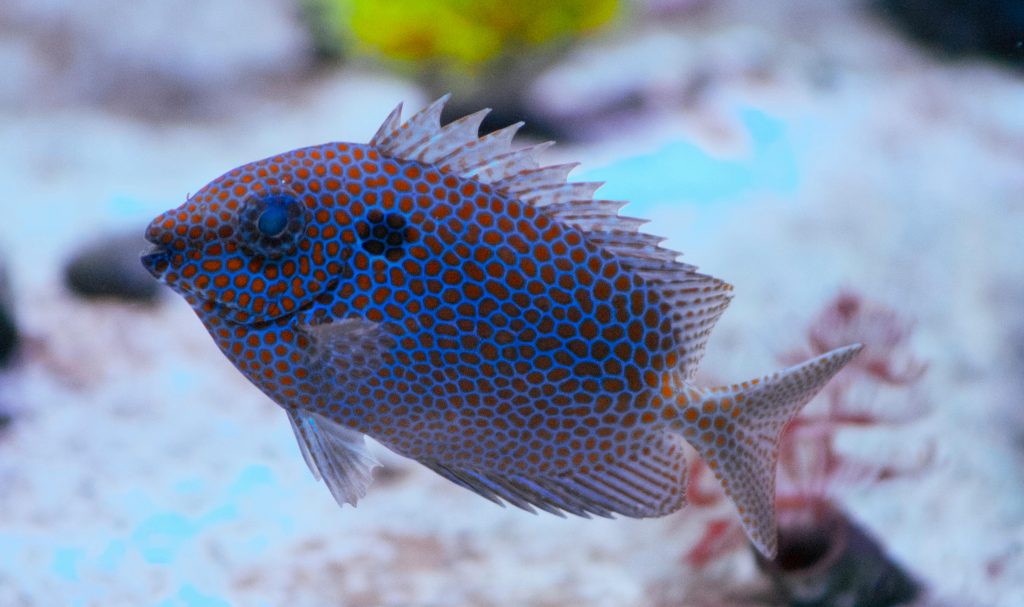
Gold Spotted Rabbitfish (Siganus Punctatus)
Gold Spotted Rabbitfish care includes large tanks, heavy algae feeding, and caution with corals. Learn tank size, diet,…
 By
By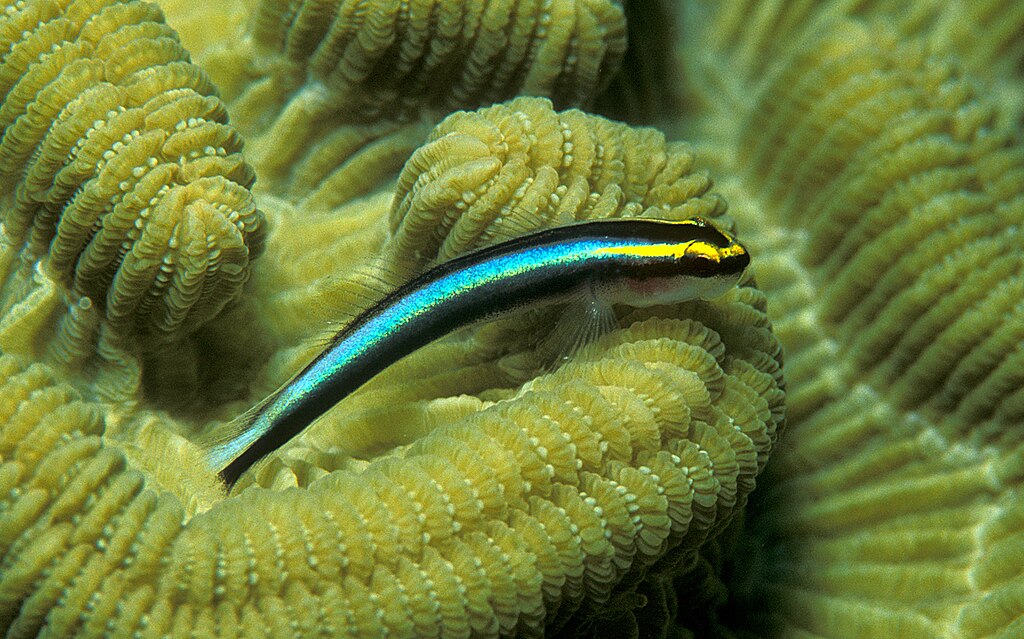
Sharknose Goby (Elacatinus evelynae)
Sharknose Goby care is simple in stable reef tanks. Learn feeding, tank setup, compatibility, and common problems for…
[favorite_button]
My Bookmarks:
To see full list click here
[user_favorites user_id="" include_links="true" site_id="" post_types="" include_thumbnails="true" thumbnail_size="thumbnail" include_excerpt="false"]