

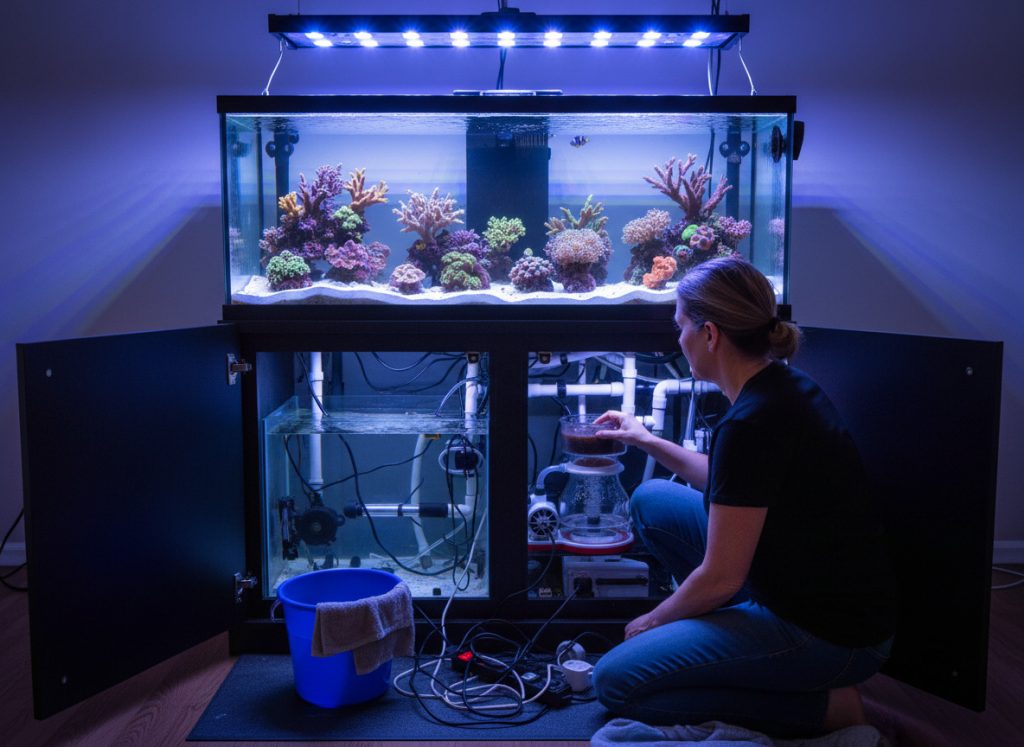
Protein skimmer tuning is the process of adjusting air, water level, and outlet control so your skimmer removes waste consistently. A well-tuned skimmer produces stable foam, dark skimmate, and fewer daily surprises. It also helps keep nutrients under control without overflowing your cup.
Many reef keepers struggle with skimmers at first. One day the cup stays dry. The next day it floods the sump. That is normal. Skimmers react to water depth, feeding, additives, bio-load, and even your hands in the tank. In this guide, you will learn how a skimmer works, how to tune it step by step, what wet and dry skimming mean, and how to fix common problems. The goal is simple. You want stable performance, not constant adjustment.
Quick Reference Table
| Topic | Best Practice |
|---|---|
| Break-in period | Allow 3 to 7 days before making major judgments |
| Water depth | Keep skimmer in the manufacturer’s recommended sump depth |
| Initial setting | Start with a lower internal water level and raise slowly |
| Foam target | Aim for stable foam head at the base of the neck |
| Wet skimming | Lighter skimmate, faster export, more cup filling |
| Dry skimming | Darker skimmate, slower export, less frequent emptying |
| After feeding | Expect temporary foam collapse or surging |
| After additives | Watch closely for overflow from foods, coral dips, and conditioners |
| Cleaning schedule | Clean cup and neck weekly for stable foam production |
| Overflow prevention | Use a waste container or drain line if available |
Use this table as your fast setup guide. Most skimmer issues come from water depth, dirty necks, or sudden changes in tank chemistry. Start simple. Make one adjustment at a time. Then wait and observe.
How a Protein Skimmer Works
A protein skimmer removes dissolved organic waste before it breaks down fully. It does this with foam fractionation. The pump mixes water with many fine air bubbles. Organic compounds stick to the bubble surfaces. Those bubbles rise into the neck and collect in the cup.
The key to tuning is bubble stability. If the internal water level is too low, foam never reaches the cup. If it is too high, the cup fills with watery skim. Air intake matters too. More air often improves performance, but only within the skimmer’s design range. Sump depth also changes back pressure. That affects the internal water line.
Think of your skimmer as a balance point. Air, water, organics, and outlet restriction all interact. A tuned skimmer creates a dense foam head that slowly climbs the neck. It should not surge wildly. It should not sit completely flat for days unless the tank is very clean or something is suppressing foam.
Before You Start Tuning
Check three things first. Confirm the skimmer is clean. Confirm the pump and airline are clear. Confirm the sump water depth matches the manual. These basics solve many problems before tuning even begins.
New skimmers need a break-in period. Fresh acrylic and manufacturing oils affect foam production. During this stage, performance can swing a lot. That is not always a defect. Give the skimmer several days. Avoid constant adjustment during the first 24 hours.
Also consider your system. A lightly stocked tank may produce less skimmate. A heavily fed SPS tank may produce much more. If you recently used epoxy, medications, water conditioners, or coral foods, your skimmer may behave differently for hours. Stability matters in reefing. The same rule applies here. If your sump level changes daily, add an auto top off. A stable water line makes skimmer tuning much easier. You can learn more in our reef tank parameters guide.
Step-by-Step Protein Skimmer Tuning
Start with the air intake fully open, unless the manufacturer says otherwise. Set the skimmer in the correct water depth. Then open the outlet so the internal water level stays low. You want a safe starting point.
- Turn the skimmer on and let it run for 10 to 15 minutes.
- Look inside the body and find the internal water line.
- Slowly restrict the outlet or raise the gate valve.
- Bring the foam head to the lower neck area.
- Wait 10 to 20 minutes after each small adjustment.
- Aim for dense foam that rises steadily, not violently.
- For drier skimming, keep the foam lower in the neck.
- For wetter skimming, raise the foam slightly higher.
- Mark your preferred setting once it stabilizes.
Do not chase every short-term change. Feedings and hands in the tank can alter foam quickly. If the skimmer is not overflowing and the foam returns later, leave it alone. Most over-adjustment happens because hobbyists react too fast. Patience is part of tuning.
Wet Skimming vs Dry Skimming
Wet skimming means the foam rises higher and carries more water into the cup. The skimmate looks lighter. The cup fills faster. This can help during heavy feeding, nutrient reduction, or after a tank issue. The downside is more frequent emptying and more saltwater loss.
Dry skimming means the foam breaks later and collects thicker waste. The skimmate looks darker and smellier. The cup fills more slowly. This is popular for steady day-to-day export. It usually requires less maintenance between empties.
Neither method is always best. Match the setting to your goals. If nitrate and phosphate are climbing, slightly wetter skimming may help. If the skimmer is stripping too aggressively in a low nutrient tank, tune a little drier. Pair skimmer tuning with regular testing. Our reef nitrate guide and reef phosphate guide can help you interpret the results.
Aquarium Setup Factors That Affect Tuning
Your skimmer does not work in isolation. Sump design, return section level, feeding habits, and tank bio-load all affect performance. A skimmer in a fluctuating chamber will act differently every day. That leads to random overflow or weak foam.
Place the skimmer in a chamber with stable water height. Use a stand if the sump is too deep. Keep the air silencer dry and the airline free from salt creep. Check that the venturi is not clogged. Reduced air draw often looks like poor tuning, but the real issue is maintenance.
Tank age matters too. New tanks often have unstable organics. Mature tanks usually skim more predictably. Heavier fish loads increase dissolved waste. Coral-heavy systems may react strongly to amino acids and foods. If you are still refining filtration, read our reef tank filtration guide. It explains how skimmers fit with refugiums, filter socks, and media reactors.
Maintenance for Stable Skimmer Performance
A dirty skimmer neck reduces foam rise. Waste builds a slick layer inside the neck. That causes bubbles to pop sooner. The result is weaker collection and less predictable tuning. Clean the cup and neck at least weekly. Some heavy systems need it twice a week.
Every month, inspect the pump, impeller, venturi, and airline. Salt creep and calcium buildup restrict air and water flow. Soak parts in warm water and vinegar if needed. Rinse well before reinstalling. Replace brittle airline tubing. Make sure the pump restarts reliably after cleaning.
Also inspect the outlet gate or wedge pipe. Debris there can change the water level inside the body. Small restrictions create big tuning changes. Consistent maintenance means fewer random adjustments. That saves time and keeps nutrient export steady.
Common Problems
Why is my skimmer overflowing?
Overflow usually comes from the internal water level being too high. It can also happen after epoxy use, water conditioners, coral foods, medications, or oily foods. Lower the internal water level immediately. Raise the cup if your model allows it. If the cause is an additive, let the skimmer run with the outlet more open until it settles.
Why is my skimmer not producing foam?
Check the airline, venturi, and pump first. Then confirm the sump depth. A very clean tank can also produce little skimmate. So can a new skimmer during break-in. If you recently put your hands in the tank, oils may suppress foam temporarily. Wait a few hours before changing settings.
Why does my skimmer surge on and off?
Surging often points to unstable sump water level, inconsistent air draw, or a partial clog. It can also happen when the skimmer is set too close to the overflow point. Lower the internal water level slightly. Then verify your auto top off is working correctly.
Why is the skimmate too watery?
The skimmer is likely tuned too wet. Lower the internal water level a little. Clean the neck if it is heavily coated. Watch the foam head for 20 minutes before making another change. Fine adjustments matter more than large ones.
Why does the skimmer stop after feeding?
Many foods and supplements change surface tension. That can collapse foam for a while. This is common with frozen foods, amino acids, and coral feeds. In most cases, the skimmer recovers on its own. Avoid retuning unless the behavior continues long after feeding.
Frequently Asked Questions
How long does it take to tune a protein skimmer?
Basic tuning takes about 15 to 30 minutes. Full stabilization may take several hours. New skimmers may need several days to break in.
Should I turn my skimmer off at night?
Usually no. Continuous operation gives the most stable results. Some hobbyists shut skimmers off during target feeding, then restart them later.
Is darker skimmate always better?
Not always. Dark skimmate means drier collection. That can be useful, but it is not the only goal. Stable nutrient control matters more.
Can a skimmer remove too much?
In very low nutrient systems, aggressive skimming can contribute to ultra-low nutrients. Watch coral color, polyp extension, nitrate, and phosphate.
Do all reef tanks need a skimmer?
No. Some nano and soft coral systems run well without one. Still, a skimmer adds oxygenation and export capacity, which many reef keepers value.
Final Tips for Consistent Results
The best skimmer setting is the one that stays stable for your system. Start low. Raise slowly. Wait between changes. Keep the water depth constant. Clean the neck often. Watch how feeding and additives affect behavior. Those habits matter more than chasing the darkest skimmate possible.
If your skimmer still behaves unpredictably, step back and review the basics. Check sump depth. Clean the air path. Inspect the pump. Then test nutrients and consider your feeding schedule. Protein skimmer tuning gets easier once you understand the pattern. After that, small adjustments are usually all you need.
Was this helpful?
Related Posts
Sohal Tang (Acanthurus Sohal)
Sohal Tang care centers on space, heavy feeding, and aggression control. Learn tank size, diet, compatibility, and common…
 By
By
Reef Safe Fish Guide
Learn which reef safe fish work best in coral tanks, plus species to avoid, compatibility tips, and beginner-friendly…
[favorite_button]
My Bookmarks:
To see full list click here
[user_favorites user_id="" include_links="true" site_id="" post_types="" include_thumbnails="true" thumbnail_size="thumbnail" include_excerpt="false"]