

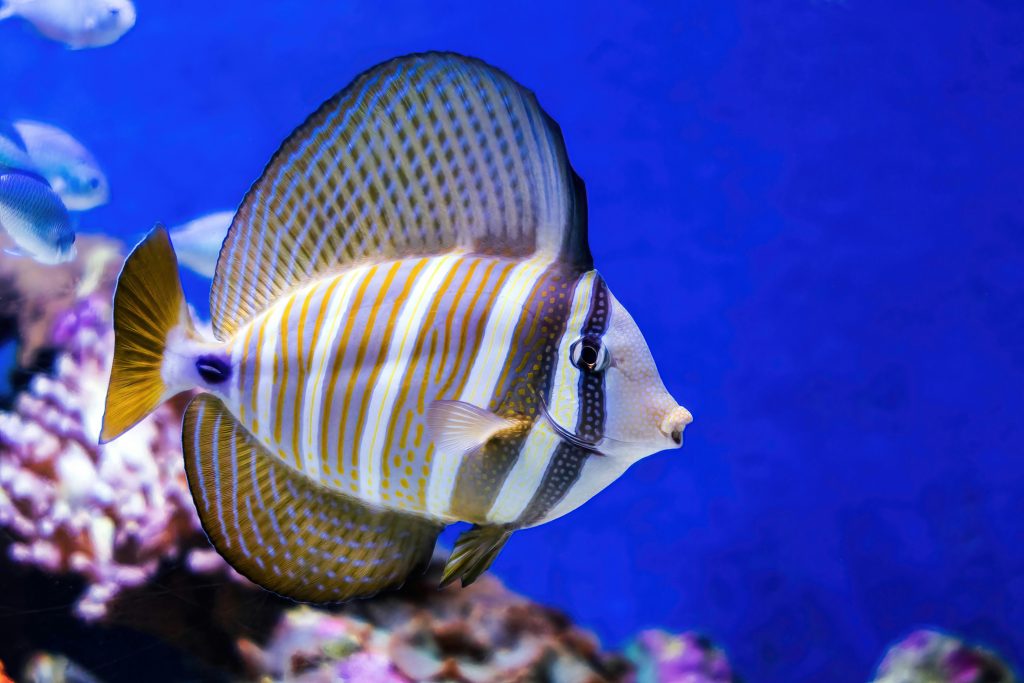
The Sailfin Tang is a striking reef fish with bold stripes, a tall dorsal fin, and active swimming habits. It is hardy once established, but it needs a large tank, stable water quality, and a steady supply of algae-based foods. This species is best for hobbyists who can provide space and strong husbandry.
Sailfin Tangs are popular for good reason. They are beautiful, useful grazers, and full of personality. They also become large and demand more room than many new reef keepers expect. That makes planning very important. In this guide, you will learn how big a Sailfin Tang gets, what it eats, what tank size it needs, and how to avoid common problems. We will also cover compatibility, quarantine, and practical care tips that help this fish thrive long term in a reef aquarium.
Quick Care Facts
| Common name | Sailfin Tang |
| Scientific name | Zebrasoma velifer |
| Family | Acanthuridae |
| Care level | Moderate |
| Temperament | Semi-aggressive |
| Adult size | Up to 15 inches |
| Minimum tank size | 180 gallons |
| Diet | Herbivore with some meaty foods |
| Reef safe | Yes |
| Temperature | 75–79°F |
| Salinity | 1.025–1.026 |
| pH | 8.1–8.4 |
| Nitrate | Under 20 ppm |
Natural Habitat
Zebrasoma velifer occurs across the Indo-Pacific. It is found around coral-rich coastal reefs, lagoons, and seaward reef slopes. Juveniles often stay in sheltered areas with rubble, macroalgae, and branching coral. Adults move into more open reef zones where they can graze over larger areas.
In nature, Sailfin Tangs spend much of the day feeding. They pick at filamentous algae and biofilm on hard surfaces. They also use reef structure for shelter when threatened. This natural behavior explains two big needs in captivity. First, they need constant access to vegetable matter. Second, they need a long tank with open swimming lanes and rockwork for security. When those needs are met, they usually settle in well and become confident display fish.
Identification and Adult Size
The Sailfin Tang is easy to recognize. It has a disc-shaped body, alternating vertical bands, and a very tall dorsal and anal fin. When the fins are fully extended, the fish looks much larger and more dramatic. Juveniles are especially eye-catching and often show stronger contrast than adults.
One common mistake is underestimating its final size. This species can reach around 15 inches in captivity, though many stay somewhat smaller. Even at 10 to 12 inches, it is still a very large tang. Its body depth also matters. This is not a narrow fish that can turn easily in short tanks. It needs room to cruise and pivot. That is why tank length and open swimming space are both critical for long-term success.
Aquarium Setup
A 180-gallon tank is the practical minimum for an adult Sailfin Tang. Larger is always better. A 6-foot tank should be considered the starting point. An 8-foot tank is even better for full-grown specimens. Avoid housing this species in cramped systems, even when it is still small. It will outgrow them quickly.
Build the aquascape with a balance of rock and open water. Create caves and shaded areas, but leave broad lanes for swimming. Keep rock structures stable and secure. Tangs are active and can wedge into rockwork at night. Strong filtration is important because large herbivores produce a lot of waste. A quality protein skimmer helps. So does regular maintenance. If you are still planning your system, our guides on reef tank setup, live rock for reef tanks, and protein skimmer guide can help you build a better home from the start.
Water Parameters and Stability
Sailfin Tangs handle a range of reef conditions, but they do best with stability. Sudden swings often trigger stress, poor feeding, or disease outbreaks. Keep temperature between 75 and 79 degrees Fahrenheit. Maintain salinity near natural seawater, ideally 1.025 to 1.026. Hold pH between 8.1 and 8.4. Keep ammonia and nitrite at zero.
Nitrate should stay low to moderate. Under 20 ppm is a good target. Phosphate should also remain controlled, but not stripped to zero. Stable alkalinity and oxygen levels are important too. This fish is active and uses a lot of oxygen. Good gas exchange matters. Test often, especially in new systems. If you struggle with consistency, review your maintenance routine and feeding load. Our article on reef tank water parameters explains the targets in more detail.
Lighting Requirements
The Sailfin Tang does not have strict lighting needs in the same way corals do. It adapts well to standard reef lighting. What matters more is a steady day and night cycle. Sudden changes or harsh light in a bare quarantine tank can increase stress. Give the fish shaded areas so it can retreat when needed.
In display reefs, the lighting should match the coral collection rather than the tang. If algae growth is too sparse, the fish may lose a natural grazing source. That does not mean you should let nuisance algae take over. It means the tang still needs regular prepared foods and nori, even in a mature reef. Good nutrition is more important than relying on incidental algae alone.
Water Flow
Moderate to strong water movement works well for this species. In the wild, Sailfin Tangs live in areas with steady circulation and high oxygen levels. They appreciate brisk flow, but they still need calm zones for resting. Aim for varied flow rather than one constant blast across the whole tank.
Good flow also supports overall reef health. It keeps waste suspended, improves oxygen exchange, and reduces dead spots in the rockwork. These benefits matter in tanks that house large herbivores. If the fish constantly hides, breathes heavily, or avoids open water, review both flow and aquascape. Sometimes the issue is not too much flow. It is poor flow direction or a lack of sheltered areas.
Feeding
Feeding is one of the most important parts of Sailfin Tang care. This fish is primarily an herbivore. It should receive algae-based foods every day. Dried nori is the staple. Use a clip and offer it at least once daily. Many keepers feed it twice daily. Remove uneaten sheets before they foul the water.
Round out the diet with quality herbivore pellets, spirulina flakes, and frozen foods that include marine algae. Mysis shrimp can be offered in small amounts for variety. Do not rely on meaty foods alone. That often leads to poor body condition over time. A healthy Sailfin Tang should have a full belly, smooth head profile, and active grazing behavior. If the fish looks pinched or ignores algae, act quickly. Check for stress, bullying, or internal health issues.
Compatibility
Sailfin Tangs are generally reef safe. They do not bother corals in most cases. They can live with many reef fish, including clownfish, wrasses, gobies, and reef-safe angelfish. Problems usually involve other tangs or fish with similar shape and feeding style. They may become territorial, especially in smaller tanks.
If you want multiple tangs, tank size becomes even more important. Introduce them carefully. Add the Sailfin Tang last when possible. Use acclimation boxes if needed. Provide several feeding stations to reduce conflict. Avoid mixing it with other Zebrasoma species in tanks that are too small. It usually ignores shrimp, snails, and crabs. As always, individual behavior varies. Watch closely during the first weeks after introduction.
Step-by-Step Acclimation Guide
- Prepare a quarantine tank before purchase. Include hiding places and strong aeration.
- Match temperature first. Float the bag for 15 to 20 minutes.
- Use drip acclimation if salinity differs noticeably. Keep the process gentle and brief.
- Transfer the fish without store water if possible.
- Offer nori within the first day. Many tangs settle faster when they can graze.
- Observe breathing, appetite, and waste output every day.
- Quarantine for several weeks before display introduction.
- Use an acclimation box in the display if tankmates are aggressive.
Quarantine is strongly recommended for all tangs. They are prone to marine ich and other external parasites. A healthy start prevents many future problems. It also protects the rest of your reef.
Propagation and Breeding
Sailfin Tangs are not bred by home hobbyists in normal reef systems. In nature, they are broadcast spawners. They release eggs and sperm into open water. The larvae are planktonic and require specialized rearing methods. That is far beyond the scope of most aquariums.
Because captive breeding is not practical for most keepers, focus on responsible sourcing. Buy a healthy specimen from a reputable vendor. Choose one that is alert, feeding, and free of visible spots or frayed fins. Avoid thin fish with sunken bellies. A good start makes long-term care much easier.
Common Problems
Why is my Sailfin Tang not eating?
New arrivals often refuse food for a short time. Stress is the main cause. Shipping, poor acclimation, and harassment from tankmates are common triggers. Offer nori first. Keep lighting subdued. Provide cover. Check ammonia and oxygen levels. If the fish still refuses food after several days, inspect for parasites or mouth injuries.
Why does my Sailfin Tang have white spots?
White spots often indicate marine ich, though other parasites can look similar. Tangs are especially susceptible. Stress lowers resistance. Move the fish to a proper treatment system if disease is confirmed. Do not medicate a reef display without a clear plan. Quarantine remains the best prevention.
Why is my Sailfin Tang aggressive?
Territorial behavior is common in undersized tanks or crowded tang communities. Rearranging rockwork can help. So can adding more feeding points. In severe cases, separation may be needed. Aggression often reflects limited space rather than a bad individual fish.
Why is my Sailfin Tang getting thin?
Weight loss usually points to poor diet, competition, stress, or internal parasites. Increase algae feedings first. Confirm the fish actually gets food. Watch for bullying during meals. If appetite is good but the body keeps shrinking, investigate internal health issues.
Frequently Asked Questions
Is the Sailfin Tang good for beginners?
It can work for prepared beginners with a large tank. It is not ideal for small or new systems.
How big does a Sailfin Tang get?
It can reach about 15 inches. Many aquarium specimens stay slightly smaller, but still need substantial space.
Can a Sailfin Tang live in a 125-gallon tank?
A juvenile may live there temporarily, but it is not a good long-term home for a full-grown fish.
Is the Sailfin Tang reef safe?
Yes. It is generally safe with corals and most reef invertebrates.
What is the difference between Zebrasoma velifer and desjardinii?
They are closely related and often confused. Both are called sailfin tangs in the trade. Patterns and geographic origin differ, but care is very similar.
Final Thoughts
The Sailfin Tang is a beautiful and rewarding fish, but it is not a casual purchase. It needs swimming room, stable water, and a serious feeding routine. When those needs are met, it becomes a hardy centerpiece and an excellent algae grazer. Plan for the adult size from day one. That single choice will shape your success more than anything else.
Was this helpful?
Related Posts
Reef Alkalinity and Calcium Guide
Learn the ideal reef alkalinity and calcium ranges, how they interact, and how to test, dose, and troubleshoot…
 By
ByReef Tank Basics
Learn reef tank basics, from setup and cycling to lighting, flow, and water chemistry, so your first reef…
[favorite_button]
My Bookmarks:
To see full list click here
[user_favorites user_id="" include_links="true" site_id="" post_types="" include_thumbnails="true" thumbnail_size="thumbnail" include_excerpt="false"]