Reef Dosing Basics
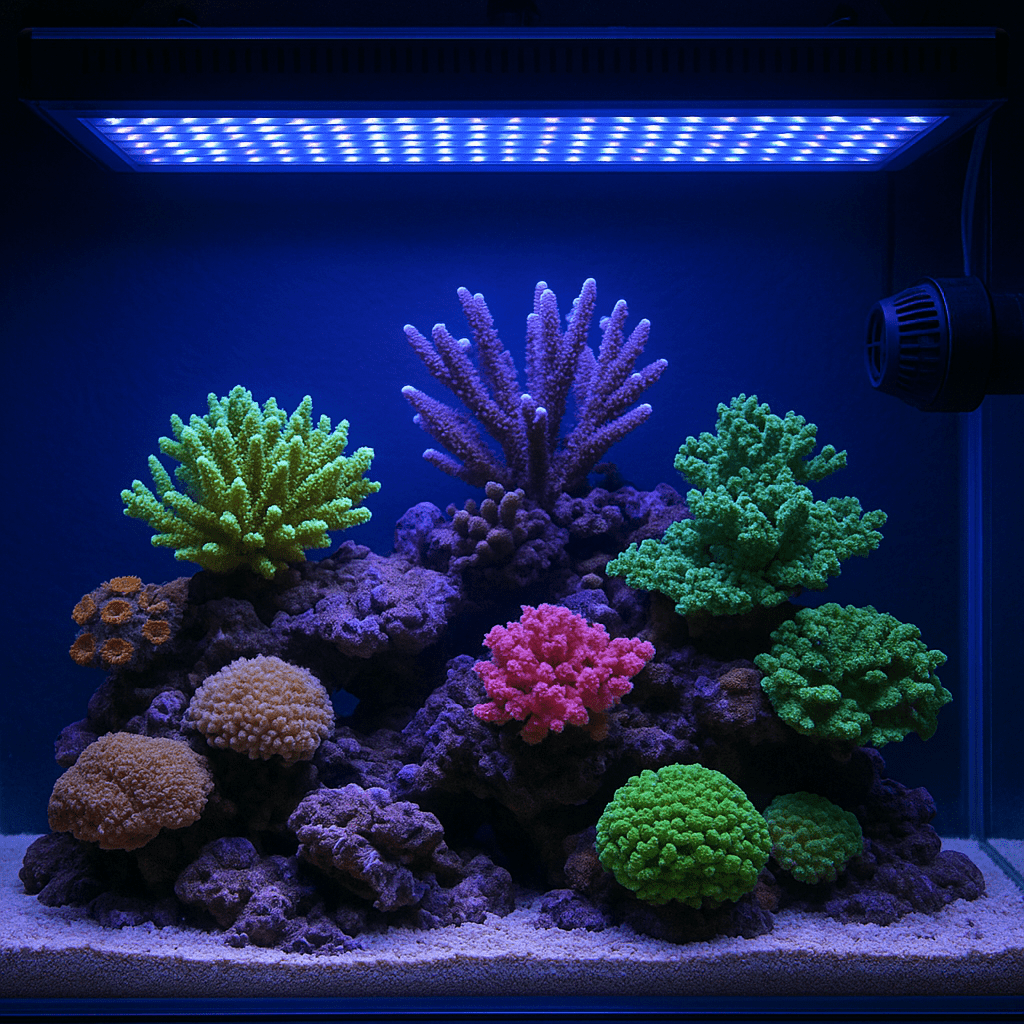
Dosing is one of those milestones in the saltwater aquarium hobby that signals you’re moving from a simple tank to a true reef system. When corals begin to grow, they quickly use up key elements from the water. Dosing replaces what’s lost and keeps your parameters stable so your reef can thrive. In this guide, we’ll cover what reef dosing is, what to dose, and how to get started safely.
What Is Dosing and Why Does It Matter?
In a reef tank, corals and coralline algae constantly consume calcium, alkalinity, and magnesium to build their skeletons. Water changes alone often can’t keep up, especially in tanks with lots of stony corals. Dosing is the controlled addition of these elements (and sometimes others) to maintain stable levels.
Stable parameters are far more important than chasing perfect numbers. Big daily swings in alkalinity or calcium can stress corals, cause tissue loss, and slow growth. Dosing helps you avoid these swings by replacing exactly what your reef uses each day.
Before you start dosing, it’s a good idea to review the basics of saltwater testing and make sure you’re comfortable reading and logging your results.
The Big Three: Alkalinity, Calcium, and Magnesium
Target Ranges
- Alkalinity (dKH): 7.5–9.0 dKH (pick a number and keep it steady)
- Calcium (Ca): 400–450 ppm
- Magnesium (Mg): 1250–1400 ppm
Most reefers start dosing when regular water changes can no longer keep these three in range between changes. If you see your levels dropping several points over a week, it’s time to consider dosing.
Basic Dosing Options
- Two-part solutions: Separate bottles for alkalinity and calcium (often with magnesium included in one part or added separately). Ideal for most mixed reefs.
- All-in-one blends: Combine multiple elements, convenient for lighter-demand tanks but less flexible for fine-tuning.
- Manual vs. automated: You can add supplements by hand or use a dosing pump to spread the dose out over the day.
If you’re still planning your equipment, check out our overview on reef tank equipment to see where dosing pumps fit into the bigger picture.
How to Start Dosing Safely
Step 1: Test and Establish a Baseline
- Test alkalinity, calcium, and magnesium at the same time each day.
- Record results for 3–7 days without dosing.
- Calculate the average daily drop for each parameter.
Example: If alkalinity falls from 9.0 dKH to 8.0 dKH over 4 days, your tank is using about 0.25 dKH per day.
Step 2: Use the Manufacturer’s Calculator
Most reputable dosing products provide a calculator or chart. Use your tank volume and daily consumption to figure out how many milliliters to add per day. Start with 50–75% of that suggested amount, then fine-tune over a week of testing.
Step 3: Dose Slowly and Consistently
- Split your daily dose into 2–4 smaller doses to reduce swings.
- If using a dosing pump, schedule alk doses at night and calcium during the day, or alternate hours.
- Never raise alkalinity by more than about 1 dKH per day.
As your coral load increases, your dosing needs will change. Retest weekly and adjust your dose gradually.
Common Dosing Mistakes to Avoid
- Dosing without testing: Always test first; never guess.
- Changing too many things at once: Adjust one parameter at a time and give the tank a few days to respond.
- Chasing exact numbers: Aim for stability in a reasonable range, not a single “perfect” value.
- Ignoring magnesium: Low magnesium makes it harder to maintain stable calcium and alkalinity.
With a bit of patience and a good logbook, dosing becomes a simple routine instead of a mystery. Start slowly, test regularly, and focus on keeping your parameters steady. Your corals will reward you with better color, growth, and overall health.
Sources
- Randy Holmes-Farley, “Reef Aquarium Water Parameters” and related chemistry articles, Reefkeeping Magazine.
- Bulk Reef Supply, “BRStv Investigates” video series on reef tank chemistry and dosing.
- Sprung, J. & Delbeek, J. C., The Reef Aquarium (multi-volume series), Ricordea Publishing.
Was this helpful?
Related Posts
Dragonets Fish Care
Dragonets are beautiful reef fish, but they need mature tanks and steady food sources. Learn how to keep…
 By
By
Lighting For Aquarium
Lighting for Aquarium: Getting Saltwater Illumination Right Lighting for a saltwater aquarium is about much more than simply…