

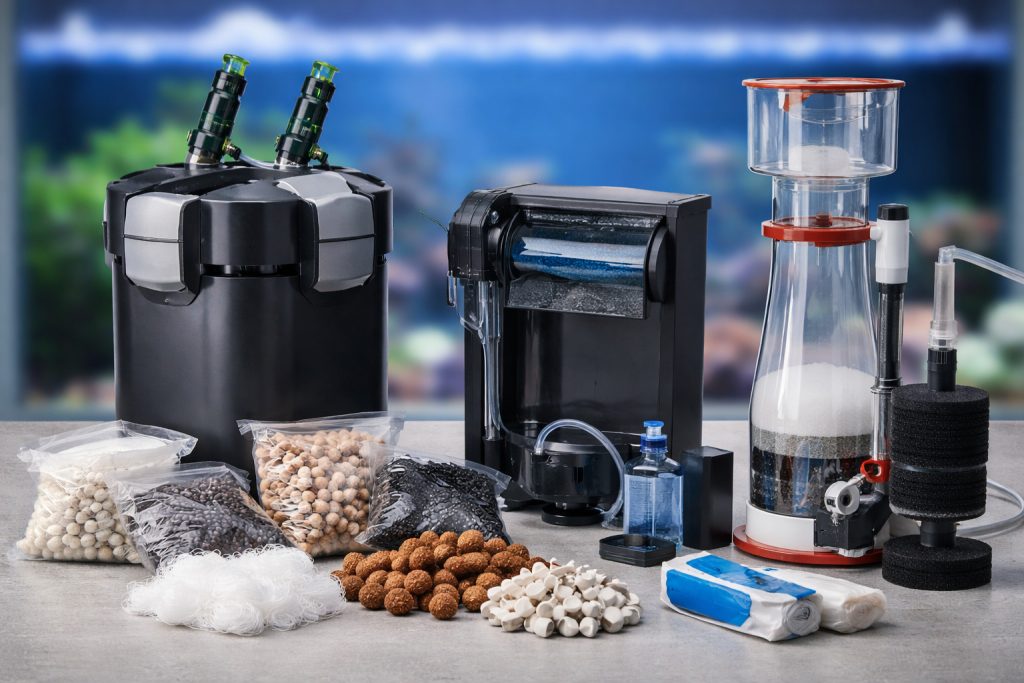
Reef filtration basics come down to one goal. Keep water stable and clean without stripping it too hard. A good reef filter system removes waste, supports beneficial bacteria, and helps control nutrients. When each part works together, corals stay healthier and fish handle stress better.
Many beginners think filtration means buying one powerful filter. In reef tanks, it is more of a system. Live rock, mechanical media, protein skimming, biological filtration, and nutrient export all play a role. The right mix depends on tank size, livestock, and feeding habits. In this guide, you will learn what each filtration method does, which ones matter most, and how to build a simple plan that keeps your reef stable long term.
Quick Reference Table
| Filtration Type | Main Job | Best Use | Watch Out For |
|---|---|---|---|
| Mechanical | Traps particles and detritus | Filter socks, floss, roller mats | Dirty media raises nitrate if not changed |
| Biological | Processes ammonia and nitrite | Live rock, bio media, sand | Needs stable flow and oxygen |
| Chemical | Removes dissolved waste or toxins | Carbon, GFO, specialty resins | Overuse can strip water too fast |
| Protein Skimmer | Removes organics before breakdown | Most reef systems with fish | Needs tuning and regular cleaning |
| Refugium | Exports nutrients with macroalgae | Mixed reefs and nutrient control | Poor growth if light or flow is weak |
| UV Sterilizer | Reduces free-floating pests and algae | Water clarity and disease support | Not a replacement for quarantine |
This table gives the short version. Most reef tanks use several methods at once. That layered approach is what makes reef filtration work so well.
Why Filtration Matters in a Reef Tank
Reef aquariums are closed systems. Waste has nowhere to go unless you remove it. Fish release ammonia. Uneaten food breaks down. Coral mucus and detritus build up in low-flow areas. Without filtration, water quality drops fast.
The first goal is ammonia control. Even low ammonia can stress fish and invertebrates. The second goal is nutrient management. Nitrate and phosphate are not always bad, but excess levels can fuel algae and irritate corals. The third goal is stability. Corals respond best when conditions change slowly. Good filtration helps prevent sudden spikes in waste, low oxygen, and cloudy water.
Think of filtration as support, not a shortcut. It will not fix overfeeding, poor stocking, or skipped maintenance. It does make those routine tasks easier to manage. That is why successful reef keepers build simple systems first. Then they add equipment only when it solves a real problem.
The Three Core Types of Reef Filtration
Most reef filtration falls into three categories. These are mechanical, biological, and chemical filtration. Each one handles waste in a different way.
Mechanical filtration removes visible particles. This includes fish waste, food, and suspended debris. Filter socks, floss, and roller mats are common examples. They improve water clarity fast. They also stop detritus from settling in the sump or rockwork.
Biological filtration is the foundation of every reef tank. Beneficial bacteria live on rock, sand, and porous media. These bacteria convert toxic ammonia into nitrite, then nitrate. This process is called the nitrogen cycle. Without it, the tank cannot support life.
Chemical filtration removes dissolved compounds from the water. Activated carbon removes yellowing compounds and many toxins. GFO binds phosphate. Other resins target nitrate, silicate, or metals. Chemical media can be very useful, but use it with purpose. Random media changes often cause more confusion than benefit.
Biological Filtration: The Real Backbone
Biological filtration does most of the heavy lifting in a reef tank. This is why live rock remains so valuable. It offers huge surface area for bacteria. Water moves through tiny pores and supports different microbial zones. Some bacteria process ammonia and nitrite. Others help reduce nitrate in low-oxygen areas.
Dry rock can work just as well over time. It simply needs time to mature. Bio bricks, ceramic blocks, and porous media also add surface area. These products help in tanks with minimal rockwork. They are common in modern aquascapes with open space.
Biological filtration needs oxygen and steady flow. If media gets clogged with detritus, performance drops. That is why pre-filtration matters. A dirty sump can become a nutrient trap. Keep water moving and remove trapped waste often. Stable salinity and temperature also protect bacterial populations. Sudden swings can reduce efficiency and stress the whole system.
Mechanical Filtration: Simple but Important
Mechanical filtration is often underestimated. Its job is simple. Catch particles before they break down. This reduces the amount of waste that turns into nitrate and phosphate later.
Filter socks are common in sump systems. They work well, but need frequent cleaning. Many reef keepers change them every two to three days. Filter floss is cheap and easy to replace. It works well in all-in-one tanks and media baskets. Roller mats automate this process. They cost more, but reduce maintenance and keep detritus from sitting in the system.
The key is consistency. Dirty mechanical media becomes part of the problem. If you leave it too long, trapped waste breaks down in place. Water clarity may still look good, but nutrients can rise. Mechanical filtration works best when paired with strong flow. That keeps debris suspended long enough to reach the overflow and sump.
Chemical Filtration: Use It With a Purpose
Chemical media can polish water and solve specific issues. Activated carbon is the most common choice. It removes dissolved organics, odors, and coral toxins. This is especially helpful in mixed reefs with soft corals. Carbon also improves water clarity, which can increase light penetration.
GFO, or granular ferric oxide, removes phosphate. It can be very effective in tanks with persistent algae. However, lowering phosphate too quickly can stress corals. Start with small amounts. Test often. Change media based on results, not guesswork.
Other media target nitrate, silicate, or ammonia. These are usually situational tools. They should not replace good husbandry. If nutrients are high, first check feeding, detritus buildup, and maintenance habits. Chemical filtration works best when it supports a balanced system rather than forcing one.
Protein Skimmers and Refugiums
A protein skimmer removes dissolved organic waste before it fully breaks down. It does this by creating foam that collects waste in a cup. Skimmers help oxygenate the water too. That is useful in tanks with heavy fish loads or dense coral growth.
Not every reef tank needs a large skimmer. Some nano reefs run well without one. Still, skimmers are one of the most helpful tools for long-term nutrient control. They also add a margin of safety if you feed heavily.
Refugiums work differently. They use macroalgae, usually chaetomorpha, to absorb nitrate and phosphate. A refugium also supports copepods and other microfauna. This adds biodiversity and can benefit finicky fish. Refugiums are slower than skimmers, but they are very natural. Many hobbyists use both together for balanced export.
How to Build a Simple Reef Filtration System
You do not need every gadget on day one. A simple setup often works best. Start with enough live rock or bio media for biological filtration. Add mechanical filtration at the overflow or media basket. Use a skimmer if your tank size and budget allow it. Then add chemical media only when a test result or clear problem justifies it.
For many beginner tanks, this plan works well. Use filter floss changed twice weekly. Add quality rock for bacteria. Run a properly sized skimmer. Keep carbon on hand for occasional use or run a small amount continuously. Perform regular water changes. Test nitrate and phosphate every week at first.
If nutrients stay high, add a refugium or improve maintenance before buying more media. If nutrients fall too low, feed more or reduce export. Reef filtration is about balance. More equipment is not always better.
Common Problems
Why is my reef tank nitrate high?
High nitrate usually points to excess waste or weak export. Check feeding first. Overfeeding is common. Next, inspect filter socks, floss, and sump chambers for trapped detritus. Clean the skimmer neck and cup. Vacuum dead spots in the sand and rockwork. If nitrate still stays high, consider adding macroalgae or increasing water changes.
Why is phosphate still high with GFO?
Phosphate may be entering faster than media can remove it. Frozen food, dirty rock, and old detritus are common sources. Test your source water too. Replace exhausted GFO and use smaller amounts more often. Improve mechanical filtration so debris does not keep breaking down.
Why is my water cloudy?
Cloudy water can come from bacterial blooms, stirred detritus, or microbubbles. Check recent changes first. New sand, overcleaning, carbon dosing, or dead livestock can trigger blooms. Use fresh mechanical filtration and improve aeration. If microbubbles are the cause, inspect sump baffles and skimmer output.
Can filtration be too strong?
Yes. Ultra-low nutrients can pale corals and slow growth. Aggressive skimming, heavy media use, and oversized refugiums can strip water too far. If nitrate and phosphate bottom out, reduce export and feed a bit more. Corals usually prefer stable, measurable nutrients over zero.
Frequently Asked Questions
Do reef tanks need a canister filter?
Not usually. Canister filters can work, but they need frequent cleaning. If neglected, they trap waste and raise nutrients. Most reef keepers prefer sumps, media baskets, or simple mechanical filtration.
Is live rock enough for filtration?
Live rock handles biological filtration very well. Still, most tanks benefit from mechanical filtration and regular export. Live rock alone rarely manages all nutrient issues in a heavily fed reef.
Should I run carbon all the time?
Many hobbyists do. A small amount changed regularly works well. It helps with clarity and toxins. Just avoid huge amounts unless you have a specific reason.
What is the best filtration for a beginner reef tank?
The best beginner setup is simple. Use live rock, filter floss, a skimmer if possible, and regular water changes. Add extra media only when tests show a need.
How often should I clean reef filtration equipment?
Change floss every few days. Clean filter socks at least twice weekly. Empty and wipe the skimmer cup weekly. Inspect pumps and media monthly. Consistent light cleaning beats rare deep cleaning.
Final Tips for Long-Term Success
The best reef filtration system is the one you will maintain consistently. Keep it simple. Test often. Make slow changes. Watch your animals more than your equipment. Healthy corals, clear water, and stable nutrients tell you the system is working.
If you are building your first reef, start with strong biological filtration and easy mechanical export. Add a skimmer if your tank needs it. Use chemical media carefully. Over time, you will learn what your tank produces and what it needs removed. That is when reef filtration starts to feel less confusing and much more predictable.
For more help, read our guides on reef tank cycling, protein skimmer basics, reef tank water parameters, and how to lower nitrate in a reef tank.
Was this helpful?
Related Posts
Blue Dot Jawfish (Opistognathus Rosenblatti)
Blue Dot Jawfish need cool water, deep sand, and a tight lid. Learn how to keep Opistognathus rosenblatti…
 By
By
Arc Eye Hawkfish (Paracirrhites arcatus)
Arc Eye Hawkfish care is simple in a stable tank. Learn tank size, feeding, reef safety, and shrimp…
[favorite_button]
My Bookmarks:
To see full list click here
[user_favorites user_id="" include_links="true" site_id="" post_types="" include_thumbnails="true" thumbnail_size="thumbnail" include_excerpt="false"]