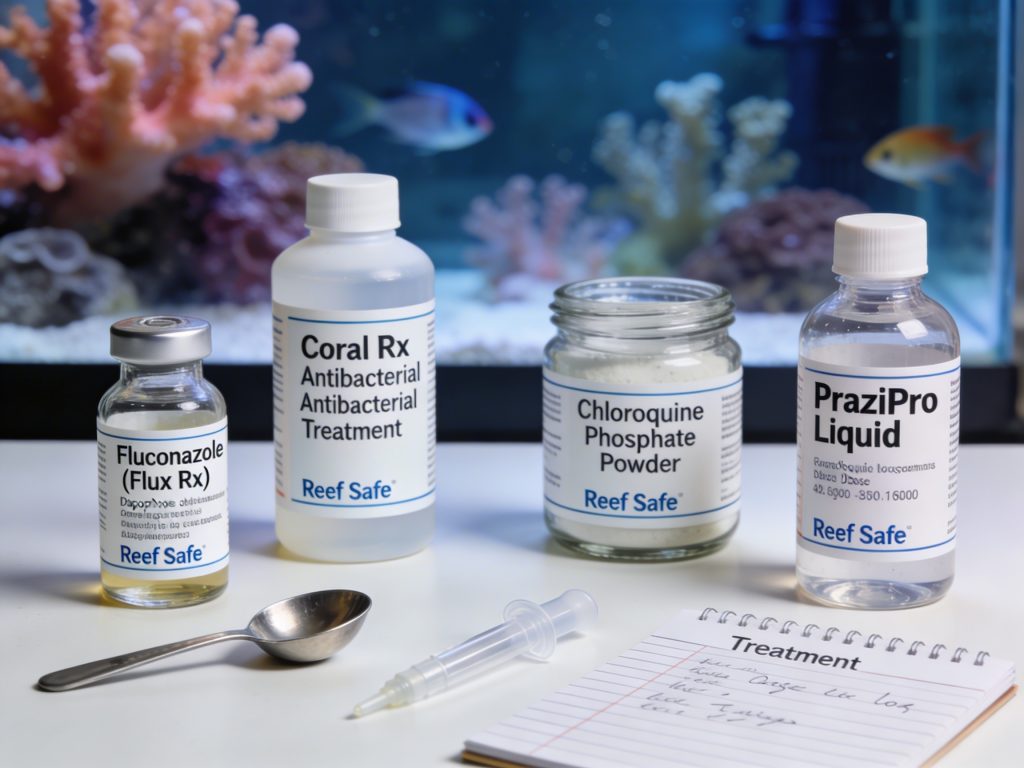
Reef fish medication can save lives. It can also cause problems when used poorly. The safest approach is simple. Diagnose the issue first. Treat in quarantine when possible. Match the medication to the disease. Then support recovery with stable water and good nutrition.
Many reef keepers lose fish because they medicate too late, too broadly, or inside the display tank. This guide explains the basics in plain language. You will learn when to medicate, which common drugs treat which problems, and which products are unsafe for corals and invertebrates. We will also cover quarantine setup, dosing mistakes, and the most common fish disease questions hobbyists search for online.
Quick Reference Table
| Problem | Likely Cause | Common Treatment | Reef Safe? | Best Place to Treat |
|---|---|---|---|---|
| White spots | Marine ich | Copper or tank transfer method | No | Quarantine tank |
| Fine dusting, fast breathing | Marine velvet | Copper | No | Quarantine tank |
| Heavy slime, flashing | Brooklynella | Formalin or metronidazole support | No | Quarantine tank |
| Stringy feces, weight loss | Internal parasites | Praziquantel or metronidazole | No | Quarantine tank or medicated food |
| Cloudy eyes, sores | Bacterial infection | Kanamycin, nitrofurazone, broad antibiotics | No | Hospital tank |
| Flukes | Monogenean worms | Praziquantel | Usually not advised in display | Quarantine tank |
| Open wounds after fighting | Secondary infection risk | Antibiotics and clean water | No | Hospital tank |
Use this table as a starting point. It is not a substitute for diagnosis. Many diseases look similar in the early stage. Watch breathing rate, body slime, appetite, and behavior. Those clues matter more than one symptom alone.
When Should You Medicate Reef Fish?
Medication should never be your first reflex. Start with observation. Many fish act stressed after shipping, aggression, or parameter swings. Stress can mimic disease. A fish may hide, breathe faster, or stop eating for a day. That does not always mean infection.
Medicate when symptoms are consistent and progressive. White dots that increase daily suggest ich. A gold or dusty sheen with rapid death points to velvet. Excess slime and peeling skin often suggest brooklynella. Flashing and head twitching can point to flukes. Weight loss despite eating can indicate internal worms.
Always check water quality before treating. Ammonia burns can look like disease. Low oxygen can cause rapid breathing. Aggression can tear fins and cause bacterial issues later. If the fish is in a reef display, move it to quarantine if possible. Most effective medications are not reef safe.
The Golden Rule: Treat in Quarantine, Not the Display
This is the most important part of any reef fish medication guide. Most medications harm corals, shrimp, snails, worms, and beneficial bacteria. Copper is a classic example. It is highly effective against external parasites. It is also toxic to invertebrates. Once copper enters rock or sand, it can linger.
A basic hospital tank is enough. Use a bare bottom tank. Add a heater, simple filter, air stone, and PVC elbows for shelter. Keep lighting dim. Test ammonia daily. Use seeded sponge filters when possible. If not, be ready for water changes and an ammonia binder if the medication allows it.
A separate quarantine tank also helps with diagnosis. You can watch the fish closely. You can control dosing. You can avoid poisoning your display. If you only remember one thing from this article, remember this. Do not medicate a reef tank unless the product is clearly proven safe for reefs, and even then use caution.
Common Reef Fish Medications and What They Treat
Copper is one of the most useful fish medications. It treats marine ich and velvet. It does not treat flukes well. It does not fix bacterial infections. Copper must stay in the therapeutic range. Too little fails. Too much harms fish. Always use the matching test kit for the copper brand you use.
Praziquantel is widely used for flukes and some internal worms. It is often gentler than copper. Fish usually tolerate it well. Appetite can drop during treatment. Good aeration helps. Repeat dosing is often needed because eggs can hatch later.
Metronidazole is useful for some protozoan infections and internal issues. It is often combined with food for gut problems. It can also be paired with other treatments in some cases. Kanamycin and nitrofurazone are common antibiotics for bacterial infections. They are helpful for sores, cloudy eyes, fin rot, and secondary infections after parasite damage.
Formalin is effective but more advanced. It is used for brooklynella and some severe external protozoans. It also demands careful handling. Follow product instructions exactly. Use strong aeration. Never guess with formalin dosage.
Step-by-Step: How to Medicate Fish Safely
- Observe symptoms for pattern and severity. Note breathing, appetite, spots, slime, and scratching.
- Test water first. Check ammonia, nitrite, temperature, salinity, and pH.
- Move the fish to a quarantine or hospital tank if possible.
- Identify the most likely disease. Do not shotgun multiple drugs without reason.
- Read the medication label fully. Confirm dosage, duration, and compatibility.
- Remove carbon and chemical media if the medication requires it.
- Increase aeration. Many medications reduce oxygen or stress the gills.
- Dose accurately using the true water volume, not tank size alone.
- Monitor the fish daily. Watch for appetite, breathing, and worsening symptoms.
- Complete the full treatment course. Stopping early often causes relapse.
- After treatment, run fresh carbon and perform water changes as needed.
- Keep the fish under observation before returning it to the display.
This process prevents many common mistakes. It also helps you avoid random dosing. Random dosing often kills weak fish faster than the disease itself.
How to Match the Medication to the Disease
Marine ich usually appears as distinct salt-like dots. Fish may scratch on rock. Appetite may stay normal early on. Copper is the standard treatment in quarantine. The display tank must remain fishless long enough to break the parasite life cycle.
Marine velvet often looks finer than ich. Fish breathe hard. They may stay in high flow. They often decline very fast. Copper is the main treatment. Time matters with velvet. Delays are deadly.
Brooklynella is common on clownfish. Look for heavy slime, pale patches, and skin peeling. Fish may gasp and crash quickly. Formalin is often the strongest option. Supportive care is critical.
Flukes can cause flashing, cloudy eyes, and excess mucus. Praziquantel is the usual treatment. Internal parasites often show as weight loss, long white feces, and poor growth. Medicated food with metronidazole or praziquantel is often useful. Bacterial infections usually need antibiotics and very clean water.
Common Problems
Why did my fish get worse after medication?
The diagnosis may be wrong. The dosage may be off. Oxygen may be too low. Some fish also arrive too weak to survive aggressive treatment. Check aeration first. Recheck the disease signs. Confirm the dose with actual water volume. Test ammonia in the hospital tank.
Can I medicate a reef tank with corals and inverts?
Usually no. Copper, antibiotics, and many parasite treatments are not reef safe. They can kill shrimp, snails, worms, pods, and corals. They can also damage your biofilter. If a label says reef safe, still research it carefully. Results vary.
Why is my fish still flashing after treatment?
Flashing can continue from irritation, poor water quality, or incomplete treatment. Flukes may need repeat praziquantel dosing. Ich and velvet need full treatment duration. Check for ammonia and pH swings. If the fish looks otherwise improved, give it time and watch closely.
Why did the disease return?
Most relapses happen for three reasons. Treatment ended too early. The display tank still held the parasite. New fish were added without quarantine. Parasites have life cycles. You must treat the fish and manage the display at the same time.
Supportive Care During Treatment
Medication alone does not heal fish. Stable conditions matter just as much. Keep temperature steady. Maintain salinity. Match pH during water changes. Provide hiding places so fish feel secure. Stress slows recovery.
Feed small meals with high-quality foods. Use frozen mysis, enriched brine, pellets, and algae sheets as needed. Soak foods in vitamins if the fish is eating. Remove leftovers quickly. Dirty water weakens fish and fuels secondary infections.
Watch breathing every day. Fast breathing often signals gill damage, low oxygen, or progressing disease. Add an air stone early. It is cheap insurance. Also keep the room calm. Fish recover better with less sudden movement and less bright light.
Prevention Is Better Than Medication
The best medication plan starts before fish ever enter your display. Quarantine all new fish. Observe them for several weeks. Feed them well. Treat only when signs justify it, or follow a proven prophylactic protocol if that matches your approach.
Buy fish that are alert and eating. Avoid fish with clamped fins, rapid breathing, or torn skin. Acclimate carefully. Keep your reef stable. Sudden salinity swings and aggression create openings for disease. A healthy fish can resist stress far better than a weak one.
If you want a stronger disease prevention plan, read our guides on quarantine methods, reef tank maintenance, and fish acclimation. Good husbandry prevents far more losses than any bottle on the shelf.
Frequently Asked Questions
What is the best medication for marine ich?
Copper is the most common treatment in quarantine. It must stay in the therapeutic range. The display tank must remain fishless to fully eliminate ich.
Is copper safe for reef tanks?
No. Copper is not safe for corals or invertebrates. It should be used in a separate treatment tank.
Can I use multiple medications at once?
Sometimes, but only with a clear reason. Some combinations are useful. Others are stressful or dangerous. Research compatibility before mixing treatments.
How long should I quarantine new fish?
Many hobbyists use two to four weeks for observation. Longer is often better if disease appears. The exact timeline depends on your quarantine method.
Are reef-safe medications effective?
Some may help with mild issues. Few match the reliability of quarantine-based treatments. Be skeptical of products that claim to cure everything inside a full reef tank.
Final Thoughts
Our reef fish medication guide comes down to a few core ideas. Diagnose before dosing. Treat fish in quarantine. Use the right medication for the right disease. Support recovery with oxygen, clean water, and nutrition. Most importantly, build a prevention plan that keeps disease out of your reef in the first place.
Helpful next reads: reef fish quarantine guide, marine ich treatment, reef tank water parameters, best reef fish for beginners, how to acclimate reef fish.
Was this helpful?
Related Posts
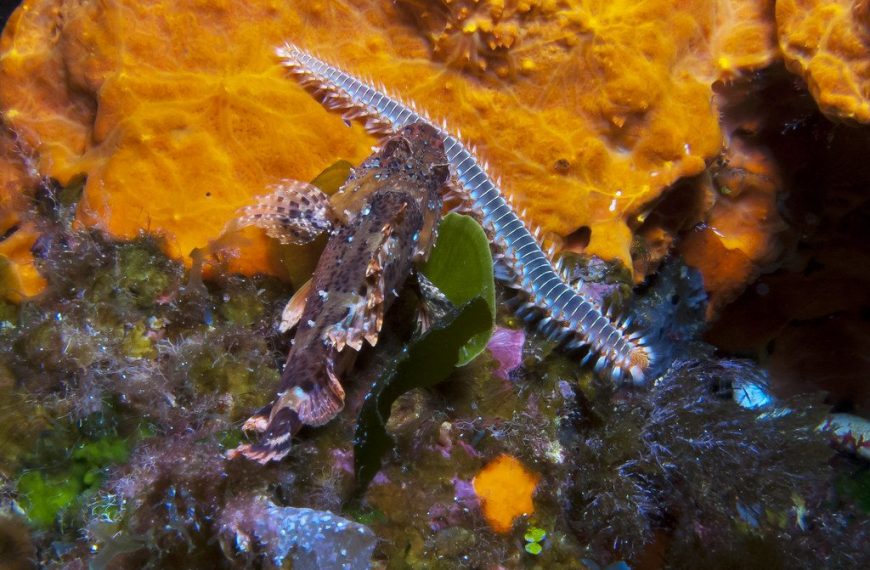
Bristleworms
Bristleworms are usually helpful reef tank scavengers. Learn how to identify them, control numbers, and spot the rare…
 By
By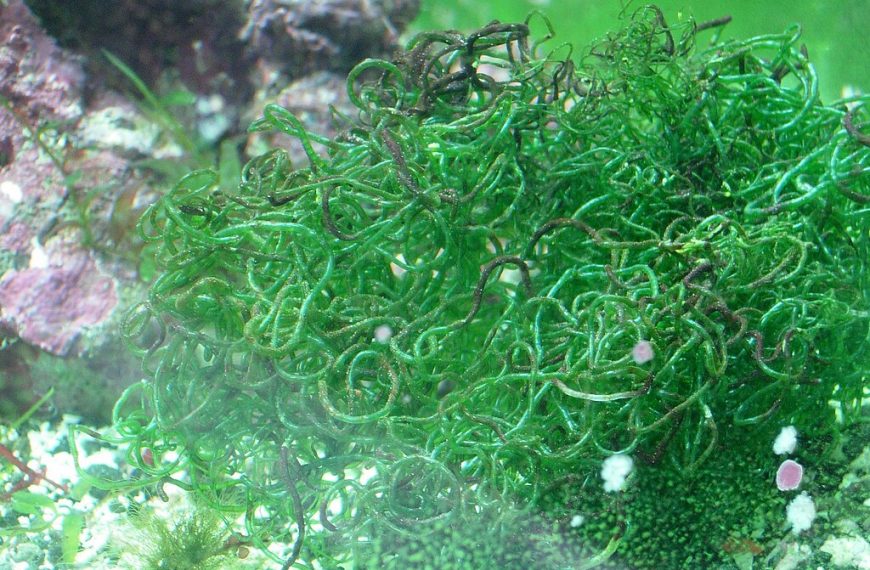
What is a Chaeto Reactor, and How Does it Help Control Nutrients?
A chaeto reactor grows macroalgae in a sealed chamber to remove nitrate and phosphate, helping reef tanks control…