Dialing In Reef LED Spectrum Settings
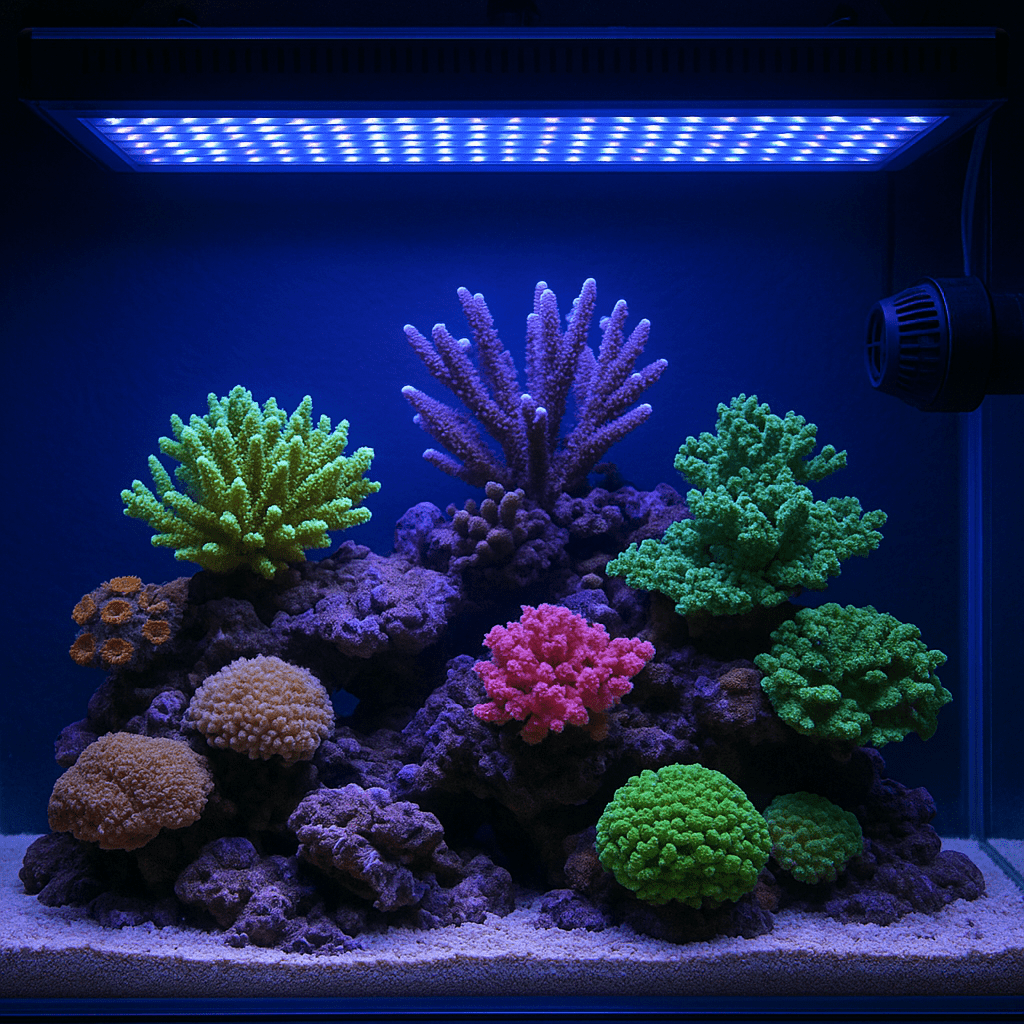
Getting reef LED spectrum settings right can feel intimidating, but it doesn’t have to be. Modern reef lights are powerful, flexible tools that can grow healthy corals and bring out amazing colors when tuned correctly. In this guide, we’ll break down the basics of spectrum, share practical starting points, and help you avoid common lighting mistakes that stress corals.
If you’re just starting to plan your system, you may also want to review your reef tank lighting basics so spectrum, intensity, and photoperiod all work together.
Understanding Reef LED Spectrum
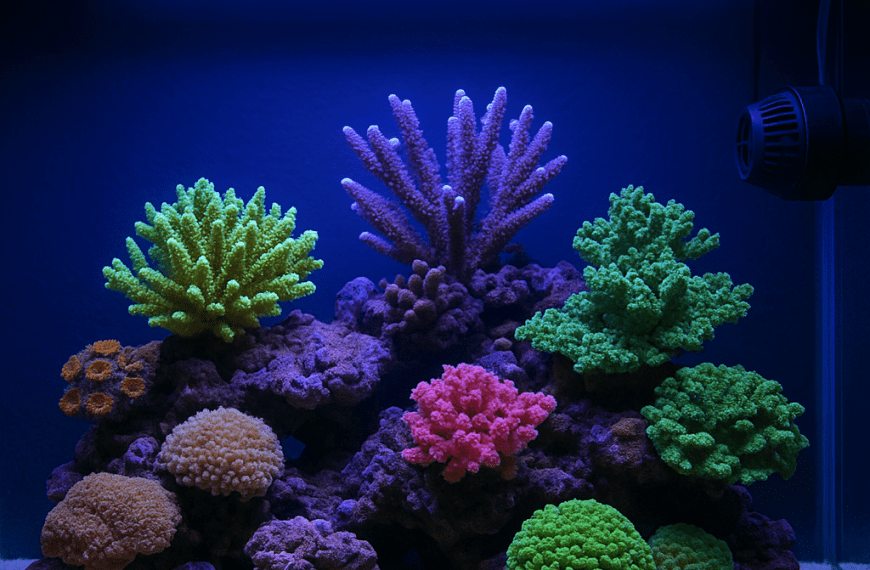
Corals evolved in shallow tropical oceans where blue light dominates. Water absorbs red and yellow quickly, while violet and blue penetrate deeper. That’s why most successful reef LED schedules lean heavily on the blue side of the spectrum.
Key Spectrum Ranges
- Violet (380–430 nm): Supports photosynthesis in zooxanthellae and helps with coral fluorescence.
- Royal Blue / Blue (430–490 nm): The workhorse range for coral growth, coloration, and energy production.
- Cyan / Green (490–550 nm): Useful in moderation for a natural look, but too much can fuel nuisance algae.
- Red (620–700 nm): Powerful but risky; very small amounts can enhance color rendering, yet excess often leads to algae and browned-out corals.
- White Channels: Usually a mix of blue + red + green. Good for visual brightness, but can be overdone.
Most successful reefers run a spectrum that is blue-heavy with modest white and very restrained red and green. If your light has a preset “coral growth” or “AB+ style” profile, that’s often a safe starting point.
Practical LED Spectrum Settings for Reef Tanks
Every brand labels channels differently, but these general targets work for many mixed reefs:
- Violet / UV: 70–100%
- Royal Blue / Blue: 80–100%
- Cyan / Green: 5–20%
- Red: 1–10%
- White: 15–35%
Use these as spectrum ratios, then set overall brightness with intensity and photoperiod. For help with that, see our guide to reef LED intensity settings so you don’t accidentally blast your corals.
Tips for Fine-Tuning Spectrum
- Change slowly: Adjust no more than 5–10% per week on any channel to avoid light shock.
- Watch coral response: Good signs include steady polyp extension, stable color, and normal growth tips.
- Use a long blue ramp: Start and end the day with mostly blue/violet light for a smooth sunrise/sunset effect.
- Limit daytime white: Enough for your eyes, but not so much that the tank looks yellow or washed out.
If you’re unsure, keep it bluer rather than whiter. Most corals tolerate a bluer spectrum far better than an overly white, red-heavy mix.
Common Spectrum Mistakes to Avoid
- Cranking red and green for color: This often leads to nuisance algae and dull coral tones. Use them sparingly.
- Copying freshwater or planted tank settings: Reef corals need a very different spectrum balance.
- Changing spectrum and intensity at the same time: Adjust one variable at a time so you know what caused any coral reaction.
- Ignoring PAR: Spectrum is only half the story. Pair your spectrum with appropriate PAR for your coral types and placement.
For a deeper dive into matching light to your livestock, check out our article on best lighting for LPS corals.
Wrapping Up: Stable, Blue-Heavy, and Coral-Centered
Reef LED spectrum settings don’t need to be perfect on day one. Aim for a blue-dominant profile with moderate white, minimal red and green, and then observe your corals. With slow, thoughtful tweaks and attention to coral health, you’ll land on a spectrum that delivers strong growth, rich coloration, and a tank you enjoy viewing every day.
Sources
- Dana Riddle, Advanced Aquarist articles on coral photobiology and spectrum.
- Bulk Reef Supply Investigates series on LED spectrum and coral growth.
- Manufacturer documentation for major reef LED brands (Ecotech Radion, AI, Kessil) regarding recommended spectrum profiles.
Was this helpful?
Related Posts
Reef Safe Fish for Beginners
Discover the best reef safe fish for beginners, plus tank size, feeding, and compatibility tips for a peaceful…
 By
By
Dragonets Fish Care
Dragonets are beautiful reef fish, but they need mature tanks and steady food sources. Learn how to keep…