

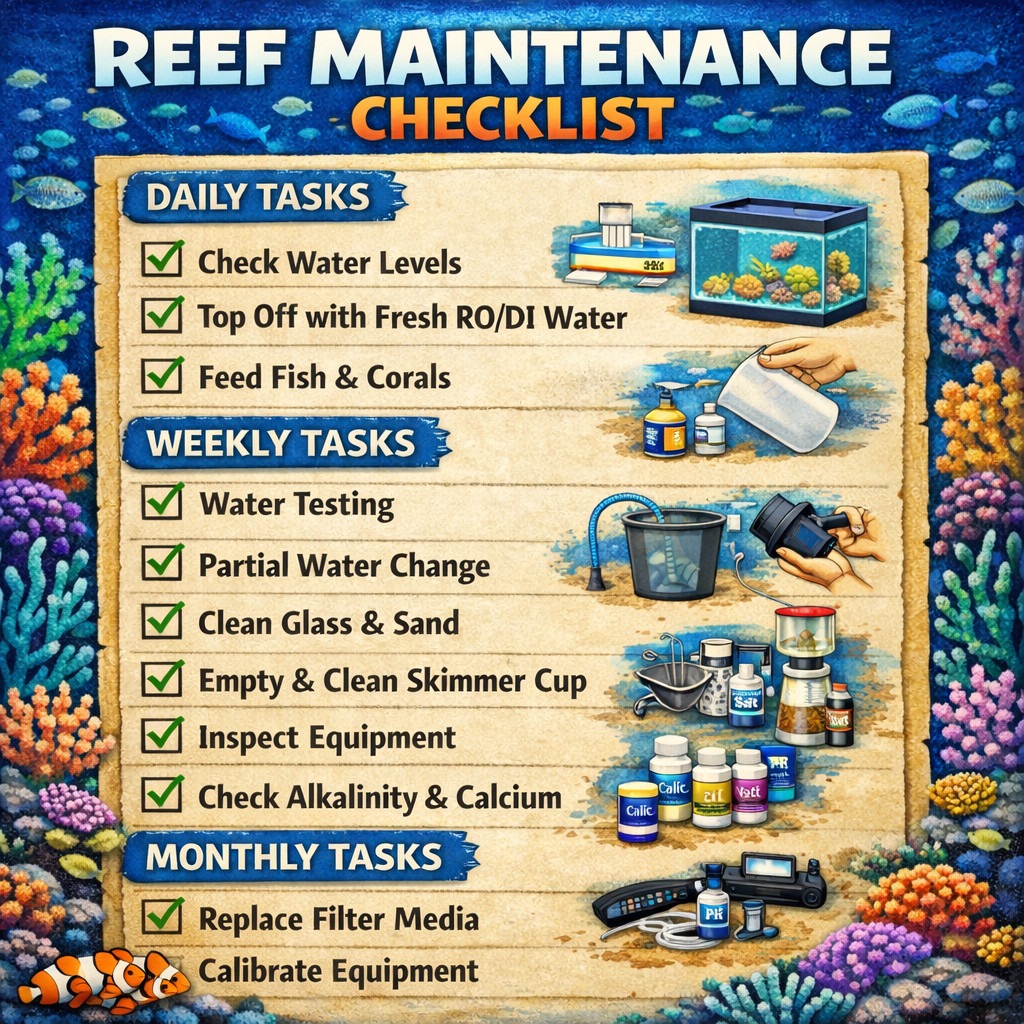
A reef maintenance checklist keeps your aquarium stable, healthy, and easier to manage. It helps you catch small problems before they become big losses. The best reef tanks rely on routine, not guesswork. This guide gives you a practical schedule for daily, weekly, monthly, and seasonal reef care.
If you have ever missed a top-off, forgotten a filter change, or overlooked a creeping algae patch, this checklist will help. Reef aquariums reward consistency. They also punish neglect quickly. Use this article to build a simple maintenance habit that supports coral growth, fish health, and clean water.
Quick Reef Maintenance Checklist
| Task | Frequency | Why It Matters |
|---|---|---|
| Check temperature, salinity, and equipment | Daily | Prevents sudden stress and failures |
| Top off evaporated water | Daily | Keeps salinity stable |
| Inspect fish and corals | Daily | Finds disease, damage, or pests early |
| Clean glass and empty skimmer cup | Weekly | Improves gas exchange and viewing |
| Test alkalinity, nitrate, and phosphate | Weekly | Supports coral health and nutrient control |
| Change filter socks or mechanical media | Weekly | Reduces detritus buildup |
| Service pumps and powerheads | Monthly | Maintains flow and efficiency |
| Replace worn bulbs or clean light lenses | Monthly | Preserves proper PAR and spectrum |
| Review coral growth and fish behavior | Monthly | Helps you adjust husbandry |
A good checklist is not complicated. It is repeatable. The goal is to keep water chemistry stable, equipment reliable, and livestock healthy. You do not need to do everything every day. You do need a system that prevents drift over time.
Daily Reef Tank Maintenance
Daily tasks should take only a few minutes. Start by checking temperature and salinity. Look at your livestock before feeding. Healthy fish swim normally and breathe evenly. Healthy corals stay open, inflated, or extended in their usual way. Small changes matter.
Top off evaporated water with RO/DI water. Never top off with saltwater. Evaporation removes pure water and raises salinity. That change can stress fish and corals fast. If you use an automatic top-off system, inspect it often. A stuck sensor can flood a tank or spike salinity.
Check your skimmer, return pump, heaters, and controllers. Listen for strange noises. Watch for reduced flow. A failing pump can create dead spots. A heater failure can cause a dangerous temperature swing. Catching these issues early saves livestock.
Weekly Reef Tank Maintenance
Weekly maintenance is where most reef keepers stay ahead of problems. Clean the glass. Empty the skimmer cup. Remove excess algae from rocks and overflow teeth. These small jobs improve oxygen exchange and keep the tank looking sharp.
Test alkalinity every week. This is one of the most important reef aquarium habits. Corals use alkalinity to build skeletons. If alkalinity swings, SPS corals often react first. Also test nitrate and phosphate. Low nutrients can starve corals. High nutrients can fuel algae and dull coral color. Stability matters more than chasing perfect numbers.
Replace filter socks, rinse mechanical filters, and remove trapped debris. Waste trapped in the system breaks down into nitrate and phosphate. That process can overwhelm even a strong skimmer. If you run carbon or other media, inspect it weekly and replace it on schedule.
Monthly Reef Tank Maintenance
Monthly tasks focus on equipment and long-term stability. Clean return pumps, wavemakers, and powerheads. Calcium buildup reduces flow and increases heat. Soak removable parts in vinegar if needed. Rinse them well before reinstalling.
Inspect all plumbing, hoses, and fittings. Look for salt creep, leaks, and loose connections. Salt creep often signals a slow leak or splash pattern. Fixing it early prevents bigger problems later. Also check your ATO reservoir and refill it with fresh RO/DI water.
Review coral growth and fish behavior. Are corals extending well? Are fish eating aggressively? Are any corals shadowed by growth or rockwork? Monthly observation helps you adjust placement before problems develop. This is also a good time to update your logbook.
Seasonal and Deep-Clean Tasks
Every few months, perform deeper maintenance. Replace worn tubing, check heater accuracy, and inspect power strips or controllers. If your lighting uses replaceable components, clean lenses and cooling fans. Dust and salt reduce performance.
Consider a larger water change if nutrients have drifted or if the tank looks dull. A 10% to 20% change can refresh trace elements and remove dissolved waste. Do not rely on water changes alone. They support the system. They do not replace good feeding, filtration, and testing.
Use seasonal changes to review your reef goals. A growing coral garden may need more flow or stronger lighting. A heavily stocked fish tank may need more export. Your checklist should evolve as the aquarium matures.
Step-by-Step Reef Maintenance Routine
Follow this simple routine for a balanced reef schedule. First, check the tank visually. Look for unusual behavior, algae, cloudy water, or coral stress. Second, confirm temperature and salinity. Third, top off evaporated water. Fourth, feed fish and observe their appetite. Fifth, inspect equipment.
Once a week, test key parameters and clean removable parts. Once a month, service pumps and review livestock placement. Every few months, replace worn items and inspect the full system. This routine keeps your reef predictable. Predictability is the foundation of success.
Common Reef Maintenance Mistakes
One common mistake is changing too much at once. Large swings in salinity, alkalinity, or light intensity can shock corals. Another mistake is skipping testing because the tank looks fine. Many reef problems start silently. By the time you see damage, the issue may already be advanced.
Overcleaning is another problem. Some beneficial film and bacterial growth is normal. Do not strip the tank bare. You want control, not sterility. Also avoid replacing all media at once unless necessary. Sudden changes can alter nutrient balance and bacterial activity.
Finally, do not ignore your logbook. Tracking trends helps you spot patterns. A slow alkalinity drop or rising phosphate level is easier to solve when documented. Good records make reef keeping much simpler.
Helpful Internal Resources
For related reef care topics, see reef tank water parameters, how to test alkalinity, reef tank top off guide, protein skimmer guide, and reef aquarium nutrient control.
Frequently Asked Questions
How often should I do reef maintenance?
Do something every day, even if it is small. Check livestock, top off water, and inspect equipment. Then do weekly testing and cleaning. Add monthly equipment service for long-term stability.
What is the most important reef tank maintenance task?
Stability is the most important goal. In practice, that means checking salinity, temperature, and alkalinity often. These three values affect coral health more than most other routine tasks.
Do I need to test every day?
Not usually. Most reef tanks do well with daily observation and weekly testing. If your tank is new, heavily stocked, or dominated by SPS corals, test more often.
How do I know if my reef tank needs more maintenance?
Watch for algae growth, unstable parameters, poor coral extension, cloudy water, or stressed fish. These are common signs that your routine needs more attention or better consistency.
Can a reef maintenance checklist help new hobbyists?
Yes. New reef keepers benefit the most. A checklist removes guesswork and builds good habits. It also helps you learn how your tank behaves over time.
Was this helpful?
Related Posts
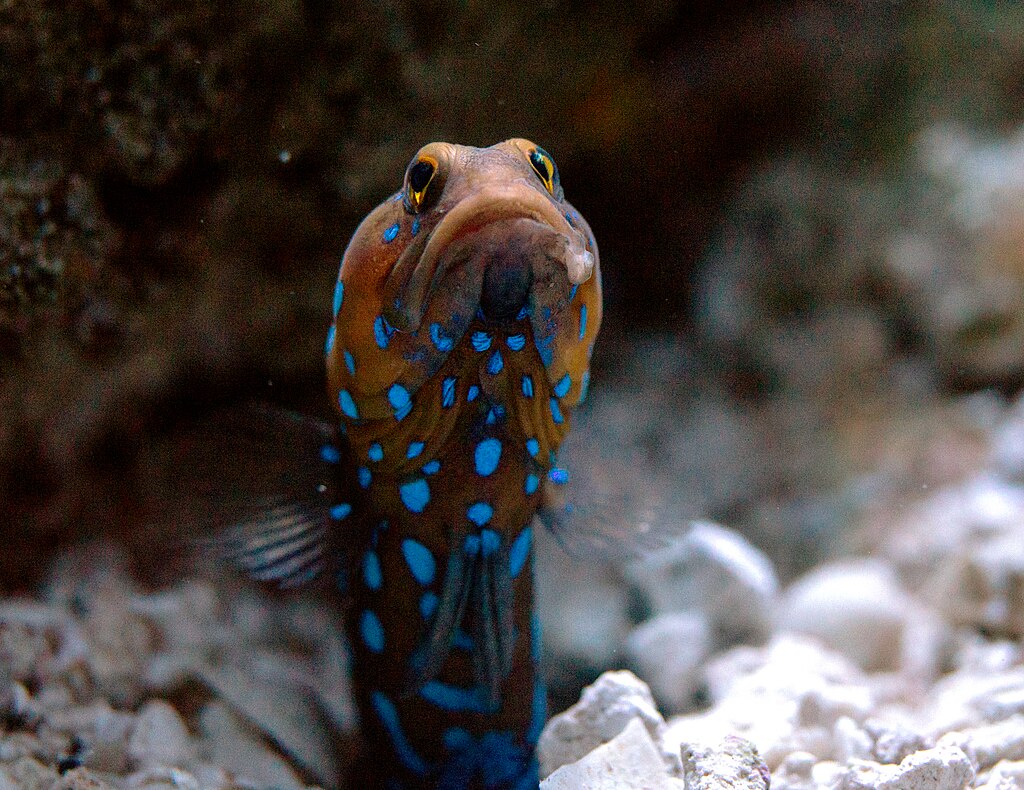
Blue Dot Jawfish (Opistognathus Rosenblatti)
Blue Dot Jawfish need cool water, deep sand, and a tight lid. Learn how to keep Opistognathus rosenblatti…
 By
By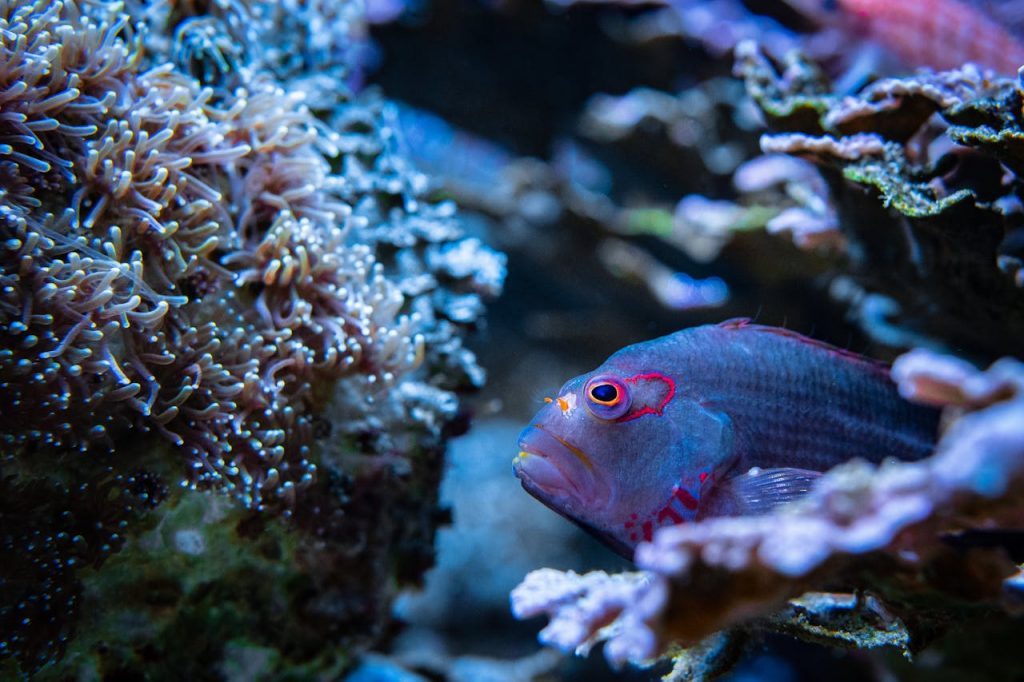
Arc Eye Hawkfish (Paracirrhites arcatus)
Arc Eye Hawkfish care is simple in a stable tank. Learn tank size, feeding, reef safety, and shrimp…
[favorite_button]
My Bookmarks:
To see full list click here
[user_favorites user_id="" include_links="true" site_id="" post_types="" include_thumbnails="true" thumbnail_size="thumbnail" include_excerpt="false"]