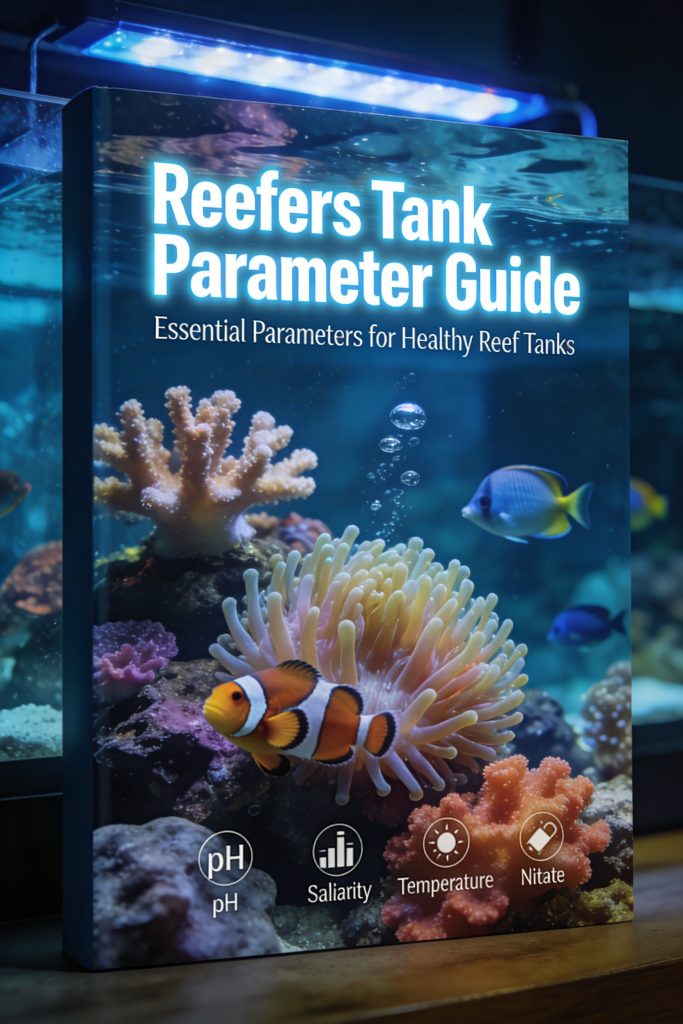
Stable water chemistry keeps coral growing and fish calm. This reef tank parameter guide gives target ranges and simple routines. Use it to spot problems early and fix them fast.
Core targets and what they control
Start with salinity, temperature, and pH. Aim for 1.025 specific gravity at 25°C. Keep temperature at 77–79°F with a max swing of 1°F daily. Hold pH at 8.1–8.4 with steady aeration.
Alkalinity, calcium, and magnesium drive coral skeleton growth. Target alkalinity at 8–9 dKH for mixed reefs. Keep calcium at 420–450 ppm for strong calcification. Maintain magnesium at 1280–1400 ppm to stabilize both.
Nutrients must be present but controlled. Keep nitrate at 2–15 ppm for most reefs. Keep phosphate at 0.03–0.10 ppm for color and growth. Ultra-low numbers can starve corals and raise pest risks.
- Quick target card: 1.025 SG, 78°F, pH 8.2, Alk 8.5 dKH, Ca 440 ppm, Mg 1350 ppm.
- Nutrients: NO3 5–10 ppm and PO4 0.05 ppm are solid starting points.
- Stability rule: avoid changes over 10% per day for any major parameter.
If you need a refresher on mixing saltwater, review how to mix saltwater. Poor mixing can cause drift in alkalinity and salinity. Always heat and circulate new water for 12–24 hours. Then match salinity and temperature before a water change.
Testing schedule and dosing that actually works
Test more often when the tank is young or heavily stocked. Check salinity and temperature daily if you can. Test alkalinity 3 times per week at minimum. Calcium and magnesium can be weekly once stable.
Use a consistent method and log results. Test at the same time each day. Alkalinity often dips overnight as corals consume it. A simple notebook prevents guessing and over-correcting.
For dosing, measure daily alkalinity consumption first. Example: Alk drops from 8.6 to 8.1 dKH in 24 hours. That is 0.5 dKH per day. Dose enough alkalinity solution to replace 0.5 dKH, split into 2–4 smaller doses.
Two-part dosing fits many mixed reefs. A calcium reactor fits higher demand SPS systems. Kalkwasser helps with pH and adds balanced calcium and alkalinity. If you use kalk, start at half strength and watch pH.
- Calibrate refractometers monthly with 35 ppt solution.
- Replace test reagents every 6–12 months for accuracy.
- Make dosing changes slowly, using 3-day trends.
New fish can raise nutrients fast. Quarantine helps reduce stress and disease spikes. See reef fish quarantine basics for a simple setup. A calm tank eats better and pollutes less.
Troubleshooting swings and common mistakes
Alkalinity swings are the most common reef problem. They often come from inconsistent dosing or missed top-off. An ATO helps keep salinity stable, too. If alkalinity jumps, stop dosing for 24 hours and retest.
Low pH usually means high indoor CO2. Open a window for one hour and recheck pH. Increase surface agitation and skimmer air intake. A refugium on a reverse light cycle can also help.
High nitrate with low phosphate is also common. This can stall coral growth and fuel dinos. Feed a bit more, or reduce aggressive phosphate removal. Aim to keep NO3:PO4 in a workable balance, not at zero.
Cloudy water after dosing can mean precipitation. This happens when pH spikes or you add too fast. Dose into high flow and never mix calcium and alkalinity in the same cup. If precipitation occurs, run carbon and retest alkalinity.
- Do not chase numbers: correct only if a trend lasts 3 days.
- Water changes: 10% weekly can reset trace elements and nutrients.
- Equipment check: clean pumps monthly to keep flow consistent.
Algae blooms can signal rising nutrients or weak export. Start with clean up crew guide to match grazers to your tank. Then tune feeding and filtration. Fix the cause before adding more chemicals.
Reef success comes from stable reef tank parameters and simple routines. Pick target ranges and test on a schedule you can keep. Make small changes, log results, and let the tank respond. Sources: Randy Holmes-Farley, “Reef Aquarium Water Parameters” (Reefkeeping Magazine); Julian Sprung, The Reef Aquarium series; Eric Borneman, Aquarium Corals.
Was this helpful?
Related Posts
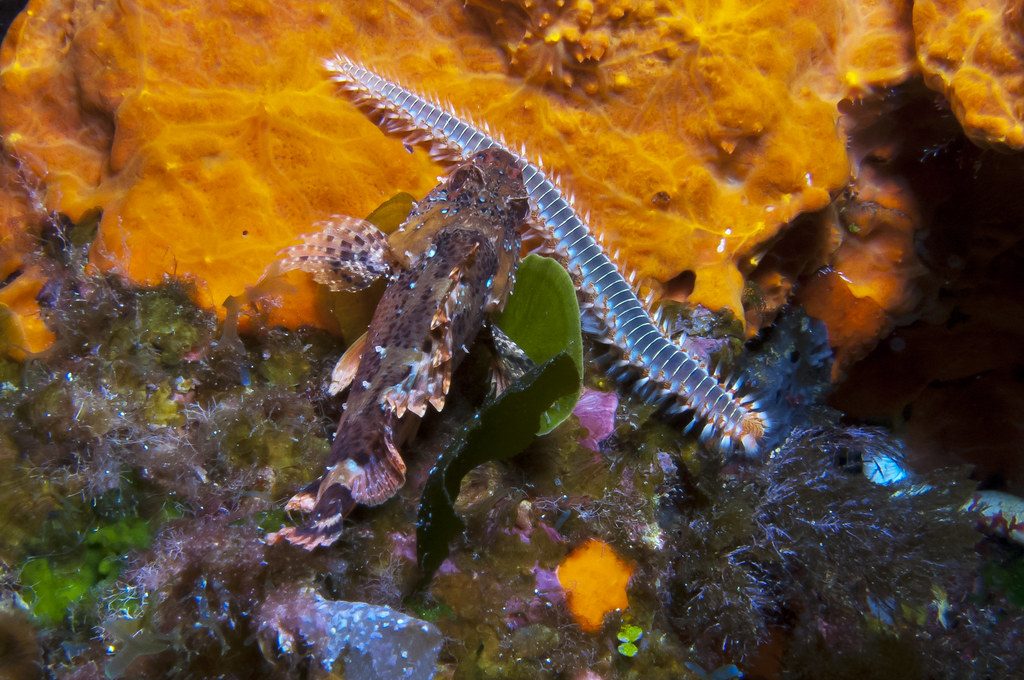
Bristleworms
Bristleworms are usually helpful reef tank scavengers. Learn how to identify them, control numbers, and spot the rare…
 By
By
Managing Ich in a Reef Tank
Learn practical steps for managing ich in a reef tank, from early detection to proven fallow and hospital-tank…