Reef Safe Angelfish Guide
Angelfish are among the most stunning saltwater fish available, but many species are notorious for nipping at corals and clams. If you keep a reef tank, choosing the right angelfish is critical. This reef-safe angelfish guide will walk you through the best options, how to manage risk, and practical tips to keep both your corals and angels thriving.
What “Reef Safe” Really Means for Angelfish
When hobbyists say an angelfish is “reef safe,” they usually mean it rarely bothers corals, not that it is guaranteed safe. Even the best candidates can pick at fleshy LPS or clam mantles if they’re hungry or bored. Think of reef safety as a spectrum:
- More reef-safe: Dwarf/pygmy angels (Centropyge) such as coral beauty and flame angels.
- Moderate risk: Genicanthus angels, often considered among the safest, but still capable of occasional nipping.
- High risk: Large angels (Pomacanthus, Holacanthus) that commonly eat or nip corals.
If you’re still planning your system, you may want to read our Beginner Saltwater Fish Stocking Guide first, then come back to this list to decide if an angelfish fits your reef plan.
Best Angelfish Options for Reef Tanks
Dwarf (Pygmy) Angelfish
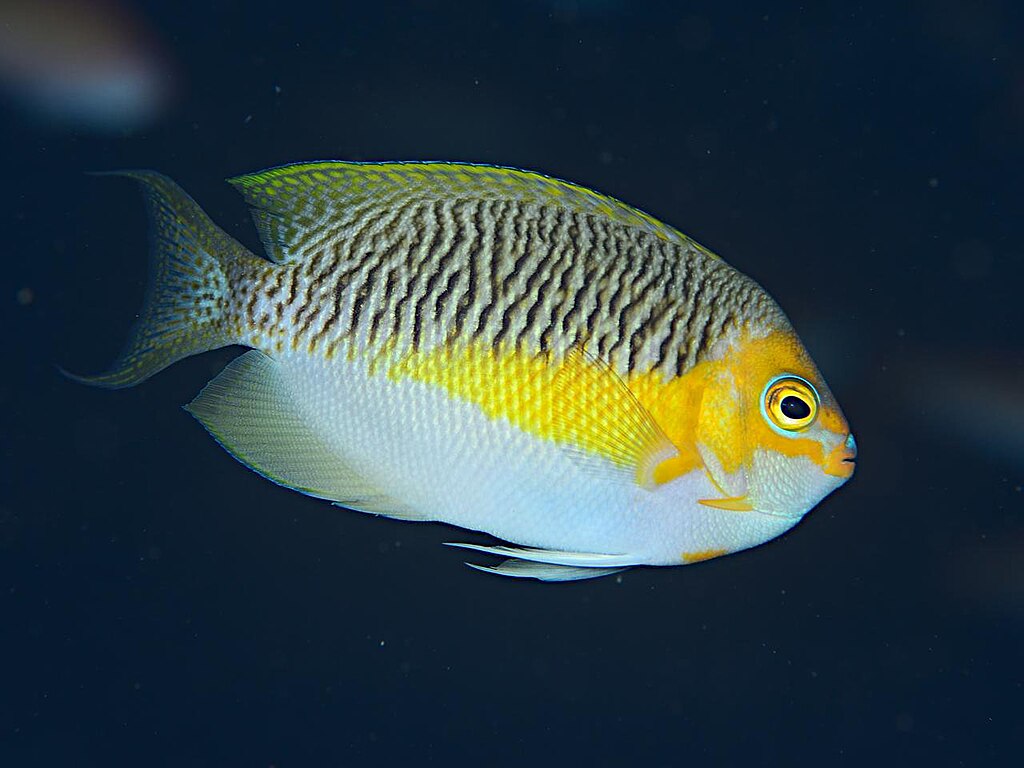
Dwarf angels are the most popular choice for reef aquariums because of their smaller size and relatively lower risk to corals.
- Coral Beauty (Centropyge bispinosa) – Hardy, inexpensive, and widely available. Often behaves well in mixed reefs when well fed.
- Flame Angel (Centropyge loricula) – Bright red and orange, a centerpiece fish. Can nip at LPS and zoas, but many hobbyists keep them successfully in SPS-dominated tanks.
- Cherub/Pygmy Angel (Centropyge argi) – Small, feisty, and generally less destructive. Good for smaller reef systems with plenty of rockwork.
For smaller tanks, make sure you review our Nano Reef Fish Ideas so you don’t overcrowd your system when adding a dwarf angel.
Genicanthus (Swallowtail) Angelfish
Genicanthus angels are often labeled as the most reef safe because they are planktivores in the wild and spend more time in the water column than picking at rock.
- Watanabei Angel (Genicanthus watanabei)
- Bellus Angel (Genicanthus bellus)
- Lamarck Angel (Genicanthus lamarck)
These species typically leave SPS, LPS, and soft corals alone when well fed and provided with ample swimming space. They do best in longer tanks with strong, clean flow and excellent water quality.
Tips to Keep Angelfish and Corals Happy Together
- Feed small, frequent meals: A hungry angelfish is far more likely to sample corals. Offer a mix of frozen foods, pellets, and nori.
- Provide mature live rock: Established rock with natural algae and biofilm gives angels something to graze on besides your corals.
- Start with hardy corals: Test a new angelfish in a tank dominated by soft corals and SPS before adding expensive fleshy LPS or clams.
- Watch for problem behavior: Occasional curious pecks are normal; repeated, focused nipping on a specific coral means it may be time to remove either the coral or the fish.
- Use an acclimation box: Introducing your angelfish in a clear box inside the display lets you observe its behavior around corals and tankmates before full release.
For more on planning your system around fish and coral compatibility, check out our Reef Tank Planning Checklist.
Hobbyist Tip: If you keep a borderline reef-safe angel, avoid very fleshy, slow-recovering corals in prominent spots. Place them on removable frag racks so you can quickly rescue them if nipping starts.
Angelfish and reef tanks can absolutely work together if you choose species carefully and manage risk. Focus on dwarf and Genicanthus angels, keep them well fed, and watch their behavior closely. With a thoughtful approach, you can enjoy the bold colors and personality of angelfish without sacrificing your favorite corals.
Sources
- Fenner, R. M. (2001). The Conscientious Marine Aquarist. Microcosm Ltd.
- Michael, S. W. (2004). Angelfishes & Butterflyfishes. Microcosm Ltd.
- Borneman, E. H. (2001). Aquarium Corals. TFH Publications.
- Collected best practices and common outcomes reported by experienced reef aquarists on long-running hobby forums and club discussions.
Was this helpful?
Related Posts
Reef Safe Fish for Beginners
Discover the best reef safe fish for beginners, plus tank size, feeding, and compatibility tips for a peaceful…
 By
By
Dragonets Fish Care
Dragonets are beautiful reef fish, but they need mature tanks and steady food sources. Learn how to keep…