

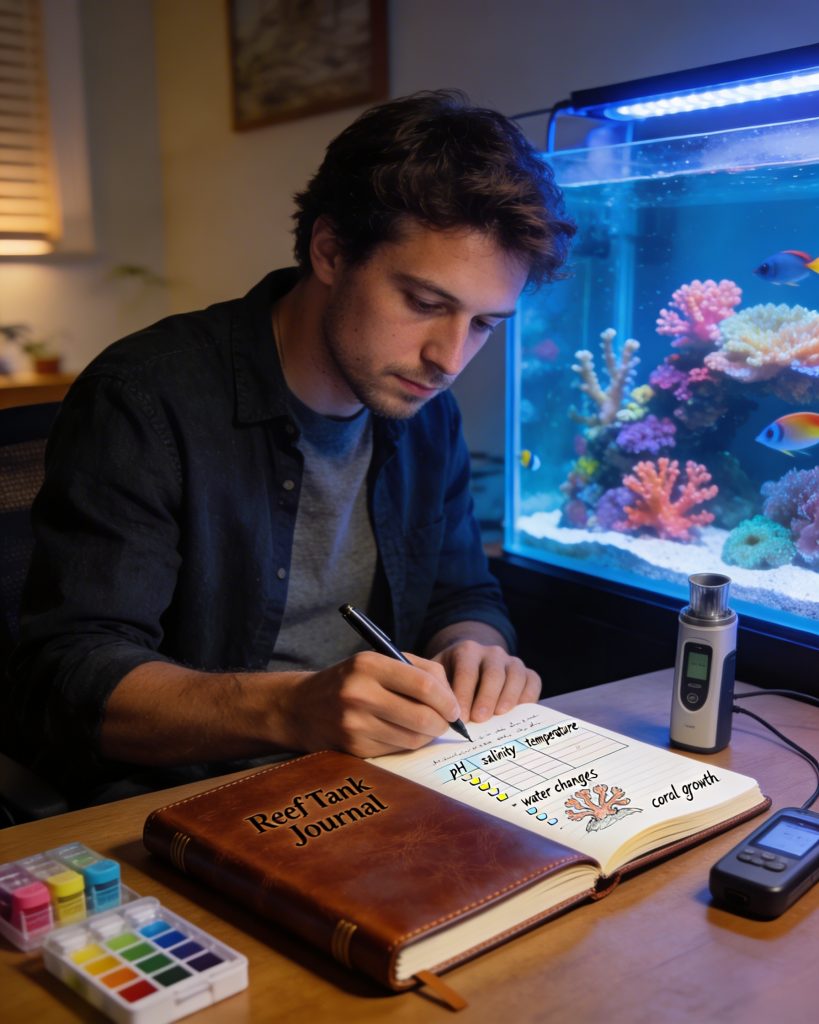
A reef tank journal helps you track water chemistry, coral growth, livestock behavior, and maintenance trends in one place. Good notes make reef keeping less reactive. They help you spot problems early, repeat what works, and build a more stable aquarium over time.
Many reef keepers test often but record very little. That creates a blind spot. You may remember a rough alkalinity number, but not the exact trend over three weeks. You may notice a coral looked better last month, but not know what changed. A reef tank journal solves that problem. It turns scattered observations into useful data. In this guide, you will learn what to record, how often to log it, which metrics matter most, and how to use your notes to improve coral health, fish stability, and long-term reef success.
Quick Reference Table
| Journal Category | What to Record | How Often | Why It Matters |
|---|---|---|---|
| Water Parameters | Salinity, temperature, alkalinity, calcium, magnesium, nitrate, phosphate, pH | Daily to weekly | Shows stability and trends |
| Maintenance | Water changes, filter cleaning, dosing adjustments, media swaps | Every task | Links actions to results |
| Livestock Notes | New fish, coral placement, feeding response, aggression, disease signs | As needed | Improves compatibility decisions |
| Equipment | Light changes, pump settings, heater issues, ATO problems | As needed | Helps identify hidden causes |
| Photos | Full tank shots and coral close-ups | Weekly or monthly | Tracks growth and color changes |
Why a Reef Tank Journal Matters
Reef tanks reward consistency. They also punish guesswork. A journal gives you a clear record of what happened and when. That matters because most reef problems build slowly. Alkalinity drift, rising phosphate, weak flow, or overfeeding rarely cause instant failure. They create patterns first. Your notes help you catch those patterns before corals decline.
A journal also improves decision making. Many hobbyists make several changes at once. They raise light intensity, change salt mix, and increase feeding in the same week. Then a coral reacts poorly. Without records, the cause stays unclear. With records, you can review each change and narrow the likely trigger.
This habit is useful for beginners and advanced reef keepers alike. New hobbyists learn faster. Experienced keepers refine systems more precisely. If you keep SPS, a journal becomes even more valuable. Small shifts in alkalinity or nutrient levels often explain changes in color, polyp extension, and growth.
What to Record in a Reef Tank Journal
Your journal should be practical. It does not need to be complicated. Start with the information that affects coral and fish health most. Water parameters come first. Record salinity, temperature, alkalinity, calcium, magnesium, nitrate, phosphate, and pH if you monitor it. Add the exact test result and the date.
Next, log maintenance. Write down water changes, filter sock swaps, skimmer cleaning, carbon replacement, and dosing adjustments. Include the amount changed. “Increased alkalinity dosing from 24 ml to 28 ml” is far more useful than “adjusted dosing.”
Livestock notes are also important. Record new additions, coral placement, feeding response, signs of stress, and any aggression. Note if a torch coral stayed retracted after moving. Write down if a clownfish stopped eating. Small details often matter later.
Finally, track equipment changes. New lights, altered flow settings, failed heaters, or ATO issues can all shift tank stability quickly. These entries often explain sudden changes that chemistry alone does not reveal.
How to Set Up Your Journal
You can use a notebook, spreadsheet, app, or digital document. The best format is the one you will actually maintain. Many hobbyists prefer a spreadsheet because trends are easy to review. Others like a physical notebook near the tank. Both work well if entries stay consistent.
Create a few simple sections. Start with a tank profile. Include display size, sump size, lighting model, return pump, wavemakers, skimmer, dosing method, and filtration media. Add your salt mix and target parameters. This gives context to every later entry.
Then build daily, weekly, and event-based logs. Daily logs can include temperature, salinity checks, and quick observations. Weekly logs can include full testing and maintenance. Event-based logs should cover livestock additions, coral moves, outbreaks, and equipment changes.
Keep entries short. Use clear numbers and simple comments. “Nitrate 8 ppm. Phosphate 0.06 ppm. Hammer coral fuller than last week. Cleaned skimmer cup.” That is enough. A useful journal is consistent, not fancy.
Step-by-Step: How to Keep a Useful Reef Tank Journal
First, choose your format. Pick paper or digital. Do not overthink it. Start with what feels easiest. Second, list your target parameters. This gives you a baseline. For example, salinity 1.025, alkalinity 8.5 dKH, calcium 430 ppm, magnesium 1350 ppm, nitrate 5 to 15 ppm, and phosphate 0.03 to 0.1 ppm.
Third, decide your testing schedule. Many mixed reef tanks do well with weekly full testing. Heavily stocked SPS tanks may need more frequent alkalinity checks. Fourth, record every maintenance task the same day. Delayed notes become forgotten notes.
Fifth, add photos. Take a full tank shot once a week or once a month. Photograph key corals from the same angle. This reveals growth and tissue loss more clearly than memory alone. Sixth, review your journal weekly. Look for trends, not isolated numbers.
Finally, use your journal before making changes. If coral color fades, review recent nutrient levels, light changes, and dosing shifts first. This prevents random corrections. It also protects your reef from unnecessary stress.
Best Parameters to Track Closely
Not every number needs the same attention. Salinity and temperature should stay very stable. Even small swings can stress fish and corals. Alkalinity is often the most important chemistry trend for stony coral systems. Sudden changes can affect growth, tissue health, and polyp extension quickly.
Calcium and magnesium matter too, but they usually change more slowly. Nitrate and phosphate deserve close attention because nutrients shape coral color, algae growth, and overall system balance. Ultra-low nutrients can cause pale corals. Excess nutrients can fuel nuisance algae and reduce coral health.
pH can be helpful to track, especially if your home has poor gas exchange. Still, many reef keepers focus too much on chasing pH and too little on stability. Journal trends help you see the full picture. A slightly lower but stable pH is often less concerning than unstable alkalinity.
If you dose trace elements, record those carefully as well. Trace dosing without notes can become risky. A journal helps you connect additions to visible results and avoid overcorrection.
Using Your Journal to Troubleshoot Problems
A reef tank journal becomes most valuable when something goes wrong. It helps you move from guessing to diagnosing. If coral tissue recedes, check recent alkalinity, salinity, and temperature entries first. Then review any light or flow changes. If nuisance algae appears, compare feeding, nitrate, phosphate, and maintenance frequency.
Fish behavior also tells a story. If a fish starts hiding, review recent additions, aggression notes, and temperature swings. If corals stay closed, compare flow changes, dipping history, and nearby coral placement. A journal often reveals the trigger faster than memory can.
The key is pattern recognition. One phosphate reading of 0.12 ppm may not matter much. A steady climb from 0.04 to 0.12 over four weeks does matter. One missed water change may be harmless. Three skipped maintenance sessions often are not. Good records make these patterns obvious.
This is why reef journals improve long-term success. They turn reef keeping into a process of observation, response, and refinement.
Common Problems
I Keep Forgetting to Log Data
Make the process smaller. Use a simple template. Keep your notebook by the tank or save a phone note on your home screen. Log results immediately after testing. If the system feels tedious, you will avoid it. Simplicity wins.
My Numbers Are Recorded, but I Never Review Them
Schedule a weekly review. Spend five minutes looking for trends. Highlight changes in alkalinity, nutrients, and dosing. Compare those trends with coral appearance. A journal only helps if you use it.
I Have Too Much Data
Focus on the essentials first. Track salinity, temperature, alkalinity, nitrate, phosphate, maintenance, and observations. Add more detail later if needed. Too much complexity often kills consistency.
My Tank Looks Worse, but the Tests Look Fine
Review non-chemical changes. Check light intensity, photoperiod, flow pattern, aggression, pests, and recent coral moves. Many reef issues come from placement or equipment changes, not just chemistry.
Frequently Asked Questions
What is the best reef tank journal format?
The best format is the one you will use every week. A spreadsheet works well for trends. A notebook works well for quick notes. Many hobbyists use both.
How often should I update my reef tank journal?
Update it every time you test, dose, clean, or change equipment. Weekly full entries are a strong minimum. Daily notes help with sensitive systems.
Should I log coral placement changes?
Yes. Coral placement affects light, flow, and aggression. A simple note can explain later changes in extension, color, or tissue health.
Can a journal help prevent reef tank crashes?
It can help reduce risk. A journal reveals trends before they become emergencies. It also helps you respond with evidence instead of guessing.
What should beginners track first?
Start with salinity, temperature, alkalinity, nitrate, phosphate, feeding, and water changes. Those entries provide the clearest picture for most beginner reef tanks.
Final Tips for Building a Better Reef Tank Journal
Your reef tank journal should support better habits. It should not feel like homework. Keep it short. Keep it consistent. Record numbers clearly. Add observations that connect chemistry to what you see in the tank. Over time, your notes will become one of your most valuable reef tools.
If you want to improve your tracking process, also review our guides on reef tank parameters, reef tank maintenance schedule, how to lower phosphate in a reef tank, and best coral for beginners. Strong reef keeping comes from stable routines, careful observation, and small corrections made at the right time.
Was this helpful?
Related Posts
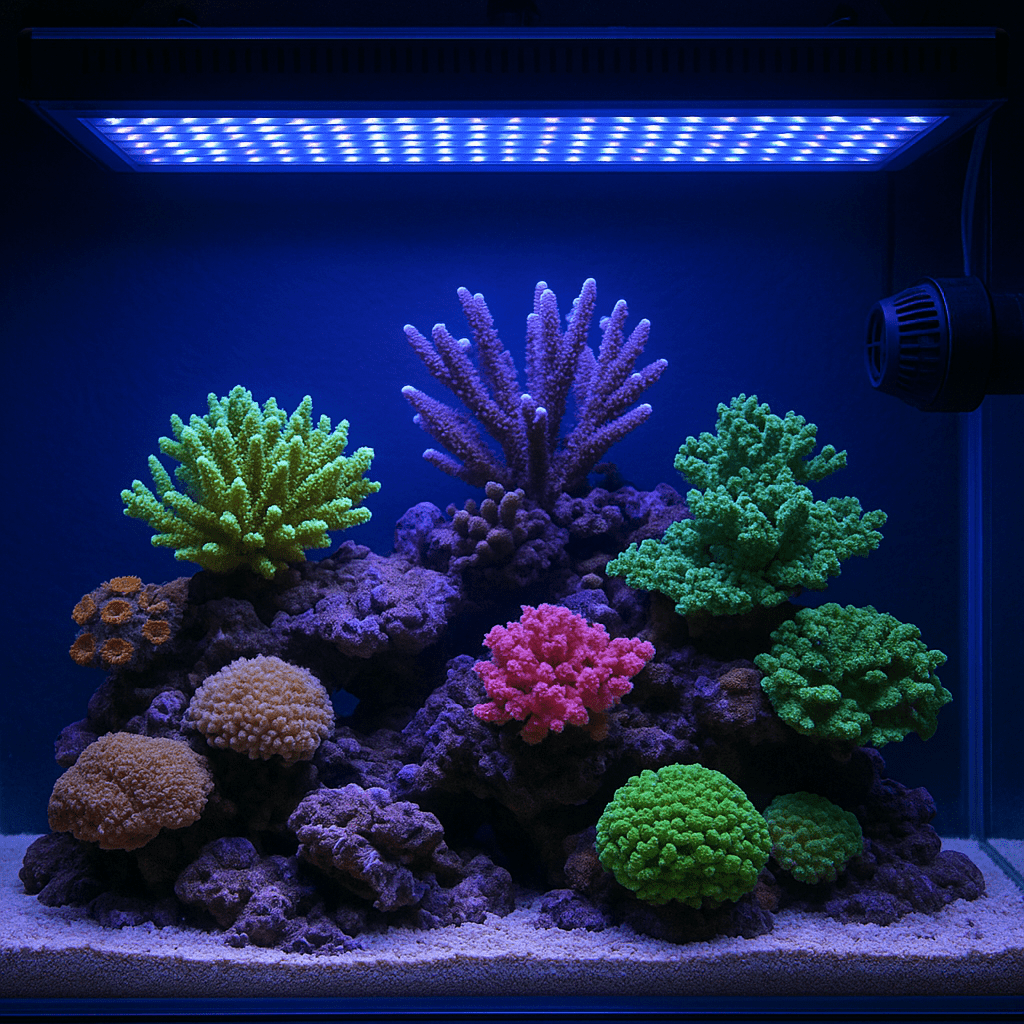
Reef Tank Plumbing Basics
Learn reef tank plumbing basics, including drains, return pumps, sump flow, noise control, and flood prevention for a…
 By
ByOur Reef Emergency Plan
A reef emergency plan helps you act fast during outages, leaks, and water quality crashes. Here is the…
[favorite_button]
My Bookmarks:
To see full list click here
[user_favorites user_id="" include_links="true" site_id="" post_types="" include_thumbnails="true" thumbnail_size="thumbnail" include_excerpt="false"]