

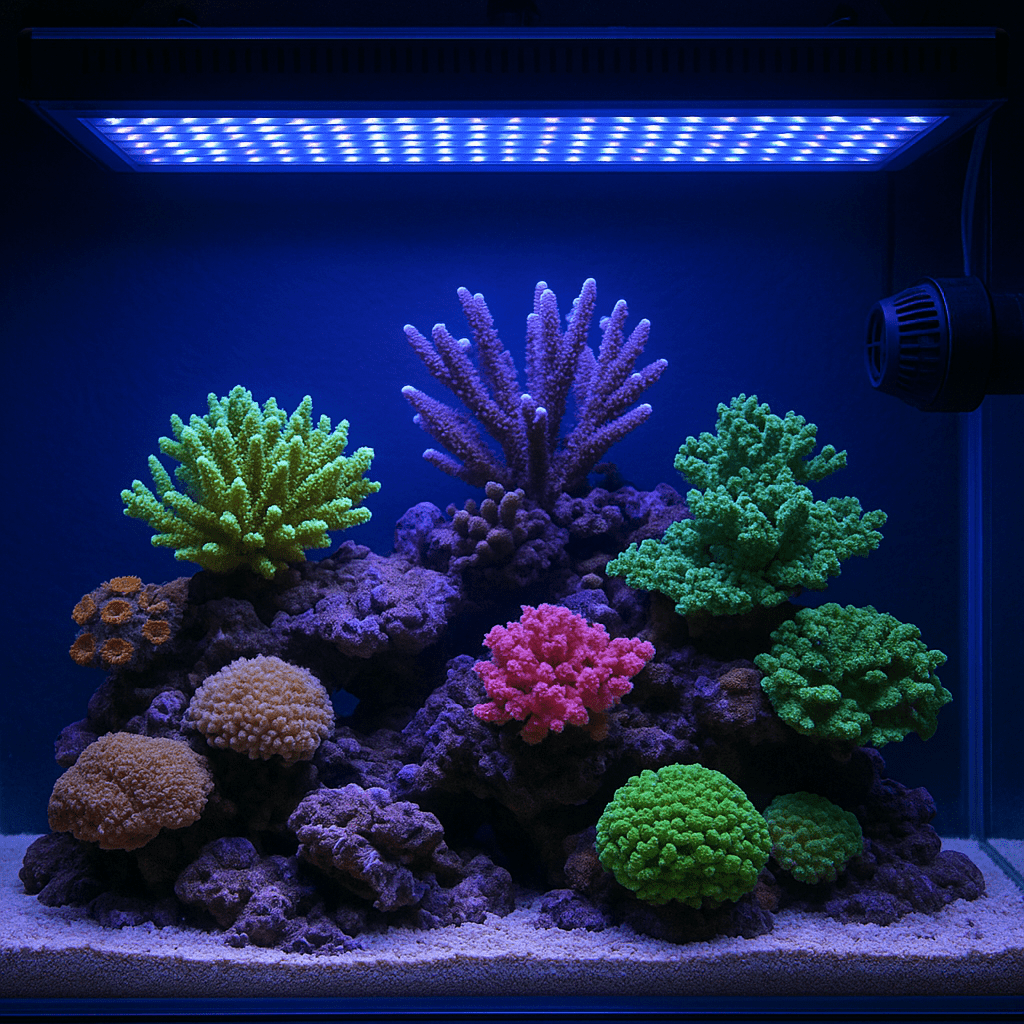
Reef tank maintenance basics come down to consistency, stability, and observation. Small weekly tasks prevent major problems later. When you keep salinity, nutrients, and equipment in check, corals grow better, fish stay healthier, and the whole aquarium becomes easier to manage.
A reef aquarium can look complex at first. There are test kits, pumps, lights, dosing schedules, and endless opinions online. The good news is that successful reef keeping usually depends on a simple routine. You do not need to chase perfect numbers every day. You need stable conditions and a clear plan. In this guide, you will learn the core reef tank maintenance tasks, how often to do them, what parameters matter most, and how to spot trouble before it becomes expensive. This article is written for beginners, but intermediate hobbyists can also use it to tighten up their routine and avoid common mistakes.
Quick Reference Maintenance Table
| Task | How Often | Why It Matters |
|---|---|---|
| Check temperature and equipment | Daily | Prevents sudden failures and livestock stress |
| Top off evaporated water | Daily | Keeps salinity stable |
| Feed fish and corals appropriately | Daily | Supports health without overloading nutrients |
| Clean glass | 2–4 times weekly | Improves viewing and limits algae buildup |
| Test alkalinity | 1–3 times weekly | Tracks coral demand and dosing needs |
| Test nitrate and phosphate | Weekly | Helps balance nutrients for coral health |
| Empty skimmer cup | Weekly or as needed | Maintains skimmer performance |
| Water change | Weekly or biweekly | Exports waste and refreshes trace elements |
| Change or rinse filter media | Weekly | Prevents detritus buildup |
| Inspect pumps and plumbing | Monthly | Prevents flow loss and equipment failure |
Why Reef Tank Maintenance Matters
Reef tanks reward stability more than perfection. Corals can adapt to many conditions. They struggle when those conditions swing quickly. That is why maintenance matters so much. A missed top-off can raise salinity. A clogged pump can reduce oxygen. Overfeeding can drive up phosphate and nitrate. These changes often happen slowly at first. Then problems appear all at once.
Good maintenance protects your investment. It also protects your animals. Fish, corals, snails, and shrimp all depend on you for a stable environment. Regular care helps prevent algae outbreaks, coral recession, tissue loss, and fish disease. It also makes troubleshooting easier. When you know your normal routine, unusual changes stand out fast. That gives you time to fix issues before they spread across the tank.
If you are still building your system, our guides on reef tank setup and reef tank water parameters can help.
Daily Reef Tank Maintenance Tasks
Daily maintenance should be quick. Most days, it takes only a few minutes. Start by checking temperature. Make sure the heater and return pump are running normally. Look at powerheads, the skimmer, and the water level in the sump. Listen for unusual sounds. A noisy pump often signals a problem early.
Next, top off evaporated water with fresh RODI water. Never use saltwater for evaporation top-off. Salt does not evaporate. Only water does. Replacing evaporation with saltwater raises salinity over time. If you have an auto top-off system, confirm it is working and the reservoir is full.
Feed fish carefully. Offer small portions they can finish quickly. Remove uneaten food if needed. Watch your livestock during feeding. Fish that stop eating often show the first sign of stress or disease. Corals also tell you a lot each day. Good polyp extension, normal color, and full tissue are positive signs. A quick daily look can prevent major losses later.
Weekly Reef Tank Maintenance Tasks
Weekly maintenance is the backbone of a healthy reef tank. This is when you clean, test, and reset the system. Start by scraping algae from the glass. Clean the viewing panes before it hardens. Soft film algae is easy to remove. Thick coralline and stubborn algae take more effort later.
Test your key parameters. For most reef tanks, check alkalinity every week at minimum. Also test nitrate, phosphate, salinity, and temperature. Calcium and magnesium should be checked regularly too, especially in tanks with stony corals. Record your results. Trends matter more than one isolated number.
Empty and clean the skimmer cup. Rinse filter socks or replace mechanical media. Detritus trapped in dirty media breaks down and fuels nutrient problems. If you use activated carbon or phosphate remover, inspect it weekly and replace it when needed. Finally, perform a water change if that is part of your schedule. Many reef keepers do best with small, regular changes instead of large, infrequent ones.
Monthly Maintenance and Equipment Checks
Monthly maintenance focuses on deeper cleaning and prevention. Remove pumps and powerheads one at a time. Clean off calcium buildup, coralline algae, and debris. Reduced flow can hurt corals long before a pump stops completely. Return pumps, wavemakers, and skimmer pumps all need periodic care.
Inspect plumbing, tubing, and electrical cords. Look for salt creep around fittings. Salt creep often points to a slow leak or splash issue. Check your heater for corrosion or cracks. Verify your thermometer against a second one if possible. Temperature mistakes can be costly.
This is also a good time to review your aquascape and livestock growth. Corals may begin shading each other or stinging nearby colonies. Trim macroalgae in refugiums if needed. Refill dosing containers. Calibrate probes if you use electronic monitors. A monthly reset keeps small issues from becoming major failures.
Water Changes: How Much and How Often
Water changes are still one of the best reef maintenance tools. They remove dissolved waste. They also replace trace elements and help correct minor imbalances. A common starting point is 10 percent weekly or 15 to 20 percent every two weeks. Heavily stocked tanks may need more. Lightly stocked tanks may need less.
The key is consistency. Mix new saltwater fully before use. Match temperature and salinity closely to the display tank. Sudden differences can stress fish and corals. Use a clean pump and container dedicated to aquarium use. Never mix reef salt in buckets that held soap or chemicals.
During the change, siphon detritus from low-flow areas if possible. Bare-bottom tanks make this easy. Sand beds need a gentler approach. Lightly vacuum dirty sections instead of disturbing the whole bed at once. If you want a deeper guide, read our article on reef tank water changes.
Key Water Parameters to Monitor
Beginners often focus on too many numbers. Start with the parameters that matter most. Salinity should usually stay around 1.025 to 1.026 specific gravity. Temperature should remain stable, often between 77 and 79 degrees Fahrenheit. Alkalinity is critical for coral growth and stability. Many successful tanks run between 7 and 9 dKH.
Calcium often stays between 400 and 450 ppm. Magnesium often stays between 1250 and 1400 ppm. Nitrate and phosphate should not be zero in most reef tanks. Corals need some nutrients. Many mixed reefs do well with nitrate around 5 to 15 ppm and phosphate around 0.03 to 0.10 ppm. Exact targets vary by tank and coral type.
Most important, avoid big swings. Stable alkalinity beats chasing an exact value. Stable salinity beats occasional corrections. Test at the same time of day when possible. Use reliable kits. Replace expired reagents. If your tank holds many stony corals, review alkalinity in reef tanks for a deeper explanation.
Step-by-Step Reef Maintenance Routine
Here is a simple routine that works well for many reef keepers.
- Check temperature, salinity equipment, and water level each morning.
- Feed fish lightly and observe behavior during feeding.
- Top off evaporated water with fresh RODI water.
- Clean front glass as needed during the week.
- Test alkalinity, nitrate, and phosphate on the same day each week.
- Empty the skimmer cup and rinse mechanical filtration.
- Perform a scheduled water change with matched saltwater.
- Siphon detritus from easy-to-reach dead spots.
- Inspect pumps, cords, and plumbing for wear each month.
- Record results in a log so you can track trends.
This routine is simple, but it covers the basics well. Once your tank matures, you can adjust based on coral demand, nutrient levels, and equipment choices.
Common Problems
Why is algae growing so fast?
Fast algae growth usually points to excess nutrients, old bulbs, poor flow, or neglected maintenance. Start by testing nitrate and phosphate. Clean detritus traps like filter socks, sump corners, and rock crevices. Reduce overfeeding. Use RODI water with a low TDS reading. Increase herbivores if appropriate. Algae control works best when you remove the cause, not just the visible algae.
Why are my corals losing color?
Color loss can come from unstable alkalinity, poor lighting, very low nutrients, or sudden parameter changes. Review your recent maintenance. Did you change salt brands, lights, or dosing amounts? Test alkalinity first. Then check nitrate and phosphate. Pale corals often need more stability, not more additives. Make one change at a time and watch results for a week or two.
Why does my salinity keep drifting?
Salinity drift usually means inconsistent top-off or a faulty refractometer. Calibrate your refractometer with calibration fluid, not fresh water. Check your auto top-off sensor for salt creep. Make sure the reservoir does not run dry. In small tanks, even modest evaporation causes noticeable swings. Stable salinity is one of the most important reef maintenance basics.
Why are nitrates or phosphates always high?
High nutrients often come from overfeeding, heavy stocking, dirty media, or trapped detritus. Feed smaller portions. Rinse frozen food if needed. Increase water change frequency. Clean the skimmer and improve export. Add flow to dead spots. In some cases, a refugium or media reactor can help. Still, basic maintenance should come first.
Tips for Making Maintenance Easier
The best maintenance plan is the one you can keep doing. Store your tools together. Keep towels, test kits, buckets, and tubing in one place. Mix saltwater ahead of schedule when possible. Label dosing containers clearly. Use reminders on your phone for test days and water changes.
Automation can help, but it does not replace observation. Auto top-off systems, dosers, and controllers are useful. They still need inspection. A simple tank journal is one of the most powerful tools in reef keeping. Write down test results, livestock additions, maintenance dates, and any unusual behavior. Patterns become easier to spot. That saves time, money, and coral losses.
If you are planning livestock additions, our clean-up crew for reef tanks guide can help you choose useful invertebrates.
Frequently Asked Questions
How often should I do maintenance on a reef tank?
Reef tanks need light daily care, weekly testing and cleaning, and deeper monthly equipment checks. Short, regular sessions work best.
What is the most important reef tank parameter?
Stability matters more than any single number. Salinity, temperature, and alkalinity are especially important to keep steady.
Are water changes enough for reef tank maintenance?
Water changes help a lot, but they are not enough alone. You also need testing, cleaning, top-off, and equipment inspection.
How do I know if I am overfeeding my reef tank?
Uneaten food, rising nitrate, rising phosphate, and algae growth are common signs. Feed less and observe fish response closely.
Can a reef tank be low maintenance?
Some reef tanks are easier than others, but no reef tank is maintenance free. Good equipment and simple routines reduce the workload.
Was this helpful?
Related Posts
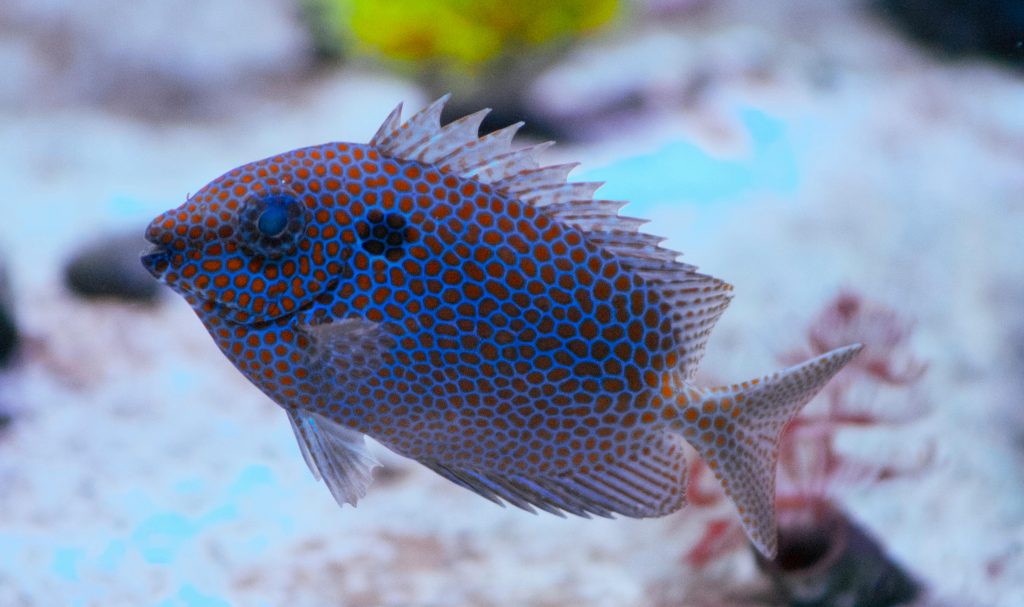
Gold Spotted Rabbitfish (Siganus Punctatus)
Gold Spotted Rabbitfish care includes large tanks, heavy algae feeding, and caution with corals. Learn tank size, diet,…
 By
By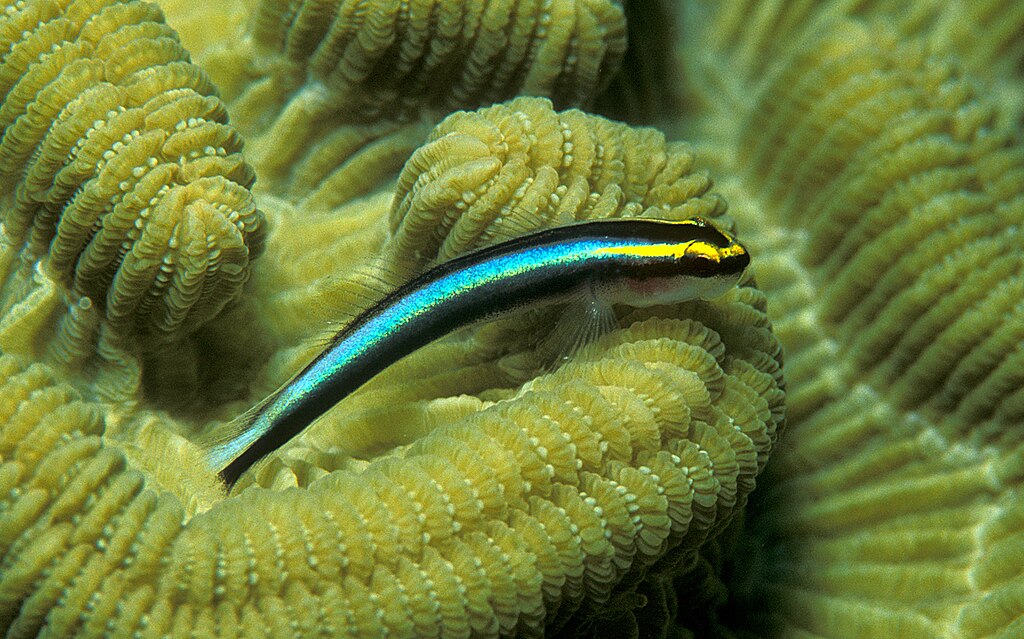
Sharknose Goby (Elacatinus evelynae)
Sharknose Goby care is simple in stable reef tanks. Learn feeding, tank setup, compatibility, and common problems for…
[favorite_button]
My Bookmarks:
To see full list click here
[user_favorites user_id="" include_links="true" site_id="" post_types="" include_thumbnails="true" thumbnail_size="thumbnail" include_excerpt="false"]