

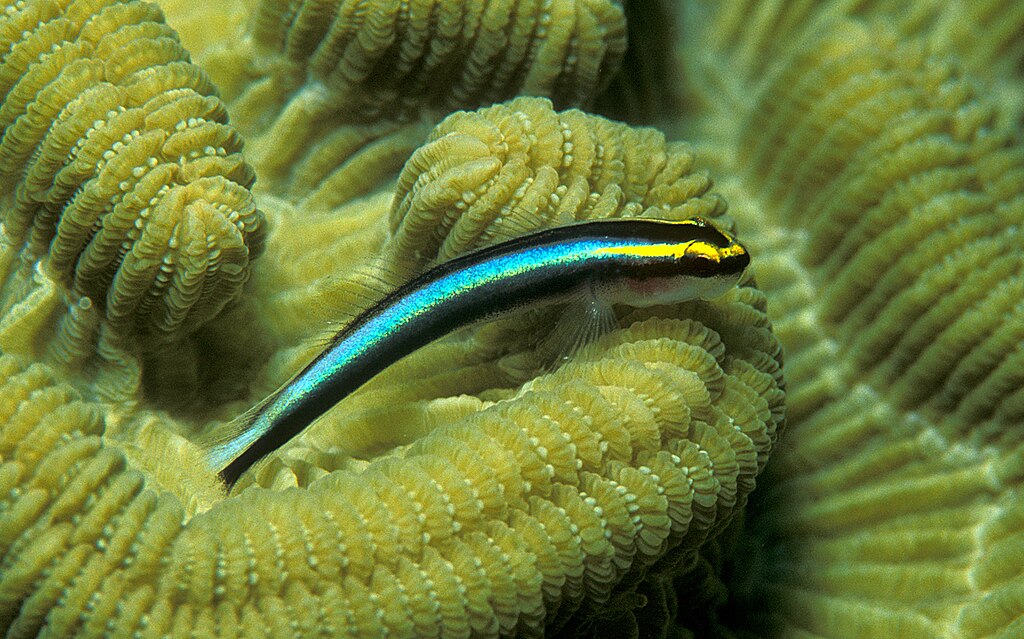
The Sharknose Goby is a small reef-safe cleaner fish with bright color, big personality, and simple care needs. It suits many nano and midsize reef tanks. This species stays tiny, helps clean tank mates, and usually mixes well with peaceful community fish when given stable water and secure rockwork.
If you are considering Elacatinus evelynae, this guide covers the details that matter most. You will learn about tank size, aquascaping, feeding, behavior, compatibility, and common problems. I will also explain how this goby acts in the wild and what that means for aquarium care. For beginners, it is one of the more approachable marine fish. For experienced reef keepers, it is a useful addition to peaceful display tanks and cleaner-themed setups.
Quick Reference
| Common name | Sharknose Goby |
| Scientific name | Elacatinus evelynae |
| Care level | Easy |
| Temperament | Peaceful |
| Adult size | About 2 inches |
| Minimum tank size | 10 gallons for one, 20+ gallons preferred for community reefs |
| Diet | Carnivore, small meaty foods |
| Reef safe | Yes |
| Lighting needs | No special fish requirement |
| Flow preference | Low to moderate, with calm perches |
| Temperature | 76–80°F |
| Salinity | 1.024–1.026 specific gravity |
| pH | 8.1–8.4 |
| Compatibility | Best with peaceful fish and non-predatory inverts |
Use the table above as a fast care snapshot. The real success comes from stable conditions, gentle tank mates, and regular feeding. This fish is hardy, but it still struggles in tanks with bullying, sudden salinity swings, or poor acclimation.
Natural Habitat
The Sharknose Goby comes from the tropical western Atlantic and Caribbean. It lives around coral reefs, rocky ledges, and cleaning stations. In nature, these gobies often perch in the open and wait for larger fish to approach. They remove parasites, dead tissue, and mucus from willing clients. This behavior makes them one of the better-known cleaner gobies in the hobby.
Wild fish usually stay close to structure. They dart back into crevices when threatened. That tells us something important for aquarium care. They need small caves, overhangs, and narrow gaps between rocks. Open water alone is not enough. They also prefer stable tropical water with good oxygen levels. A mature reef tank mimics that environment well. When they feel secure, they spend more time visible and active. When they feel exposed, they hide more and feed less.
Aquarium Setup
A single Sharknose Goby can live in a 10-gallon tank, but that is the bare minimum. A 20-gallon or larger reef is easier to keep stable. Stability matters more than raw volume, but small tanks swing faster. That can stress tiny fish. In beginner systems, I strongly prefer at least 20 gallons.
Build the aquascape with several perch points and retreat zones. Use live rock or reef-safe dry rock with holes and shaded pockets. Leave some open sand and open water in front. This fish likes to hover, perch, and make short dashes. A tight-fitting lid is essential. Gobies can jump, especially during the first week. Keep ammonia and nitrite at zero. Nitrate should stay low, though this species is not unusually delicate. Good filtration, a cycled tank, and stable salinity are the real priorities. If you need help dialing in a new system, see: reef tank setup guide, nano reef tank mistakes, marine fish acclimation, reef aquarium salinity.
Lighting Requirements
The Sharknose Goby does not need special lighting for its own health. Lighting in its tank should be chosen for the reef as a whole. In coral tanks, normal reef lighting works fine. In fish-only systems, moderate lighting is enough. What matters most is that the fish has both lit areas and shaded places.
Very intense light can make shy individuals spend more time under ledges. This is common in bare or exposed aquascapes. If your tank uses strong LEDs for SPS corals, create shadows with rock shelves and branching coral skeletons. That gives the goby options. It will often perch at the edge of light and shade. There is no need to chase a PAR target for this species. Instead, focus on fish comfort and tank balance. If the goby is out in the open, feeding well, and not breathing hard, your lighting setup is likely fine.
Water Flow
This species does best in low to moderate flow with access to calmer pockets. It can handle movement, but it should not be blasted nonstop. In reef tanks with random flow, Sharknose Gobies usually perch behind rock edges or on lower-flow surfaces. They then make short swimming runs into the current.
A good setup has mixed flow zones. Aim powerheads so one part of the tank stays gentle. That gives the goby a resting area. High, chaotic flow in every corner can lead to stress and reduced feeding. Watch the fish after adding or adjusting pumps. If it struggles to hold position everywhere, your flow is too strong. If detritus collects heavily and oxygen seems low, your flow may be too weak. The sweet spot is enough circulation for reef health, plus several small calm perches for the goby.
Feeding
Many new hobbyists assume cleaner gobies can live on parasites alone. That is not true in aquariums. The Sharknose Goby needs regular feeding. Offer small meaty foods once or twice daily. Good choices include enriched brine shrimp, mysis chopped into smaller pieces, finely minced seafood, copepods, and quality nano pellets. Frozen blends for small marine fish also work well.
Because this fish is tiny, food size matters. Large chunks are often ignored. Feed small portions that drift past its perch. In mixed reefs, faster fish may outcompete it. Target feeding can help. Use a turkey baster or pipette to deliver food nearby. A healthy Sharknose Goby usually learns the feeding routine fast. It becomes bold and visible at meal times. If it remains thin, increase feeding frequency and check for aggression. Variety is useful. It supports color, body condition, and long-term health. Do not rely on incidental leftovers.
Compatibility
The Sharknose Goby is one of the more peaceful marine fish. It is reef safe with corals and usually safe with ornamental invertebrates. It works well with small gobies, firefish, assessors, cardinalfish, clownfish, blennies, and other calm species. It can also coexist with many wrasses if they are not aggressive feeders or predators.
Avoid housing it with large hawkfish, lionfish, groupers, aggressive dottybacks, or predatory wrasses. These fish may harass or eat it. Also be careful with territorial fish in nano tanks. Even clownfish can become pushy in tight spaces. Cleaner behavior is interesting, but not every fish welcomes it. Some tank mates ignore the goby. Others visit it often. A bonded pair of Sharknose Gobies can work in suitable tanks. Multiple similar cleaner gobies in small systems may fight. Add them carefully and provide enough territory. In most community reefs, one specimen is the safest choice.
Step-by-Step Acclimation Guide
Proper acclimation prevents many early losses. This fish is hardy, but tiny species can react badly to sudden salinity shifts.
- Dim the tank lights before opening the bag.
- Float the bag for 15 to 20 minutes to match temperature.
- Test bag salinity if possible.
- Use drip acclimation for 30 to 45 minutes.
- Keep the fish submerged during transfer if you can.
- Do not add store water to your display tank.
- Release the goby near rock cover, not open water.
- Leave the lights low for a few hours.
- Offer a small meal later that day or the next morning.
Watch closely during the first week. Normal behavior includes hiding at first, then short perching trips into the open. Rapid breathing, constant surface hanging, or inability to stay upright signals trouble. Check salinity, temperature, and ammonia right away.
Propagation or Breeding
Can Sharknose Gobies breed in captivity?
Yes, cleaner gobies from the genus Elacatinus have been bred in captivity. It is not as common as clownfish breeding, but it is possible. A compatible pair is needed. They usually choose a protected nesting site, such as a small cave, shell, or narrow rock cavity.
Spawning behavior
The pair cleans the nest site before spawning. Eggs are attached inside the chosen shelter. The male often guards the clutch. Stable water, frequent feeding, and low stress improve the odds. In busy display tanks, eggs may be eaten or larvae may not survive long.
Raising larvae
Larval rearing is the hard part. It requires very small live foods, clean rearing tanks, and close timing. Most hobbyists enjoy the spawning behavior but do not raise the fry. For advanced breeders, the project is rewarding but technical.
Common Problems
Why is my Sharknose Goby hiding all the time?
New arrivals hide often. That is normal for several days. Long-term hiding usually points to bullying, too much flow, or lack of secure rockwork. Check for aggressive tank mates first. Then inspect the aquascape. Add more small caves if needed. Also review lighting intensity. Very bright tanks with little shade can keep this fish tucked away.
Why is it not eating?
Refusal to eat is common after shipping stress. Start with very small frozen foods and enriched brine. Feed near the fish. If larger fish rush every meal, target feed the goby. Also test salinity. Fish imported from lower salinity systems may need careful adjustment. Persistent refusal beyond a few days needs close attention.
Why does it look thin?
Thin body shape usually means underfeeding or competition. Cleaner behavior does not supply enough nutrition in most aquariums. Increase meal frequency. Offer finer foods. Observe whether the goby actually swallows food. Internal parasites are possible but less common than simple food competition.
Why is my goby breathing fast?
Rapid breathing can signal ammonia, low oxygen, salinity shock, or disease. Test water immediately. Confirm heater accuracy. Check whether pumps are providing enough surface agitation. If parameters are stable, inspect for visible spots, flashing, or excess mucus. Quarantine may be needed.
Frequently Asked Questions
Is the Sharknose Goby reef safe?
Yes. It is considered reef safe with corals and most reef invertebrates.
How big does a Sharknose Goby get?
Most stay around 2 inches or less, which makes them ideal for smaller reef tanks.
Can a Sharknose Goby live in a nano reef?
Yes, but choose a stable nano reef with a lid, mature filtration, and peaceful tank mates.
Do Sharknose Gobies clean other fish?
Often, yes. Many individuals perform cleaning behavior in aquariums, though not all tank mates participate.
Can I keep two Sharknose Gobies together?
Sometimes. A bonded pair can work, but random additions in small tanks may lead to chasing and stress.
Was this helpful?
Related Posts
Coral Care Tips
These coral care tips cover lighting, flow, feeding, and water chemistry so your reef corals stay healthy, colorful,…
 By
ByHow To Frag And Mount Corals
Learn how to frag and mount corals safely with simple tools, clean cuts, and proven reef-safe methods for…
[favorite_button]
My Bookmarks:
To see full list click here
[user_favorites user_id="" include_links="true" site_id="" post_types="" include_thumbnails="true" thumbnail_size="thumbnail" include_excerpt="false"]