Reef tank flow and circulation keep corals healthy, suspend waste, and deliver oxygen and food across the aquarium. Good flow is not just about strong pumps. It is about creating varied, indirect movement that matches your corals, rockwork, and tank size.
Many reef problems trace back to poor circulation. Dead spots collect detritus. Coral tissue gets irritated by harsh jets. Low oxygen can stress fish at night. New hobbyists often focus on lighting first. Flow deserves the same attention. In this guide, you will learn how reef flow works, how much you need, where to place pumps, and how to troubleshoot common circulation issues. You will also see how flow needs differ for soft corals, LPS, and SPS systems. By the end, you will know how to build a more stable and healthier reef aquarium.
Quick Reference Table
| Topic | Best Practice |
|---|---|
| Soft coral tanks | Moderate, random flow |
| LPS tanks | Low to moderate indirect flow |
| SPS tanks | High, turbulent flow |
| Turnover guideline | 20x to 60x display volume per hour |
| Powerhead placement | Aim across glass or above rockwork |
| Dead spots | Check behind rocks and low corners |
| Night oxygen support | Maintain surface agitation |
| Return pump role | Filtration turnover, not main coral flow |
Use these numbers as a starting point. Every reef tank behaves differently. Aquascape shape, coral density, and pump type all change the final result.
Why Flow Matters in a Reef Tank
Water movement affects almost every part of reef husbandry. Corals need flow to exchange gases and remove waste. They also rely on it to bring food and dissolved nutrients to their tissues. In nature, reef water is always moving. Waves, tides, and surge create constant variation. Our tanks need to imitate that motion.
Good circulation also helps your filtration system. It keeps detritus suspended so filter socks, rollers, and skimmers can remove it. Without enough flow, waste settles in low areas and breaks down. That can raise nitrate and phosphate over time. Fish also benefit from better oxygen levels and more stable water chemistry.
The goal is not a sandstorm. The goal is broad, changing movement across the whole aquarium. Corals should sway, not get blasted. Polyps should extend, not stay retracted all day. When flow is balanced, the tank looks more natural and stays cleaner between maintenance sessions.
How Much Flow Does a Reef Tank Need?
Flow is often measured as turnover. This means how many times your display volume moves each hour. A mixed reef often does well around 20x to 40x total flow. SPS-heavy tanks often run 40x to 60x or more. Soft coral and LPS systems usually prefer less direct intensity.
These numbers are only rough guidelines. Pump ratings are measured in ideal conditions. Rockwork, coral growth, and dirty pumps reduce real output. A tank with open aquascape can handle stronger circulation. A dense wall of rock creates more sheltered areas and turbulence.
It also helps to separate return pump flow from in-tank circulation. Your return pump moves water through the sump. It supports filtration and gas exchange. It rarely provides enough display flow for coral health on its own. Most reef tanks need one or more powerheads, wavemakers, or gyre pumps inside the display. If your corals collect debris or show weak extension, you may need more varied movement rather than simply more gallons per hour.
Types of Reef Tank Flow Patterns
Not all flow feels the same to corals. A narrow, direct jet can damage tissue. A wide, pulsing stream is usually safer. Random flow is ideal because it prevents one side of a coral from taking constant force. It also mimics natural reef conditions better.
There are several useful flow patterns. Laminar flow moves in one direction. It works in some setups but can create dead areas. Turbulent flow changes direction and intensity. This is excellent for many corals. Pulsing flow turns pumps up and down on a schedule. It creates a more natural sway. Gyre flow moves water in a circular path around the tank. This can keep waste suspended very well.
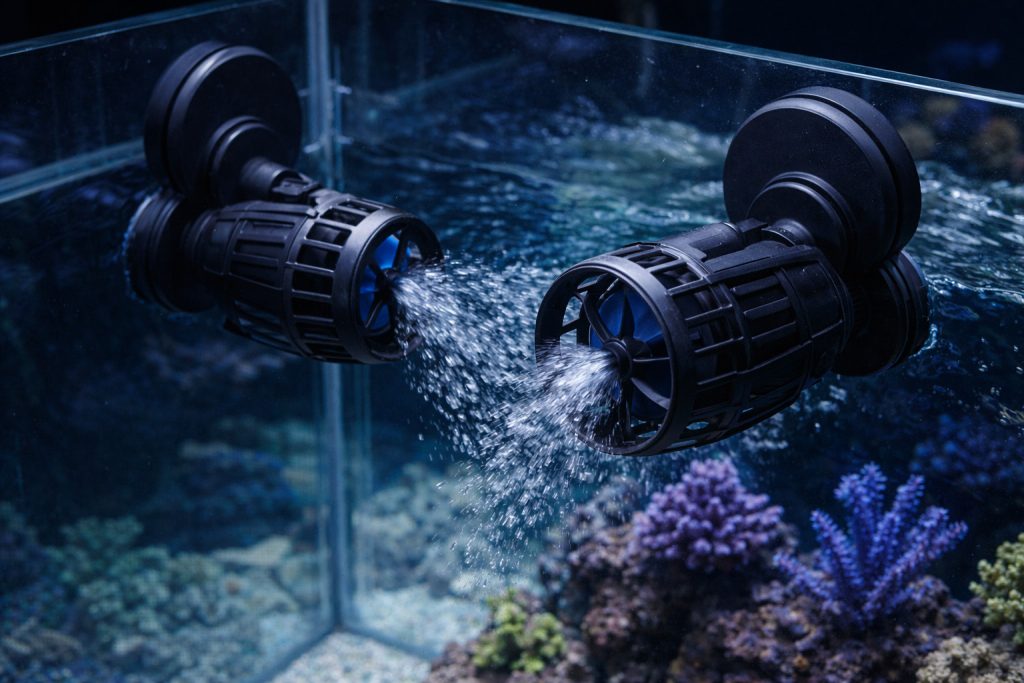
Most successful reef tanks use a combination. For example, two opposing wavemakers can create chaotic movement. A gyre pump near the surface can support broad circulation. The best setup depends on your livestock and aquascape. Watch how food particles move in the water column. That often reveals your true flow pattern better than pump settings alone.
Aquarium Setup and Powerhead Placement
Pump placement matters as much as pump strength. Start by avoiding direct blasts at coral colonies. Aim pumps across the front glass, side glass, or just above the rockwork. This spreads force and reduces tissue damage. It also creates wider movement through the tank.
In a standard rectangular tank, many hobbyists place one pump on each side panel. This works well for mixed reefs. In longer tanks, adding a third pump can help eliminate weak zones in the center or behind structures. In peninsula tanks, flow often works best when pumps create a circular path from one end to the other.
Keep an eye on problem areas. Detritus often settles behind rock islands, under overhangs, and in back corners. Adjust pump angles before increasing raw power. Small changes can make a big difference. Also leave room for future coral growth. A pump that works today may become blocked by colonies in six months. Revisit placement regularly as your reef matures.
Flow Needs by Coral Type
Different corals prefer different movement. Soft corals usually like moderate, varied flow. Mushrooms and some leathers can tolerate lower flow, though they still need enough movement to prevent detritus buildup. Toadstools often enjoy stronger indirect flow than many beginners expect.
LPS corals need more caution. Euphyllia, acans, blastos, and scolys can be damaged by direct jets. Their fleshy tissue tears easily. Give them indirect, intermittent flow that causes gentle movement. If tentacles whip violently or stay shrunken, the flow is too harsh. If debris collects on the skeleton, it may be too low.
SPS corals usually need the strongest circulation. Acropora, montipora, and similar species thrive in high, chaotic flow. Strong movement helps them exchange gases and prevents dead zones between branches. Still, even SPS dislike a constant narrow blast. Broad, random flow is best. In mixed reefs, place high-flow corals higher on the rockwork and lower-flow corals in sheltered zones. This creates natural microhabitats within one tank.
Lighting and Flow Work Together
Flow and lighting are closely linked. Strong light increases coral metabolism. As photosynthesis rises, corals need better gas exchange and nutrient delivery. A brightly lit SPS tank with weak circulation often struggles. Tissue can become stressed even when water parameters look acceptable.
High flow also helps corals handle intense lighting by reducing stagnant boundary layers around their tissue. This improves oxygen and carbon dioxide exchange. In simple terms, good flow helps corals breathe and feed under strong lights. That is one reason shallow reef species often demand both high PAR and high movement.
On the other hand, lower-light corals in shaded areas often prefer gentler flow. Match both factors to the coral’s natural habits. If you upgrade lighting, review your circulation at the same time. Many hobbyists increase PAR but leave flow unchanged. That can lead to poor extension, algae in dead spots, or slow tissue recession in sensitive species.
Step-by-Step Guide to Setting Up Reef Tank Circulation
Start with your tank goals. Decide whether you want a soft coral tank, mixed reef, or SPS system. This sets your target flow range. Next, choose pump types that fit your aquarium shape. Wavemakers are flexible and easy to aim. Gyre pumps create broad movement in longer tanks.
Mount pumps where they create crossflow, not direct impact. Turn them on at moderate power first. Add a small amount of fine food or coral food to the tank. Watch where particles travel and where they settle. Those settling areas are your dead spots. Adjust angles before raising speed.
Then observe your livestock. Coral polyps tell you a lot. Gentle swaying usually means good flow for soft corals and LPS. Strong extension and clean branches often indicate good SPS flow. Recheck after feeding and after lights out. Nighttime oxygen is important. Maintain enough surface agitation at all times. Finally, clean pumps often. Calcium buildup and algae reduce output more than many hobbyists realize.
Common Problems
Detritus Collecting in Corners
This usually means you have dead spots. Waste settles where circulation is weak. First, inspect the back of the rockwork and lower corners. Aim one pump slightly downward behind the rocks or add a small supplemental pump. Turkey baste the rock during water changes to keep debris from accumulating.
Corals Staying Closed
Closed polyps can mean too much or too little flow. Look at the coral type first. Euphyllia and fleshy LPS often close from direct blasts. SPS may close when flow is stagnant or when tissue is irritated by debris. Move the coral or redirect the pump. Then observe for several days before making more changes.
Sand Blowing Everywhere
Strong pumps can create bare spots in the sand bed. Raise the pumps higher in the tank. Aim them toward the surface or glass instead of straight across the bottom. You can also reduce pulse intensity or switch to wider-flow nozzles. Fine sand is especially easy to move.
Low pH or Fish Gasping at Night
Poor gas exchange may be part of the problem. Increase surface agitation and verify your overflow is working well. Make sure pumps continue running overnight. Dense tanks consume oxygen after lights out. Strong surface movement can improve oxygen levels and help stabilize pH swings.
Pumps Losing Power
Dirty pumps often underperform. Coralline algae, calcium deposits, and snail shells can reduce output. Soak wet sides and impellers in citric acid or vinegar, then rinse well. Regular cleaning restores flow and extends pump life.
Maintenance Tips for Long-Term Success
Flow changes as a reef grows. Branching corals block circulation. Large leather corals create sheltered pockets. What worked in a new tank may fail in a mature one. Reassess your setup every few months. Watch for debris buildup, cyanobacteria patches, or uneven coral extension.
Clean pumps on a schedule. Many reef keepers wait until performance drops. That is usually too late. Monthly or bimonthly cleaning is a good routine for most tanks. Also inspect magnets, guards, and cables for wear. A failed pump can quickly affect oxygen and coral health.
Use feed mode and night mode carefully. These features are helpful, but they should not leave the tank stagnant for long. If you run reduced nighttime flow, keep enough movement for gas exchange. Stability matters more than chasing a perfect number on paper.
Frequently Asked Questions
Can a reef tank have too much flow?
Yes. Too much direct flow can tear LPS tissue, keep polyps closed, and blow sand around. Broad, indirect flow is safer than a narrow blast.
Is the return pump enough for reef tank circulation?
Usually not. Return pumps handle sump turnover well, but most reef tanks need powerheads or wavemakers for coral health.
How do I find dead spots in my reef tank?
Feed a small amount of fine food and watch where particles settle. Detritus buildup behind rocks and in corners also reveals weak flow.
Do corals need flow at night?
Yes. Corals and fish still need oxygen at night. Keep enough circulation and surface agitation running after lights out.
What is the best flow for a mixed reef?
A mixed reef usually does best with moderate to strong random flow. Create high-flow and sheltered zones for different coral types.
Final Thoughts
Reef tank flow and circulation are easy to underestimate. They shape coral health, tank cleanliness, oxygen levels, and long-term stability. The best systems use varied, indirect movement instead of brute force. Start with your coral goals, place pumps carefully, and adjust based on what the tank shows you. If your reef has clean rockwork, active polyp extension, and little detritus buildup, your flow is likely on the right track.
For more help, see reef tank setup guide, reef tank water parameters, best coral for beginners, how to lower nitrates in a reef tank, and reef tank maintenance schedule.
Was this helpful?
Related Posts
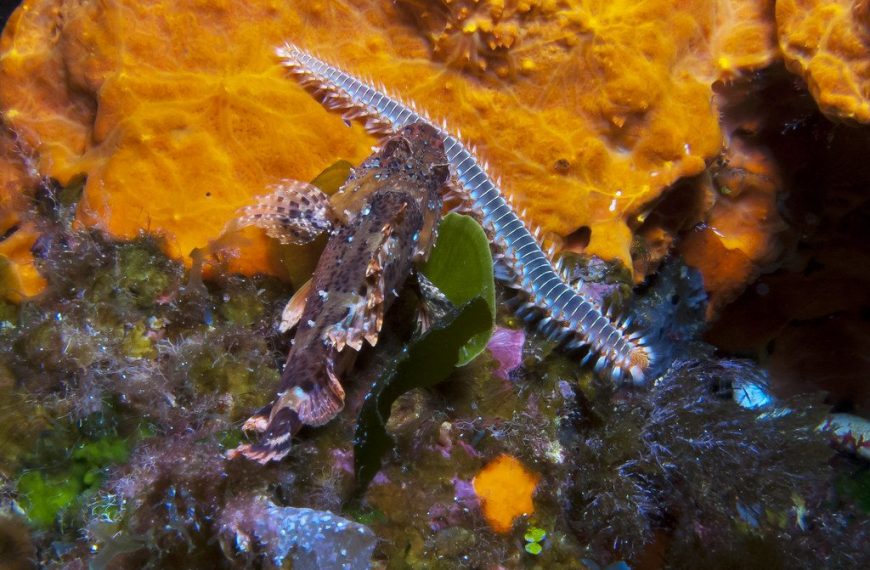
Bristleworms
Bristleworms are usually helpful reef tank scavengers. Learn how to identify them, control numbers, and spot the rare…
 By
By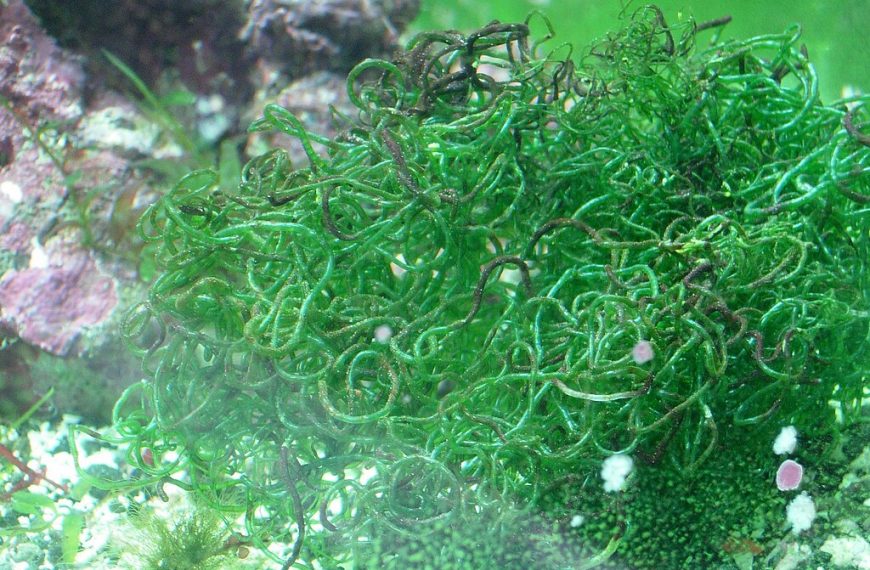
What is a Chaeto Reactor, and How Does it Help Control Nutrients?
A chaeto reactor grows macroalgae in a sealed chamber to remove nitrate and phosphate, helping reef tanks control…