

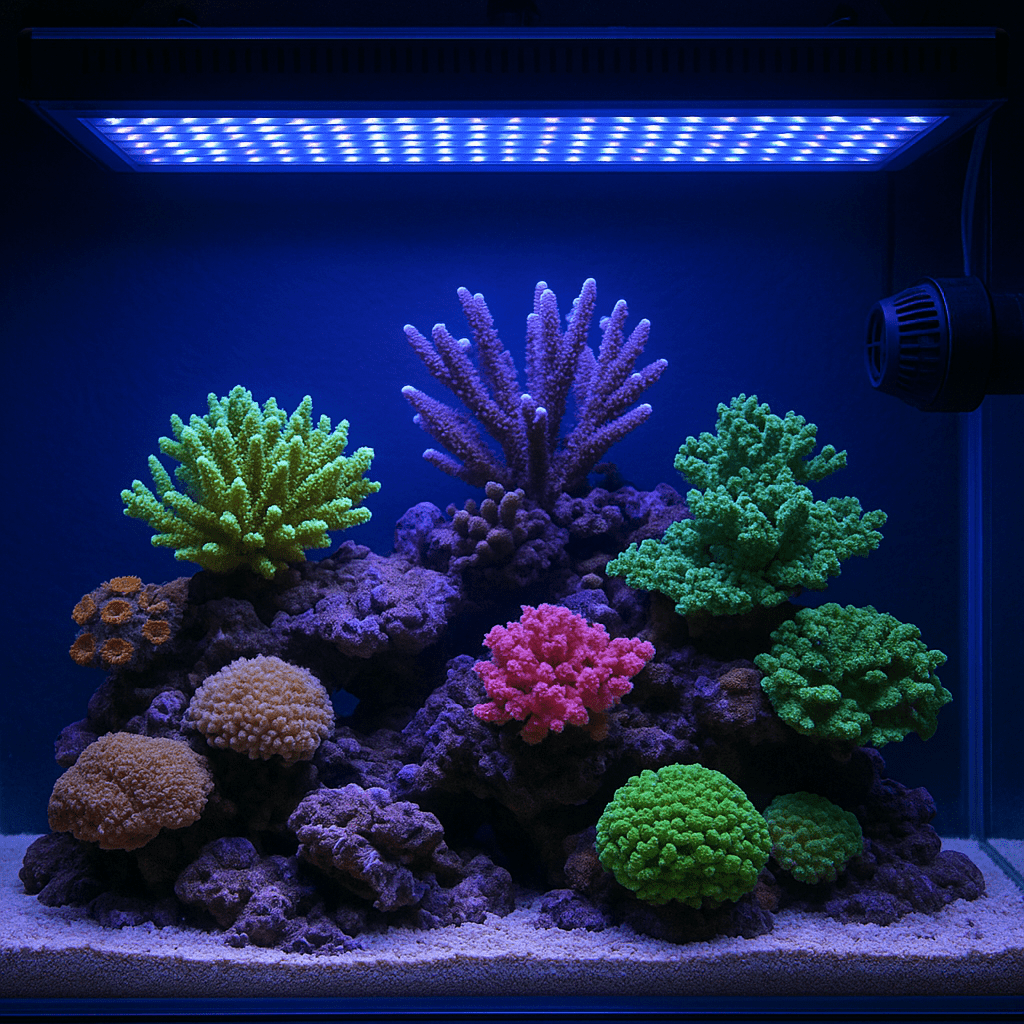
Oxygenation keeps every reef tank alive. Fish, corals, bacteria, and microfauna all need steady dissolved oxygen. In most aquariums, oxygen problems come from weak gas exchange, excess organics, high temperature, or poor flow. Fixing those issues improves animal health, pH stability, and overall reef resilience.
Many hobbyists focus on salinity, alkalinity, and nitrate first. Those matter a lot. Yet oxygen is just as fundamental. A reef aquarium can test well on paper and still struggle if dissolved oxygen stays low. Fish may breathe harder. Corals may stay retracted. Bacteria may process waste less efficiently. In severe cases, livestock losses happen fast, especially at night. This guide explains what oxygenation means, why reef tanks lose oxygen, and how to improve it with simple equipment and better husbandry. You will also learn how oxygen relates to pH, temperature, stocking, and surface agitation.
Quick Reference Table
| Topic | Best Practice | Why It Matters |
|---|---|---|
| Surface movement | Keep the water surface visibly rippling | Improves gas exchange |
| Flow | Use varied, tank-wide circulation | Prevents dead spots and boosts oxygen delivery |
| Temperature | Keep stable, usually 76–79°F | Warmer water holds less oxygen |
| Protein skimmer | Run a properly sized skimmer | Adds aeration and removes organics |
| Stocking | Avoid overstocking fish | Reduces oxygen demand |
| Nighttime risk | Watch tanks closely before lights-on | Oxygen is often lowest then |
| Power outages | Keep battery air pumps ready | Prevents emergency oxygen crashes |
Think of oxygenation as both a chemistry issue and a flow issue. Oxygen enters aquarium water mainly at the air-water interface. It also enters through skimmers and other aeration devices. Once dissolved, it must move throughout the tank. That means circulation matters just as much as surface agitation. A tank can have a rippling surface but still have low-oxygen zones behind rockwork. This is common in dense aquascapes and heavily stocked systems.
What Oxygenation Means in a Reef Tank
Oxygenation is the process of dissolving oxygen into aquarium water and keeping it available. Reef animals use that oxygen constantly. Fish use it through their gills. Corals and invertebrates use it across tissues. Beneficial bacteria also need oxygen to break down ammonia and nitrite. Without enough dissolved oxygen, every part of the system becomes stressed.
It helps to separate oxygenation from water movement. They are related, but not identical. A pump can move water fast without adding much oxygen if the surface stays flat. An air stone can add gas exchange but still leave dead spots in the rockwork. The best reef tanks balance both. They create active surface exchange and broad internal circulation.
Photosynthesis also affects oxygen. During the day, algae and symbiotic zooxanthellae produce oxygen. At night, that production stops. Respiration continues around the clock. This is why tanks often have their lowest oxygen level just before the lights come on. If your system is already marginal, nighttime can expose the problem quickly.
Why Oxygen Matters So Much
Low oxygen affects more than fish breathing. It can reduce coral extension, slow growth, and increase stress. Fish may gather near flow pumps or the surface. They may breathe fast or act lethargic. Invertebrates can also react badly. Shrimp and snails often become less active. Sensitive species may decline without obvious warning signs.
Oxygen also supports biological filtration. Nitrifying bacteria need oxygen to process waste. If oxygen drops, filtration efficiency can drop too. This can worsen ammonia risk in crowded tanks. Low oxygen can also coincide with low pH. Both problems often come from excess carbon dioxide and poor gas exchange. Improving aeration can help both at once.
Stable oxygen levels make tanks more forgiving. Fish recover better from stress. Corals handle heat and nutrient swings more effectively. Feeding responses improve. Overall, the system feels cleaner and more stable. Many reef keepers see better polyp extension and stronger fish activity after improving oxygenation.
Main Causes of Low Oxygen
Overstocking is a major cause. More fish means more oxygen demand. Heavy feeding adds even more pressure because bacteria consume oxygen while breaking down waste. This is common in tanks with many active fish, large tangs, or frequent frozen feeding.
High temperature is another issue. Warm water holds less dissolved oxygen. A tank at 82°F has less oxygen capacity than one at 77°F. Summer heat, hot equipment, and poor room ventilation can all push oxygen lower. Heat stress and low oxygen often happen together, which makes the problem worse.
Poor surface agitation limits gas exchange. A smooth surface looks clean, but it is not ideal for oxygen transfer. Closed canopies and stagnant sump compartments can also trap humid, carbon dioxide-rich air. Dirty filter socks, clogged pumps, and organics building in the substrate increase oxygen demand further. In short, low oxygen usually comes from several small issues stacking together.
How Reef Tanks Get Oxygen
The water surface is the main exchange zone. Oxygen enters while carbon dioxide leaves. This happens best when the surface is disturbed. You do not need splashing everywhere. You need steady rippling and turnover. Aim return nozzles so they break the surface gently. Keep film from building up. Surface film reduces gas exchange and traps waste.
Protein skimmers are powerful oxygen tools. They mix large amounts of air and water. This creates excellent gas exchange. A good skimmer often raises oxygen while also removing dissolved organics. Sumps help too. Water falling through an overflow and moving through open chambers can improve aeration, especially when combined with a skimmer.
Powerheads help distribute oxygen-rich water throughout the tank. They keep water moving around and through the rock structure. This prevents low-flow pockets where waste accumulates and oxygen drops. In emergency situations, even a simple air stone can help a lot. It is not always elegant, but it is effective.
Step-by-Step: How to Improve Oxygenation
- Check the water surface first. Add visible rippling if it looks flat.
- Inspect all pumps and powerheads. Clean them if flow seems weak.
- Make sure your overflow and sump are running well.
- Run a properly sized protein skimmer if possible.
- Lower temperature if the tank runs hot.
- Reduce overfeeding and remove trapped detritus.
- Review fish stocking and long-term bioload.
- Keep a battery air pump for outages and emergencies.
Start with the easiest fix. Increase surface movement. This alone solves many mild oxygen problems. Next, restore full flow from dirty pumps and blocked nozzles. If your skimmer is undersized or off for long periods, consider running it more consistently. If your tank runs warm, improve cooling with fans or an adjusted heater setting. Finally, look at the system honestly. Some tanks simply hold too many fish for their gas exchange capacity.
Water Flow and Aquascape Considerations
Good oxygenation depends on flow reaching all parts of the aquarium. Dense rock walls can block circulation. This creates hidden low-oxygen zones. Detritus collects there. Bacteria consume oxygen as they break it down. Fish may never show you the problem, but corals in those areas often stay dull or irritated.
Open aquascapes usually oxygenate better. They allow water to move behind and through the rockwork. Multiple smaller pumps often work better than one strong pump. You can angle them to create crossflow and random movement. This keeps oxygen-rich water moving over coral surfaces and into caves.
Do not confuse violent flow with effective flow. Corals still need species-appropriate movement. The goal is broad circulation without blasting tissue. Watch for dead spots where food settles. Those areas often need a pump adjustment. If your tank has a sand bed, avoid creating constant sandstorms. Gentle, strategic flow is the better solution.
Temperature, pH, and Oxygen
Temperature has a direct effect on oxygen capacity. As water warms, it holds less oxygen. This matters most in summer and in tanks with enclosed stands or poor room airflow. Even a few degrees can make a difference when the tank is heavily stocked. Keeping temperature stable is one of the simplest oxygen safeguards.
pH is closely linked to gas exchange. Low pH often points to excess carbon dioxide in the water or room air. Better aeration helps drive off carbon dioxide. That can improve pH while also improving oxygenation. This is why opening a room, running outside air to a skimmer, or increasing surface agitation sometimes raises pH.
Still, do not chase pH blindly. Focus on root causes. Improve gas exchange. Reduce organics. Keep temperature in range. Make sure the room itself is ventilated. When oxygen and carbon dioxide balance improve, pH often follows naturally.
Compatibility with Fish, Corals, and Invertebrates
Some animals are less tolerant of low oxygen than others. Active fish need a lot of oxygen. Tangs, anthias, wrasses, and larger angels can show stress early in crowded systems. Fish with high metabolic demand often react first during warm nights or power failures.
Corals also respond differently. SPS corals usually prefer strong, consistent flow and stable oxygen delivery. Soft corals can tolerate more variation, but they still suffer in stagnant tanks. LPS corals often dislike direct blasting flow, yet they still need enough movement to refresh the water around their tissues.
Invertebrates such as shrimp, crabs, and snails also need stable oxygen. Heavily fed invert systems can run into trouble if waste builds up. If you keep many fish and corals together, oxygen demand rises quickly. The more life your tank supports, the more important aeration becomes.
Common Problems
Why are my fish breathing fast?
Fast breathing often points to low oxygen, high temperature, ammonia, or disease. Check the easiest risks first. Look at surface movement. Confirm temperature. Test ammonia if the tank is new or recently disturbed. If several fish breathe hard at once, oxygen is a strong suspect. Add aeration immediately while you investigate.
Why is the problem worse in the morning?
Oxygen is often lowest before lights-on. Photosynthesis stopped overnight. Respiration continued. Carbon dioxide rose while oxygen fell. This pattern is normal, but it becomes risky in tanks with weak gas exchange. Better nighttime aeration often solves the issue.
Can a tank have enough flow but still low oxygen?
Yes. Internal flow alone does not guarantee gas exchange. If the surface stays still, oxygen transfer may remain poor. A closed stand, poor room ventilation, or a weak skimmer can also limit results. You need both circulation and air-water exchange.
Does a protein skimmer increase oxygen?
Usually, yes. Skimmers draw in air and mix it intensely with water. This promotes strong gas exchange. They also remove organics that would otherwise increase oxygen demand. A skimmer is not the only answer, but it is one of the best tools.
What should I do during a power outage?
Prioritize oxygen first. Use battery air pumps, battery-powered wavemakers, or a generator. Reduce feeding. Keep temperature from swinging too far. In a prolonged outage, manually agitating the surface can help. Fish losses during outages usually come from oxygen depletion before anything else.
Frequently Asked Questions
Do corals produce enough oxygen during the day?
They help, but not enough to replace good aeration. Oxygen production stops at night.
Are air stones safe in reef tanks?
Yes, especially in emergencies or sumps. Salt spray can increase, so placement matters.
What temperature is best for oxygen retention?
Most reef tanks do well around 76–79°F. Stability matters as much as the exact number.
Can low oxygen lower pH?
Indirectly, yes. Poor gas exchange often allows carbon dioxide to build up, which lowers pH.
How can I tell if my tank needs more oxygen?
Watch for fast fish breathing, weak surface movement, morning stress, and heavy organic buildup.
Final Tips for Better Reef Oxygenation
Keep the surface active. Keep pumps clean. Avoid excess heat. Do not overstock. Use a skimmer if you can. Prepare for outages before they happen. These simple habits prevent most oxygen issues long before they become emergencies.
If you want to build a more stable reef, oxygenation deserves regular attention. It supports fish health, coral performance, and biological filtration every hour of the day. For more practical reef guidance, see reef tank flow basics, protein skimmer guide, reef tank temperature management, and how to manage reef tank pH.
Was this helpful?
Related Posts
Reef Tank Plumbing Basics
Learn reef tank plumbing basics, including drains, return pumps, sump flow, noise control, and flood prevention for a…
 By
ByOur Reef Emergency Plan
A reef emergency plan helps you act fast during outages, leaks, and water quality crashes. Here is the…
[favorite_button]
My Bookmarks:
To see full list click here
[user_favorites user_id="" include_links="true" site_id="" post_types="" include_thumbnails="true" thumbnail_size="thumbnail" include_excerpt="false"]