

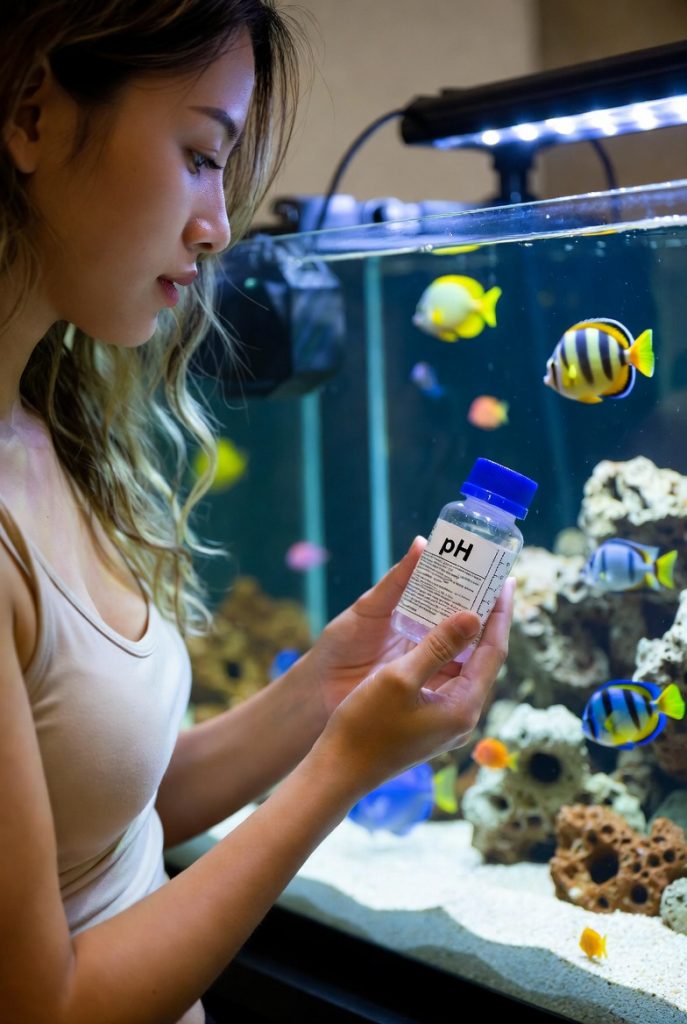
Reef tank pH control matters because pH affects coral growth, fish health, and overall stability. Most successful reef tanks run best with a daily pH range around 7.8 to 8.4. The real goal is not chasing a perfect number. It is keeping pH stable while fixing the causes of low or swinging readings.
Many reef keepers worry about pH early on. That makes sense. pH is one of the most discussed reef parameters. It is also one of the most misunderstood. Low pH can slow coral calcification. Big swings can stress fish and invertebrates. Yet pH problems often start outside the tank. Indoor carbon dioxide, poor gas exchange, and weak alkalinity control are common causes. In this guide, you will learn what reef tank pH means, what range to target, what causes low pH, and how to raise pH safely. You will also learn when not to intervene. That prevents costly mistakes and keeps your reef more stable long term.
Quick Reference Table
| Parameter | Recommended Range | Notes |
|---|---|---|
| pH | 7.8 to 8.4 | Daily swings are normal |
| Best practical target | 8.0 to 8.3 | Prioritize stability over perfection |
| Alkalinity | 7 to 11 dKH | Supports pH stability |
| Temperature | 76 to 79 F | Keep stable daily |
| Salinity | 1.025 to 1.026 SG | Match natural reef conditions |
| Main low pH causes | High indoor CO2, poor aeration | Also check alkalinity |
| Safe pH correction tools | Fresh air, skimmer air line, kalkwasser | Use gradual changes only |
What pH Means in a Reef Tank
pH measures how acidic or basic the water is. Reef tanks are naturally alkaline systems. Ocean water usually sits near 8.1 to 8.3. Your aquarium will change through the day. That is normal. pH usually drops at night. It rises during the light cycle. Photosynthesis removes carbon dioxide. Respiration adds it back.
Many hobbyists think pH alone tells them if the tank is healthy. It does not. pH is linked to alkalinity, gas exchange, and carbon dioxide levels. A tank with pH 7.9 can still thrive. A tank with unstable pH can struggle even if the average looks fine. That is why trends matter more than one test result. Use pH as part of the full picture. Also monitor alkalinity, salinity, and temperature. If those remain stable, pH usually becomes easier to manage. Constant corrections often do more harm than the original low reading.
What Is the Ideal Reef Tank pH Range?
A practical reef tank pH range is 7.8 to 8.4. Most mixed reefs do very well between 8.0 and 8.3. If your tank stays in that zone, you usually do not need aggressive correction. Slight daily movement is expected. Morning pH is often the lowest point. Evening pH is often the highest.
Do not aim for a fixed number every hour. That creates instability. Instead, aim for a predictable pattern. For example, a tank that moves from 8.0 in the morning to 8.2 in the evening is healthy. A tank that jumps from 7.7 to 8.4 after dosing is not. Corals dislike sudden chemistry changes. Fast pH increases can also cause precipitation. That strips calcium and alkalinity from the water. If your pH is slightly low but your corals look good, test before changing anything. Confirm the result with a calibrated probe or fresh test kit. Bad readings are common. Wrong corrections are even more common.
Common Causes of Low pH in Reef Aquariums
High indoor carbon dioxide is the most common cause of low pH. This happens often in modern homes. Closed windows trap CO2 indoors. The tank absorbs that gas. pH then falls. This is common in winter. It is also common in small rooms with poor ventilation.
Poor gas exchange is another major cause. Tanks with weak surface agitation hold more carbon dioxide. Sumps with little airflow can have the same issue. A dirty or undersized protein skimmer also reduces aeration. Low alkalinity can make the pH less stable. It does not always cause low pH by itself, but it removes buffering support. Heavy bioloads can contribute too. More fish means more respiration. More respiration means more CO2. Finally, dosing errors can distort the chemistry. Overusing calcium reactors without enough aeration can depress pH. Excessive organic buildup can also worsen the problem. Before adding chemicals, identify which of these factors applies to your tank.
How to Test Reef Tank pH Correctly
Always verify pH before making changes. Use a high quality test kit or a calibrated pH probe. Probes are convenient, but they drift over time. Calibrate them often with fresh calibration fluids. Test kits are useful too, but color matching can be hard under blue reef lighting.
Test at the same times each day. Morning and evening readings are most helpful. That shows your normal daily swing. If possible, test alkalinity at the same time. Low alkalinity can explain unstable pH. Compare tank pH with a cup of tank water aerated outside for one hour. If the outside sample rises noticeably, indoor CO2 is likely the issue. This simple test is very useful. It prevents random dosing. Also inspect your equipment. Check skimmer performance, surface movement, and room ventilation. Good testing turns pH control into a diagnosis process. Without that step, every fix becomes a guess.
Step-by-Step Guide to Raise pH Safely
Start with the least invasive fix. Open a window near the tank for several hours. Then retest pH. If pH rises, excess indoor CO2 is your main problem. This is one of the safest tests you can do. It costs nothing and gives clear information.
- Confirm the pH reading with a calibrated probe or fresh test kit.
- Test alkalinity and correct it if it is below your target range.
- Increase surface agitation with return flow or powerhead placement.
- Clean and optimize your protein skimmer for better air exchange.
- Open windows or improve room ventilation if possible.
- Run a skimmer air line to outside air if indoor CO2 stays high.
- Consider kalkwasser for top off if your tank needs calcium and alkalinity.
- Make changes slowly and retest over several days.
Avoid pH boosters as a first response. Many products give a brief rise, then fade. Some also push alkalinity too high. That creates a new problem. Slow, cause-based correction works better and lasts longer.
Best Long-Term Methods for Reef Tank pH Control
The best long-term solution is better gas exchange. Strong surface movement helps release carbon dioxide. A well-tuned protein skimmer helps too. If your home has chronically high CO2, an outside air line to the skimmer often works very well. Some hobbyists also use a CO2 scrubber. That can raise pH effectively, though media costs add up.
Kalkwasser is another proven tool. It adds calcium and alkalinity while supporting higher pH. It works best in systems with consistent evaporation and moderate demand. Dose it carefully. Too much can spike pH fast. Reverse light refugiums can also help slightly. Macroalgae consume CO2 when lit at night. The effect varies, but it may reduce nightly pH drops. Most importantly, keep alkalinity stable. Alkalinity does not directly solve every pH issue, but unstable alkalinity makes the whole system less predictable. Good reef keeping is usually about layered stability, not one magic fix.
When You Should Not Chase pH
Not every low reading needs action. If your reef stays around 7.9 to 8.1, looks healthy, and grows well, you may not need to intervene. Corals can adapt to slightly lower pH if the system stays stable. Stability usually beats constant adjustment.
Chasing pH becomes risky when hobbyists dose random buffers daily. This often drives alkalinity too high. Corals may then show burnt tips, reduced polyp extension, or tissue recession. Some tanks also get cloudy from precipitation. If your pH is acceptable and your livestock is thriving, focus on consistency. Keep salinity stable. Keep alkalinity steady. Maintain strong aeration. Use pH as a guide, not an obsession. Many successful reef tanks do not run at textbook ocean pH all day. They succeed because the keeper avoids sharp swings and solves root causes instead of reacting to every decimal point.
Common Problems
Why is my reef tank pH low even with good alkalinity?
This usually points to excess carbon dioxide. Your alkalinity may be fine, but the room air can still depress pH. Test an aerated sample outside. If pH rises, indoor CO2 is the likely cause. Improve ventilation or run outside air to the skimmer.
Why does pH drop at night?
Nighttime pH drops are normal. Photosynthesis slows after lights out. Fish, corals, and bacteria still respire. That adds CO2 to the water. A refugium on a reverse light cycle may reduce the swing. Better aeration also helps.
Why did pH not rise after using a buffer?
Buffers often raise alkalinity more than they solve CO2 issues. If the room still has high carbon dioxide, pH may stay low. This is why many short-term additives disappoint hobbyists. Fix the air exchange problem first.
Can high pH be dangerous?
Yes. pH above about 8.5 can stress livestock. It also increases precipitation risk. This can strip calcium and alkalinity from the water. High pH often happens after overdosing kalkwasser or other additives. Dose carefully and monitor closely.
Frequently Asked Questions
What is the best pH for a reef tank?
A stable range of 8.0 to 8.3 is an excellent target. Anywhere from 7.8 to 8.4 can be acceptable.
Is 7.8 pH too low for a reef tank?
Not always. It is on the low side, but many tanks do fine there if the value is stable.
Does alkalinity raise pH?
Stable alkalinity supports pH stability, but it does not always fix low pH caused by high CO2.
Does a refugium increase pH?
It can help reduce nighttime drops, especially on a reverse light schedule. Results vary by system.
Should I use a CO2 scrubber?
A CO2 scrubber can work very well in homes with high indoor CO2. It is effective, but media replacement adds cost.
Final Tips for Stable pH
Think of reef tank pH control as a system issue. It is rarely a single-number problem. Start with accurate testing. Then check alkalinity, aeration, and indoor carbon dioxide. Use the simplest fix first. Avoid large chemical corrections unless you understand the cause. That approach protects corals and saves money.
If you want to build a more stable reef overall, also review reef tank alkalinity, reef tank water parameters, protein skimmer setup, and kalkwasser dosing. pH becomes much easier when the rest of the system is balanced.
Was this helpful?
Related Posts
Best Filtration Systems
Best Filtration Systems for a Healthy Saltwater Aquarium Choosing the best filtration system for your saltwater aquarium is…
 By
By
Clown Triggerfish (Balistoides Conspicillum)
Clown triggerfish are stunning but aggressive marine fish that need very large tanks, strong filtration, and careful tankmate…
[favorite_button]
My Bookmarks:
To see full list click here
[user_favorites user_id="" include_links="true" site_id="" post_types="" include_thumbnails="true" thumbnail_size="thumbnail" include_excerpt="false"]