

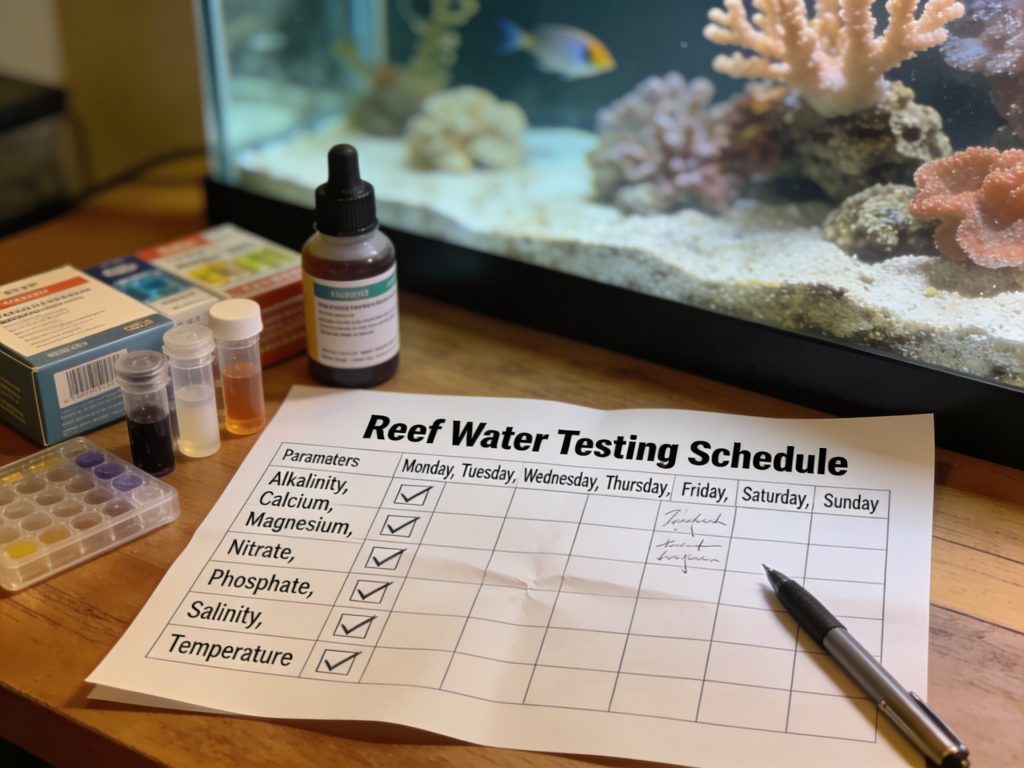
A reef tank testing schedule keeps your aquarium stable and predictable. Test the right parameters at the right times, and you will catch problems early, protect coral health, and avoid the slow swings that often cause algae, stress, and tissue loss.
Many reef keepers test too little at first. Others test everything every day and burn out. The best approach sits in the middle. You need a simple schedule that matches your tank’s age, coral load, and dosing method. In this guide, you will learn what to test, how often to test it, when to increase testing, and how to use results to make smart adjustments. I will also cover common mistakes, beginner-friendly routines, and a practical weekly rhythm that works for most mixed reefs.
Quick Reference Table
| Parameter | New Tank | Established Reef | Heavy SPS or Dosed Tank | Target Range |
|---|---|---|---|---|
| Temperature | Daily | Daily | Daily | 76–79°F |
| Salinity | 2–3 times weekly | Weekly | 2 times weekly | 1.025–1.026 SG |
| Alkalinity | 2 times weekly | Weekly | Daily to 3 times weekly | 7.5–9 dKH |
| Calcium | Weekly | Weekly | 2 times weekly | 400–450 ppm |
| Magnesium | Weekly | Every 2–4 weeks | Weekly to biweekly | 1250–1400 ppm |
| Nitrate | 2 times weekly | Weekly | Weekly | 2–20 ppm |
| Phosphate | 2 times weekly | Weekly | Weekly | 0.03–0.10 ppm |
| Ammonia | During cycling or emergencies | As needed | As needed | 0 ppm |
| Nitrite | During cycling | Rarely needed | Rarely needed | 0 ppm |
| pH | Weekly | Weekly | 2 times weekly | 7.8–8.4 |
Use this table as a starting point. Your actual schedule should reflect coral growth, nutrient export, and dosing demand. Fast-growing stony corals consume alkalinity and calcium quickly. Soft coral tanks often need less frequent testing. Stability matters more than chasing perfect numbers.
Why a Reef Tank Testing Schedule Matters
Reef tanks change every day. Corals consume alkalinity, calcium, and magnesium. Fish feeding raises nutrients. Evaporation changes salinity. Bacteria shift as the tank matures. These changes are normal, but they can become harmful if you do not monitor them.
A testing schedule gives you context. One test result is only a snapshot. A pattern tells the real story. For example, alkalinity dropping from 8.5 to 7.6 dKH over three days shows demand is rising. Nitrate climbing each week may point to overfeeding, weak export, or a dirty filter. Regular testing lets you correct the cause before corals react.
It also saves money. Many hobbyists waste supplements because they dose blindly. Testing first prevents unnecessary additions. That means fewer swings and fewer losses. In reef keeping, stable parameters almost always beat aggressive correction.
What to Test in a Reef Tank
The core reef parameters are temperature, salinity, alkalinity, calcium, magnesium, nitrate, phosphate, and pH. These affect coral growth, fish health, and algae pressure. New tanks also need ammonia and nitrite testing during the cycle.
Temperature and salinity should never drift far. These are foundational. Alkalinity is the most important chemistry test for many reef keepers because it changes quickly. Calcium and magnesium support skeletal growth. Nitrate and phosphate tell you how nutrient-rich the system is. pH helps reveal gas exchange issues, excess indoor carbon dioxide, or poor aeration.
Some advanced hobbyists also test potassium, iodine, or trace elements. Those tests can help in specialized systems. Most beginners do not need them right away. Master the basics first. A simple, repeatable routine will do more for your reef than a shelf full of rarely used kits.
Testing Schedule for a New Reef Tank
New reef tanks need more frequent testing. The tank is biologically unstable, and your bacteria population is still maturing. During the cycling phase, test ammonia and nitrite every few days. Also test nitrate to see if the cycle is progressing. Once ammonia and nitrite stay at zero, you can reduce those tests.
After the cycle, shift your focus to salinity, temperature, nitrate, phosphate, and alkalinity. Test salinity several times each week until your top-off routine is consistent. Test alkalinity twice weekly if you add corals early. Even a few stony frags can create measurable demand in a small tank.
New tanks also tend to swing in nutrients. Diatoms, early algae, and bacterial blooms are common. Frequent nitrate and phosphate testing helps you avoid overreacting. Not every ugly phase needs a chemical fix. Often, the tank simply needs time, stable husbandry, and measured observation.
Testing Schedule for an Established Reef Tank
Established tanks usually need less testing, but not less attention. Once your reef is stable, weekly testing works well for most mixed reefs. Test alkalinity every week at minimum. Test calcium weekly or every other week if demand is low. Test magnesium every two to four weeks.
Nitrate and phosphate should be checked weekly. This is especially important after changing food, filtration, or stocking. Salinity should be checked weekly, even with an auto top-off. ATO systems fail. Refractometers drift. Quick checks prevent slow mistakes.
If your tank is packed with SPS corals, test alkalinity more often. In heavy-demand systems, alkalinity can move fast enough to stress acropora within days. Many SPS keepers test it daily or every other day. Once you understand consumption, you can dose more accurately and reduce risk.
Step-by-Step: How to Build Your Own Testing Routine
Start with your tank type. A soft coral nano has different needs than a large SPS reef. Next, list what you dose. If you dose two-part, kalkwasser, or a calcium reactor, alkalinity becomes a high-priority test. Then look at coral growth. Fast growth means faster chemistry changes.
- Test temperature daily with a reliable thermometer or controller.
- Check salinity weekly, or more often in small tanks.
- Test alkalinity two to three times weekly at first.
- Test calcium and magnesium weekly until demand is clear.
- Test nitrate and phosphate weekly.
- Write results in a log or app.
- Review trends every two to four weeks.
- Adjust dosing slowly based on repeated results.
Always test at the same time of day when possible. Consistency improves accuracy. Keep your kits clean and unexpired. Replace reagents on schedule. Good data depends on good tools.
Best Times to Increase Testing
Some situations demand more frequent testing. Increase your schedule after adding many new corals, changing salt brands, starting a new dosing system, or making a large aquascape change. Test more often after a fish death, power outage, heater issue, or equipment failure.
You should also increase testing when corals look off. Faded color, reduced polyp extension, tissue recession, or sudden algae growth often point to chemistry shifts. In these moments, test before you dose or change anything. Guessing usually creates a second problem.
Water changes are another key trigger. If you perform a large water change, recheck salinity, alkalinity, and temperature after the system mixes fully. A mismatch between tank water and fresh saltwater can stress corals, especially sensitive SPS colonies.
Common Problems
Why does alkalinity keep dropping?
This usually means coral demand exceeds your dosing. Stony corals, coralline algae, and clams all consume alkalinity. Test daily for several days. Measure the average daily drop. Then increase dosing slowly. Also verify salinity. Low salinity can make alkalinity readings misleading.
Why are nitrate and phosphate both rising?
Overfeeding is a common cause. Dirty filter socks, trapped detritus, weak skimming, and low export also contribute. Test source water too. If your RO/DI system is exhausted, you may be adding nutrients back into the tank. Reduce feeding slightly, improve maintenance, and retest in a week.
Why do my test results seem inconsistent?
Inconsistent results often come from technique. Use clean vials. Follow timing exactly. Swirl as directed. Read color changes under bright white light. Cross-check important results with a second kit or trusted store. Expired reagents and poor sample handling cause many false readings.
Should I chase pH every day?
Usually, no. pH naturally changes through the day. Focus on alkalinity stability first. If pH remains chronically low, improve aeration, fresh air exchange, and skimmer intake air. Test pH at the same times when comparing results. One random number means little by itself.
Testing Tools and Record Keeping Tips
Choose test kits that are easy for you to use correctly. A good kit used consistently beats a fancy kit used rarely. Digital checkers can help with phosphate and alkalinity, but they still require careful technique. Refractometers should be calibrated with proper calibration fluid, not plain freshwater.
Keep a logbook. This matters more than many hobbyists realize. Write the date, time, result, and any changes made. Note water changes, new livestock, and dosing adjustments. Over time, this log becomes one of your best troubleshooting tools. You will see patterns before they become emergencies.
If you prefer digital tracking, use a spreadsheet or aquarium app. The format does not matter. Consistency does. Data without records is easy to forget and hard to interpret.
Frequently Asked Questions
How often should I test alkalinity in a reef tank?
Test weekly in stable mixed reefs. Test more often in SPS tanks or when adjusting dosing. Daily testing may be useful in high-demand systems.
Do I need to test calcium and magnesium every week?
Weekly testing is helpful at first. Once your tank is stable, magnesium can often be tested less often. Calcium still deserves regular checks.
What is the most important reef tank test?
For many reef tanks, alkalinity is the most important chemistry test. It changes quickly and strongly affects coral health and growth.
Should I test after every water change?
You do not need to test everything after every small water change. Check salinity and temperature at minimum. Test alkalinity if the change was large.
Can I rely on visual signs instead of testing?
No. Corals often show stress after the problem has already developed. Testing helps you catch issues before livestock reacts.
Final Tips for a Sustainable Testing Routine
The best reef tank testing schedule is one you will actually follow. Keep it simple. Focus on the parameters that change fastest in your system. Test more during change, and less during long stable periods. Avoid panic corrections. Confirm unusual results before making big adjustments.
If you are new to reef keeping, start with temperature, salinity, alkalinity, nitrate, and phosphate. Add calcium and magnesium as coral demand grows. As your reef matures, your schedule will become more precise. That is normal. Reef keeping is not about constant intervention. It is about measured observation and steady habits.
For more help, read our guides on reef tank water parameters, how to lower nitrate in a reef tank, reef tank salinity guide, and reef alkalinity guide.
Was this helpful?
Related Posts
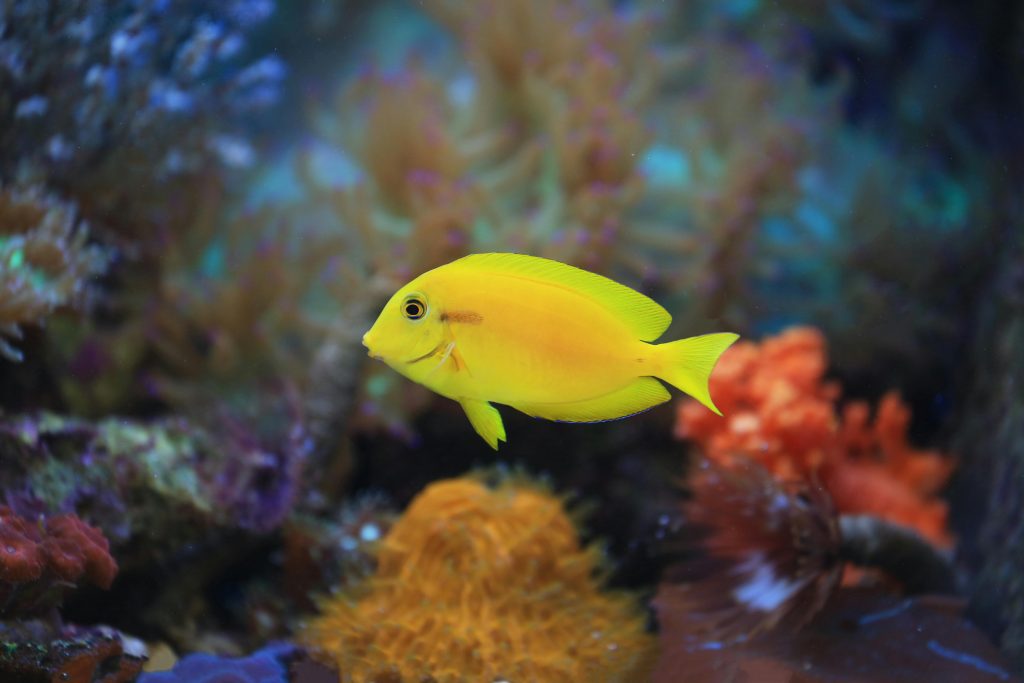
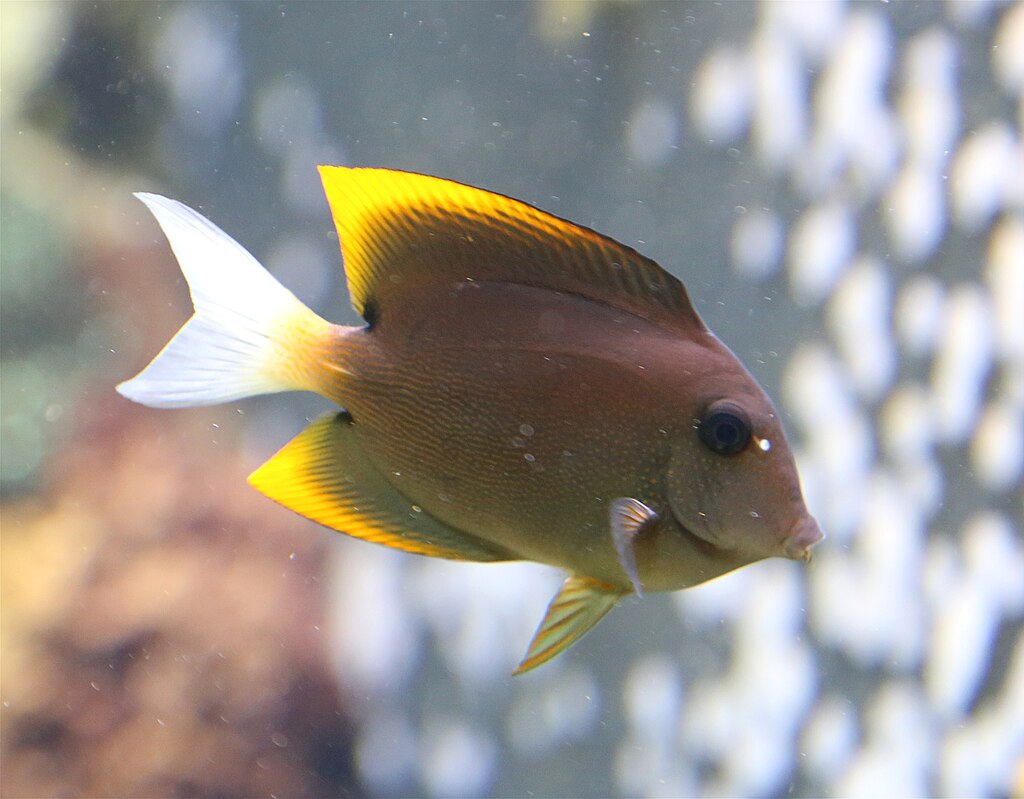
Juvenile Orange Shoulder (acanthurus Olivaceus)
Juvenile orange shoulder tangs are bright, hardy, and reef safe, but they grow large and need a spacious…
 By
By
Best Filtration Systems
Best Filtration Systems for a Healthy Saltwater Aquarium Choosing the best filtration system for your saltwater aquarium is…
[favorite_button]
My Bookmarks:
To see full list click here
[user_favorites user_id="" include_links="true" site_id="" post_types="" include_thumbnails="true" thumbnail_size="thumbnail" include_excerpt="false"]