Clear water is more than a “pretty tank” goal. It helps light reach corals and supports stable gas exchange. It also makes it easier to spot early problems.
Reef tank water clarity depends on filtration, nutrients, and good habits. The fix is often simple. You just need to match the cause.
What “cloudy” really means in a reef tank
Cloudiness usually falls into three types. White haze is often bacterial bloom or microbubbles. Yellow tint points to dissolved organics. Green water is rare in reefs but can happen with algae.
Start with quick observations. Does the haze get worse after feeding. Does it spike after you clean sand. Does it appear right after a water change. These clues narrow the cause fast.
Check core parameters before chasing gadgets. Aim for salinity 1.025–1.026, temperature 77–79°F, and pH 8.1–8.4. Keep alkalinity stable at 8–9 dKH. Stability reduces bacterial swings.
Also look for microbubbles. They can mimic haze in bright light. Inspect return lines, skimmer outlets, and filter socks. If bubbles collect on coral tips, fix bubbles first.
- White haze: bacterial bloom, sand dust, or microbubbles.
- Yellow tint: dissolved organics and aging carbon.
- Particles: detritus, stirred sand, or weak mechanical filtration.
Build a clarity system: mechanical, chemical, and biological
Mechanical filtration removes particles before they break down. Use a 100–200 micron filter sock or a roller mat. Change socks every 2–3 days. Leaving them longer feeds bacteria and clouds water.
Chemical filtration targets yellowing compounds and odors. Run activated carbon in a media bag or reactor. Use about 1/2 cup per 25 gallons as a baseline. Replace every 2–4 weeks, depending on load.
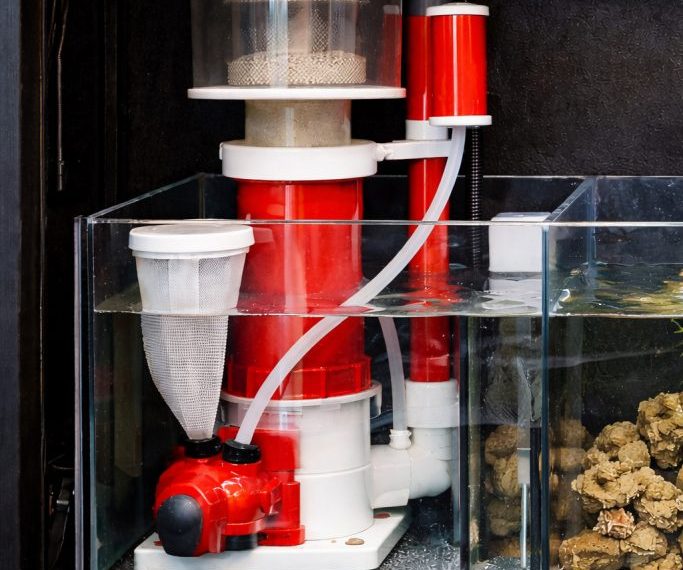
Protein skimming improves clarity by exporting organics early. Tune the skimmer for a steady foam head. Aim for dark tea to coffee skimmate over several days. Wet skimming can help during blooms.
Biological balance prevents repeated haze. Keep nitrate around 2–15 ppm for mixed reefs. Keep phosphate around 0.03–0.10 ppm. Ultra-low nutrients can trigger bacterial instability and pale corals.
- Place carbon after a filter sock to prevent clogging.
- Rinse new carbon until rinse water runs clear.
- Clean skimmer neck weekly for consistent foam.
Troubleshooting steps and common mistakes
If water turns milky overnight, suspect a bacterial bloom. Reduce feeding for 48 hours. Increase surface agitation for oxygen. Point a powerhead at the surface. Keep skimmer running and empty the cup often.
If cloudiness follows sand work, it is usually fine dust. Add a filter sock and run it for 24 hours. Do not blast the sand bed daily. Use a turkey baster on rocks instead. You can read more in our reef tank maintenance schedule.
If the tank looks yellow under white lights, replace carbon and check nutrients. Dissolved organics rise with heavy feeding and weak export. Consider a small refugium light cycle. Our reef filtration guide covers simple setups.
A common mistake is overdosing “clarifiers” in reefs. They can bind particles but stress invertebrates. Another mistake is chasing zero nitrate and phosphate. That can fuel dinos and haze. If dinos appear, review our dinos in reef tank checklist.
- Fast clarity win: fresh carbon plus a clean 200 micron sock.
- Bloom response: cut feeding, boost aeration, skim wet for two days.
- Prevention: change socks often and avoid stirring old sand.
Reef tank water clarity improves when you remove particles early and export organics steadily. Focus on stable parameters and simple maintenance. With a few habits, your tank will look crisp and stay healthier.
Sources: Holmes-Farley, R. “Activated Carbon in Reef Aquaria”; Delbeek & Sprung, “The Reef Aquarium” Vol. 1–3; Fenner, B. “The Conscientious Marine Aquarist”.
Was this helpful?
Related Posts
Protein Skimmer Reef Tank Guide
Learn how a protein skimmer works, how to size one, and how to tune it for a cleaner,…
 By
By
Reef Aquarium Water Parameters
Learn the ideal reef aquarium water parameters, safe ranges, and how to keep salinity, alkalinity, nutrients, and pH…