

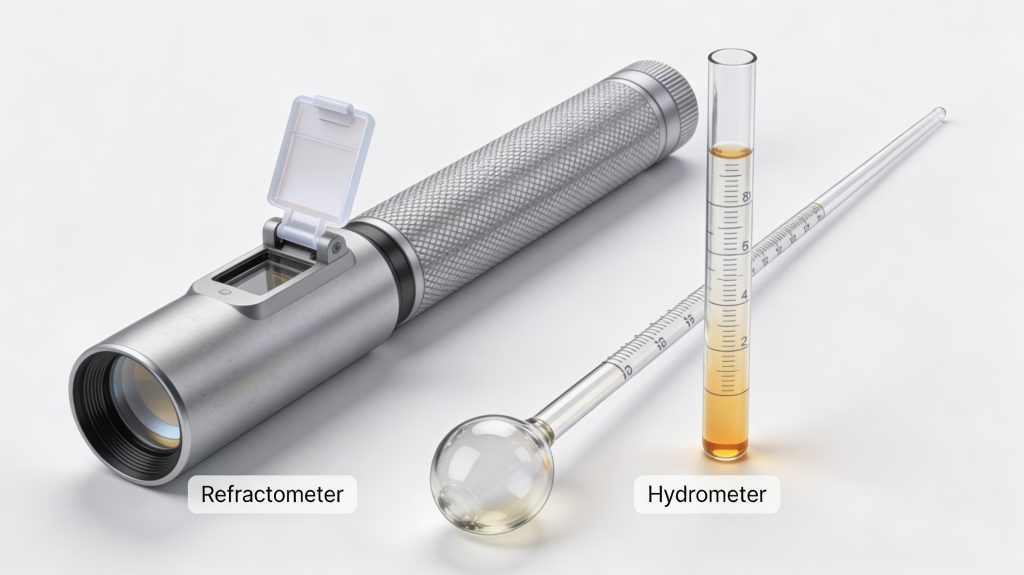
Choosing between a refractometer and a hydrometer matters more than many reef keepers expect. Both tools measure salinity, but they differ in accuracy, ease of use, and long-term reliability. For most reef aquariums, a calibrated refractometer gives more dependable readings. A hydrometer can still work, though, if you understand its limits and use it carefully.
Salinity affects every animal in a marine tank. Corals, fish, snails, shrimp, and beneficial microbes all depend on stable salt levels. Small errors can create stress over time. That is why this comparison matters for beginners and experienced reef keepers alike. In this guide, you will learn how each tool works, where each one succeeds, where each one fails, and which option fits your reefing style and budget. You will also learn how to test salinity correctly, avoid common mistakes, and keep your tank stable.
Quick Reference Table
| Feature | Refractometer | Hydrometer |
|---|---|---|
| Accuracy | High when calibrated properly | Moderate and often less consistent |
| Best For | Reef tanks and coral systems | Fish-only tanks and budget setups |
| Cost | Higher upfront cost | Low upfront cost |
| Ease of Use | Simple after calibration | Very simple to use |
| Maintenance | Needs periodic calibration | Needs careful cleaning after use |
| Common Issue | Incorrect calibration fluid use | Air bubbles and residue skew readings |
| Long-Term Reliability | Excellent with care | Can drift or become less trustworthy |
If you keep corals, a refractometer is usually the better choice. If you need the cheapest entry point, a hydrometer can still help. The key is understanding how to use either tool correctly.
Why Salinity Matters in a Reef Aquarium
Salinity is one of the most important reef parameters. Natural seawater sits near 35 parts per thousand. That equals a specific gravity around 1.026 at common reef temperatures. Most reef tanks do best close to that range. Stability matters even more than chasing tiny decimal points.
When salinity drifts, animals must adjust their internal balance. Fish can often handle mild swings better than corals. Many invertebrates are less forgiving. Shrimp, snails, starfish, and stony corals may react badly to repeated changes. You may see poor polyp extension, tissue recession, slow growth, or failed molts.
Salinity also affects other test results. Calcium, magnesium, and alkalinity values make more sense when salinity is correct. If your salinity reading is wrong, your dosing decisions may also be wrong. That can create a chain of problems. This is why a reliable measuring tool is not just a luxury. It is part of basic reef husbandry. For a broader look at stability, see water parameter basics and reef tank maintenance schedule.
What Is a Hydrometer?
A hydrometer measures the density of saltwater. In reef keeping, most hobbyists use a swing-arm hydrometer. You fill the chamber with tank water. A plastic arm floats upward. The arm points to a specific gravity reading on a scale.
The biggest advantage is price. Hydrometers are cheap and easy to find. They are also simple to use. This makes them popular with beginners and casual saltwater hobbyists. You do not need calibration fluid. You do not need to look through an eyepiece. You just fill, tap, and read.
The downside is consistency. Salt creep, dried residue, and tiny air bubbles can all change the reading. Temperature can also affect accuracy. Some hydrometers are reasonably close when new. Others are off right out of the box. If you use one, compare it against a trusted refractometer at least once. That gives you a better idea of its true range. Hydrometers can work, but they require caution.
What Is a Refractometer?
A refractometer measures how light bends through saltwater. The more salt present, the more the light refracts. You place a few drops of water on the prism. Then you close the cover plate and look through the eyepiece. The reading appears on a scale.
Refractometers are widely preferred in reef keeping. They are more precise than basic hydrometers. They are also less affected by trapped bubbles or leftover film. Most hobby models include automatic temperature compensation. That helps improve consistency during normal room use.
The main catch is calibration. A refractometer is only as good as its setup. Many hobbyists calibrate with pure freshwater. That can create small errors in the reef salinity range. A proper 35 ppt calibration solution is better. Once calibrated, a refractometer becomes a dependable tool for mixing saltwater, checking tank salinity, and confirming top-off performance. If you keep sensitive corals, this extra accuracy is worth the cost.
Refractometer vs. Hydrometer: Which Is More Accurate?
In most reef situations, the refractometer wins on accuracy. It gives repeatable readings when calibrated correctly. It is less likely to be fooled by bubbles, residue, or slight handling differences. That makes it a better match for coral systems, where stability matters.
A hydrometer can still be useful. It is often accurate enough for rough checks. It may be fine for fish-only tanks or emergency backup use. But many reef keepers eventually discover that their hydrometer reads high or low. Even a small error can matter. For example, a tank that appears to be 1.025 might really be 1.022 or 1.028. That is a meaningful gap.
If your budget allows only one tool, buy a refractometer. If you already own a hydrometer, keep it as a backup after comparing it to a known accurate device. This gives you a second opinion if something seems off. For more beginner gear advice, check reef tank equipment checklist.
Step-by-Step: How to Use Each Tool Correctly
How to Use a Refractometer
- Calibrate the unit with 35 ppt calibration solution.
- Clean the prism with RO/DI water.
- Dry it with a soft lint-free cloth.
- Place a few drops of tank water on the prism.
- Close the cover plate gently.
- Wait a few seconds for the sample to settle.
- Look through the eyepiece toward a light source.
- Read the line where blue and white meet.
- Rinse and dry the prism after use.
Recalibrate often. Monthly is a good habit. Check more often if the unit gets bumped or stored in humid areas.
How to Use a Hydrometer
- Rinse the hydrometer with tank water first.
- Fill it slowly to avoid trapped bubbles.
- Tap the side gently to release bubbles.
- Set it on a flat surface.
- Read the swing arm at eye level.
- Rinse it well after use.
- Let it dry fully before storage.
Always inspect for crusted salt or film. Any buildup can change buoyancy and distort the result.
Best Choice for Different Reef Keepers
If you are building a reef tank with soft corals, LPS, or SPS, buy a refractometer. Corals respond to long-term instability. Better measurement helps you avoid that. It also makes water changes more consistent.
If you keep only hardy marine fish, a hydrometer may be acceptable at first. Many beginner fish-only systems run successfully this way. Still, upgrading later is wise. Accuracy becomes more important as your livestock becomes more expensive and sensitive.
For quarantine tanks, either tool can work. A hydrometer is often fine for basic use. But if you are matching salinity carefully during acclimation, a refractometer is safer. This matters when moving fish or corals between systems. Matching salinity reduces osmotic shock and stress. You can learn more in fish acclimation guide and coral acclimation tips.
Common Problems
Why does my hydrometer read differently every time?
The most common cause is trapped air bubbles. These cling to the swing arm and make the sample seem more buoyant. Residue inside the chamber can also interfere. Rinse thoroughly after each use. Fill slowly. Tap the body gently before reading. If readings still jump around, compare it with a refractometer.
Why is my refractometer giving wrong readings?
The usual issue is poor calibration. Many units are set incorrectly with freshwater alone. Use a 35 ppt standard instead. Also make sure the prism is clean. Dried salt can shift the reading. Let the sample spread evenly under the plate. Recheck calibration if the room temperature changes sharply.
My tank salinity keeps rising. Is my tool broken?
Maybe, but evaporation is more likely. Salt stays behind when water evaporates. This raises salinity unless you replace lost water with fresh RO/DI water. An auto top-off system helps a lot. Verify your reading tool first. Then check daily evaporation and top-off habits.
Can I trust a cheap refractometer?
Often yes, if it is designed for seawater and calibrated correctly. Many affordable hobby models perform well. The critical part is maintenance and calibration. A cheap refractometer that is checked regularly can outperform a neglected premium model.
Practical Tips for Better Salinity Stability
Test salinity at the same time each week. Check mixed saltwater before every water change. Calibrate your refractometer with proper solution, not guesswork. Keep a backup tool if possible. Use RO/DI water for top-off. Never top off evaporation with saltwater. That only makes salinity climb higher.
If salinity is too low, raise it slowly. Use slightly saltier water during changes. If salinity is too high, remove a small amount of tank water and replace it with fresh RO/DI water. Avoid sudden corrections. Fast changes can stress livestock more than the original mistake.
Record readings in a log. Trends matter more than one isolated test. If your numbers drift, look at your top-off routine, mixing process, and testing method before blaming the animals. Reef success often comes from these small habits.
Frequently Asked Questions
Is a refractometer better than a hydrometer for reef tanks?
Yes. A refractometer is usually better for reef tanks because it is more accurate and consistent. Corals benefit from that stability.
Can I use a hydrometer for a saltwater aquarium?
Yes, you can. It is a budget-friendly option. Just understand that readings may be less precise and should be checked against a better tool.
What salinity should a reef tank be?
Most reef tanks do well around 35 ppt, or about 1.026 specific gravity. Stability is the main goal.
How often should I calibrate my refractometer?
Calibrate it at least monthly. Calibrate sooner if it is dropped, stored poorly, or gives suspicious readings.
Do I need both a refractometer and a hydrometer?
No, but having both can help. A refractometer should be your main tool. A hydrometer can serve as a backup.
Final Verdict
If you are serious about reef keeping, choose a refractometer. It offers better accuracy, better repeatability, and more confidence when caring for corals and invertebrates. A hydrometer is cheap and easy, but it carries more risk of misleading readings. That risk grows over time.
For beginners, this choice is simple. Buy the best salinity tool you can afford early on. It will save confusion later. Stable salinity supports healthier livestock, cleaner troubleshooting, and more predictable reef growth. In reef keeping, small details matter. Salinity is one of the biggest small details of all.
Was this helpful?
Related Posts
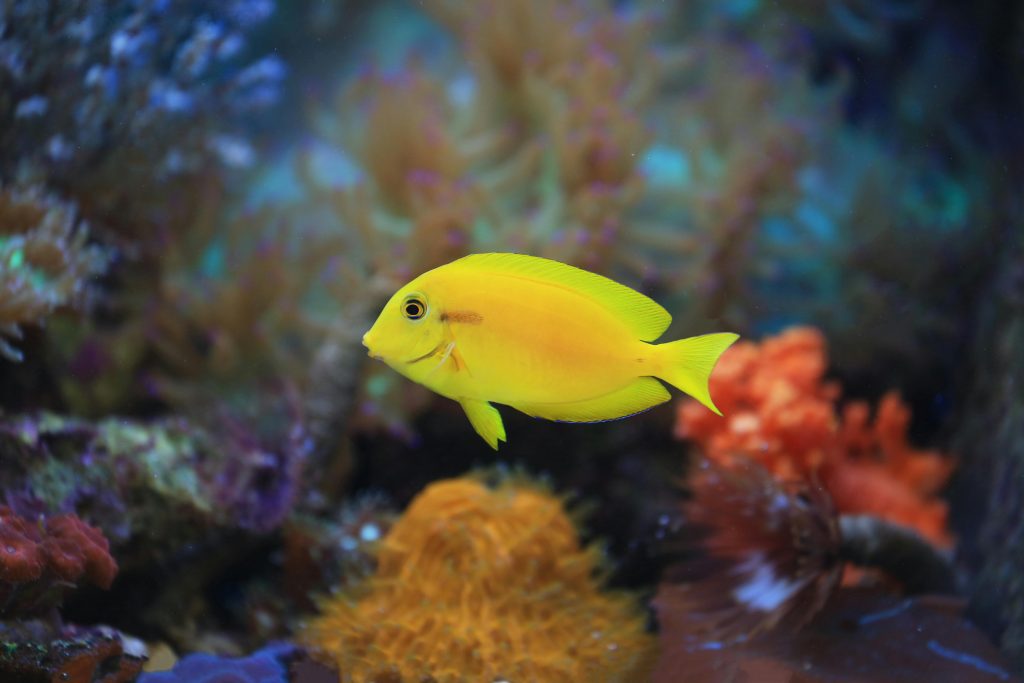
Juvenile Orange Shoulder (acanthurus Olivaceus)
Juvenile orange shoulder tangs are bright, hardy, and reef safe, but they grow large and need a spacious…
 By
By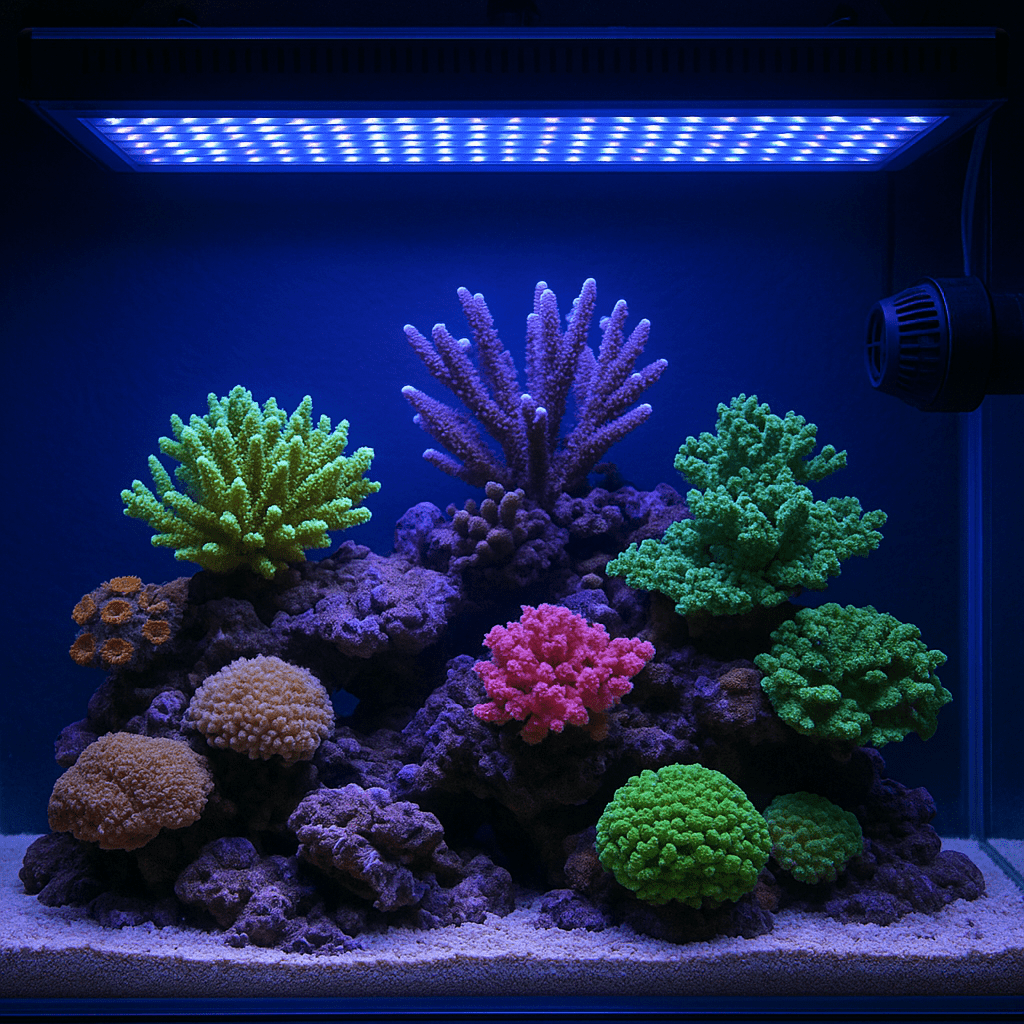
Best Filtration Systems
Best Filtration Systems for a Healthy Saltwater Aquarium Choosing the best filtration system for your saltwater aquarium is…
[favorite_button]
My Bookmarks:
To see full list click here
[user_favorites user_id="" include_links="true" site_id="" post_types="" include_thumbnails="true" thumbnail_size="thumbnail" include_excerpt="false"]