

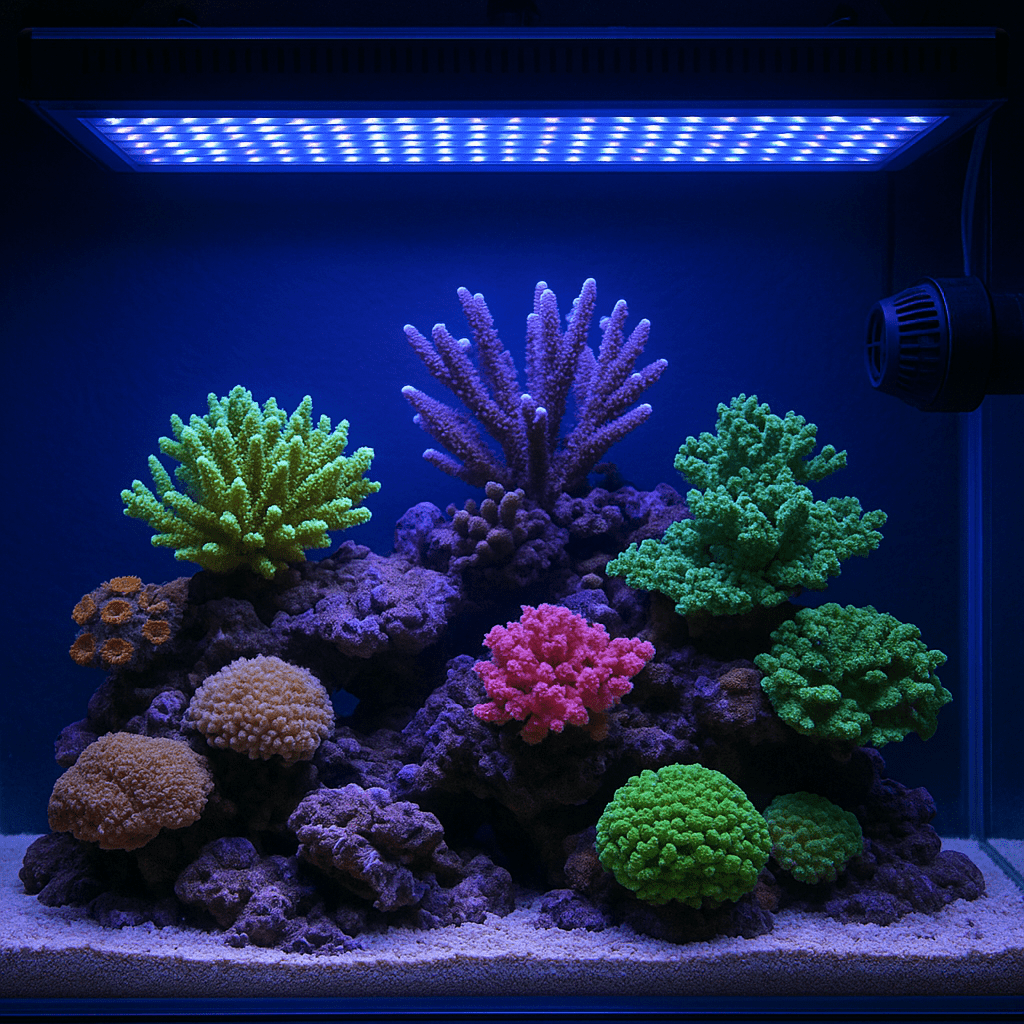
Return line plumbing moves water from your sump back to the display tank. A good design stays quiet, reliable, and easy to service. The best setups use the right pipe size, smart valve placement, and simple routing that reduces head loss and avoids flood risks.
Many reef keepers focus on drains first. That makes sense. Drains prevent floods and control overflow noise. Still, the return line matters just as much for daily performance. It affects flow, pump efficiency, maintenance, and even temperature. Poor plumbing can make a strong pump feel weak. It can also create microbubbles, salt creep, and frustrating leaks.
In this guide, you will learn how return line plumbing works, how to size it, and how to build it correctly. We will cover pumps, hard pipe versus flexible tubing, valves, unions, nozzles, manifolds, and common mistakes. You will also learn how to troubleshoot noisy or weak returns and how to make future maintenance much easier.
Quick Reference Table
| Topic | Best Practice |
|---|---|
| Return pump sizing | Aim for 3x to 5x display volume per hour after head loss |
| Pipe size | Match or slightly upsize from the pump outlet when possible |
| Main materials | PVC, vinyl tubing, or flexible PVC |
| Must-have fittings | Union near pump, ball or gate valve, loc-line nozzle |
| Check valve | Optional only; never trust it alone for flood prevention |
| Return outlet placement | Keep near surface to limit back siphon during outages |
| Noise control | Use soft tubing sections, proper support, and avoid cavitation |
| Maintenance | Clean pump and return line every few months |
What Return Line Plumbing Does
Your overflow sends water down to the sump. The return pump sends it back up. That loop keeps your filtration system working. It also stabilizes temperature, improves gas exchange, and helps move water across the display.
Many beginners think the return line should create all tank flow. It should not. In a reef tank, powerheads usually handle most internal circulation. The return line should provide steady turnover through the sump. That means enough flow for filtration, but not so much that the overflow gets loud or the sump becomes turbulent.
For most reef systems, 3 to 5 times display volume per hour is a strong target after head loss. A 75-gallon tank often runs well with 225 to 375 gallons per hour returning from the sump. SPS-heavy systems may run more, but display flow should still come mainly from wavemakers.
If you are still planning your system, our guides on reef tank plumbing basics, how to set up a sump, and reef tank flow guide can help.
Choosing the Right Return Pump
Your plumbing starts with the pump. Every pump loses flow as it pushes water upward. It also loses flow through elbows, valves, tees, and narrow pipe. This is called head loss. You must account for it before buying a pump.
First, measure vertical rise. That is the distance from the pump in the sump to the return outlet in the display. Then estimate added resistance from fittings. A pump rated at 800 gallons per hour at zero head may deliver much less in real use.
DC return pumps are popular because they are adjustable and usually quiet. AC pumps are often simple and durable. Either can work well. Focus on real flow at your system’s head height, not the box rating.
Buy a pump that can meet your target turnover without running at its absolute limit. That gives you room to fine tune. It also helps if your plumbing gets dirty over time. A slightly oversized DC pump is often easier to manage than an undersized pump that cannot keep up.
Pipe Size and Material Choices
Pipe size has a huge effect on performance. Small plumbing increases friction and reduces flow. Many hobbyists use the pump outlet size as the entire plumbing size. That can work, but upsizing often improves efficiency.
For example, a pump with a 3/4-inch outlet may perform better with 1-inch plumbing for most of the run. You can then reduce near the return nozzle if needed. This lowers resistance and helps the pump move water more easily.
Common options include rigid PVC, flexible PVC, and vinyl tubing. Rigid PVC looks clean and stays secure. It is great for permanent installs. Flexible PVC reduces vibration and uses fewer elbows. Vinyl tubing is easy for beginners, but it can kink, sag, and look less tidy over time.
Use reef-safe materials and quality fittings. Avoid metal parts that contact saltwater. Saltwater quickly corrodes many metals. That can harm livestock and damage equipment.
Essential Return Line Components
A good return line is simple, but it still needs the right parts. Start with a union near the pump. This lets you remove the pump without cutting pipe. Add a valve after the union. A ball valve is fine for basic control. A gate valve offers finer adjustment, but it costs more.
Many reef keepers use a short flexible section near the pump. This reduces vibration and noise transfer. It also makes alignment easier. At the tank, loc-line nozzles help direct flow where you want it. Dual nozzles can spread flow, but they also reduce pressure from each outlet.
A manifold is another useful option. This is a branch off the return line that feeds reactors, UV sterilizers, or other gear. It can reduce the need for extra pumps. Still, every branch adds resistance. Plan manifold flow carefully if your return pump is already near its limit.
Use thread sealant designed for aquarium-safe plumbing where needed. Do not overtighten threaded fittings. That can crack bulkheads or pump housings.
Step-by-Step Return Line Plumbing Setup
Start by placing the return pump in the sump. Confirm the water depth matches the pump’s recommended operating range. Then dry fit all plumbing before gluing anything.
Step one is measuring the route. Keep it as straight as possible. Every elbow adds resistance. Gentle bends are better than sharp turns when possible.
Step two is installing a union close to the pump. This makes future cleaning easy. Step three is adding a valve after the union. Use it to fine tune flow or isolate the pump during service.
Step four is routing the line upward to the display. Support long runs so they do not sag. Step five is connecting the return bulkhead or over-the-rim return. Make sure all fittings align naturally. Forced alignment leads to stress and leaks.
Step six is adding the return nozzle. Keep the outlet near the water surface. This limits back siphon during a power outage. Step seven is testing with freshwater if possible. Shut off the pump and watch how much water drains back. Your sump must hold that volume safely.
Return Outlet Placement and Flow Direction
Return nozzles should support circulation, not replace powerheads. Aim them to eliminate dead spots near the surface or behind rockwork. Avoid blasting corals directly. Strong direct jets can irritate tissue, especially on LPS and soft corals.
Surface agitation is important. It improves oxygen exchange and helps prevent oily film buildup. Pointing one nozzle slightly upward often helps. If your tank has two returns, aim them to create broad movement rather than colliding streams.
Keep outlets shallow enough to reduce back siphon. During a power failure, water will drain until air enters the return outlet. If the nozzle sits too deep, too much water returns to the sump. That can cause a flood if the sump lacks enough free space.
Some hobbyists drill anti-siphon holes just below the waterline. These can work, but they need regular cleaning. Snails, algae, and calcium buildup can clog them. Never rely on them alone.
Should You Use a Check Valve?
Check valves are common in reef plumbing. They are also commonly misunderstood. A check valve can reduce backflow during a power outage. It cannot be your only flood protection. Salt creep, sand, snails, and debris can stop it from sealing fully.
If you use one, choose a high-quality model that can be disassembled for cleaning. Install it where you can reach it easily. Clean it often. Then design your sump as if the check valve will fail. That is the safest approach.
The best flood prevention is simple. Keep return outlets near the surface. Leave enough empty sump volume to hold drain-back water. Test the system by shutting off the pump. Repeat that test after any plumbing change.
This mindset prevents expensive mistakes. It also removes the false confidence that often comes with neglected check valves.
Common Problems
Weak Return Flow
Weak flow usually comes from head loss, dirty pumps, clogged plumbing, or undersized equipment. Check the pump intake first. Sponges, snail shells, and detritus often reduce output. Then inspect the return nozzle and any reactors on a manifold.
If the system was always weak, the pump may be too small for the plumbing path. Too many elbows and narrow pipe can also cause major losses. Upsizing pipe or simplifying the route often helps.
Noisy Return Line
Noise can come from pump vibration, cavitation, loose plumbing, or water splashing at the outlet. Place a soft mat under external vibration points if appropriate. Use a short flexible section near the pump. Secure pipes so they do not rattle against the stand.
If the pump sucks air, check sump water level and baffle design. Low water often causes sucking sounds and bubbles. Clean the pump too. Calcium buildup can make impellers noisy.
Microbubbles in the Display
Microbubbles often enter through the sump, not the return line itself. Check for skimmer overflow, drain turbulence, or a pump drawing water from a bubbly chamber. Make sure the return section has enough spacing from the drain area.
Also inspect all return fittings before the pump. A tiny air leak on the suction side can introduce bubbles. Tighten fittings and replace worn tubing if needed.
Leaks Around Fittings
Leaks usually come from misaligned plumbing, cracked threads, or poor glue joints. Never force fittings into place. Dry fit first. Support heavy plumbing runs. If a threaded fitting leaks, remove it and reseal it correctly. Do not just tighten harder.
Bulkheads should be snug, not overtightened. The gasket belongs on the flange side. Many leaks start from incorrect bulkhead assembly.
Maintenance Tips for Long-Term Reliability
Return line plumbing needs routine care. Clean the pump every few months. Soak removable parts in vinegar solution to dissolve calcium deposits. Rinse well before reinstalling. Inspect unions, valves, and nozzles during each cleaning.
Check for salt creep around fittings. Salt creep often signals a slow leak or splash issue. Catching it early prevents bigger problems later. Also inspect flexible tubing for hardening or discoloration. Replace aging tubing before it cracks.
Test power outage behavior several times a year. Shut off the pump and confirm the sump still handles drain-back safely. Reef systems change over time. New nozzles, algae growth, or altered water levels can affect back siphon volume.
For more maintenance help, see reef tank maintenance schedule and how to clean a return pump.
Frequently Asked Questions
How much flow should a return pump provide?
Most reef tanks do well with 3x to 5x display volume per hour after head loss. Higher flow is not always better. Powerheads should handle most in-tank circulation.
Is hard PVC better than flexible tubing?
Hard PVC looks cleaner and stays rigid. Flexible tubing is easier to install and can reduce vibration. Many hobbyists use both for the best result.
Do I need a valve on my return line?
Yes, in most cases. A valve helps fine tune flow and isolate the pump for service. Pair it with a union to make maintenance much easier.
Can a check valve prevent sump floods?
No. It can help, but it can also fail. Always design the sump and return outlet height so the system stays safe without it.
Why is my return pump losing power over time?
Calcium buildup, dirty impellers, clogged intake screens, and blocked nozzles are common causes. Regular cleaning usually restores performance.
Final Thoughts
Good return line plumbing makes a reef tank easier to run. It keeps flow stable, reduces noise, and simplifies maintenance. The best design is not always the most complex. It is the one that is efficient, accessible, and safe during power loss.
Use the right pump. Keep plumbing simple. Add unions and valves where they matter. Test everything before trusting it. That extra planning pays off for years in a stable reef system.
Was this helpful?
Related Posts
Best Filtration Systems
Best Filtration Systems for a Healthy Saltwater Aquarium Choosing the best filtration system for your saltwater aquarium is…
 By
By
Clown Triggerfish (Balistoides Conspicillum)
Clown triggerfish are stunning but aggressive marine fish that need very large tanks, strong filtration, and careful tankmate…
[favorite_button]
My Bookmarks:
To see full list click here
[user_favorites user_id="" include_links="true" site_id="" post_types="" include_thumbnails="true" thumbnail_size="thumbnail" include_excerpt="false"]