
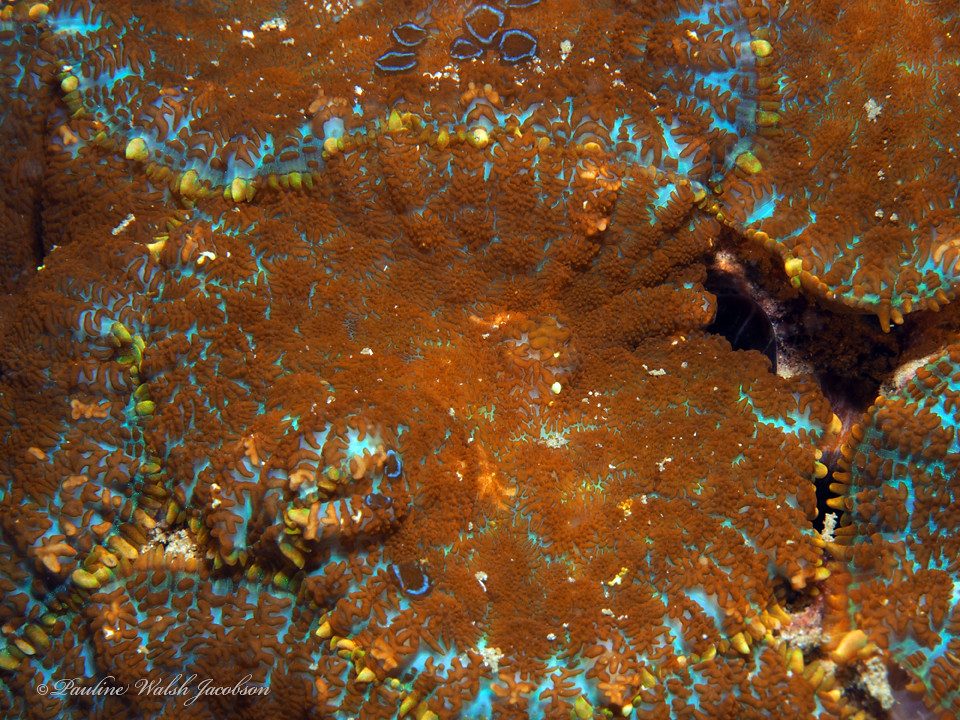
Rhodactis mushrooms are hardy soft corals with big, textured discs. They suit new reef keepers, but they still need stable basics. With the right light, flow, and feeding, they grow fast and look bold.
Placement, lighting, and flow
Start Rhodactis low in the tank. Use a sand bed or a low rock shelf. Many pieces bleach under strong LEDs. Aim for 50–120 PAR at the coral. Increase light by 5–10% per week if needed.
Give them gentle, indirect flow. You want the disc to sway, not fold. Too much flow keeps them closed and dusty. Too little flow lets film algae settle on the disc. A small powerhead aimed at glass often works well.
Use a “test rock” when you buy a new frag. Place it where you think it should live. Wait seven days and watch behavior. A happy Rhodactis stays inflated and sticky. A stressed one stays tight and gapes at the mouth.
- Good signs: full inflation, strong grip, mouth closed
- Too much light: fading color, shrinking, staying flat
- Too much flow: curled edges, constant deflation, sand blasting
For more placement ideas, see soft corals for beginners. It helps you compare mushrooms to leathers and zoas.
Water parameters and stability targets
Rhodactis tolerate “mixed reef” water, but they hate swings. Keep salinity at 1.025–1.026 specific gravity. Hold temperature at 25–26°C (77–79°F). Keep pH steady at 8.1–8.3 when possible.
They do not demand high calcium, but stability still matters. Target alkalinity at 8–9 dKH, calcium at 400–450 ppm, and magnesium at 1250–1400 ppm. Keep nitrate at 5–20 ppm for steady growth. Keep phosphate at 0.03–0.10 ppm to avoid pale tissue.
Use weekly testing in new tanks. Test alkalinity twice per week if you dose. Mushrooms can “melt” after big salinity drops. This often happens after top-off mistakes. Mark your sump water line to prevent it.
- Do 10% water changes weekly in smaller systems
- Match new saltwater to tank salinity within 0.001
- Avoid large carbon changes that strip the water too fast
If you need a stability checklist, read reef tank water parameters. It covers targets and common drift patterns.
Feeding, growth, and troubleshooting
Rhodactis get energy from light, but feeding boosts size. Feed once or twice per week. Use small meaty foods like mysis, brine, or chopped shrimp. Offer pieces about 3–5 mm wide. Too-large chunks can rot and cause brown slime.
Turn off pumps for 10–15 minutes during feeding. Place food on the disc near the mouth. Use feeding tongs or a pipette. If fish steal food, use a clear feeding dome. A cut plastic bottle works in a pinch.
They spread by splitting and by “walking.” They can detach and drift to new spots. Plan space around them. Keep 5–8 cm from slow neighbors. They can sting some LPS and irritate zoanthids. Use rubble islands to contain a colony.
- Closed for days: check flow, then check salinity and temperature
- Brown jelly look: siphon debris, increase flow slightly, run fresh carbon
- Bleaching: lower PAR, shorten photoperiod to 7–8 hours
Quarantine helps with hitchhikers like flatworms and nudibranchs. Use a coral dip and a rinse. Inspect the foot and underside. For a simple QT plan, see coral quarantine setup.
Rhodactis mushrooms reward patience and stable care. Start them low, keep flow gentle, and avoid fast changes. Feed lightly and watch their response. With steady parameters, they become a reliable, fast-growing centerpiece.
Sources: Borneman, Eric H. “Aquarium Corals” (2001); Delbeek, J. Charles & Sprung, Julian. “The Reef Aquarium” Vol. 1–3 (1994–2005); Fenner, Robert. “The Conscientious Marine Aquarist” (2001)
Was this helpful?
Related Posts
Dragonets Fish Care
Dragonets are beautiful reef fish, but they need mature tanks and steady food sources. Learn how to keep…
 By
By
Lighting For Aquarium
Lighting for Aquarium: Getting Saltwater Illumination Right Lighting for a saltwater aquarium is about much more than simply…