

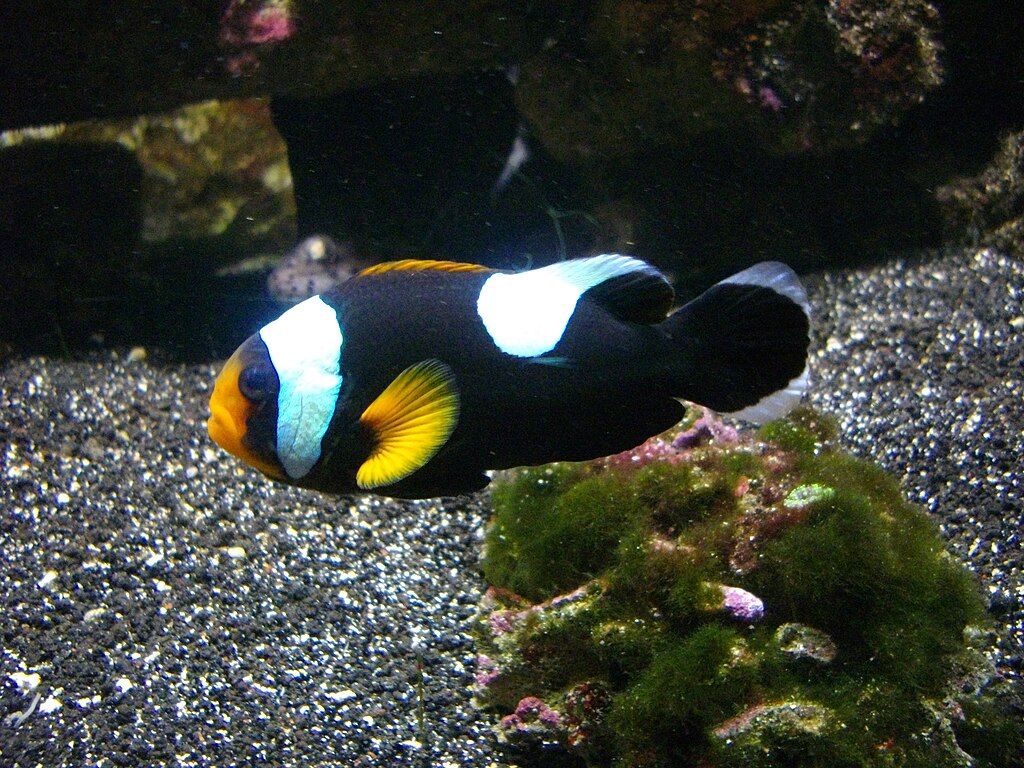
Saddleback clownfish are hardy, striking clownfish with bold white markings and a darker body. They suit many reef tanks, but they need stable water, a calm setup, and careful tankmate choices. This guide covers care, feeding, compatibility, breeding, and common problems so you can keep Amphiprion polymnus with confidence.
Saddleback clownfish are often overlooked beside ocellaris and percula clowns. That is a mistake. They have strong personality, unique patterning, and fascinating host relationships. They also behave differently from many beginner clownfish. They can be more territorial. They may prefer sand-adjacent hosts. They also need thoughtful stocking in smaller aquariums. In this updated FancyReef guide, you will learn how to identify saddleback clownfish, choose the right tank size, build a suitable aquascape, feed them well, and avoid common husbandry mistakes. If you want a clownfish with more character and a less common look, this species deserves a closer look.
Quick Reference Care Table
| Common name | Saddleback Clownfish |
| Scientific name | Amphiprion polymnus |
| Care level | Easy to moderate |
| Temperament | Semi-aggressive, territorial |
| Adult size | About 5 inches |
| Minimum tank size | 30 gallons for a pair |
| Diet | Omnivore |
| Reef safe | Yes |
| Temperature | 76–80°F |
| Salinity | 1.024–1.026 |
| pH | 8.1–8.4 |
| Host anemones | Usually carpet anemones and sebae anemones |
| Breeding | Egg layer, readily spawns in captivity |
Use this table as a fast care snapshot. The details below matter most for long-term success.
What Is a Saddleback Clownfish?
The saddleback clownfish is a damselfish from the clownfish group. Its most obvious feature is the broad white band behind the head. This marking often looks like a saddle draped over the back. The body is usually dark brown, black, or charcoal. The face and belly may show lighter tones. The tail often appears pale or yellowish.
This species grows larger than many common clownfish. Adults can reach around 5 inches. They are active, alert, and often bolder than expected. They also form strong pair bonds. Once settled, they usually claim a small territory and defend it well. That behavior is normal. It just needs planning.
Captive-bred specimens are the best choice for most hobbyists. They adapt faster. They eat prepared foods readily. They also place less pressure on wild reefs. If possible, choose a bonded pair or buy two juveniles and let them sort out their hierarchy in a peaceful tank.
Natural Habitat
Amphiprion polymnus occurs in the Indo-Pacific. It is found around northern Australia, Indonesia, Malaysia, Thailand, and nearby regions. In nature, this species often lives in lagoon habitats, coastal reefs, and silty areas with sandy bottoms. That detail matters. Saddlebacks are not always tied to steep, high-energy reef faces.
They often associate with host anemones placed near sand. Common hosts include Stichodactyla haddoni and Heteractis crispa. These anemones can sit partly embedded in substrate. Because of this, saddleback clownfish may spend more time low in the tank than other clown species. They often hover close to their host and make short patrols around it.
Water in these habitats is warm and stable. Salinity does not swing much. Food arrives as plankton, tiny crustaceans, algae, and organic particles. In captivity, matching that stability matters more than chasing rare numbers. Consistent conditions support immune health, appetite, and breeding behavior.
Aquarium Setup
A 30-gallon tank is the minimum for a pair. Bigger is better. A 40 breeder or larger gives better territory spacing and more stable water. If you plan to keep a host anemone, increase tank size. Anemones need mature systems and room to settle safely.
Build an aquascape with open swimming space and several rock structures. Leave a calm zone near the sand bed. That area often becomes the clownfish home base. If you keep a host anemone, place rockwork so pumps cannot pull it in if it moves. Use guards on wavemakers. That simple step prevents disasters.
A sand bed works well for this species. It suits their natural behavior and complements many host choices. Keep the system stable and mature. Avoid sudden salinity shifts. Maintain ammonia and nitrite at zero. Keep nitrate reasonable. Aim for under 15 ppm in most mixed reefs. You can read more about reef tank parameters and cycling a saltwater aquarium before adding fish.
Lighting Requirements
Saddleback clownfish do not need intense lighting themselves. They adapt to a wide range of reef lighting levels. Your lighting choice should match the tank’s main goal. In a fish-only or soft coral tank, moderate lighting is fine. In an anemone system, lighting becomes far more important.
Carpet anemones and sebae anemones usually need strong, stable reef lighting. That means quality LED, T5, or hybrid fixtures with enough intensity for photosynthetic invertebrates. Avoid rapid changes. Sudden jumps in intensity can stress both fish and host. Use an acclimation mode when upgrading lights.
Provide a natural day and night cycle. Around 8 to 10 hours of full lighting works well in many reef systems. A short ramp-up and ramp-down period reduces stress. If your clownfish hide constantly after a lighting change, review intensity, flow, and aggression. Lighting is not always the only cause.
Water Flow
Moderate flow is ideal. Saddleback clownfish do not need extreme turbulence. They prefer an area where they can hover comfortably and retreat without fighting current all day. Create varied flow zones instead of blasting the entire aquarium evenly.
If you keep a host anemone, match the flow to that species. Carpet anemones usually like moderate, indirect flow. Sebae anemones also prefer steady but not punishing movement. Strong direct flow can keep the anemone retracted. It can also force the clownfish to stay away from the host.
Watch the fish. Healthy saddlebacks swim with control and confidence. If they pin themselves into corners, gasp near the surface, or avoid open water, reassess oxygenation, pump direction, and aggression from tankmates. Good flow should move waste and support gas exchange without creating constant stress.
Feeding
Saddleback clownfish are easy feeders once settled. They are omnivores and do best with variety. Feed small portions once or twice daily. A good routine includes quality marine pellets, frozen mysis shrimp, finely chopped seafood, and enriched brine shrimp. Rotate foods through the week.
Include some plant matter in the diet. Spirulina-based foods and marine algae blends are useful additions. Variety supports color, energy, and breeding condition. It also reduces the chance of nutritional gaps. Captive-bred fish usually accept pellets quickly. Wild fish may need frozen foods first.
Do not overfeed. Clownfish beg often. That does not mean they need more food. Excess feeding raises nutrients and can irritate anemones in smaller tanks. If a fish refuses food, check for bullying, recent shipping stress, or disease. More feeding advice is available in our guide to the best food for clownfish.
Compatibility
Saddleback clownfish are reef safe with corals and most invertebrates. The main issue is temperament. They can become territorial, especially as a pair. This is most obvious near their host, nest site, or chosen corner of the tank. In a small aquarium, they may chase peaceful fish repeatedly.
Good tankmates include peaceful to semi-aggressive reef fish that occupy other zones. Gobies, blennies, fairy wrasses, and many reef-safe basslets can work well. Avoid mixing clownfish species in smaller tanks. That often ends badly. Also avoid very aggressive damsels or large predators.
With invertebrates, caution is needed around host anemones. A large carpet anemone can eat small fish. Plan livestock accordingly. If you want community harmony, add saddleback clownfish after very shy fish have settled. Read more about reef-safe fish for beginners when building a peaceful stocking list.
Step-by-Step Guide to Acclimating Saddleback Clownfish
- Quarantine the fish if possible. A separate tank helps catch disease early.
- Dim the lights before introduction. Lower light reduces stress and panic.
- Float the bag for temperature matching. Give it 15 to 20 minutes.
- Use drip acclimation if salinity differs. Keep the process gentle and clean.
- Net the fish into the tank. Avoid adding store water.
- Offer a hiding spot near the bottom. PVC or rock overhangs work well.
- Do not feed immediately if the fish looks stressed. Wait a few hours.
- Monitor breathing, swimming, and aggression for the first week.
If you are introducing a pair, add both together. If you are pairing juveniles, choose one slightly larger fish. That helps the dominance structure form naturally. Never force two established females together. The fighting can be severe.
Propagation and Fragging
How Saddleback Clownfish Breed
Saddleback clownfish are egg layers. A bonded pair often spawns on a cleaned rock near their host or territory. The female lays the eggs. The male guards and fans them. Spawning usually increases with stable temperature, regular feeding, and low stress.
Raising the Fry
Raising clownfish fry is possible, but it takes planning. You need a separate rearing setup, rotifers, and later baby brine shrimp. Eggs hatch at night in most cases. Larvae need tiny live foods immediately. Water quality must stay clean without strong flow. Breeding is rewarding, but it is not a casual side project.
Common Problems
Why is my saddleback clownfish so aggressive?
Territorial behavior is normal, especially in pairs. Aggression worsens in small tanks, crowded layouts, and during spawning. Add more space, improve line-of-sight breaks, and avoid other clownfish. If one fish is being injured, separate them.
Why will my clownfish not host an anemone?
Not all captive-bred clownfish host quickly. Some never do. Time helps. Species match matters too. Saddlebacks naturally prefer certain anemones. Even then, hosting is never guaranteed. Focus on fish health first. Hosting is a bonus, not a requirement.
Why is my saddleback clownfish breathing fast?
Fast breathing can signal ammonia, low oxygen, disease, or severe stress. Test water immediately. Check temperature and salinity. Inspect for white spots, flashing, or mucus. Review recent additions. Quarantine is often the safest next step.
Why did my pair start fighting?
Hierarchy disputes happen during pairing. Mild chasing is common. Locked jaws, torn fins, and nonstop attacks are not. Two females may have been combined. Remove the weaker fish if injuries appear. Start over with juveniles if needed.
Frequently Asked Questions
Are saddleback clownfish good for beginners?
Yes, with caveats. They are hardy and adaptable. Their territorial nature makes them slightly less beginner-friendly than ocellaris clownfish.
How big do saddleback clownfish get?
Most adults reach around 5 inches. Females are larger than males.
Can saddleback clownfish live without an anemone?
Yes. They do not need an anemone to thrive in captivity. Stable water and good nutrition matter more.
What is the best tank size for a pair?
A 30-gallon tank is the minimum. A 40 breeder or larger is a better long-term choice.
Are saddleback clownfish reef safe?
Yes. They are reef safe with corals. Their aggression toward tankmates is the main concern, not coral nipping.
Final Thoughts
Saddleback clownfish offer a different clownfish experience. They are bolder, larger, and often more territorial than common designer clowns. They also have unique charm. Give them stable water, a sensible aquascape, and compatible tankmates. Feed a varied diet and avoid crowding. Do that, and Amphiprion polymnus can become one of the most interesting fish in your reef tank.
Was this helpful?
Related Posts
Best Filtration Systems
Best Filtration Systems for a Healthy Saltwater Aquarium Choosing the best filtration system for your saltwater aquarium is…
 By
By
Clown Triggerfish (Balistoides Conspicillum)
Clown triggerfish are stunning but aggressive marine fish that need very large tanks, strong filtration, and careful tankmate…
[favorite_button]
My Bookmarks:
To see full list click here
[user_favorites user_id="" include_links="true" site_id="" post_types="" include_thumbnails="true" thumbnail_size="thumbnail" include_excerpt="false"]