

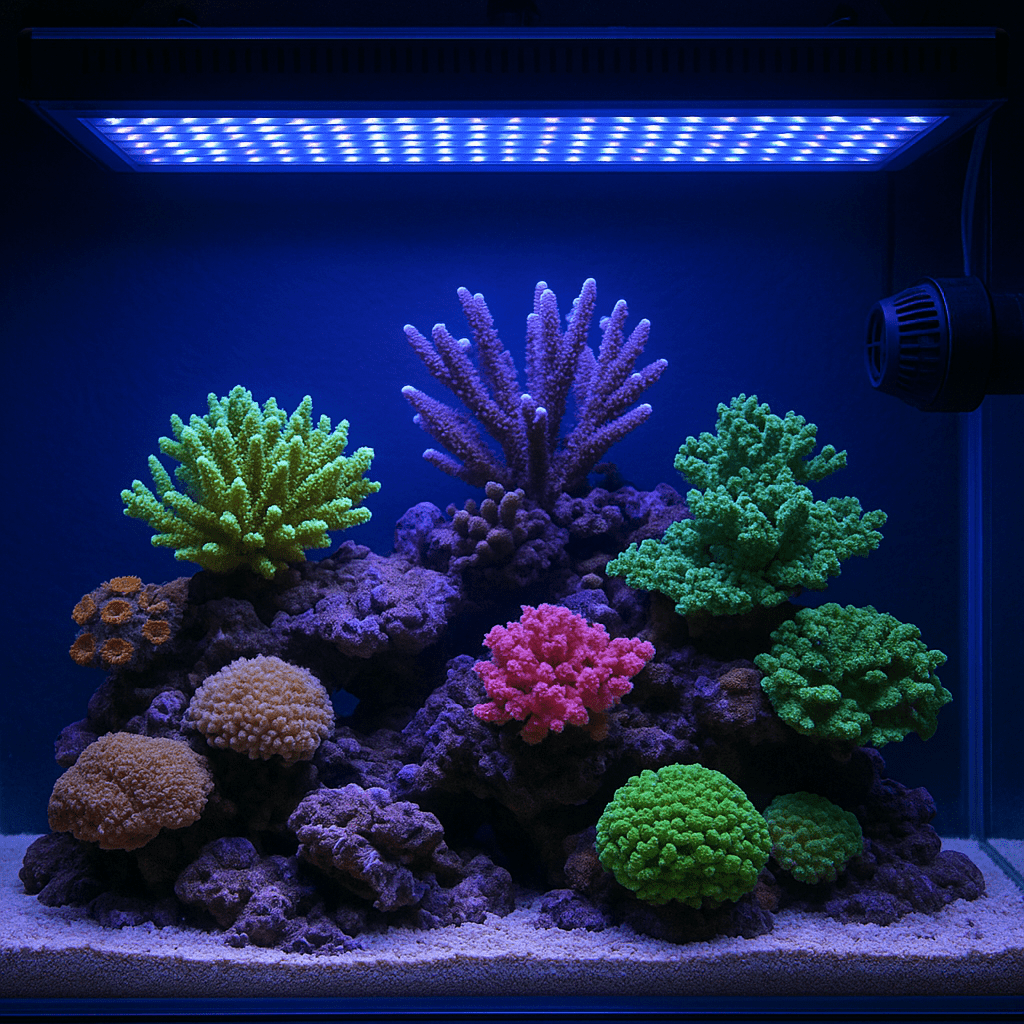
Salinity calibration is the foundation of accurate reef tank testing. If your refractometer or digital salinity meter is off, every livestock decision that follows can be wrong. This guide explains how to calibrate reef salinity tools correctly, what fluid to use, and how to avoid common mistakes that stress corals and fish.
Many reef problems start with bad numbers. Salinity is one of the biggest examples. A tank that seems stable at 1.025 may actually be running much lower or higher if the measuring tool is not calibrated. That can affect coral polyp extension, fish osmoregulation, alkalinity readings, and dosing accuracy. In this article, you will learn how salinity calibration works, which calibration standards reef keepers should use, how often to calibrate, and how to troubleshoot odd readings. You will also learn the difference between calibrating a refractometer and checking a digital salinity meter. Good calibration takes only a few minutes, but it protects everything in your reef.
Quick Reference Table
| Topic | Best Practice |
|---|---|
| Target reef salinity | 35 ppt or 1.0264 specific gravity |
| Best calibration fluid | 35 ppt calibration solution |
| Avoid using | RODI water for reef refractometer calibration |
| Calibration frequency | Before first use, then weekly or before important testing |
| Tool temperature | Let meter, fluid, and room stabilize first |
| Common error | Calibrating at zero instead of 35 ppt |
| After calibration | Rinse with RODI and dry with lint-free cloth |
Why Salinity Calibration Matters
Reef animals are sensitive to osmotic stress. They depend on stable salinity every day. Even small errors matter over time. A refractometer that reads 1.026 can be wrong by several points if it was calibrated poorly. That error may lead you to add too much salt or too much fresh water. Corals often react first. You may see weak extension, dull color, or slow growth. Fish can show heavy breathing or reduced appetite.
Salinity also affects other test results. Alkalinity, calcium, and magnesium values shift with concentration changes. If salinity is wrong, your chemistry plan may be wrong too. That is why calibration is not just about one number. It supports the whole system. Many hobbyists chase nutrients, lighting, or trace elements when the real issue is a poorly calibrated meter. Start with salinity. It is one of the simplest checks you can make, and one of the most important.
Which Salinity Tools Need Calibration
Most reef hobbyists use one of three tools. The first is an optical refractometer. This is the common handheld unit with a flip cover and eyepiece. The second is a digital salinity meter. These meters use conductivity or optical sensors. The third is a swing-arm hydrometer. Hydrometers do not calibrate in the same way, but they still need cleaning and verification against a trusted standard.
Optical refractometers are popular because they are affordable and reliable when used correctly. Digital meters are faster and easier to read, but they still need regular checks. Hydrometers are cheap, but they are the least precise. Salt creep, bubbles, and deposits can throw them off. If you use a hydrometer, compare it against a calibrated refractometer or a trusted digital device. In most reef tanks, a quality refractometer calibrated with 35 ppt solution is the best balance of cost and accuracy.
What Calibration Fluid Should You Use
Use a 35 ppt calibration solution. This is the best choice for reef aquariums. Natural seawater is about 35 ppt. Your target salinity is near that point. Calibrating at the actual operating range gives better accuracy where it matters most. Many hobbyists still use RODI water because older instructions mention it. That is not ideal for reef use. Zero-point calibration can create errors at seawater strength.
Buy a reputable calibration fluid from a reef or lab supplier. Keep the bottle sealed tightly. Do not contaminate it with tank water. Do not leave the cap off. Replace old fluid if it evaporates or looks dirty. If you use a digital meter, check the manufacturer instructions first. Some devices require a specific standard. Still, for reef salinity tools, 35 ppt fluid is usually the correct answer. It is a small purchase that prevents major mistakes.
Step-by-Step: How to Calibrate a Refractometer
First, place the refractometer, calibration fluid, and room air at the same temperature. Give them about 10 to 15 minutes. Temperature swings can affect the reading. Next, clean the prism with RODI water. Dry it with a soft lint-free cloth. Add a few drops of 35 ppt calibration solution to the prism. Close the cover plate gently so the fluid spreads evenly.
Wait about 30 to 45 seconds. Look through the eyepiece toward a bright light. Focus the scale if needed. Find the boundary line between light and dark. Use the calibration screw to set that line exactly at 35 ppt or 1.0264 specific gravity, depending on the scale. Once set, wipe away the fluid. Rinse the prism with RODI water. Dry it again. Now test a sample of tank water. Repeat the process if the tool was far off at the start. For best results, calibrate before mixing new saltwater or making major corrections.
Step-by-Step: How to Check a Digital Salinity Meter
Digital meters are convenient, but they are not maintenance free. Start by rinsing the probe or sensor with RODI water. If the manufacturer allows it, gently remove any residue with a soft cloth. Never scrape the sensor. Let the meter and calibration fluid reach room temperature. Then follow the meter instructions exactly. Some models have a calibration mode. Others only allow verification against a standard.
Use fresh 35 ppt solution in a clean cup. Do not pour used fluid back into the bottle. Insert the sensor and wait for the reading to stabilize. If the meter supports calibration, adjust it to match the standard. If it does not, compare the reading and note any drift. A badly drifting meter may need cleaning, new batteries, or replacement. After testing, rinse the sensor with RODI water and store it as directed. Digital meters are fast, but sensor fouling is common in reef rooms. Salt film alone can create false confidence.
Common Salinity Calibration Mistakes
Using RODI Water Instead of 35 ppt Fluid
This is the most common mistake. Many refractometers sold for aquariums are designed around seawater ranges. They are most accurate when calibrated near reef salinity. Zero-point calibration can shift the reading at 35 ppt. That means your tank may be off even though the tool seems correct in pure water.
Ignoring Temperature Stability
Automatic temperature compensation helps, but it is not magic. A cold refractometer and warm fluid can still produce drift. Let the tool and fluid sit together first. This improves consistency and reduces false adjustments.
Testing on a Dirty Prism or Sensor
Salt residue changes the sample path. Fingerprints can also distort the line on a refractometer. Clean the surface every time. Rinse with RODI water after each use. Dry gently. This takes seconds and prevents a lot of confusion.
Trusting One Tool Blindly
Cross-check your reading sometimes. Borrow another calibrated meter. Compare with a trusted local fish store if needed. If one device suddenly disagrees, do not rush to change tank salinity. Verify first. Fast corrections can stress livestock more than the original error.
How Often Should You Calibrate Salinity Tools?
Calibrate a new refractometer before first use. After that, weekly calibration is a smart routine for active reef keepers. At minimum, calibrate before mixing new saltwater, before a large water change, or any time the reading seems unusual. If the tool gets dropped, recalibrate it immediately. If your reef room has big temperature swings, check it more often.
Digital meters should be checked on a similar schedule. Some high-end units stay stable for longer, but reef environments are harsh. Salt spray, humidity, and residue are constant issues. If you run a coral-heavy system, accuracy matters even more. Stable salinity supports skeletal growth and reduces stress during dosing changes. A simple weekly habit is enough for most tanks. Pair calibration with your regular testing day for consistency.
Target Salinity for Reef Aquariums
Most reef tanks do best at 35 ppt. That equals about 1.0264 specific gravity at standard reef reference conditions. Some hobbyists run slightly lower, around 34 ppt, but stability matters more than chasing tiny differences. Fish-only systems can tolerate a bit more variation. Coral reefs are less forgiving. SPS corals especially prefer consistency.
If your tank is currently off target, correct it slowly. Raise or lower salinity over several days. Sudden changes can shock invertebrates. Top off evaporation with fresh RODI water only. Use saltwater only when you need to increase salinity intentionally. During water changes, match the new water to the display tank closely. This is one reason calibration matters so much. Good mixing means little if your measuring tool is wrong.
Common Problems
My Refractometer Reading Changes Every Time
This usually points to dirty surfaces, unstable temperature, or inconsistent sample size. Clean the prism well. Let the fluid settle. Use enough liquid to cover the prism fully. Check that the cover plate closes evenly. Also inspect the calibration screw. Some cheap units drift if the screw is loose.
My Tank Salinity Seems Fine, but Corals Look Stressed
Verify the tool with 35 ppt fluid. Compare with a second device if possible. Many tanks run off target for weeks because the owner trusts an unverified meter. If salinity is wrong, correct it slowly. Then observe coral response over several days.
My Digital Meter Reads Lower Than My Refractometer
One of them is likely dirty or out of calibration. Clean both tools. Recheck with fresh standard solution. If the digital meter still drifts, inspect the sensor and battery. If the refractometer still disagrees, recalibrate and test again under stable room conditions.
I Accidentally Adjusted My Tank Based on a Bad Reading
Do not panic. Measure again with a verified tool. Determine the real salinity. Then make gradual corrections only. Avoid large single-day swings. Fish and corals often recover well from a mild error if the correction is slow and stable.
Best Practices for Long-Term Accuracy
Store your refractometer in a dry case. Keep calibration fluid sealed and clean. Never touch the prism with rough towels. Replace cheap tools if they drift often. Accuracy is worth more than saving a few dollars. Label your calibration bottle with the date opened. Old fluid can evaporate over time.
It also helps to build a repeatable process. Calibrate on the same day each week. Test salinity before feeding or maintenance. Record the result in a log. If you notice a trend, investigate evaporation, auto top off performance, and mixing practices. Good reef keeping is often about removing hidden variables. Salinity calibration does exactly that.
Frequently Asked Questions
Can I calibrate a reef refractometer with distilled water?
You can, but you should not for reef accuracy. Use 35 ppt calibration solution instead.
What salinity should a reef tank be?
Aim for 35 ppt or about 1.0264 specific gravity. Keep it stable above all else.
How long does calibration fluid last?
It lasts a long time if sealed well. Replace it if contaminated, evaporated, or very old.
Should I calibrate before every use?
Not always, but it is wise before major water changes or if the reading seems unusual.
Is a refractometer better than a hydrometer?
Yes, in most reef tanks. A calibrated refractometer is usually more precise and consistent.
For more reef chemistry help, see our guides on reef tank parameters, mixing saltwater, using an auto top off, and choosing the best refractometer for reef aquariums.
Was this helpful?
Related Posts
Palytoxin in the Marine Aquarium
Palytoxin in the marine aquarium is a real risk during coral handling. Learn safe practices, warning signs, and…
 By
ByReef Tank Water Chemistry Basics
Learn reef tank water chemistry basics, including ideal parameters, testing routines, and simple ways to keep corals healthy…
[favorite_button]
My Bookmarks:
To see full list click here
[user_favorites user_id="" include_links="true" site_id="" post_types="" include_thumbnails="true" thumbnail_size="thumbnail" include_excerpt="false"]