Why Saltwater Aquarium Lighting Matters
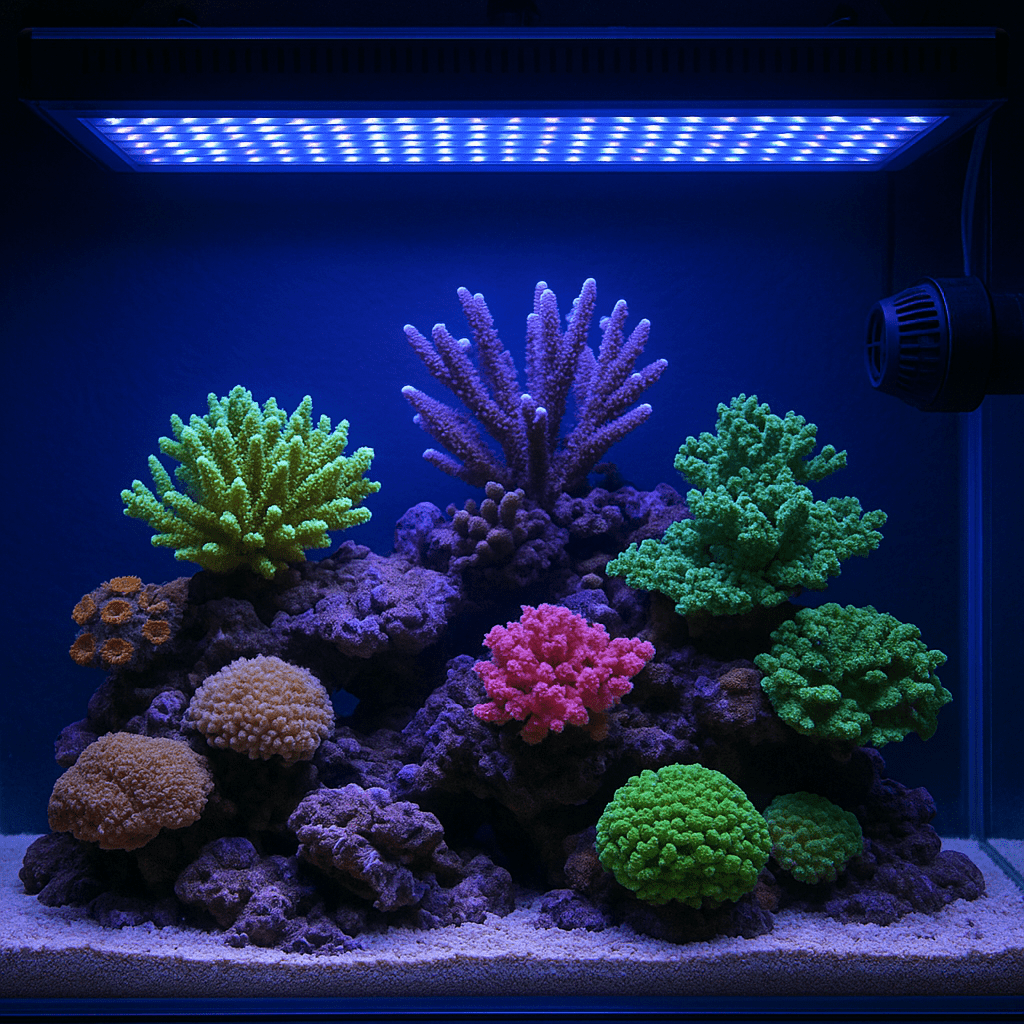
Lighting is one of the most important pieces of equipment on a saltwater aquarium. It doesn’t just make your tank look good—it drives coral growth, affects fish behavior, and even influences algae. Whether you keep soft corals, LPS, SPS, or a fish-only system, choosing the right light and settings will make your reef more stable and enjoyable.
If you’re just starting and still planning your build, pair this guide with your overall setup plan so your light matches your saltwater aquarium setup checklist and long-term livestock goals.
Types of Saltwater Aquarium Lighting
Modern reef tanks almost always use LED lighting, but it helps to understand your options:
- LED (most common) – Energy efficient, low heat, programmable, and available in reef-specific spectrums. Ideal for nearly all reef tanks when sized correctly.
- T5 fluorescent – Even light spread and proven coral growth, but bulbs need regular replacement and fixtures run warmer.
- Metal halide (old-school high intensity) – Deep penetration and great growth, but they’re hot, power-hungry, and less common today.
For most hobbyists, a quality reef LED fixture is the best balance of performance, control, and cost over time.
Key Lighting Concepts for Reef Tanks
PAR and Intensity
Corals use light for photosynthesis via their zooxanthellae. The useful light is measured as PAR (Photosynthetically Active Radiation). Different corals prefer different PAR ranges:
- Soft corals & mushrooms: roughly 50–100 PAR
- LPS corals: roughly 75–150 PAR
- SPS corals: roughly 200–350+ PAR
You don’t need to chase exact numbers, but aim for a consistent range. Renting or borrowing a PAR meter for a day can help you dial in intensity and avoid burning new corals.
Spectrum (Color)
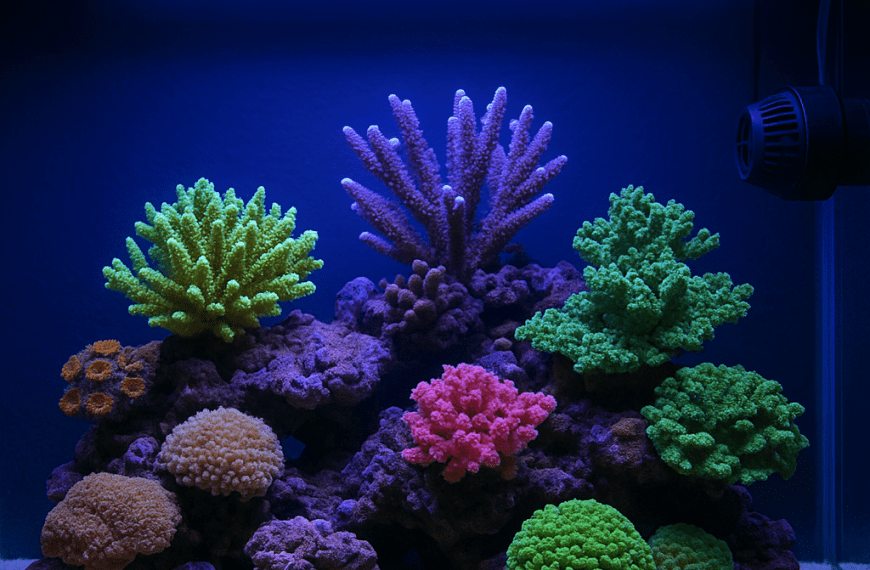
Reef tanks typically favor a blue-heavy spectrum (around 14K–20K “look”) because blue light penetrates water better and supports coral fluorescence and growth. Most reef LEDs provide separate channels for white, blue, UV/violet, and sometimes red/green. A simple starting point:
- Blue/royal blue/UV: 80–100%
- White: 10–30%
- Red/green: very low or off to reduce nuisance algae
From there, adjust to taste while watching how your corals respond over a few weeks.
Photoperiod (How Long the Lights Are On)
Most reef tanks do well with a total light cycle of 8–10 hours. Use gradual ramps to mimic sunrise and sunset and reduce stress:
- 1–2 hour ramp-up from dim blue to full intensity
- 6–8 hours at your main daytime settings
- 1–2 hour ramp-down back to dim blue
Avoid long, intense photoperiods when the tank is new, as they can fuel algae blooms while your system matures.
Practical Lighting Tips for a Healthy Reef
- Match the light to your tank size: Check the manufacturer’s recommended coverage and depth. Deeper tanks (24″+) need stronger lights or multiple fixtures.
- Acclimate corals to new light: When upgrading lights or increasing intensity, raise PAR slowly over 1–2 weeks, or start with a shorter photoperiod.
- Mounting height matters: Higher mounting (8–12″ above the water) improves spread but lowers PAR. Adjust height and intensity together.
- Keep lenses and splash guards clean: Salt creep and dust can cut PAR significantly. Wipe fixtures gently every few weeks.
- Use lighting presets wisely: Many reef LEDs offer proven templates. Start there, then fine-tune rather than reinventing the wheel.
Lighting works best as part of an overall reef plan. Combine good light with stable parameters and proper saltwater aquarium maintenance and you’ll see far better coral color and growth.
Bringing It All Together
The right saltwater aquarium lighting doesn’t have to be complicated. Choose a reliable reef-capable LED, match it to your tank size and coral types, then focus on consistent spectrum, reasonable PAR, and a stable photoperiod. Make small adjustments, give corals time to respond, and keep notes on what works.
If you’re still deciding what to keep, review our coral care guide so your lighting and livestock plans grow together. With a thoughtful approach, your reef will reward you with vibrant colors, healthy growth, and a display you’ll be proud of for years.
Sources
- Bulk Reef Supply – BRS Investigates: LED Lighting & PAR Testing Series
- World Wide Corals – Coral Care and Lighting Recommendations
- Sprung, J. & Delbeek, J. – The Reef Aquarium (lighting chapters)
Was this helpful?
Related Posts
Reef Safe Fish for Beginners
Discover the best reef safe fish for beginners, plus tank size, feeding, and compatibility tips for a peaceful…
 By
By
Dragonets Fish Care
Dragonets are beautiful reef fish, but they need mature tanks and steady food sources. Learn how to keep…