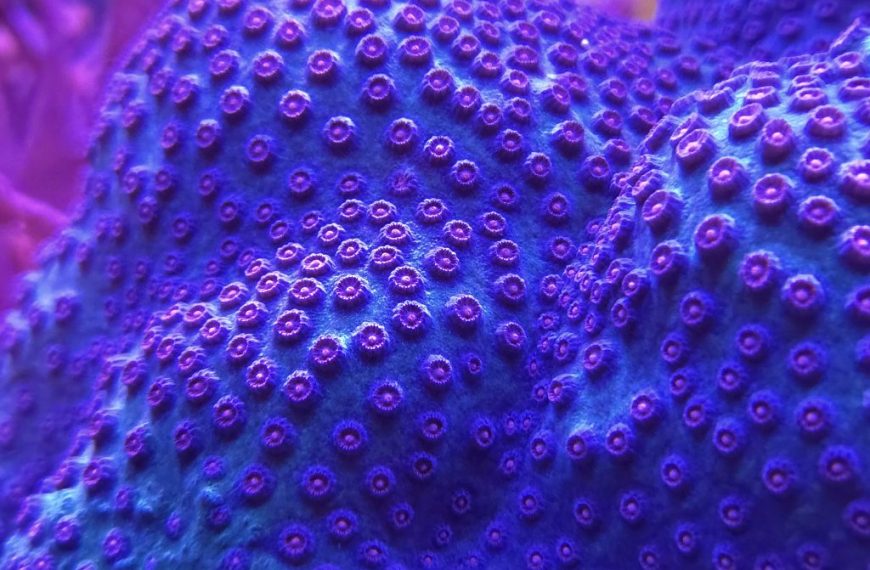

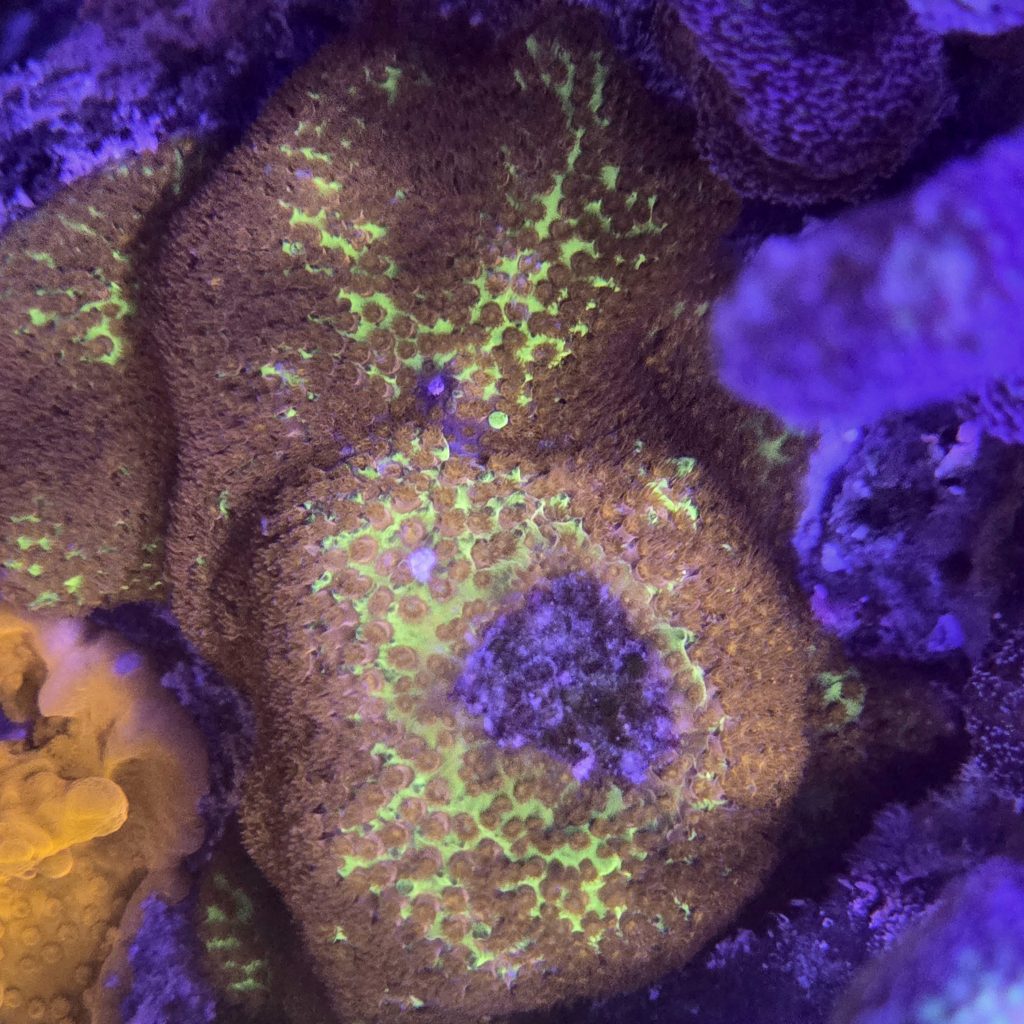
Stylocoeniella corals are hardy, small-polyp stony corals. They can look like encrusting or knobby mounds. Good stability matters more than chasing high numbers.
These corals reward consistent lighting, flow, and alkalinity. They also respond well to clean water and steady nutrients. This guide covers setup, feeding, and common problems.
Placement, lighting, and flow
Start Stylocoeniella low to mid in the tank. Give it room to encrust onto rock. Leave 2 to 3 inches from aggressive neighbors.
Use moderate light at first. Aim for 120 to 200 PAR for most systems. Increase by 10 to 15% per week if color stays stable.
Provide strong, varied flow across the surface. Use random or alternating patterns. Avoid a direct jet that strips tissue.
Watch polyp extension and surface sheen. Dull tissue can mean too much light. Detritus settling can mean too little flow. For a lighting baseline, review our PAR lighting guide.
- Acclimate light with a screen or 50% intensity for 7 days.
- Target 20 to 40x turnover using wavemakers and return flow.
- Mount frags on stable rock to prevent sand abrasion.
Water parameters and daily stability
Stylocoeniella prefers reef-stable parameters with minimal swings. Keep temperature at 25 to 26 C. Keep salinity at 1.025 to 1.026 specific gravity.
Hold alkalinity at 8.0 to 9.0 dKH for mixed reefs. Keep calcium at 420 to 460 ppm. Keep magnesium at 1280 to 1400 ppm.
Keep nutrients present but controlled. Aim nitrate at 2 to 15 ppm. Aim phosphate at 0.03 to 0.10 ppm. Ultra-low nutrients can pale tissue.
Test alkalinity three times per week at first. Dose two-part daily if it drops more than 0.3 dKH. For dosing routines, see our two-part dosing walkthrough.
- Limit alkalinity change to 0.2 to 0.3 dKH per day.
- Do 10% water changes weekly or 20% biweekly.
- Calibrate salinity with 35 ppt reference fluid monthly.
Feeding, growth, and troubleshooting
Stylocoeniella can grow well from light and dissolved nutrients. It still benefits from targeted feeding. Feed 1 to 2 times per week after lights dim.
Use fine foods that stay suspended. Try reef roids, rotifers, or powdered plankton. Turn off pumps for 10 minutes during feeding.
Quarantine frags when possible. Dip for 5 to 10 minutes in a coral dip. Inspect for flatworms, nudibranchs, and vermetid snails.
Common issues include browning, paling, and slow tissue loss. Browning often means high nutrients or low light. Paling often means low nutrients or too much light. Slow loss often tracks to alkalinity swings or pests. For pest ID, use our coral pest checklist.
- If tissue recedes, check alkalinity daily for one week.
- If detritus collects, increase random flow and siphon weekly.
- If algae grows on the base, reduce white light and add grazers.
Example scenario helps with diagnosis. A frag placed at 250 PAR may bleach in three days. Move it to 150 PAR and feed lightly for two weeks. Color often returns once nutrients and light balance.
Another common scenario is rapid alkalinity rise after a large water change. A jump from 8.0 to 9.5 dKH can trigger stress. Match new saltwater to tank dKH within 0.5.
Conclusion
Stylocoeniella corals do best with steady alkalinity, moderate PAR, and strong flow. Keep nutrients in a safe range and feed fine foods weekly. With patience, they encrust fast and hold color well.
Track changes with a simple log and adjust one variable at a time. Stability wins with this coral. Sources: Borneman, E. (2001) Aquarium Corals; Delbeek, J. & Sprung, J. (1994–2005) The Reef Aquarium series; Veron, J.E.N. (2000) Corals of the World.
Was this helpful?
Related Posts
Dragonets Fish Care
Dragonets are beautiful reef fish, but they need mature tanks and steady food sources. Learn how to keep…
 By
By
Lighting For Aquarium
Lighting for Aquarium: Getting Saltwater Illumination Right Lighting for a saltwater aquarium is about much more than simply…