

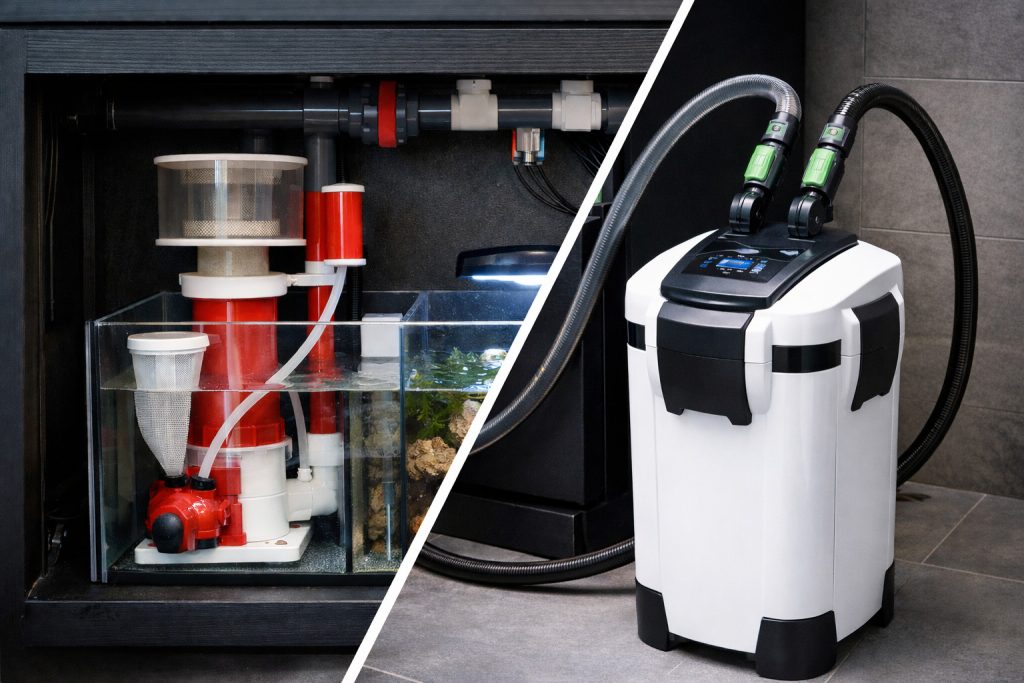
Choosing between a sump and canister filter depends on your tank goals, budget, and maintenance style. For most reef aquariums, a sump offers better flexibility and long-term stability. A canister filter can still work on some marine tanks, but it needs stricter cleaning and has more limits for coral-focused systems.
Many reef keepers ask this question early in the hobby. Both systems move water and hold filtration media. That is where the similarities start to fade. A sump adds water volume, hides equipment, and supports advanced reef gear. A canister filter is compact, simple to install, and often cheaper at first. In this guide, you will learn how each system works, where each one shines, and which option makes more sense for beginner and intermediate reef tanks. You will also see common mistakes, maintenance tips, and practical setup advice based on real reef keeping needs.
Quick Reference Table
| Feature | Sump | Canister Filter |
|---|---|---|
| Best for | Reef tanks and advanced marine systems | Fish-only tanks and simple setups |
| Initial cost | Higher | Lower |
| Maintenance frequency | Moderate | High if used on reefs |
| Equipment storage | Excellent | Very limited |
| Water volume increase | Yes | No |
| Media flexibility | Very high | Moderate |
| Skimmer compatibility | Excellent | Poor |
| Risk if neglected | Usually gradual | Can become a nitrate trap |
| Noise level | Moderate, depends on design | Usually quiet |
| Recommended for beginners | Yes, if budget allows | Only with strong maintenance habits |
What Is a Sump?
A sump is a second tank placed below the display aquarium. Water drains from the main tank into the sump. It then passes through different chambers before a return pump sends it back up. This creates a larger total water volume. That extra volume improves stability. Stable systems are easier to manage, especially in reef tanks.
A sump can hold filter socks, a protein skimmer, heaters, reactors, probes, and even a refugium. That makes it more than just a filter. It becomes the support system for the whole reef. It also keeps equipment out of sight. Your display tank looks cleaner and more natural.
Many hobbyists choose a sump because it grows with the tank. You can add better nutrient export later. You can run carbon, GFO, or a refugium. You can also make maintenance easier by keeping all service points below the tank. For coral tanks, this flexibility is a major advantage.
What Is a Canister Filter?
A canister filter is a sealed external unit. Water is pulled from the aquarium through an intake line. It passes through trays filled with media. Then it returns to the tank through an outlet hose. Canister filters are popular in freshwater tanks. They are also used on some marine setups.
The main appeal is simplicity. A canister is compact and self-contained. It does not require drilling the tank. It also avoids sump plumbing. Many beginners like that. Setup is often faster than a sump. The upfront cost is usually lower too.
Still, reef keepers need to understand the tradeoff. A canister can polish water well. It can hold carbon or phosphate remover. But trapped waste breaks down quickly if the unit is not cleaned often. That can raise nitrate and phosphate. In a reef tank, that matters. Corals respond badly to poor nutrient control and unstable conditions.
Sump vs Canister Filter for Reef Tanks
For most reef aquariums, a sump is the better choice. It supports the equipment reef tanks usually need. That includes skimmers, auto top off sensors, media reactors, and refugiums. It also increases oxygen exchange. Good gas exchange helps maintain pH. Many reef tanks struggle with low pH indoors. A sump can help reduce that issue.
A canister filter can work on a reef tank, but it needs discipline. Mechanical media must be cleaned often. Weekly cleaning is common. Some tanks need it even more often. If waste sits in the canister, nutrients rise. Algae can follow. Corals may lose color or stop growing. This is why many reef keepers call canisters nitrate traps.
That label is not fully fair. The filter itself is not the problem. Neglected maintenance is the problem. Still, reef systems reward equipment that is easier to service. On that point, sumps usually win. They offer better access, better expansion, and better long-term reef performance.
Aquarium Setup Considerations
Your tank size matters when comparing these options. Small tanks can run with either system. Larger tanks benefit more from a sump. Extra water volume helps reduce swings in salinity, temperature, and nutrient levels. Those swings stress fish and corals. Stability is one of the biggest keys to reef success.
A sump setup usually needs an overflow box or a reef-ready drilled tank. You also need a return pump and plumbing. That adds complexity. It also requires planning for power outages and drainage capacity. Once installed well, though, the system is very effective.
A canister filter needs less space below the tank. It can be a practical choice for apartments or all-in-one systems without sump room. It also works when drilling is not possible. If you choose a canister on a reef tank, pair it with strong flow, quality live rock, and a separate protein skimmer if possible. Do not rely on the canister alone for full reef filtration.
Maintenance Requirements
Maintenance is where many hobbyists make their final decision. A sump spreads filtration across open compartments. Filter socks or roller mats catch debris. Skimmers remove dissolved organics. Media can be swapped without disconnecting hoses. This makes routine service more convenient.
Canister filters require shutdown, disassembly, and cleaning. Sponges and floss collect waste fast. If left too long, they become nutrient factories. Reef keepers often underestimate this. The tank may look fine at first. Then nitrate creeps up. Hair algae appears. Cyanobacteria follows. Corals stay closed. The root cause can be a dirty canister.
If you enjoy hands-on cleaning and follow a schedule, a canister can still perform well. If you prefer easier access and lower risk from missed cleanings, a sump is safer. Be honest about your habits. The best filter is the one you will maintain properly every week.
Water Flow and Oxygenation
Neither a sump nor a canister replaces proper in-tank flow. Corals need water movement from powerheads or wavemakers. That said, the filtration choice still affects circulation and oxygenation. Sumps usually improve surface agitation through overflow and return movement. This supports gas exchange. Better gas exchange means more stable oxygen and carbon dioxide levels.
Canister filters return water under pressure, but they do less for surface skimming unless the intake and return are positioned carefully. Surface film can build up more easily. That film reduces oxygen exchange and blocks light penetration. Reef tanks benefit from a clean, active surface.
For fish-only systems, this may be less critical. For coral tanks, every part of the system matters. Corals need stable oxygen, pH, and nutrient export. A sump supports that more naturally. A canister can still work, but you must compensate with strong flow, surface agitation, and regular cleaning.
Cost: Upfront vs Long-Term
A canister filter usually costs less at the start. That makes it attractive for beginners. You buy the unit, add media, and connect the hoses. A sump setup often costs more. You may need a drilled tank, overflow, plumbing parts, return pump, and sump itself. The price adds up quickly.
Long-term value often tells a different story. Reef keepers tend to upgrade. They add a skimmer. Then an auto top off. Then media reactors. Then a refugium. A sump supports all of these. A canister does not. Many hobbyists buy a canister first, then replace it later with a sump. That means spending twice.
If your goal is a coral reef tank, it may be cheaper to start with a sump. If your goal is a simple fish-only marine tank, a canister can be a reasonable budget tool. Match the equipment to your actual plan, not just your current budget.
Step-by-Step: How to Choose the Right One
- Decide if the tank will be fish-only or reef. Reef tanks usually benefit more from a sump.
- Check if your tank is drilled or can be drilled safely. If not, a canister may be easier.
- Measure cabinet space. Sumps need more room and access.
- Set your realistic maintenance schedule. Canisters need more frequent deep cleaning.
- List future equipment plans. If you want a skimmer or refugium, choose a sump.
- Compare total cost, not just starting cost. Include upgrades and replacement parts.
- Think about appearance. Sumps hide equipment better than canisters.
- Choose the system that fits your long-term reef goals.
Common Problems
Why does my canister filter raise nitrate?
The usual cause is trapped waste. Sponges, floss, and biomedia collect detritus. That waste breaks down into nitrate and phosphate. Clean mechanical media often. Do not let debris sit for weeks. Reduce feeding if nutrients stay high. Test water regularly to confirm the trend.
Why is my sump noisy?
Noise usually comes from the overflow, drain line, or return section. Air mixing in the drain can cause gurgling. Water falling too far can splash. Adjust the overflow, add a gate valve if appropriate, and keep the return chamber at the right level. Proper sump design makes a huge difference.
Can a canister filter replace a protein skimmer?
Not really. A canister traps particles and holds media. A skimmer removes dissolved organic waste before it breaks down. In reef tanks, that early export matters. You can run a reef without a skimmer in some cases, but a canister does not perform the same job.
What happens during a power outage?
A sump must be designed to hold drain-down water when the return pump stops. Test this before leaving the system unattended. A canister usually stays sealed, but flow stops completely. In both cases, battery backup for circulation pumps is a smart investment for reef tanks.
Frequently Asked Questions
Is a sump better than a canister filter for saltwater tanks?
For most reef tanks, yes. A sump offers better equipment support, stability, and nutrient control. For simple fish-only tanks, a canister can still work well.
Can I use a canister filter on a reef tank?
Yes, but you must clean it often. Use it mainly for mechanical and chemical filtration. Do not let detritus build up inside.
Do I need a sump for coral?
No, but it helps a lot. Many successful coral tanks use sumps because they improve stability and make equipment management easier.
Are canister filters bad for reef aquariums?
They are not bad by default. They become problematic when maintenance is skipped. Dirty media leads to nutrient issues.
What is best for a beginner reef tank?
If the budget allows, a sump is usually the better beginner choice. It gives more room for error and supports future upgrades.
Final Verdict
If you are building a true reef aquarium, choose a sump whenever possible. It gives better stability, better nutrient export, and more room to grow. It also makes it easier to hide equipment and run the tools that reef tanks often need. A canister filter still has a place. It works for fish-only systems, temporary setups, and hobbyists who are diligent with maintenance. The key is honesty about your goals and habits. For most FancyReef readers planning corals, a sump is the stronger long-term investment.
Related reading: reef tank filtration basics, protein skimmer guide, how to lower nitrates in a reef tank, reef tank flow guide, beginner reef tank setup
Was this helpful?
Related Posts
Best Filtration Systems
Best Filtration Systems for a Healthy Saltwater Aquarium Choosing the best filtration system for your saltwater aquarium is…
 By
By
Clown Triggerfish (Balistoides Conspicillum)
Clown triggerfish are stunning but aggressive marine fish that need very large tanks, strong filtration, and careful tankmate…
[favorite_button]

My Bookmarks:
To see full list click here
[user_favorites user_id="" include_links="true" site_id="" post_types="" include_thumbnails="true" thumbnail_size="thumbnail" include_excerpt="false"]