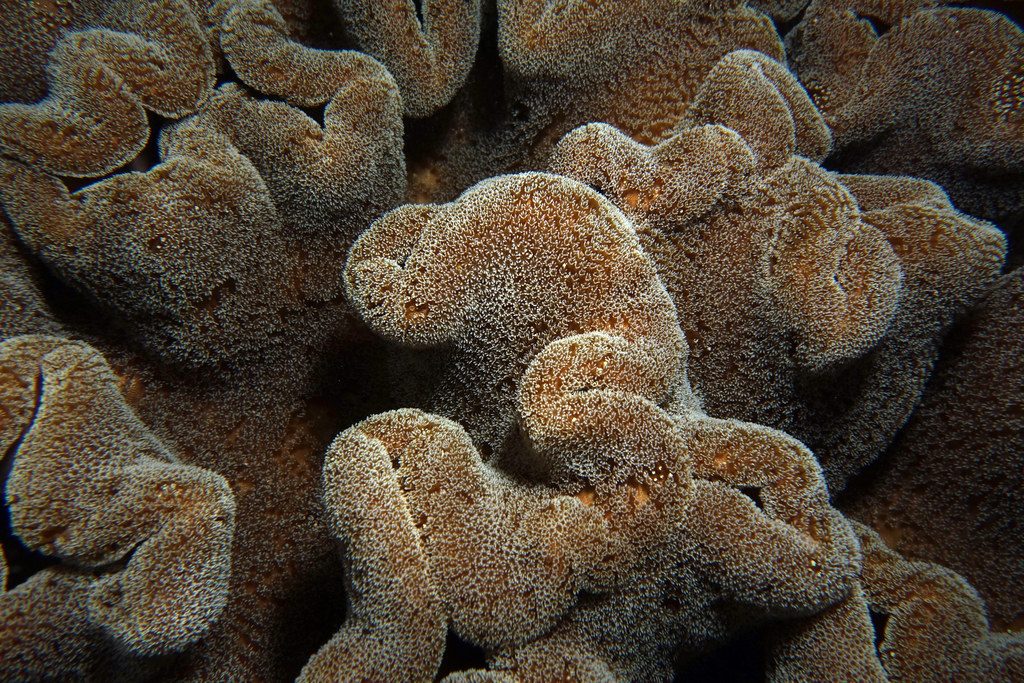
Toadstool leather corals are hardy, forgiving, and great for mixed reefs. They still need stable basics and the right placement to thrive. This guide covers day-to-day care, growth, and common issues.
Tank setup and water parameters
Start with a stable tank that is at least 20 gallons. Bigger systems swing less each day. Most toadstools do best in 6+ month old aquariums. New tanks often have unstable alkalinity.
Aim for reef-safe parameters and keep them steady. Keep salinity at 1.025 to 1.026 specific gravity. Keep temperature at 25 to 26 C, or 77 to 79 F. Hold alkalinity at 8 to 9 dKH for consistent growth.
Keep calcium at 400 to 450 ppm and magnesium at 1250 to 1400 ppm. Keep nitrate around 2 to 15 ppm for color. Keep phosphate at 0.03 to 0.10 ppm for balanced nutrients. Ultra-low nutrients can cause pale tissue.
Use carbon and a skimmer if you keep many soft corals. Leathers release chemicals during growth and stress. Carbon helps reduce coral-to-coral irritation. For a baseline routine, see reef tank water parameters.
- Test alkalinity two times per week in growing tanks.
- Change 10% water weekly or 20% every two weeks.
- Run fresh carbon for 3 to 7 days each month.
Lighting, flow, and placement
Toadstools like moderate light and moderate, random flow. PAR of 80 to 150 works well for most tanks. Stronger light can work if you acclimate slowly. Increase intensity over 2 to 3 weeks.
Place the coral where it can sway but not whip. Direct jets can prevent full polyp extension. Too little flow traps slime and detritus. That can lead to algae on the cap.
Give them space from stony corals and other leathers. A 4 to 6 inch buffer is a good start. In small tanks, chemical warfare shows up as closed polyps. Add carbon and increase water changes if this happens.
Expect periodic “shedding” as a normal behavior. The coral forms a waxy film and then sloughs it off. During this time, polyps retract for several days. Aim a gentle, alternating flow across the cap to help it peel cleanly.
- Start new frags low, then move up one rock level weekly.
- Avoid placing under a constant laminar stream from a powerhead.
- Keep the base stable to prevent rocking and tissue tears.
Feeding, growth, and troubleshooting
Toadstools get most energy from light and dissolved nutrients. They can still benefit from fine foods at night. Feed once or twice per week for steady growth. Turn off the return pump for 10 minutes during feeding.
Use small particle foods like reef roids, powdered plankton, or live phytoplankton. Mix a pinch in tank water and broadcast lightly. Do not overfeed in nano tanks. Extra food can drive nitrate above 20 ppm and fuel algae.
Common problems are closed polyps, drooping, and a dirty cap. First, check alkalinity and salinity for swings. A 1 dKH drop in a day can cause a sulk. Also check for pests like nudibranchs or flatworms.
If the coral stays closed for over a week, inspect for low flow and buildup. Gently turkey-baste the cap to remove film and detritus. Consider a short iodine dip for damaged tissue. Follow product directions and match temperature and salinity. For safe dipping steps, read coral dip guide. For safe acclimation, review how to acclimate corals.
- Closed polyps + clean cap: check alkalinity, salinity, and temperature first.
- Film that will not shed: increase random flow and run fresh carbon.
- Brown algae on cap: reduce nutrients and improve flow over the crown.
Toadstools can be fragged once they are well established. Use a clean blade and cut a wedge from the cap edge. Rubber band the frag to rubble loosely. It should attach in 7 to 14 days with good flow.
With stable parameters and smart placement, toadstools become reliable centerpieces. Expect cycles of growth and shedding as normal. Keep flow varied, nutrients reasonable, and chemistry steady for best results.
Sources: Borneman, E. (2001) Aquarium Corals; Delbeek, J.C. & Sprung, J. (1994–2005) The Reef Aquarium series; Fenner, R. (2003) The Conscientious Marine Aquarist.
Was this helpful?
Related Posts
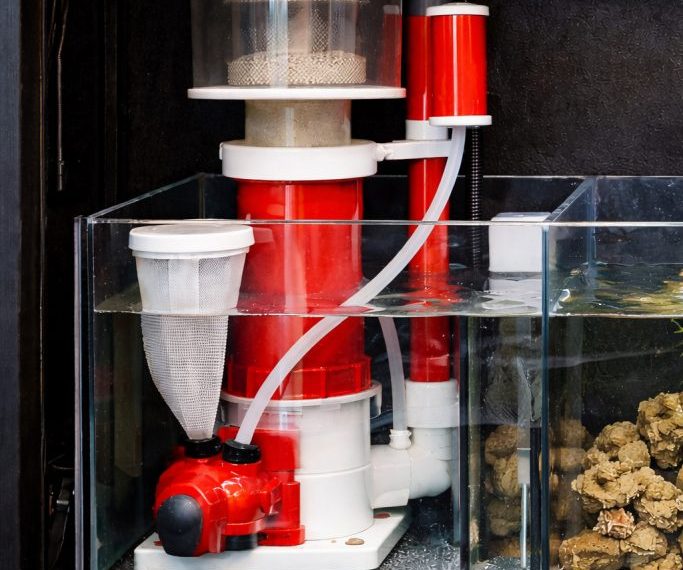
Protein Skimmer Reef Tank Guide
Learn how a protein skimmer works, how to size one, and how to tune it for a cleaner,…
 By
By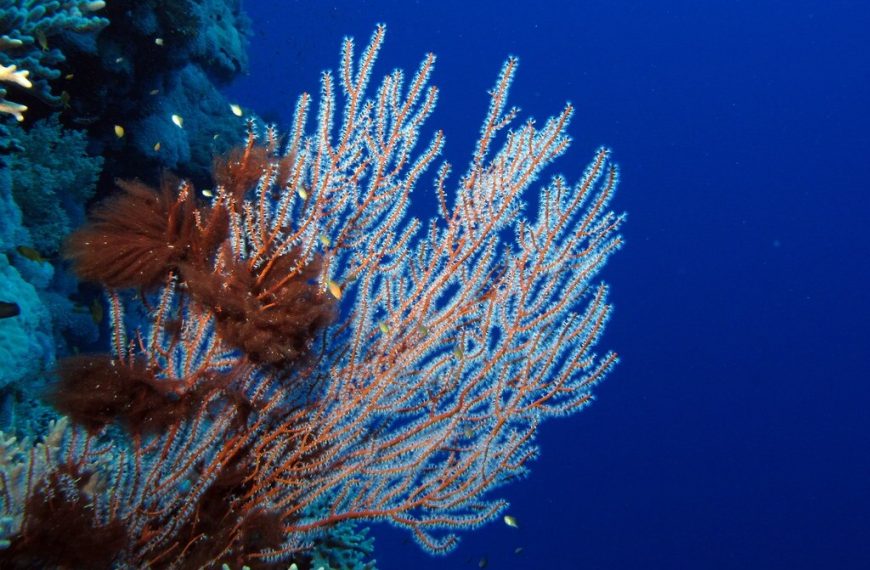
Reef Aquarium Water Parameters
Learn the ideal reef aquarium water parameters, safe ranges, and how to keep salinity, alkalinity, nutrients, and pH…