What Is Live Rock and Why It Matters
In the saltwater aquarium hobby, live rock is much more than decoration. It’s the biological backbone of your reef, housing beneficial bacteria, tiny invertebrates, and microalgae that help keep water parameters stable. Choosing the right types of live rock will affect how quickly your tank cycles, how natural it looks, and even what kinds of hitchhikers you might introduce.
If you’re just starting out, you may also want to read our guide on setting up a saltwater aquarium to see how live rock fits into the full system.
Main Types of Live Rock
1. Wild Harvested (Ocean) Live Rock
Traditional ocean-cured rock is collected from reef areas (often from rubble zones) and shipped damp to maintain life.
- Pros: Extremely diverse life, fast biological filtration, natural shapes and colors.
- Cons: Can be expensive, may introduce pests (aiptasia, mantis shrimp, nuisance crabs), and in some regions is restricted for environmental reasons.
This is often the most “alive” option, with sponges, worms, and coralline algae. However, you’ll want to carefully inspect and possibly quarantine it, similar to how you’d handle new saltwater fish in quarantine.
2. Aquacultured Live Rock
Aquacultured rock starts as dry base rock placed in the ocean or large closed systems until it becomes colonized with life.
- Pros: More sustainable, still carries good biodiversity, often pre-cured and easier to work with.
- Cons: Slightly less diverse than wild rock, can still bring in pests, and shapes may be more uniform depending on the source.
For many hobbyists, aquacultured rock is the best balance between environmental responsibility and biological performance.
3. Dry Rock (Base Rock)
Dry rock is essentially dead reef rock, often mined or man-made, sold completely dry and pest-free.
- Pros: No unwanted hitchhikers, usually cheaper, easy to aquascape before adding water, very environmentally friendly.
- Cons: Needs time to colonize with bacteria, can lead to slower cycling, and initially looks stark and white.
Hobbyists often “seed” dry rock with a smaller amount of live rock or bottled bacteria to speed up the cycle and encourage coralline growth.
4. Man-Made and Ceramic Live Rock Alternatives
These are engineered structures (ceramic, cement-based, or 3D-printed) designed to mimic natural reef rock.
- Pros: Highly customizable shapes, predictable porosity, completely pest-free at the start.
- Cons: Requires curing and seeding, may take longer to look “natural,” and some types can affect pH if not properly prepared.
Once colonized, these function much like traditional live rock and can create dramatic aquascapes with caves and overhangs.
Choosing the Right Mix for Your Reef
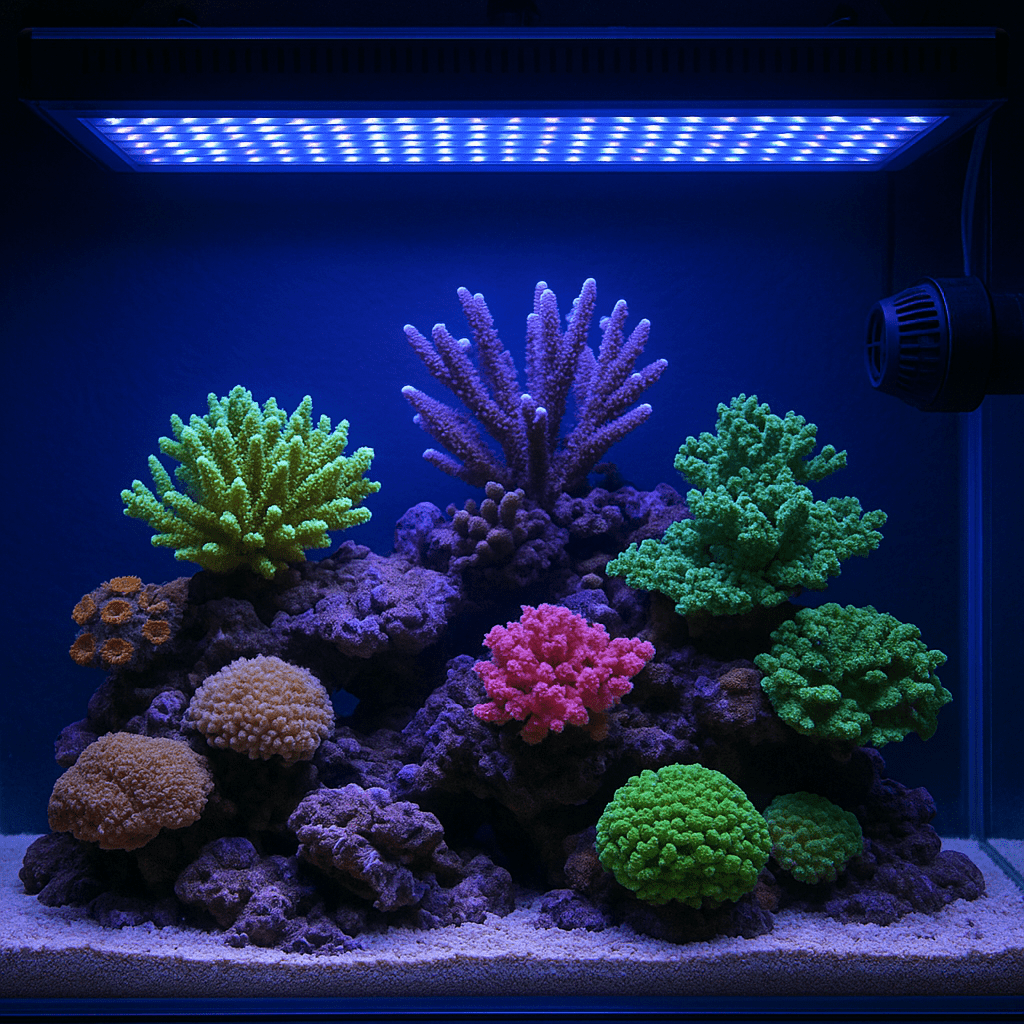
Most successful reef keepers use a blend of rock types to balance cost, biodiversity, and aesthetics. For example:
- 60–80% dry or man-made rock for structure.
- 20–40% high-quality live or aquacultured rock for seeding.
A few practical tips:
- Rinse or cure new rock in separate saltwater containers to reduce die-off and nutrients.
- Use epoxy or reef-safe glue to stabilize tall structures before adding livestock.
- Plan open swim-throughs and caves for fish, not just coral mounting spots.
Think of live rock as your tank’s foundation: the right combination now will make long-term maintenance, coral growth, and fish health much easier.
Whether you choose wild, aquacultured, dry, or man-made rock, focus on stability, sustainability, and a layout that’s easy to maintain. With patience, even the plainest white rock will transform into a colorful, living reef centerpiece.
Sources
- Borneman, E. H. Aquarium Corals: Selection, Husbandry, and Natural History. TFH Publications.
- Fenner, R. The Conscientious Marine Aquarist. Microcosm.
- Sprung, J. & Delbeek, J. C. The Reef Aquarium series. Ricordea Publishing.
Was this helpful?
Related Posts
Bristleworms
Bristleworms are usually helpful reef tank scavengers. Learn how to identify them, control numbers, and spot the rare…
 By
By
What is a Chaeto Reactor, and How Does it Help Control Nutrients?
A chaeto reactor grows macroalgae in a sealed chamber to remove nitrate and phosphate, helping reef tanks control…