

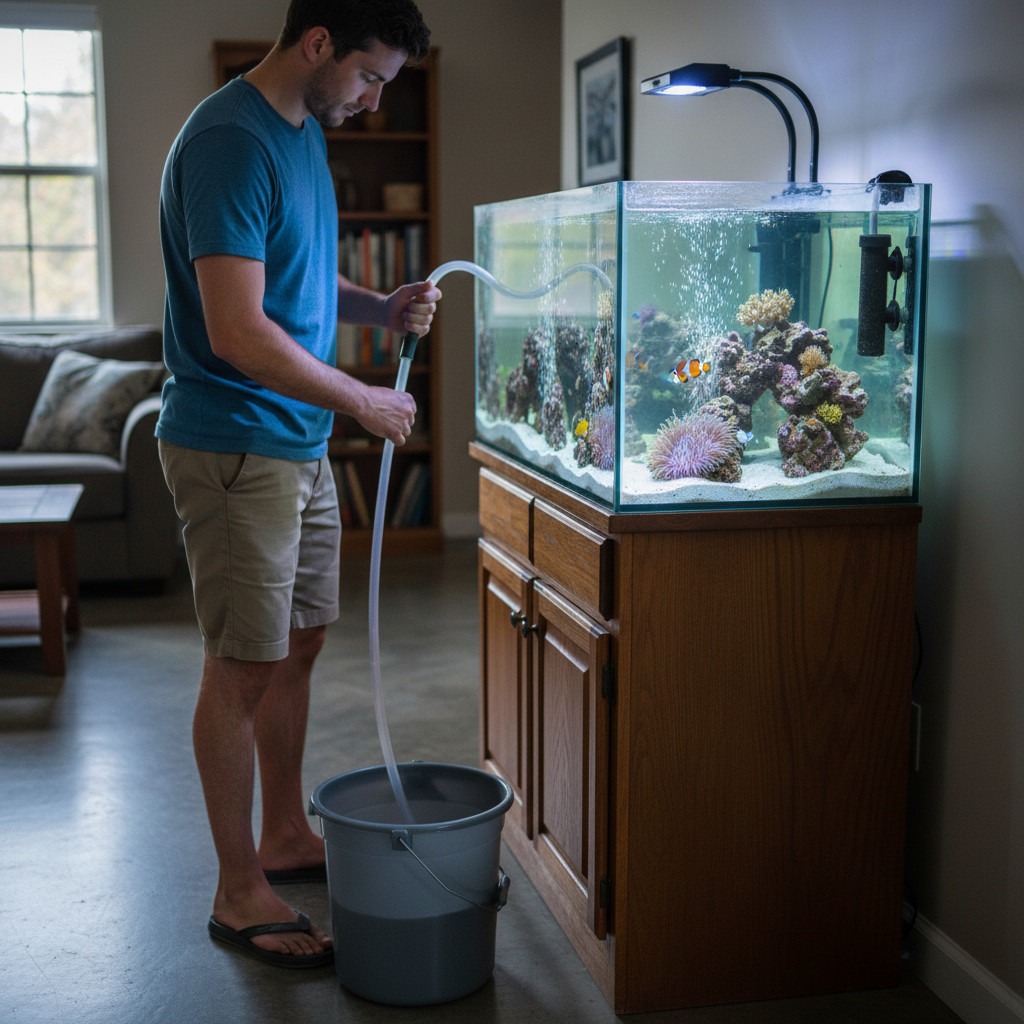
Water changes are one of the simplest ways to keep a reef tank stable. They remove waste, replace trace elements, and help correct small chemistry issues before they become serious problems.
Many reef keepers overthink water changes at first. The process is actually very manageable once you build a routine. In this guide, you will learn why water changes matter, how much water to change, how to mix saltwater correctly, and how to avoid common mistakes. I will also cover emergency water changes, nano reef tips, and troubleshooting for cloudy water, stressed corals, and parameter swings.
Quick Reference Table
| Topic | Best Practice |
|---|---|
| Routine schedule | 10% weekly or 15–20% every two weeks |
| Emergency change | 20–30% if ammonia, contamination, or major issue occurs |
| New saltwater mixing time | 2–24 hours with heat and flow |
| Match temperature | Within 1–2°F of display tank |
| Match salinity | Usually 1.025–1.026 specific gravity |
| Use RO/DI water | Yes, whenever possible |
| Key tools | Heater, pump, mixing container, refractometer, siphon |
| Main goal | Export nutrients and maintain stability |
A simple, repeatable process is better than an aggressive schedule you cannot maintain. Consistency matters more than chasing perfect numbers.
Why Water Changes Matter in a Reef Tank
Water changes do several jobs at once. They dilute nitrate, phosphate, dissolved organics, and other unwanted compounds. They also replenish minor and trace elements that corals, coralline algae, and other reef life consume over time.
In a fish-only tank, water changes mainly control waste. In a reef tank, they also support chemistry balance. Fresh saltwater can help maintain magnesium, potassium, and other elements, depending on the salt mix you use. Water changes can also improve coral extension when the tank has become chemically tired.
That said, water changes are not magic. They will not fix poor husbandry on their own. Overfeeding, weak filtration, and unstable alkalinity still need direct correction. Think of water changes as a core maintenance tool. They work best when paired with good feeding habits, strong export, and stable parameters. If you are still building your routine, our reef tank maintenance schedule can help.
How Much Water Should You Change?
For most reef tanks, 10% weekly works very well. It is easy to remember. It keeps chemistry stable. It also avoids dramatic swings. Many hobbyists also succeed with 15% to 20% every two weeks.
Smaller, more frequent changes are usually safer than large, infrequent ones. This is especially true in nano reefs. A 30% change can shift alkalinity, salinity, and temperature quickly in a small system. Corals often prefer gentle consistency.
Your ideal schedule depends on bioload and goals. A lightly stocked mixed reef may do well with weekly 10% changes. A heavily fed SPS system may need more support. Tanks with dosing, refugiums, and strong nutrient export sometimes need smaller changes. Watch your nitrate, phosphate, alkalinity trend, and coral response. If nutrients rise steadily between changes, increase frequency or volume. If parameters swing after each change, reduce the change size and improve matching. For more help, see our reef tank water parameters guide.
Best Water to Use
RO/DI water is the standard for reef aquariums. It removes chlorine, chloramine, metals, silicate, nitrate, and other contaminants found in tap water. Starting with clean source water gives you far more control.
Tap water can cause algae problems, coral irritation, and long-term instability. Even if your tap water looks fine, the dissolved content can vary across seasons. That inconsistency creates avoidable trouble in a reef tank.
If you make your own water, test your RO/DI output with a TDS meter. Replace filters and DI resin when needed. If you buy premixed saltwater or RO water from a store, verify salinity before use. Do not assume every batch is identical. A refractometer is one of the best tools you can own. If you are unsure about your source water, our RO/DI water for reef tanks article covers the basics in more detail.
Step-by-Step Water Change Guide
Here is a reliable method that works for most reef tanks.
- Measure the amount of water you plan to change.
- Fill a clean mixing container with RO/DI water.
- Add reef salt slowly, following the manufacturer’s instructions.
- Place a heater and small pump in the container.
- Mix until the water is fully clear and stable.
- Test salinity and temperature. Match them to the display tank.
- Turn off return pumps, skimmers, and heaters if needed.
- Siphon out the old tank water. Vacuum detritus from easy-access areas.
- Add the new saltwater slowly to avoid stirring sand.
- Restart equipment and confirm normal operation.
- Check salinity again after the system fully mixes.
Move slowly during the refill. Fast additions can blast corals or cloud the sand bed. I prefer pumping new water into the sump when possible. That gives the system time to mix gently before it reaches the display. If you run an auto top off, make sure it does not activate incorrectly during the change. Marking your sump’s normal operating level helps prevent confusion.
Mixing Saltwater Correctly
Good water changes start before the old water leaves the tank. Poorly mixed saltwater causes many avoidable problems. Always use a dedicated food-safe container. Never use buckets that held soap, cleaners, or garden chemicals.
Add salt to water, not water to dry salt. This helps prevent precipitation. Use a powerhead for circulation and a heater if your room is cool. Most salt mixes dissolve within a few hours, though some hobbyists mix overnight for consistency. Check the manufacturer’s instructions because some formulas are designed for shorter or longer mixing times.
Before use, verify salinity, temperature, and ideally alkalinity. This last step matters more than many beginners realize. If your tank runs at 8 dKH and your new water is 11 dKH, repeated large changes may stress sensitive corals. SPS tanks are especially reactive to alkalinity jumps. Matching the new water closely reduces risk and keeps coral response more predictable.
Aquarium Setup Considerations
How you perform water changes depends on your tank layout. A sump makes the job easier. You can remove and replace water from the sump with minimal disturbance. In all-in-one tanks, the rear chambers often work the same way.
Display-only removal is still fine, but avoid exposing corals and pumps to air for long periods. If you siphon from the display, target detritus traps. Common spots include behind rockwork, low-flow corners, and bare areas under return nozzles. You do not need to deep-clean every inch each time. Over-cleaning can stir too much waste at once.
Keep a dedicated set of hoses, buckets, and pumps for aquarium use only. Label them clearly. Cross-contamination from household cleaners is a real risk. A simple water station can save time if you do regular changes. Even a brute can, a mixing pump, and a heater can turn water changes into a quick weekly task instead of a chore.
Water Changes for Nano Reefs
Nano reefs benefit greatly from water changes. They also react faster to mistakes. In a small tank, even one extra gallon can shift salinity and chemistry quickly. Precision matters more as water volume drops.
For most nanos, 10% weekly is a strong starting point. Some pico and nano systems rely on water changes as their main method of trace element replacement. This can work very well if the routine is consistent. Measure carefully and always match salinity and temperature closely.
Use a small pump or a drip line for refilling. Pouring water directly into a nano often stirs sand and irritates corals. Be extra careful with auto top off sensors. Water level changes happen fast in rear chambers. If you keep soft corals or LPS in a nano, watch their behavior after each change. If they stay retracted for hours, the new water may not be matched closely enough.
Emergency Water Changes
Sometimes a routine change is not enough. Emergency water changes are useful after contamination, accidental overdosing, ammonia spikes, or a dead fish hidden in the rockwork. In these cases, a larger change can buy time and reduce damage.
A 20% to 30% change is common for emergencies. In severe cases, multiple moderate changes are often safer than one massive change. This approach lowers toxins while limiting sudden chemistry shifts. Run fresh carbon if contamination is suspected. Increase aeration if fish are breathing heavily.
Do not let panic create new problems. Match temperature and salinity as closely as possible, even during an urgent response. If ammonia is present, use an appropriate detoxifier only if needed and only as directed. Then address the root cause. Water changes help, but they must be part of a broader fix.
Common Problems
Corals Close After a Water Change
This usually points to a mismatch in salinity, temperature, or alkalinity. Check all three first. Corals may also react to stirred detritus or sudden changes in flow during maintenance. If the tank clears quickly and parameters match, mild short-term retraction is often normal.
Cloudy Water After Refilling
Cloudiness often comes from disturbed sand or incompletely mixed saltwater. Refill more slowly next time. Aim new water into the sump or against a plate or filter floss to diffuse the flow. Make sure the new batch is fully dissolved before use.
Salinity Keeps Drifting
Recalibrate your refractometer. Confirm your tank’s true water volume. Many hobbyists estimate volume too high because rock and sand displace water. Also check that your auto top off is working correctly before and after maintenance.
Nitrate Stays High Despite Water Changes
Water changes help, but they may not overcome constant nutrient input. Review feeding, filtration, detritus buildup, and export methods. Clean mechanical filters often. Consider improving skimming or adding a refugium. Our how to lower nitrate in a reef tank guide explains this in detail.
Frequently Asked Questions
How often should I change water in a reef tank?
Most reef tanks do well with 10% weekly. Some systems use 15% to 20% every two weeks. The best schedule depends on stocking, feeding, and nutrient control.
Can I do too many water changes?
Yes. Very frequent or very large changes can create instability if the new water does not match the tank. Stable parameters matter more than constant intervention.
Do reef tanks need water changes if I dose elements?
Often yes. Dosing can replace specific elements, but water changes still remove dissolved waste and help reset chemistry. Some advanced systems reduce changes, but they require close testing.
How long should saltwater mix before use?
Many salt mixes are ready within a few hours. Others are better after overnight mixing. Follow the salt manufacturer’s instructions and always confirm salinity and temperature before use.
Should I vacuum the sand bed during every water change?
Not always. Light surface cleaning is useful, especially in dirty areas. Deep vacuuming the entire bed every time can release too much trapped waste at once.
Water changes do not need to be complicated. A clean source of RO/DI water, a good salt mix, and careful parameter matching will solve most issues before they start. Build a routine you can keep every week. Your reef will reward that consistency with better stability, healthier corals, and fewer surprises.
Was this helpful?
Related Posts
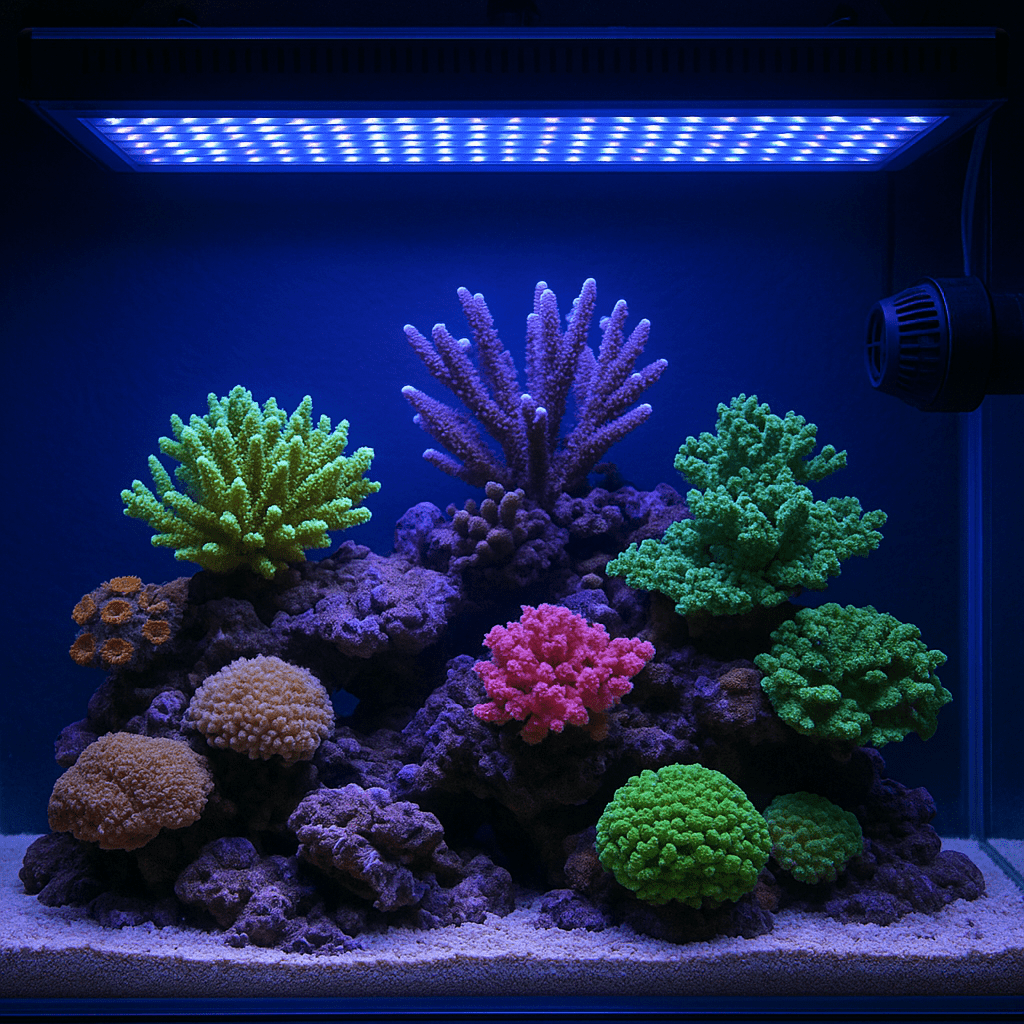
Reef Tank Basics
Learn reef tank basics, from setup and cycling to lighting, flow, and water chemistry, so your first reef…
 By
By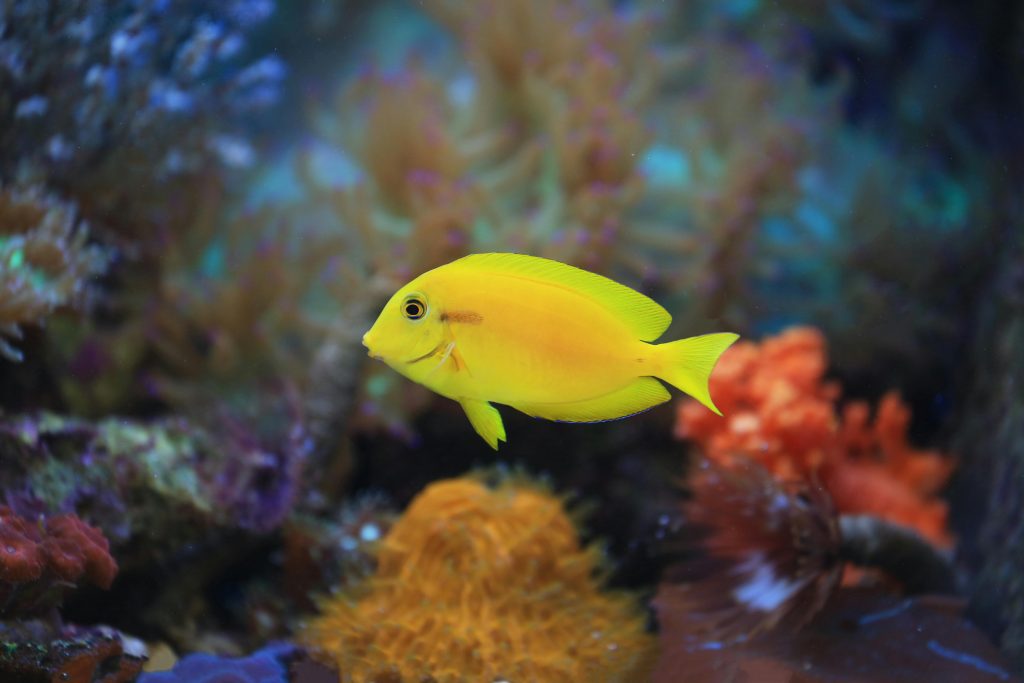
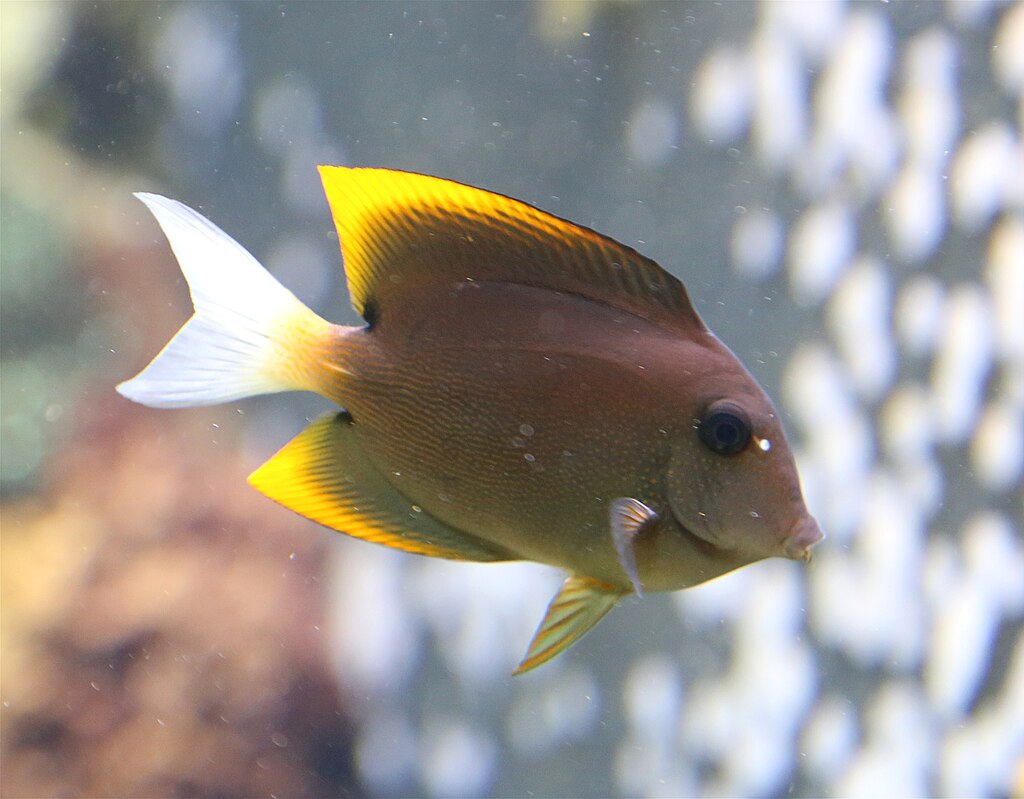
Juvenile Orange Shoulder (acanthurus Olivaceus)
Juvenile orange shoulder tangs are bright, hardy, and reef safe, but they grow large and need a spacious…
[favorite_button]
My Bookmarks:
To see full list click here
[user_favorites user_id="" include_links="true" site_id="" post_types="" include_thumbnails="true" thumbnail_size="thumbnail" include_excerpt="false"]