Acclimating Corals To New Lighting
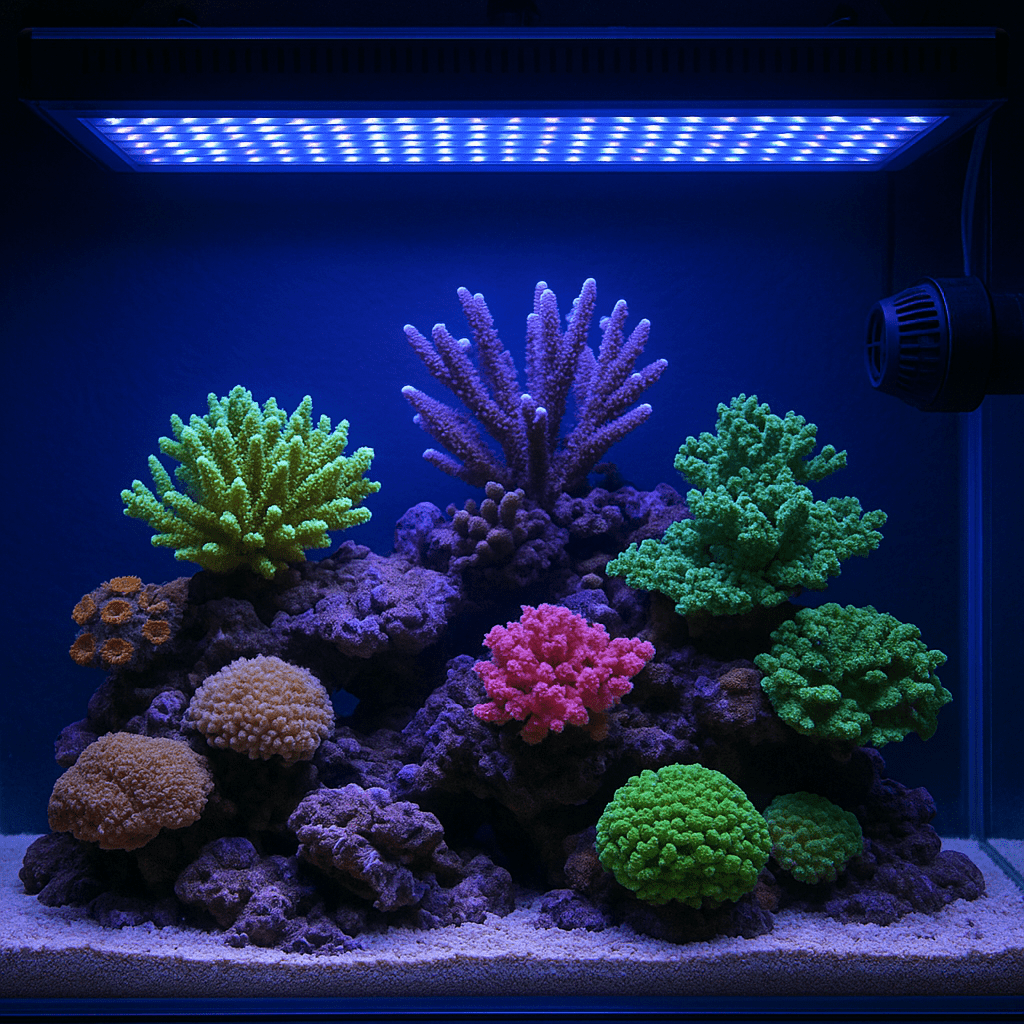
Changing your reef tank lighting can transform coral color and growth, but it’s also one of the fastest ways to shock or even kill corals if done too quickly. Whether you’re upgrading to powerful LEDs, switching from T5s, or just installing a new fixture, a careful lighting acclimation plan will keep your corals safe and thriving.
Why Corals Need Light Acclimation
Corals rely on symbiotic zooxanthellae algae to convert light into energy. When light intensity or spectrum changes suddenly, those algae can become stressed, leading to:
- Bleaching – corals expel zooxanthellae and turn pale or white.
- Tissue recession – especially on sensitive SPS tips and bases.
- Burned edges – LPS and soft corals can show shriveled or receding tissue.
Remember that new fixtures often produce more PAR than your old lights, even at similar percentage settings. A “50%” setting on a modern LED can be far more intense than your previous system.
Before you start, it’s smart to review your overall saltwater aquarium lighting guide so you understand PAR, spectrum, and photoperiod basics.
Step‑By‑Step Coral Light Acclimation Plan
1. Start Lower Than You Think
When installing new lights, begin at a conservative intensity and shorter photoperiod:
- Set intensity to 30–40% of the manufacturer’s recommended level for your tank size.
- Limit the peak photoperiod to 4–6 hours, with gentle ramp-up and ramp-down if your fixture supports it.
- Keep blue-heavy spectrum and avoid blasting full white channels at first.
If you already track PAR, aim to start around the lower end of your target ranges (e.g., 80–120 PAR for softies, 120–180 for LPS, 200–250 for most SPS) and increase slowly.
2. Increase Intensity Gradually
A safe rule of thumb is to adjust lighting no more than 5–10% per week. You can either:
- Raise intensity by 3–5% every 4–7 days, or
- Extend the photoperiod by 15–30 minutes per week until you reach your desired schedule.
Watch your corals closely after each change. Early warning signs of too much light include:
- Polyp retraction during peak intensity.
- Faded color or “washed out” tips on SPS.
- LPS staying deflated or receding from their skeletons.
If you see these, back intensity down by 5–10% and hold there for at least a week before trying again. Pair this with good reef tank maintenance habits to reduce overall stress.
3. Use Height and Shading to Your Advantage
Light acclimation isn’t only about percentages in your app. Physical adjustments help a lot:
- Raise the light fixture higher above the water to reduce PAR, then slowly lower it over several weeks.
- Use window screen or mesh between the light and tank, removing one layer every 5–7 days.
- Place new or sensitive corals lower in the rockwork and gradually move them up as they adjust.
These methods give you finer control, especially if your light controller has large jumps between settings.
Monitoring Coral Response and Making Adjustments
During the first 4–6 weeks after a lighting change, make a habit of quick daily checks:
- Are polyps extended during most of the photoperiod?
- Are colors stable or slowly improving, not bleaching?
- Do you see new growth tips, encrusting edges, or fuller polyp extension?
Consider keeping a simple log: note the date, light intensity, photoperiod, and any changes in coral behavior. This makes it easier to find your “sweet spot” and repeat success in the future.
If you’re also adding new frags, combine light acclimation with a proper coral quarantine and dip routine so pests and disease don’t complicate your observations.
Final Thoughts
Acclimating corals to new lighting is less about hitting the perfect number on day one and more about moving slowly and consistently. Start low, increase in small steps, observe closely, and be willing to pause or back off if corals show stress. With patience and a plan, your reef will reward you with better color, healthier tissue, and more predictable growth under your upgraded lights.
Sources
- Borneman, E. H. (2001). Aquarium Corals: Selection, Husbandry, and Natural History. TFH Publications.
- Delbeek, J. C., & Sprung, J. (1994–2005). The Reef Aquarium Vol. 1–3. Ricordea Publishing.
- Bulk Reef Supply. “Lighting & PAR for Reef Tanks” – educational video series and articles.
- WWC & BRS. “WWC/BRS Hybrid Method” – recommendations on PAR ranges and light acclimation.
Was this helpful?
Related Posts
Protein Skimmer Reef Tank Guide
Learn how a protein skimmer works, how to size one, and how to tune it for a cleaner,…
 By
By
Reef Aquarium Water Parameters
Learn the ideal reef aquarium water parameters, safe ranges, and how to keep salinity, alkalinity, nutrients, and pH…