

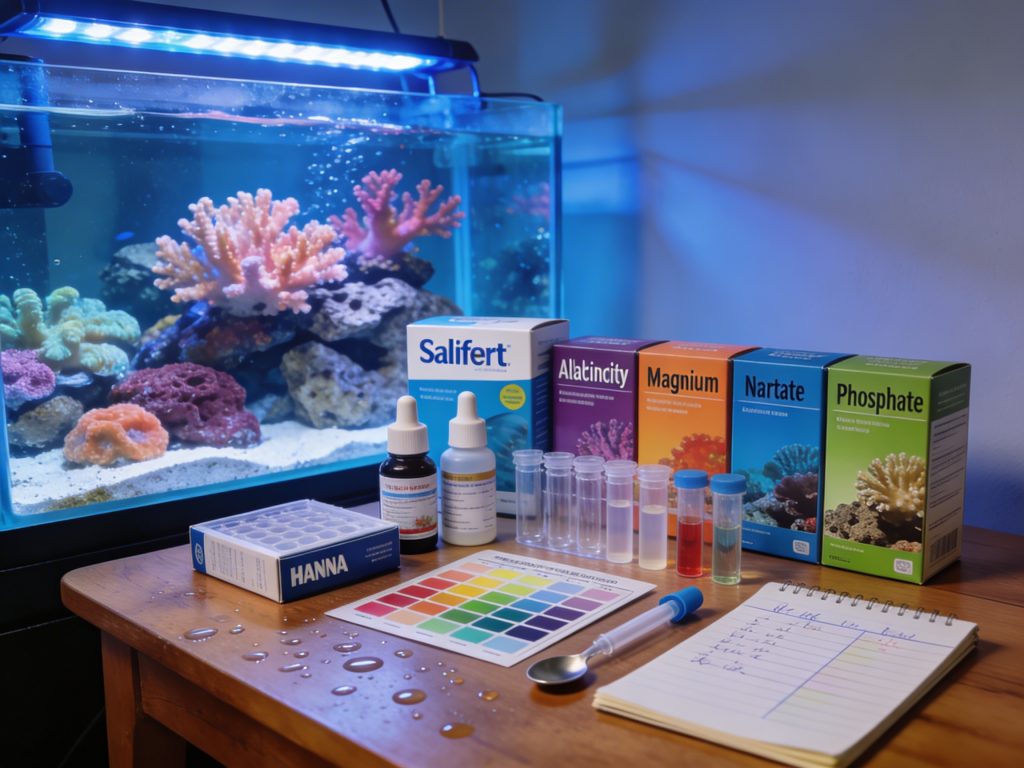
Aquarium test kits tell you what your reef tank cannot say out loud. They help you track ammonia, nitrite, nitrate, phosphate, alkalinity, calcium, magnesium, pH, and salinity. Good testing habits prevent crashes, guide dosing, and help you solve common reef problems before corals and fish suffer.
Many new reef keepers buy test kits without knowing which ones matter most. Others test often, but still feel unsure about the results. This guide explains the main aquarium test kits used in reef tanks, what each one measures, when to use it, and how to avoid common mistakes. You will also learn which kits matter most during cycling, which ones become critical in mature reefs, and how to build a simple testing routine that fits your tank.
Quick Reference Table
| Test | Why It Matters | Best Use | Typical Reef Target |
|---|---|---|---|
| Ammonia | Detects toxic waste | New tanks, emergencies | 0 ppm |
| Nitrite | Tracks cycle progress | New tanks | 0 ppm |
| Nitrate | Shows nutrient level | All reef tanks | 2–15 ppm |
| Phosphate | Controls algae and coral health | All reef tanks | 0.03–0.10 ppm |
| Alkalinity | Supports coral growth and stability | Reef tanks with corals | 7–9 dKH |
| Calcium | Needed for skeleton growth | LPS and SPS reefs | 400–450 ppm |
| Magnesium | Helps stabilize calcium and alkalinity | Mixed and SPS reefs | 1250–1400 ppm |
| pH | Reflects gas exchange and chemistry | Routine checks, troubleshooting | 7.8–8.4 |
| Salinity | Affects all livestock | Every reef tank | 1.025–1.026 SG |
This table gives a fast overview. It does not replace understanding the numbers. Reef tanks do best with stable parameters. Chasing perfect numbers often causes more harm than slightly imperfect ones.
Why Aquarium Test Kits Matter
Reef aquariums run on chemistry. Fish, corals, bacteria, and algae all change the water daily. Test kits help you see those changes. Without testing, most decisions become guesses. That can lead to overdosing, underfeeding, poor nutrient control, or coral loss.
In a fish-only tank, testing can be simpler. In a reef tank, it becomes essential. Stony corals consume alkalinity and calcium every day. Feeding raises nutrients. Evaporation changes salinity. New tanks can spike ammonia. Mature tanks can drift slowly out of balance. Test kits give you a way to measure these trends and respond early.
They also help during troubleshooting. If corals stop extending, a test kit can reveal low alkalinity. If algae spreads fast, phosphate may be high. If fish breathe heavily, ammonia or low oxygen may be involved. Good reef keeping starts with observation. It becomes much stronger when observation is backed by data.
The Main Types of Aquarium Test Kits
Most hobby kits fall into three groups. The first group uses liquid reagents. These are common and affordable. You add drops to a vial, wait, and compare color. The second group uses titration. These kits are popular for alkalinity, calcium, and magnesium. You add reagent until the sample changes color. The last group uses digital checkers or probes. These can improve precision, but they still need correct technique.
Liquid color kits work well for many parameters. They are easy to find and simple to use. Their weakness is human color reading. Room light can affect the result. Titration kits are often better for reef chemistry. They can offer finer resolution. Digital testers remove some guesswork, but they cost more and still require careful calibration and clean cuvettes.
No test kit is perfect. Even premium kits can drift, expire, or give odd results. That is why consistency matters. Use the same method each time. Test under similar conditions. If a number looks strange, repeat the test before making a big correction.
Which Test Kits You Need First
Beginners do not need every test kit on day one. Start with the tests that match your tank stage. During cycling, ammonia, nitrite, nitrate, and salinity matter most. These tell you if the biological filter is forming and if the tank is safe for livestock.
Once the tank holds corals, alkalinity becomes a priority. In tanks with LPS or SPS corals, calcium and magnesium also become important. Nitrate and phosphate should be tested regularly in all reef tanks. Corals need nutrients, but too much can fuel algae and dull coloration.
A practical starter list includes salinity, ammonia, nitrate, phosphate, and alkalinity. Add calcium and magnesium when coral demand increases. pH is useful, but it is often less urgent than salinity and alkalinity. If you can only invest in a few quality kits, buy the ones you will use often. Reliable alkalinity and salinity testing usually give the best value in a growing reef.
What Each Reef Test Measures
Ammonia is highly toxic. It should always read zero in an established tank. Nitrite matters most during cycling. In marine systems, it is usually less dangerous than ammonia, but it still helps track progress. Nitrate is a nutrient. Some nitrate is helpful for coral health, but excessive levels can stress sensitive species.
Phosphate is another key nutrient. Too little can starve corals and beneficial microbes. Too much can fuel nuisance algae and slow calcification. Alkalinity measures the water’s buffering capacity. In reef tanks, it strongly affects coral growth and stability. Sudden alkalinity swings often cause more trouble than a slightly high or low reading.
Calcium supports skeletal growth in stony corals, coralline algae, clams, and other calcifying organisms. Magnesium helps keep calcium and alkalinity balanced. pH reflects the acid-base state of the water. It can drop in homes with poor air exchange. Salinity controls osmotic balance for every animal in the tank. If salinity drifts, everything feels it.
How Often Should You Test?
Testing frequency depends on tank age and coral demand. New tanks need more frequent ammonia, nitrite, and nitrate checks. Mature reefs need regular alkalinity, nitrate, phosphate, and salinity checks. Calcium and magnesium can often be tested weekly or biweekly unless demand is high.
A simple schedule works well for many hobbyists. Test salinity several times each week. Test alkalinity two or three times weekly in coral tanks. Test nitrate and phosphate weekly. Test calcium and magnesium weekly at first. Once consumption patterns become clear, you can test them less often. Test ammonia anytime livestock acts distressed or after a major die-off.
More testing is not always better. Random testing without a log creates noise. Regular testing with notes shows trends. Write down the date, result, and any changes you made. Over time, this becomes one of the most useful reef tools you own.
Step-by-Step: How to Use Test Kits Correctly
Good technique matters as much as the kit itself. Many bad readings come from rushed steps or dirty tools.
- Read the instructions fully before starting.
- Check the expiration date on all reagents.
- Rinse the vial with tank water first.
- Fill exactly to the marked line.
- Add reagents in the correct order.
- Use the correct number of drops.
- Cap and mix as directed.
- Wait the full reaction time.
- Read colors under bright white light.
- Record the result right away.
For titration kits, hold bottles upright. Drop size changes if the bottle tilts. For digital checkers, wipe the cuvette with a clean cloth. Fingerprints can affect the reading. For refractometers, calibrate with a proper standard solution, not pure freshwater. Small errors add up fast in reef tanks.
Common Problems
Why do my test results change every time?
Inconsistent technique is the usual cause. Sample size may be off. Drops may vary. Reaction time may change. Lighting may be poor. Clean your tools, follow the same steps, and test at the same time of day. If results still jump wildly, compare with a fresh kit or a trusted local fish store.
Why does my alkalinity keep dropping?
Corals and coralline algae consume alkalinity daily. A growing reef can use more than expected. Low magnesium can also make balance harder. Test alkalinity at the same time each day for several days. That shows true consumption. Then adjust dosing slowly. Avoid large one-time corrections.
Why is phosphate unreadable but algae is growing?
Algae may be consuming phosphate as fast as it appears. The water can test low while the system still holds excess nutrients. Detritus, overfeeding, and weak export often contribute. Improve flow, remove waste, clean filters, and test trends over time instead of relying on one result.
Can expired test kits give false readings?
Yes. Reagents degrade with age, heat, and poor storage. Colors may shift. Endpoints may become unclear. Replace old kits, especially for alkalinity, calcium, and low-range nutrient tests. Store kits in a cool, dry place. Avoid humid cabinets near the sump if possible.
How to Choose the Best Aquarium Test Kits
Choose kits based on accuracy, ease of use, and how often you will test. A very precise kit is not helpful if you hate using it. For beginners, clear instructions and easy color changes matter. For SPS keepers, fine resolution matters more, especially for alkalinity and phosphate.
Read reviews from reef hobbyists, not just general aquarium users. Marine systems demand tighter control. It also helps to match your kit quality to the parameter. Salinity, alkalinity, and phosphate deserve special attention. These often influence coral health quickly. Keep one spare reagent or backup method for critical tests. That is very useful during emergencies.
If budget is limited, spend more on the tests you use weekly. You can test magnesium less often with a mid-priced kit. But a poor alkalinity kit can create constant frustration. Good reef keeping is not about owning the most gear. It is about using dependable tools well.
Frequently Asked Questions
What is the most important test kit for a reef tank?
Salinity and alkalinity are usually the most important long-term tests. In new tanks, ammonia is also critical. Each serves a different purpose.
Do I need to test calcium in a soft coral tank?
Not as often as in an SPS tank. Still, occasional calcium checks are helpful, especially if you keep some LPS or coralline algae grows heavily.
Are digital testers better than liquid kits?
Sometimes. Digital testers can reduce color guesswork. They still require clean technique and calibration. A good liquid kit can be very reliable.
How long do aquarium test kits last?
Most last one to three years unopened. Once opened, lifespan depends on storage and use. Always check the printed expiration date.
Should I test after every water change?
You do not need to test everything after each change. Checking salinity and alkalinity is smart, especially if the new salt mix differs from your tank.
Final Tips for Better Testing Habits
Test kits are only useful when paired with patience. Do not chase numbers hour by hour. Look for patterns. Make one change at a time. Then retest after the system has had time to respond. Stability beats perfection in almost every reef tank.
Create a routine you can maintain. Keep your kits organized. Label testing syringes if needed. Replace old reagents before they fail. Most importantly, learn what normal looks like in your own aquarium. That is how testing becomes more than a chore. It becomes one of your best reef keeping skills.
For more help, read our guides on how to cycle a reef tank, reef tank water parameters, how to lower nitrate in a reef tank, and reef tank dosing basics.
Was this helpful?
Related Posts
Best Filtration Systems
Best Filtration Systems for a Healthy Saltwater Aquarium Choosing the best filtration system for your saltwater aquarium is…
 By
By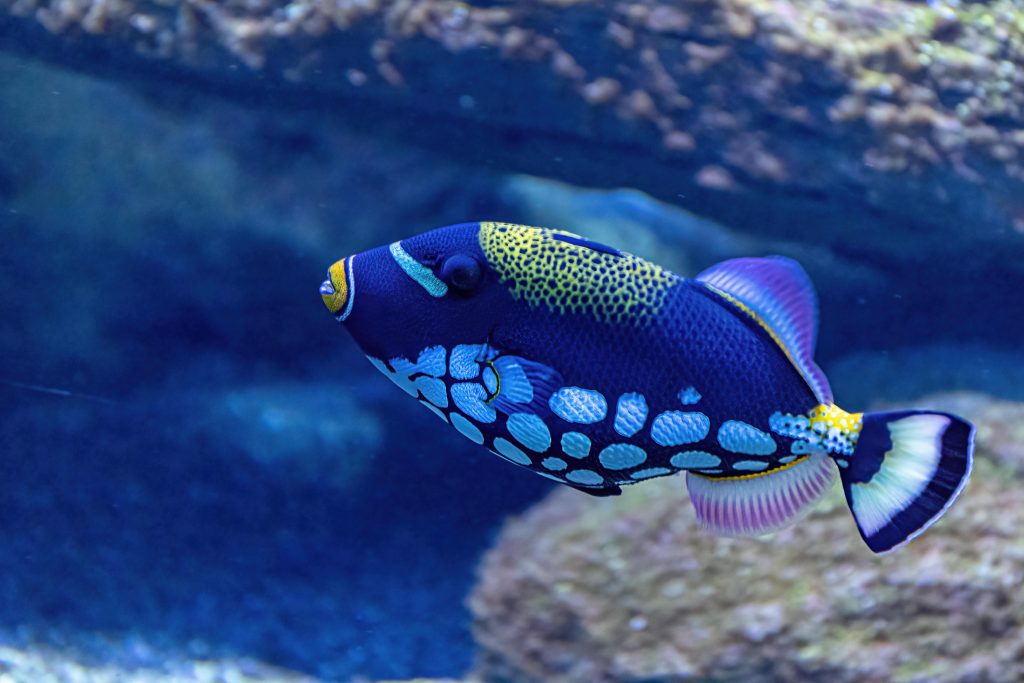
Clown Triggerfish (Balistoides Conspicillum)
Clown triggerfish are stunning but aggressive marine fish that need very large tanks, strong filtration, and careful tankmate…
[favorite_button]

My Bookmarks:
To see full list click here
[user_favorites user_id="" include_links="true" site_id="" post_types="" include_thumbnails="true" thumbnail_size="thumbnail" include_excerpt="false"]