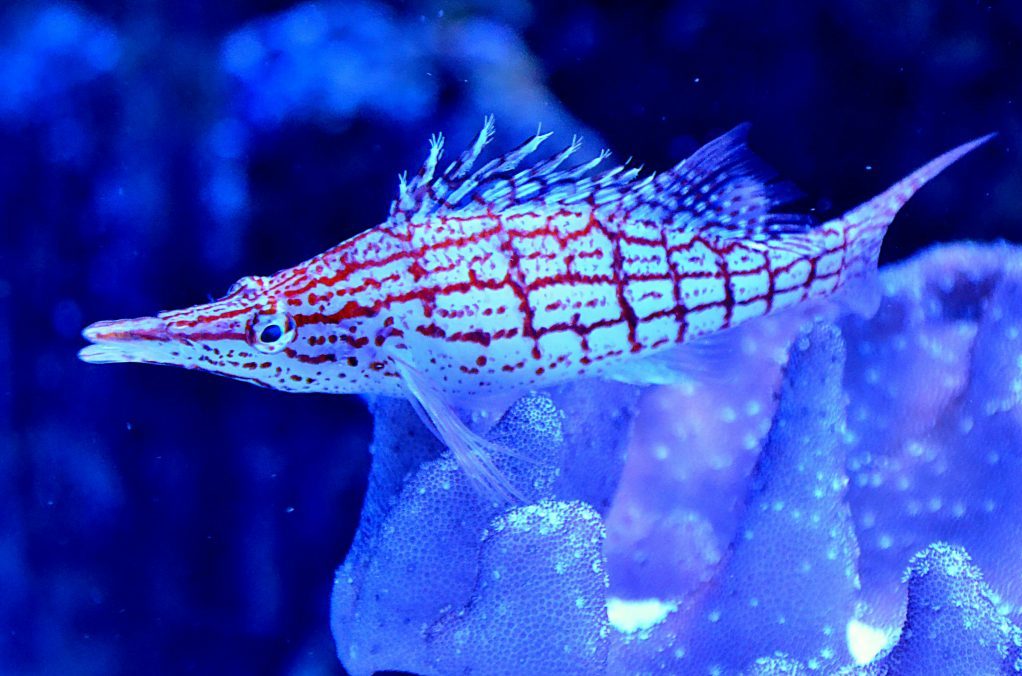
The Longnose Hawkfish is a striking reef fish with a long snout, bold red pattern, and perching behavior. It suits many reef tanks when its needs are understood. Success depends on secure aquascaping, meaty foods, and careful tankmate selection, especially around very small shrimp.
If you are considering Oxycirrhites typus, this guide covers the essentials. You will learn about tank size, feeding, behavior, reef compatibility, and common problems. The species is hardy once settled, but it has a few traits that surprise new keepers. It is not a constant swimmer like a wrasse. It prefers to perch, watch, and dart at food. That makes it both entertaining and easy to observe. With the right setup, a Longnose Hawkfish can become one of the most personable fish in a reef aquarium.
Longnose Hawkfish Care Quick Reference
| Common name | Longnose Hawkfish |
| Scientific name | Oxycirrhites typus |
| Care level | Easy to moderate |
| Temperament | Semi-aggressive |
| Adult size | About 5 inches |
| Minimum tank size | 30 gallons, 40 breeder or larger preferred |
| Diet | Carnivore |
| Reef safe | Usually with corals, caution with small shrimp |
| Temperature | 76 to 78°F |
| Salinity | 1.025 to 1.026 specific gravity |
| pH | 8.1 to 8.4 |
| Nitrate | Below 20 ppm preferred |
| Flow | Moderate to strong, with calmer perches |
| Lighting | No special need, reef lighting is fine |
This species is often chosen for its appearance, but its behavior is the real appeal. It spends much of the day perched on rockwork or coral branches. Then it lunges forward to grab food. That hunting style shapes how you should house it. Stable rockwork matters. Open perches matter too. So does avoiding tiny ornamental crustaceans that fit in its mouth.
Natural Habitat
The Longnose Hawkfish lives across the Indo-Pacific. It is commonly found on outer reef slopes and drop-offs. In nature, it often associates with gorgonians, black corals, and branched reef structures. Those elevated perches give it a clear view of passing prey. Its long snout helps it pick small crustaceans from tight spaces.
This habitat explains several aquarium behaviors. First, the fish likes to sit above the rockwork. Second, it appreciates complex structure with ledges and branches. Third, it is an ambush predator, not a grazer. It watches, waits, and strikes. In a home aquarium, that means it benefits from a scape with high lookout points. It also means it may view tiny shrimp as food. Understanding the natural habitat makes care easier. You are not keeping a random reef fish. You are keeping a specialized perch hunter.
Temperament and Behavior
Longnose Hawkfish are bold and alert. Many quickly learn to recognize the person who feeds them. They often hover near the front glass at feeding time. That makes them excellent display fish. They are usually not relentless bullies, but they can be territorial. This is more likely in smaller tanks.
They may chase similar-shaped fish or other perchers. Conflicts can also happen with small gobies or timid species. In larger systems, they usually settle into one area and patrol it. They are not built for sustained speed, so aggression tends to be short bursts. Their biggest risk is toward ornamental crustaceans. A very small cleaner shrimp or sexy shrimp may disappear. Larger cleaner shrimp often do better, but there is never a guarantee. If you value tiny shrimp, this may not be the best fish for your reef.
Aquarium Setup
A 30-gallon tank is the bare minimum for a single Longnose Hawkfish. A 40 breeder or larger is a better choice. The extra footprint helps with territories and aquascaping. Build a stable reef structure with caves, ledges, and elevated perches. Branching rock, coral skeleton replicas, or sturdy decorative branches work well. The fish wants lookout points.
Use a tight-fitting lid. Hawkfish can jump when startled. This risk rises during acclimation or after aggression. Keep water quality stable. Like most reef fish, it handles consistent conditions better than fluctuating ones. Aim for moderate nutrient levels, strong oxygenation, and reliable filtration. It does not need a species-only tank. It does need thoughtful placement among tankmates. Add the fish after very timid species have settled. That often reduces territorial behavior. Quarantine is strongly recommended. It lowers the risk of introducing marine ich, flukes, or bacterial issues into the display.
Lighting Requirements
The Longnose Hawkfish has no special lighting demand. It does well under typical reef lighting used for corals. That means your lighting plan should be based on the corals in the aquarium, not on the fish. Bright lighting does not usually bother it if there are shaded areas and overhangs.
What matters more is visual security. If the tank is very bright and exposed, the fish may hide at first. This is common in sparse aquascapes. Once it feels secure, it usually perches in full view. If your aquarium includes branching SPS, gorgonians, or elevated ledges, the fish will use them often. Just make sure delicate corals are not damaged by repeated perching. Most established colonies tolerate this well, but very fragile frags can be knocked loose. Secure frags before adding active perchers like hawkfish.
Water Flow
Moderate to strong flow is ideal, especially in a reef tank. In nature, this species lives in areas with steady water movement. Good flow supports oxygen levels and keeps detritus from collecting around the rockwork. Still, the fish should have some calmer perches where it can rest comfortably.
A mixed flow pattern works best. Let higher flow move across the upper rockwork. Then create gentler pockets behind structures and ledges. The fish will choose where it wants to sit. If flow is too chaotic everywhere, it may seem restless. If flow is too weak, the tank may feel stagnant and less natural. Watch the fish. A comfortable Longnose Hawkfish perches calmly, makes short dashes, and resumes its lookout position. Constant hiding or labored breathing points to a broader issue, not just flow alone.
Feeding
Longnose Hawkfish are carnivores. In captivity, they usually accept frozen mysis, enriched brine shrimp, finely chopped krill, clam, squid, and other meaty marine foods. Many also learn to take quality pellets. Feed small portions once or twice daily. Two smaller feedings are often better than one large meal.
Variety matters. A mixed diet supports color, body condition, and immune function. Use marine-based foods rather than freshwater feeder items. Those are unnecessary and can cause problems. If the fish is new, start with frozen mysis. That is often the easiest food to trigger a feeding response. Target feeding can help in busy community tanks. Use a turkey baster or feeding tube if needed. A healthy specimen should have a full belly but not look bloated. Sunken flanks suggest underfeeding, internal issues, or competition from faster fish.
Compatibility
This species is generally reef safe with corals. It does not nip polyps like many angelfish or butterflyfish. The main compatibility concern is crustaceans. Tiny shrimp are at risk. Sexy shrimp, anemone shrimp, and very small peppermint shrimp may be hunted. Larger cleaner shrimp and coral banded shrimp may coexist, but caution is still wise.
With fish, choose tankmates that are not overly aggressive and not extremely timid. Good companions often include clownfish, many wrasses, blennies, tangs in larger tanks, cardinalfish, and peaceful dwarf angelfish with monitoring. Avoid housing it with predatory fish that may bully or eat it. Also avoid combining multiple hawkfish in smaller systems. That often leads to territorial disputes. If you want a peaceful nano shrimp display, skip this fish. If you want a personable perching predator in a mixed reef, it can be an excellent choice.
Step-by-Step Acclimation Guide
Proper acclimation helps this fish settle quickly. Follow a simple, controlled process.
- Quarantine the fish in a separate tank if possible.
- Match temperature first by floating the bag for 15 to 20 minutes.
- Check salinity in the bag and in your tank.
- Use slow drip acclimation if salinity differs noticeably.
- Keep lights dim during transfer.
- Move the fish without adding store water to the tank.
- Offer a hiding perch immediately.
- Wait a few hours before the first feeding.
- Try frozen mysis as the first food.
- Observe breathing, posture, and interest in food for several days.
Many Longnose Hawkfish settle fast. Some eat on day one. Others need a day or two. Avoid chasing the fish with nets after release. Stress delays feeding and weakens immunity. Calm surroundings matter during the first week.
Common Problems
Why is my Longnose Hawkfish not eating?
New arrivals often refuse food from stress. Shipping, bright lighting, and aggressive tankmates can all contribute. Start with frozen mysis or enriched brine. Feed near its perch. Reduce competition during feeding. Check for rapid breathing or flashing, which may suggest parasites. Quarantine makes diagnosis much easier.
Why is it hiding all the time?
Hiding usually points to insecurity. The tank may lack elevated perches. Another fish may be harassing it. Water quality swings can also cause withdrawn behavior. Test ammonia, salinity, and temperature first. Then watch the tank from a distance. Subtle bullying is often missed during casual observation.
Will it eat my shrimp?
It might. Very small shrimp are the highest risk. Larger established cleaner shrimp sometimes coexist for years. There is still no promise. If ornamental shrimp are a priority, choose fish with a safer record around crustaceans.
Why is my hawkfish breathing fast?
Fast breathing can signal low oxygen, ammonia exposure, flukes, or marine ich. Check surface agitation and test water immediately. Inspect for visible spots, excess mucus, or scratching. If symptoms persist, move the fish to quarantine for treatment and closer observation.
Propagation and Breeding
Captive breeding of Longnose Hawkfish is not common for home hobbyists. In the wild, hawkfish reproduction involves pelagic eggs and larval stages that are difficult to raise. That means most specimens in the trade are still wild collected. Because of this, careful sourcing matters. Buy from vendors that handle fish well and offer conditioned specimens.
At home, there is little practical breeding guidance beyond maintaining excellent health and compatible social conditions. If you are interested in breeding marine fish, clownfish and some dottybacks are much more realistic starting points. For most reef keepers, the focus with this species should be long-term care, stress reduction, and responsible acquisition rather than active propagation.
Frequently Asked Questions
Is the Longnose Hawkfish reef safe?
Yes, with corals it usually is. The main caution is with small shrimp and tiny crustaceans.
How big does a Longnose Hawkfish get?
Most reach about 5 inches in captivity. Provide enough space for territory and perching.
What is the minimum tank size for a Longnose Hawkfish?
Thirty gallons is the minimum. A 40 breeder or larger is a better long-term home.
Do Longnose Hawkfish jump?
Yes. They can jump when startled. Use a secure lid or mesh screen top.
Are Longnose Hawkfish aggressive?
They are semi-aggressive. Most are manageable, but they can be territorial in smaller tanks.
Final Thoughts
The Longnose Hawkfish is one of the most engaging fish for a reef aquarium. It has character, a unique shape, and constant awareness of its surroundings. It is also fairly hardy once acclimated. The keys are simple. Give it stable water, secure rockwork, meaty foods, and suitable tankmates. Respect its predatory nature around tiny shrimp. If you do that, this fish often becomes a centerpiece despite its modest size.
For more reef care help, see our guides on reef tank parameters, quarantine marine fish, reef safe fish guide, and best cleanup crew for reef tank.
Was this helpful?
Related Posts
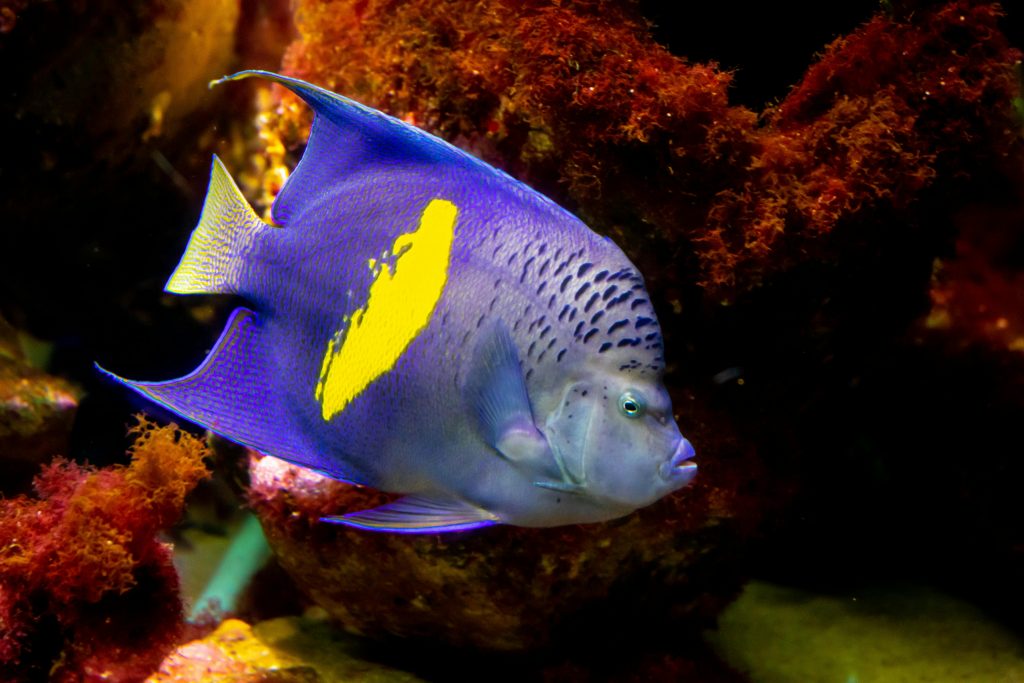
Asfur Angelfish (Pomacanthus Asfur)
Asfur Angelfish are stunning but demanding marine fish that need a large tank, varied diet, and careful tankmate…
 By
By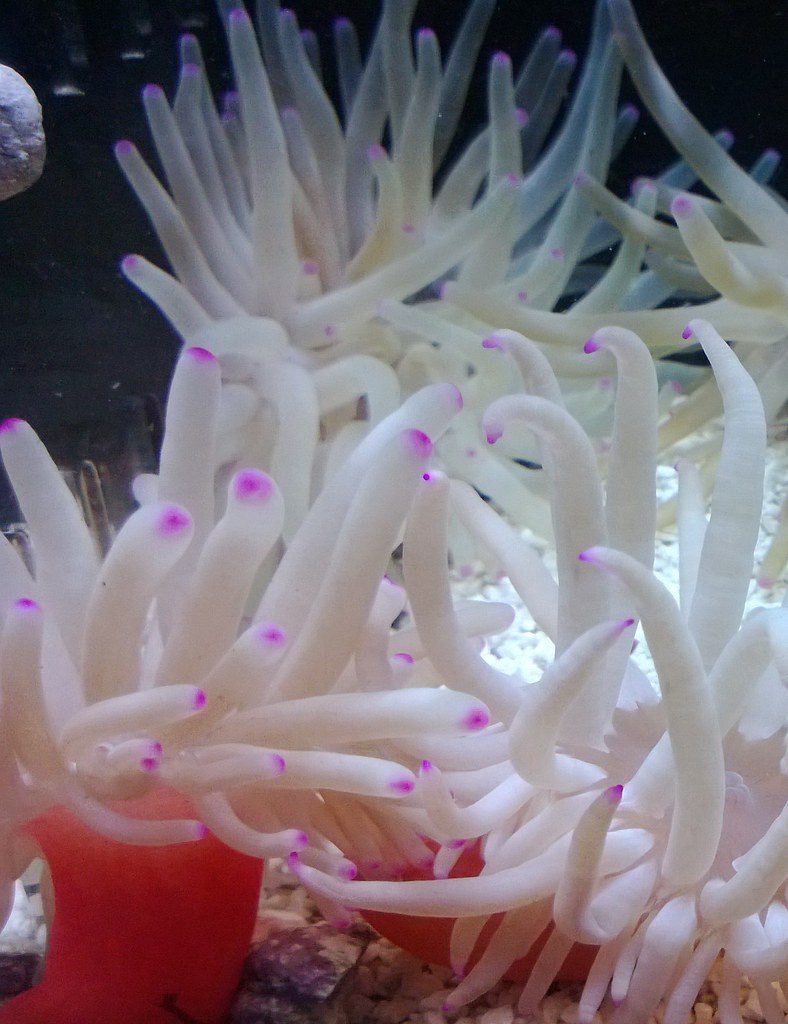
Condy Anemones
Condy anemones can thrive with stable water, safe flow, and moderate light. Learn placement, feeding, and troubleshooting for…