

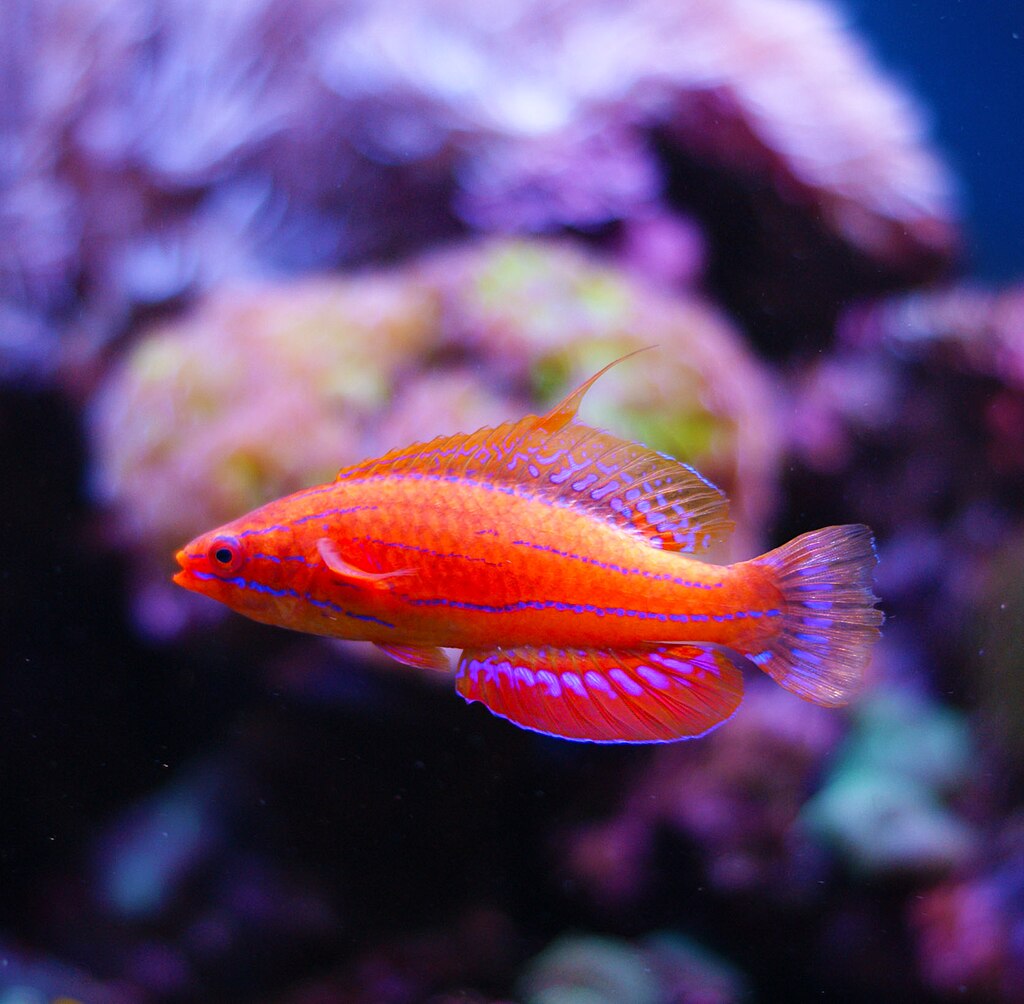
Carpenter’s Flasher Wrasse is a small, active, reef-safe fish known for bright colors and dramatic flashing displays. It suits many peaceful reef tanks. Success depends on a covered aquarium, calm tankmates, stable water quality, and frequent feeding.
This wrasse is a favorite among reef keepers for good reason. It stays relatively small. It brings constant movement to the tank. Males also perform stunning courtship displays that can transform the look of a reef aquarium. Beginner and intermediate hobbyists can keep this species successfully with the right setup. In this guide, you will learn about tank size, feeding, compatibility, water flow, and common care mistakes. You will also learn how to reduce jumping risk and help this fish settle in after purchase. If you want a colorful centerpiece for a peaceful reef, Carpenter’s Flasher Wrasse deserves a close look.
Quick Care Facts
| Common name | Carpenter’s Flasher Wrasse |
| Scientific name | Paracheilinus carpenteri |
| Care level | Easy to moderate |
| Temperament | Peaceful |
| Adult size | About 3 inches |
| Minimum tank size | 30 gallons, larger preferred |
| Diet | Carnivore |
| Reef safe | Yes |
| Water temperature | 76–78°F |
| Specific gravity | 1.025–1.026 |
| Nitrate | Low, ideally under 15 ppm |
| Special concern | Excellent jumper |
This species is often sold as a beginner-friendly wrasse. That is mostly true. It is hardy once established. It also adapts well to prepared foods. The main challenge is not aggression or coral safety. The biggest risk is jumping. A tight lid is essential from day one.
Natural Habitat
Carpenter’s Flasher Wrasse comes from the tropical Indo-Pacific. It is commonly associated with the Philippines and nearby regions. In nature, it lives above reef slopes, rubble zones, and outer reef areas. These habitats have steady water movement and plenty of open swimming space.
This fish usually stays near structure but does not hide all day. It moves in the water column and darts back to cover when startled. That behavior explains its aquarium needs. It wants both open water and rockwork. Males flash and display during social interactions, especially when females or other peaceful wrasses are present. These displays are brief but impressive. The fins extend fully. The body color intensifies. This is a normal behavior and a sign of confidence.
Unlike sand-sleeping wrasses, Carpenter’s Flasher Wrasse usually forms a mucus cocoon at night and rests in rock crevices. It does not need a deep sand bed for sleeping. That makes it easier to keep in mixed reef systems with bare-bottom or shallow sand setups.
Aquarium Setup
A 30-gallon tank is often listed as the minimum. A 40-gallon breeder or larger is a better long-term choice. Extra swimming room helps this fish feel secure. It also lowers stress when kept with other active species. Long tanks work better than tall ones.
Build an aquascape with caves, overhangs, and broken lines of sight. Leave open water in the front and upper areas. This fish likes to patrol the middle and upper levels. It also needs quick access to shelter. Avoid rock piles that fill the entire tank. Open structure is better.
The lid matters as much as the rockwork. Carpenter’s Flasher Wrasse can launch through tiny gaps. Mesh lids are ideal. Cover plumbing holes, overflow gaps, and feeder openings. Many hobbyists lose wrasses during the first week. Acclimation stress often triggers jumping. Keep lights dim on arrival day. Give the fish time to settle.
Stable reef parameters matter more than chasing exact numbers. Keep salinity stable. Avoid sudden temperature swings. Good oxygenation helps active wrasses thrive. If you are still planning your system, see reef tank setup guide and reef aquarium water parameters.
Lighting Requirements
This species does not have strict lighting needs. It is not a coral. It adapts to a wide range of reef lighting. Moderate to bright reef lighting works well, as long as the fish has shaded retreat areas. In brightly lit SPS tanks, it often stays active and visible if the aquascape includes caves and ledges.
Lighting affects behavior more than survival. Very harsh lighting in a sparse tank can make new arrivals nervous. A fish that feels exposed may hide more and flash less. Start with a normal photoperiod. Avoid sudden light shocks during acclimation. If your lights are programmable, use a gentler ramp-up period. That often helps newly introduced wrasses settle faster.
Color also looks best under balanced reef lighting. Blue-heavy lighting can make the fins glow, but a fuller spectrum often shows more body detail. If you keep this fish in a mixed reef, simply provide shaded areas and let the coral lighting dictate the schedule.
Water Flow
Carpenter’s Flasher Wrasse prefers moderate water movement. It comes from areas with consistent flow, but it does not want to fight a direct blast all day. Aim for varied, turbulent flow rather than a single strong jet. This supports oxygenation and mimics natural reef conditions.
In practical terms, the fish should be able to swim comfortably in open areas and retreat to calmer pockets near rockwork. If it constantly struggles in one part of the tank, adjust pump direction. A good setup has active circulation without creating a washing-machine effect.
Flow also affects feeding. This wrasse is a quick, midwater feeder. It does best when food stays suspended briefly. Strong surface agitation is helpful, but avoid flow patterns that pin food to overflows before the fish can eat. If you keep a mixed reef, your coral flow pattern will usually be suitable with only minor adjustment.
Feeding
Carpenter’s Flasher Wrasse is a carnivore. In nature, it eats small zooplankton and tiny drifting prey. In the aquarium, it usually accepts prepared foods quickly. Offer small meals two to three times daily. Frequent feeding supports energy, color, and body weight.
Good staple foods include frozen mysis, finely chopped seafood, enriched brine shrimp, copepod-based foods, and high-quality small pellets. Variety is important. Rotating foods reduces nutritional gaps. It also keeps picky fish interested. New imports may ignore dry food at first. Start with frozen foods that move naturally in the current.
Watch the belly shape. A healthy fish looks sleek but not pinched. If the abdomen appears sunken, increase feeding frequency and check for bullying. This species is fast, but shy individuals can still miss food in busy tanks. Targeting a small feeding zone can help. For more ideas, read best food for reef fish.
Compatibility
This is one of the more peaceful wrasses in the hobby. It is generally reef safe with corals, snails, shrimp, and other common invertebrates. It does not nip at coral tissue. It also rarely bothers clean-up crew members. That makes it a strong choice for mixed reefs and nano-to-medium peaceful systems.
Choose tankmates carefully. Avoid aggressive fish that chase constantly. Large dottybacks, aggressive damsels, and some hawkfish can intimidate it. Territorial wrasses can also be a problem. Carpenter’s Flasher Wrasse usually does best with peaceful clownfish, gobies, blennies, dartfish, firefish, and calm tangs in larger tanks.
Keeping multiple flasher or fairy wrasses can work, but tank size and introduction order matter. Males may display toward each other. Mild sparring is normal. Constant chasing is not. In smaller tanks, keep a single male. In larger systems, a peaceful wrasse community is possible with planning. If you are comparing species, visit reef safe wrasses.
Step-by-Step Acclimation Guide
Proper acclimation improves survival and reduces panic. Follow these simple steps for the best start.
- Prepare the tank first. Confirm the lid is secure.
- Dim the lights before opening the bag.
- Float the bag to match temperature for 15 to 20 minutes.
- Use drip acclimation if salinity differs noticeably.
- Transfer the fish gently without adding store water.
- Release it near rockwork, not in open flow.
- Keep the lights low for several hours.
- Offer a small frozen food meal later that day.
- Expect hiding at first. Do not chase it out.
- Check all lid gaps again that night.
Many losses happen after a sudden scare. Avoid tapping the glass. Keep pets and children from startling the tank. A calm first week makes a major difference.
Propagation and Breeding
Home breeding of Carpenter’s Flasher Wrasse is uncommon. It is not impossible, but it is difficult. Like many planktivorous marine fish, it releases eggs into the water column. The larvae are tiny and demanding. They require specialized live foods and careful rearing systems.
Spawning Behavior
Males may perform flashing displays near females, especially at dusk. These displays are normal and healthy. They do not guarantee successful spawning in a home aquarium. Social structure and low stress help encourage natural behavior.
Challenges in Captivity
The biggest challenge is larval rearing. Even if spawning occurs, raising fry is advanced work. Most hobbyists focus on long-term care rather than breeding. For now, this remains a species best appreciated rather than propagated by average reef keepers.
Common Problems
Jumping Out of the Tank
This is the most common issue. The cause is usually stress, sudden movement, aggression, or an uncovered gap. Install a tight mesh lid. Reduce bullying. Dim lights during introduction. Check every opening around plumbing and cords.
Hiding All the Time
New fish often hide for several days. Persistent hiding usually points to intimidation, poor aquascape, or too much exposure. Add more rock cover. Review tankmate behavior. Make sure the fish has calm retreat zones. Shy fish often become bold once they feel secure.
Not Eating
Refusing food is common after shipping. Offer small frozen foods first. Feed in low flow. Avoid large pellets at the start. If the fish still refuses food after several days, test water quality and look for harassment. Quarantine observation helps if disease is suspected.
Faded Color
Color loss often comes from stress, poor diet, or social suppression. Improve food variety. Maintain stable salinity and temperature. Remove aggressive tankmates if needed. Males show their best color when healthy and confident.
Flashing Without Visible Spots
“Flashing” can mean two things. It may describe the normal display behavior. It can also mean scratching against objects. If the fish rubs on rocks, check for parasites, ammonia irritation, or recent chemistry swings. Observe closely before assuming disease.
Frequently Asked Questions
Is Carpenter’s Flasher Wrasse reef safe?
Yes. It is considered reef safe with corals and most invertebrates. It is one of the safer wrasse choices for mixed reefs.
How big does Carpenter’s Flasher Wrasse get?
Most reach about 3 inches in captivity. They stay relatively small compared with many other wrasses.
Does Carpenter’s Flasher Wrasse need sand?
Not specifically for sleeping. This species usually rests in rock crevices. A sand bed is optional and can be chosen for the needs of the overall reef.
Can it live with shrimp?
Usually yes. Cleaner shrimp and other common ornamental shrimp are generally safe with this species.
How often should I feed Carpenter’s Flasher Wrasse?
Feed two to three small meals daily. Frequent feeding better matches its active lifestyle and natural planktivorous diet.
Carpenter’s Flasher Wrasse is one of the best small wrasses for a peaceful reef aquarium. It offers movement, color, and personality without threatening corals. Give it a covered tank, calm companions, and regular meals. In return, you will enjoy one of the hobby’s most elegant display fish.
Was this helpful?
Related Posts
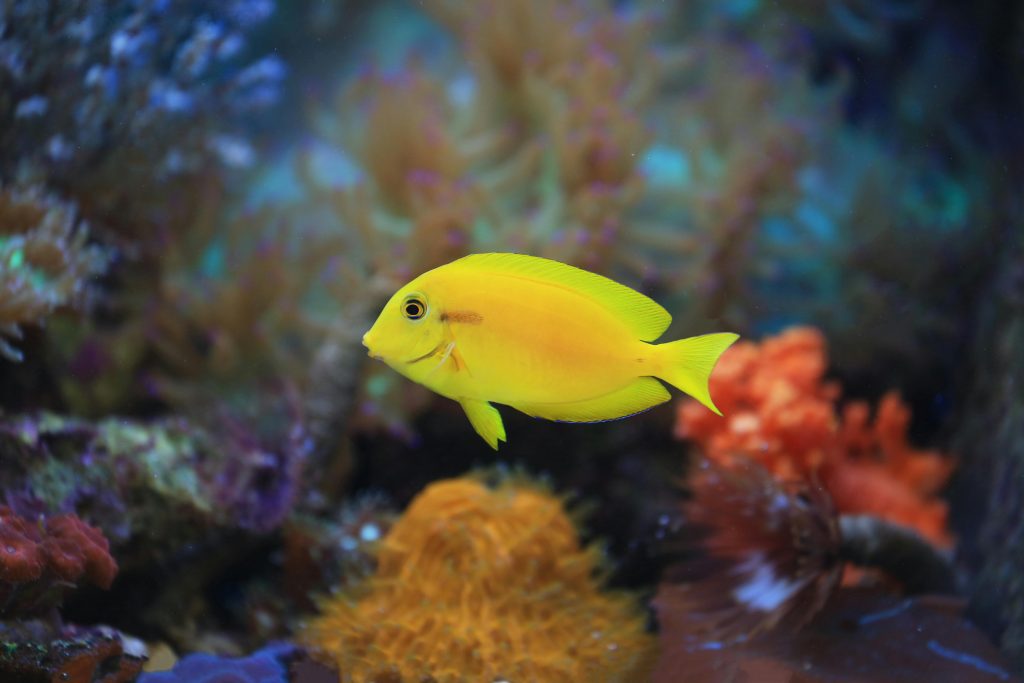
Juvenile Orange Shoulder (acanthurus Olivaceus)
Juvenile orange shoulder tangs are bright, hardy, and reef safe, but they grow large and need a spacious…
 By
By
Best Filtration Systems
Best Filtration Systems for a Healthy Saltwater Aquarium Choosing the best filtration system for your saltwater aquarium is…
[favorite_button]
My Bookmarks:
To see full list click here
[user_favorites user_id="" include_links="true" site_id="" post_types="" include_thumbnails="true" thumbnail_size="thumbnail" include_excerpt="false"]