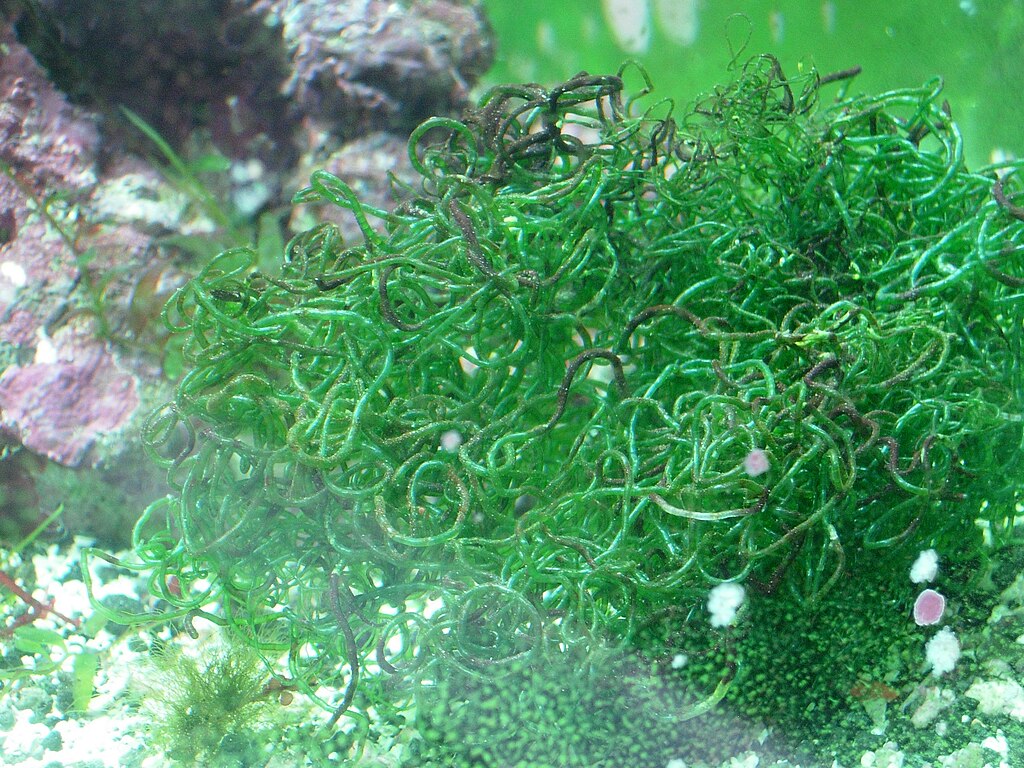
Chaeto refugiums are one of the most effective and beginner-friendly tools for keeping nutrients under control in a saltwater aquarium. By growing a fast-growing macroalgae called Chaetomorpha (often just called “chaeto”) in a dedicated refugium chamber, you can naturally export nitrate and phosphate, improve water quality, and create a more stable reef system.
What Is Chaeto and Why Use a Refugium?
Chaetomorpha is a hardy, wiry green macroalgae that doesn’t attach to rock and doesn’t go sexual (crash and release nutrients) the way some other macroalgae can. This makes it ideal for a refugium—an isolated area in your sump or back chamber where macroalgae and microfauna can thrive without fish picking at them.
Key benefits of a chaeto refugium include:
- Nutrient export: Chaeto absorbs nitrate and phosphate as it grows. Harvesting it physically removes those nutrients from the system.
- pH stability: Running your refugium light on a reverse schedule can help stabilize pH at night.
- Pod production: Amphipods and copepods love hiding in chaeto, providing a natural food source for your display tank.
- Algae control: By competing for nutrients, chaeto can help reduce nuisance algae in the display.
If you’re new to refugiums, it can help to review basic sump and refugium setup concepts before dialing in your chaeto system.
Setting Up a Chaeto Refugium
You can run chaeto in a sump chamber, a hang-on-back refugium, or even a dedicated section in an all-in-one tank. The key is giving it the right light, flow, and space.
Lighting for Chaeto
- Use a full-spectrum or plant-focused LED in the 5,000–7,000K range, or a refugium-specific light.
- Run the light on a reverse photoperiod (on at night when your display lights are off) to help buffer nighttime pH drops.
- Target a medium–high intensity: bright enough that the chaeto grows steadily, but not so intense that it bleaches or turns white.
Flow, Placement, and Maintenance
- Aim for moderate, tumbling flow so the chaeto ball slowly rolls and doesn’t collect detritus in dead spots.
- Use an egg crate divider or acrylic baffle to keep chaeto out of your return pump.
- Shake the chaeto ball weekly to dislodge detritus and siphon out any buildup in the refugium chamber.
- Harvest at least 25–50% of the mass when it becomes dense or blocks light. Rapid growth is a sign your refugium is exporting nutrients effectively.
For more detail on nutrient control methods beyond macroalgae, see our guide to nitrate and phosphate control in reef tanks.
Common Problems and Pro Tips
Chaeto is generally forgiving, but a few issues come up frequently:
- Chaeto not growing: Often due to insufficient light, very low nutrients, or lack of iron and trace elements. Consider testing nitrate and phosphate and dosing a reef-safe iron supplement if needed.
- Chaeto turning brown or melting: Can be caused by sudden lighting changes, flow that’s too low, or being smothered in detritus. Increase flow, clean the chamber, and adjust light intensity gradually.
- Refugium packed full of chaeto: Overgrown chaeto shades itself and slows growth. Regular harvesting keeps it healthy and maximizes nutrient export.
Hobbyist Tip: Start with a baseball-sized clump of chaeto and track your nutrient levels weekly. When you see steady growth and a slow drop in nitrate and phosphate, you’ve found a good balance of light and flow.
Chaeto refugiums are a simple, natural way to support a thriving reef. With the right lighting, flow, and maintenance, this unassuming green ball can become one of the hardest-working pieces of filtration on your system. If you’re designing a new setup or upgrading your filtration, don’t forget to factor in space for a refugium—your corals and fish will benefit from the added stability. For a broader look at natural filtration approaches, check out our overview of natural filtration in reef tanks.
Sources
- Feldman, K. (2019). “Refugia and Macroalgae in Reef Aquaria.” Advanced Aquarist.
- Paletta, M. (2016). The New Marine Aquarium. Microcosm.
- Sprung, J. (2002). Algae: A Problem Solver Guide. Ricordea Publishing.
Was this helpful?
Related Posts
Protein Skimmer Reef Tank Guide
Learn how a protein skimmer works, how to size one, and how to tune it for a cleaner,…
 By
By
Reef Aquarium Water Parameters
Learn the ideal reef aquarium water parameters, safe ranges, and how to keep salinity, alkalinity, nutrients, and pH…